Ali Mohmand Noor, Choijookhuu Narantsog, Takagi Hideaki, Srisowanna Naparee, Nguyen Nhat Huynh Mai, Yamaguchi Yuya, Synn Oo Phyu, Tin Htwe Kyaw Myat, Sato Katsuaki, Yamaguchi Ryoji, Hishikawa Yoshitaka
Department of Anatomy, Histochemistry and Cell Biology, Faculty of Medicine, University of Miyazaki, Miyazaki, Japan.
Laboratory of Veterinary Pathology, Department of Veterinary, Faculty of Agriculture, University of Miyazaki, Miyazaki, Japan.
Acta Histochem Cytochem. 2018 Feb 27;51(1):33-40. doi: 10.1267/ahc.17033. Epub 2018 Feb 21.
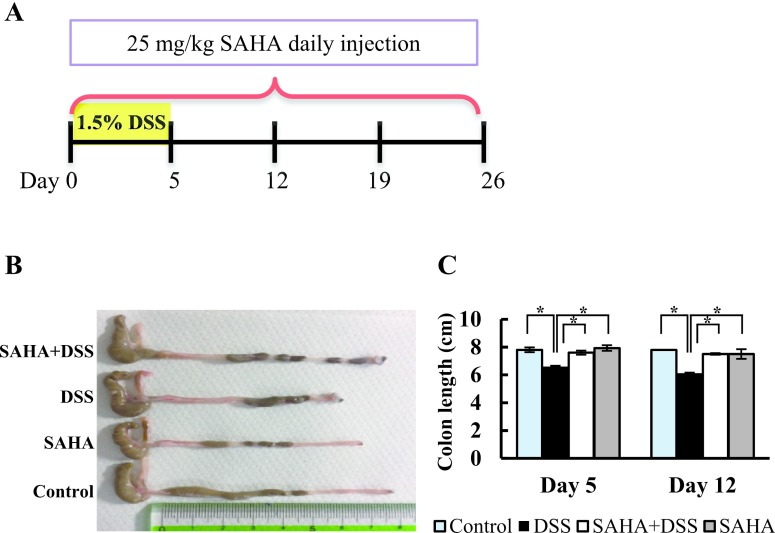
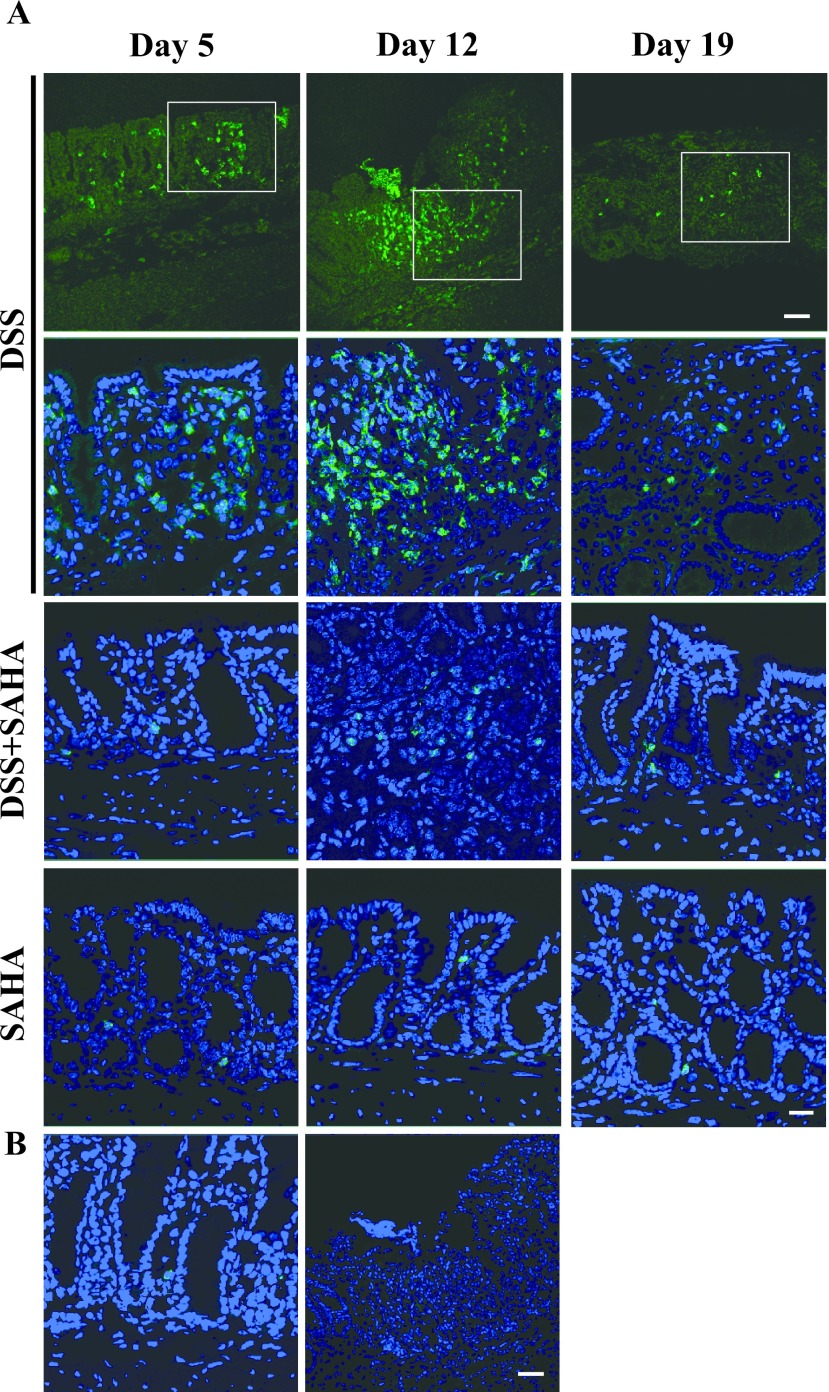
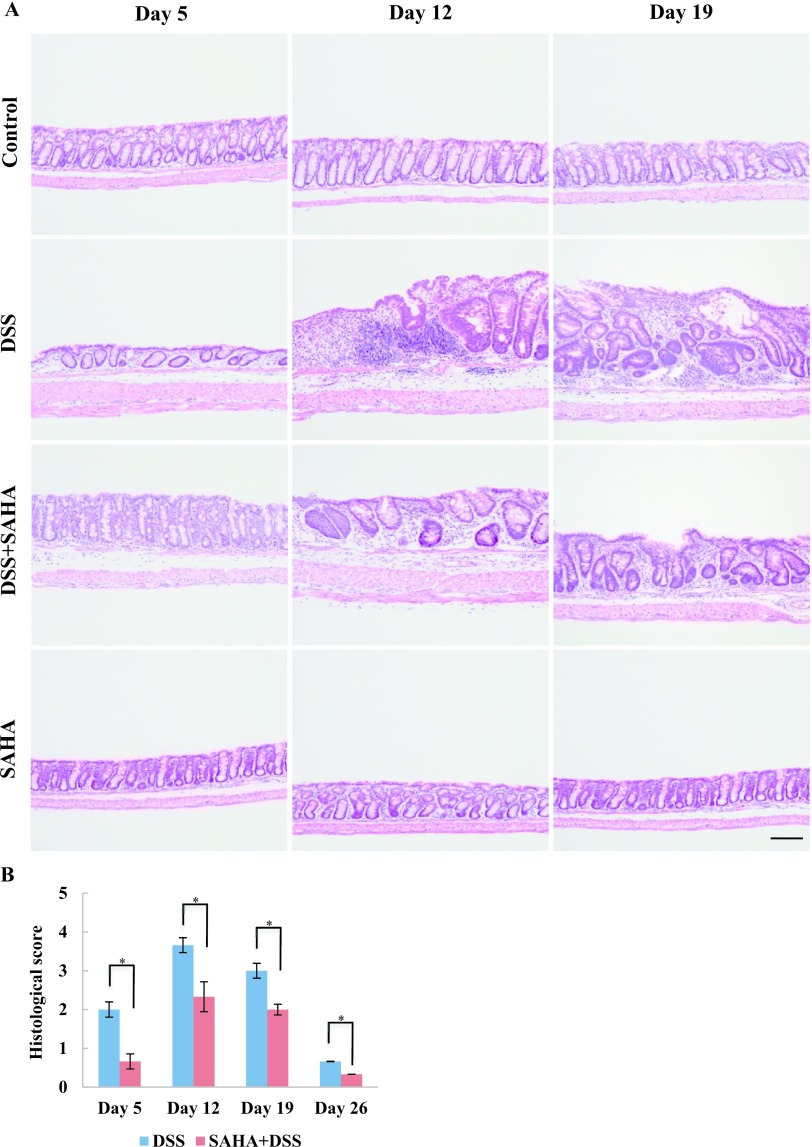
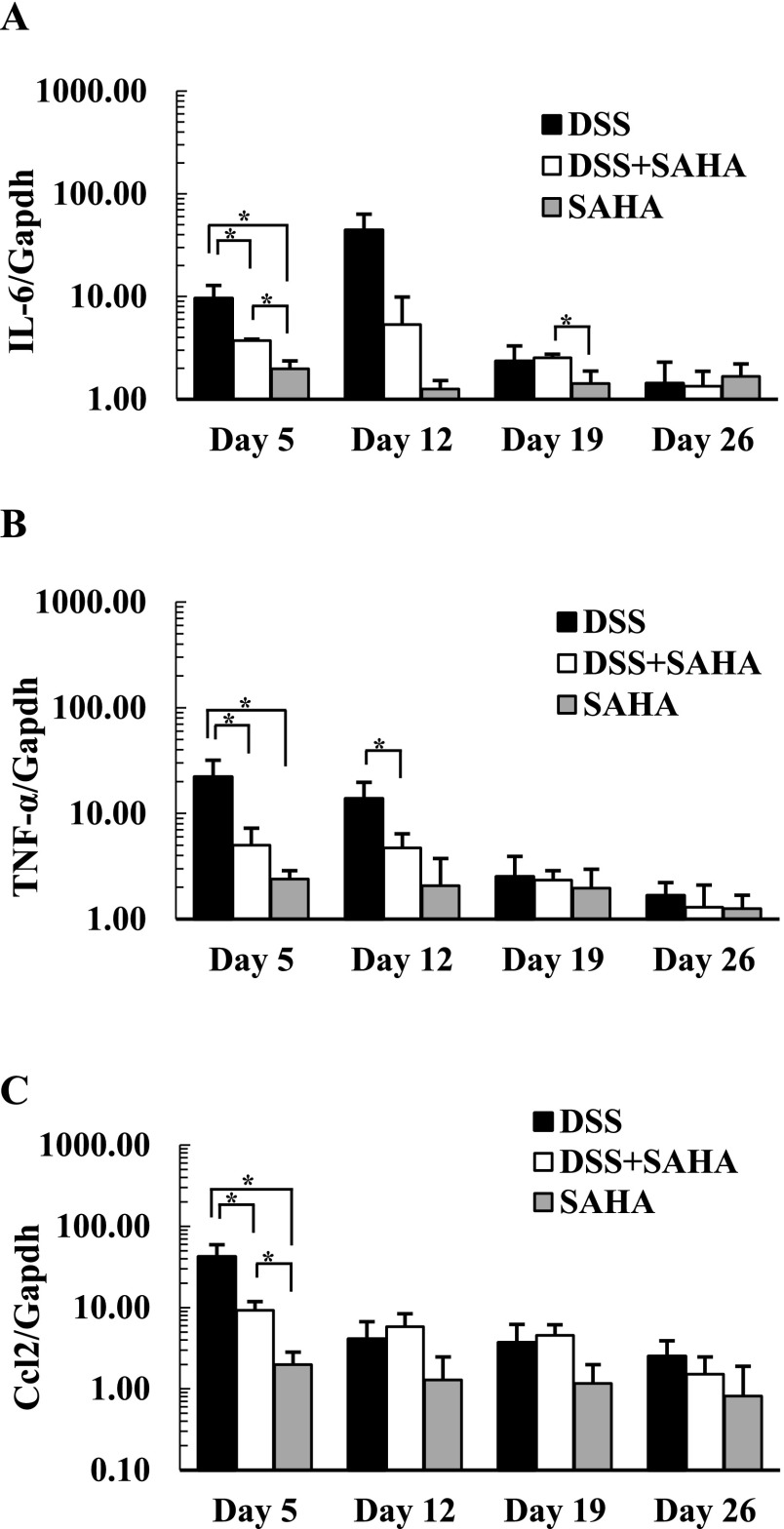
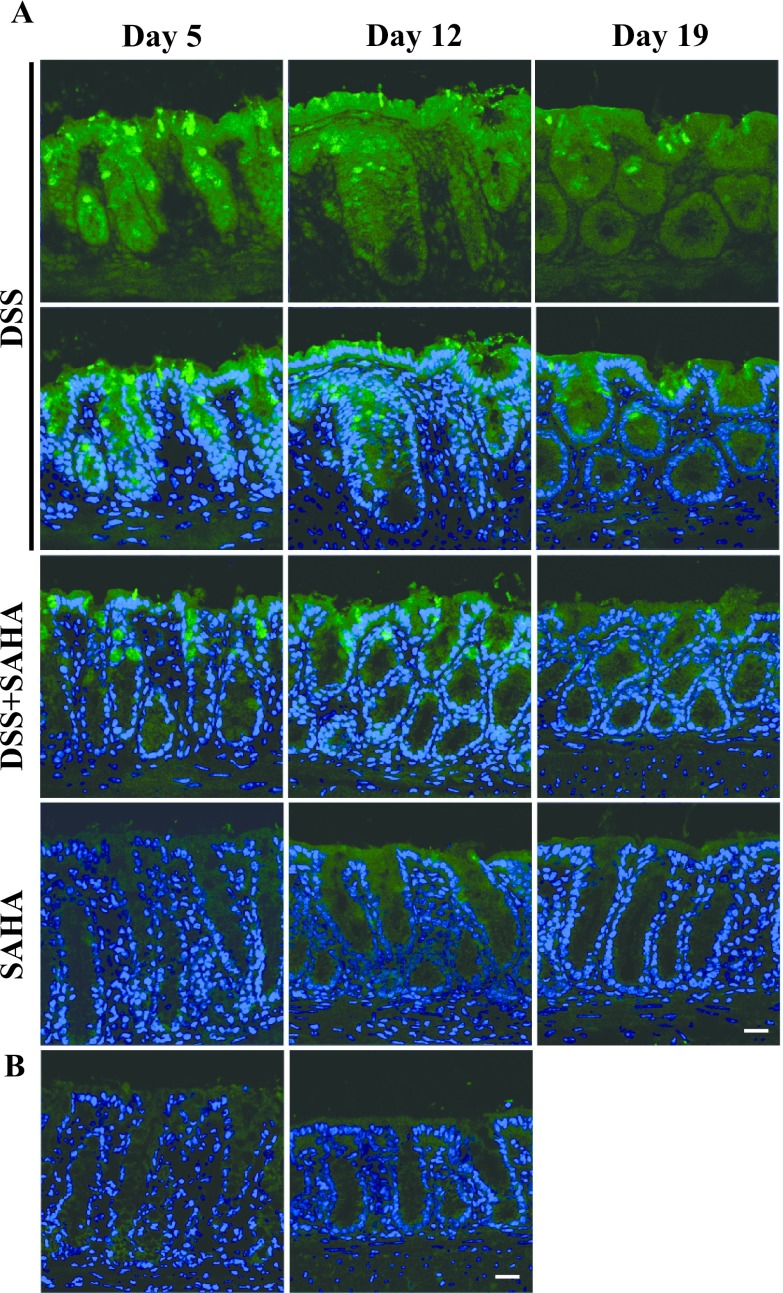
Inflammatory bowel disease (IBD) is an inflammatory disorder of the gastrointestinal tract that is caused by multiple factors, including dysfunction of the immune system and genetic and epigenetic alterations. Aberrant epigenetic regulation, especially histone acetylation, was found in biopsies from IBD patients and mouse models of colitis, suggesting that an epigenetic treatment approach may be useful for IBD therapy. Therefore, we investigated the effects of the histone deacetylase (HDAC) inhibitor, suberoylanilide hydroxamic acid (SAHA), in a mouse model of dextran sulfate sodium (DSS)-induced colitis. C57BL/6 mice were treated with 1.5% DSS for 5 days and/or SAHA (25 mg/kg BW/day) for 26 days. Levels of mRNA for the pro-inflammatory cytokines, interleukin (IL)-6 and tumor necrosis factor (TNF)-α, and the chemokines, Ccl2, were examined by qRT-PCR. CD11b, a marker of dendritic cells, macrophages, and monocytes, as well as Ccl2 expression, were examined by immunohistochemistry. IL-6, TNF-α, and Ccl2 gene expression peaked on day 5 in DSS-treated mouse colon, whereas SAHA treatment significantly decreased pro-inflammatory gene expression. Ccl2 protein expression resembled Ccl2 gene expression results. Moreover, localization of CD11b showed that migratory inflammatory cells were dramatically decreased by SAHA treatment compared to DSS-treated mouse colon. Thus, we conclude that the HDAC inhibitor, SAHA, attenuates inflammatory changes in DSS-induced colitis by suppressing local secretion of pro-inflammatory cytokines and chemokines and also by suppressing mobilization and accumulation of inflammatory cells.
炎症性肠病(IBD)是一种胃肠道炎症性疾病,由多种因素引起,包括免疫系统功能障碍以及遗传和表观遗传改变。在IBD患者的活检组织和结肠炎小鼠模型中发现了异常的表观遗传调控,尤其是组蛋白乙酰化,这表明表观遗传治疗方法可能对IBD治疗有用。因此,我们研究了组蛋白脱乙酰酶(HDAC)抑制剂辛二酰苯胺异羟肟酸(SAHA)在葡聚糖硫酸钠(DSS)诱导的结肠炎小鼠模型中的作用。将C57BL / 6小鼠用1.5%DSS处理5天和/或用SAHA(25mg / kg体重/天)处理26天。通过qRT-PCR检测促炎细胞因子白细胞介素(IL)-6和肿瘤坏死因子(TNF)-α以及趋化因子Ccl2的mRNA水平。通过免疫组织化学检查树突状细胞、巨噬细胞和单核细胞的标志物CD11b以及Ccl2的表达。在DSS处理的小鼠结肠中,IL-6、TNF-α和Ccl2基因表达在第5天达到峰值,而SAHA处理显著降低了促炎基因的表达。Ccl2蛋白表达与Ccl2基因表达结果相似。此外,CD11b的定位显示,与DSS处理的小鼠结肠相比,SAHA处理使迁移性炎症细胞显著减少。因此,我们得出结论,HDAC抑制剂SAHA通过抑制促炎细胞因子和趋化因子的局部分泌以及抑制炎症细胞的动员和积累,减轻了DSS诱导的结肠炎中的炎症变化。