Tchakounté Blandine Ngatou, Nkouayep Vanessa Rosine, Poné Josué Wabo
Laboratory of Biology and Applied Ecology, Department of Animal Biology, Faculty of Science, University of Dschang, Dschang, Cameroon.
Ethiop J Health Sci. 2018 Jan;28(1):63-72. doi: 10.4314/ejhs.v28i1.8.
Soil-transmitted helminths (STH) infections remain an important public health problem in the tropics. This study aimed to evaluate the soil contamination rate and prevalence of infestations of geohelminth among residents in Bazou.
Four hundred (400) soil samples and 182 stool specimens were collected respectively from four sites and from inhabitants aged 1 to 40 years and above in 12 households. A questionnaire was administered to evaluate risk factors of STH-infections. Soil samples were screened using sucrose centrifugal flotation method while stool specimens were analyzed using two techniques.
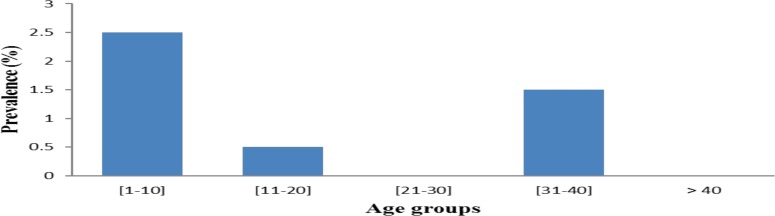
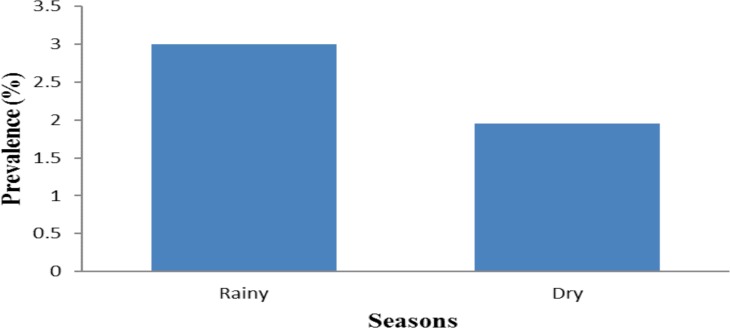
Out of the 400 soil and 182 stool samples examined, 13(3.3%) and 9(4.95%) were positive respectively after analyses. Soil contamination rates were 2%, 1% and 0.3% for Ascaris, Trichuris and hookworm eggs respectively while 4.95% of stool samples were positive to one species nematode (Ascaris lumbricoides). The soil contamination rate observed (5%) in the rainy season was significantly different (p>0.05) from the one observed (1.5%) in the dry season. Irrespectively of the season, the most frequent parasite identified was Ascaris spp. Soils around houses were more contaminated 6(12%) as compared to those collected from markets 5(10%) and roads 2(4%) while those around classrooms were not contaminated. Participants in the age group of 1-10 were more infected. Factors such as no hand washing habit and untrimmed finger nails were found to be important risk factors for STH.
These results suggest the necessity to promote measures that could help to reduce STH infections.
土壤传播的蠕虫(STH)感染在热带地区仍然是一个重要的公共卫生问题。本研究旨在评估巴祖居民中土壤污染率和土源性蠕虫感染率。
分别从四个地点以及12户1至40岁及以上居民中采集了400份土壤样本和182份粪便标本。发放问卷以评估STH感染的风险因素。土壤样本采用蔗糖离心浮选法进行筛查,而粪便标本则采用两种技术进行分析。
在检测的400份土壤样本和182份粪便样本中,分析后分别有13份(3.3%)和9份(4.95%)呈阳性。蛔虫、鞭虫和钩虫卵的土壤污染率分别为2%、1%和0.3%,而4.95%的粪便样本对一种线虫(蛔虫)呈阳性。雨季观察到的土壤污染率(5%)与旱季观察到的(1.5%)有显著差异(p>0.05)。无论季节如何,最常见的寄生虫是蛔虫属。房屋周围的土壤污染更严重,有6份(12%),相比之下,从市场采集的有5份(10%),道路采集的有2份(4%),而教室周围采集的未受污染。1至10岁年龄组的参与者感染率更高。发现没有洗手习惯和指甲未修剪等因素是STH的重要风险因素。
这些结果表明有必要推广有助于减少STH感染的措施。