Department of Physiology and Dental Research Institute, Seoul National University School of Dentistry, Seoul, 03080, Republic of Korea.
Exp Mol Med. 2018 Apr 9;50(4):1-9. doi: 10.1038/s12276-018-0029-x.
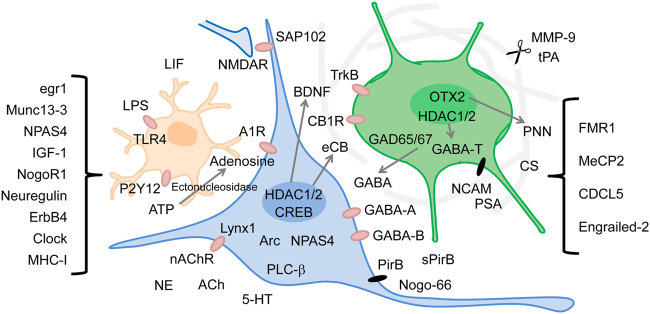
Animals, including humans, optimize their primary sensory cortex through the use of input signals, which allow them to adapt to the external environment and survive. The time window at the beginning of life in which external input signals are connected sensitively and strongly to neural circuit optimization is called the critical period. The critical period has attracted the attention of many neuroscientists due to the rapid activity-/experience-dependent circuit development that occurs, which is clearly differentiated from other developmental time periods and brain areas. This process involves various types of GABAergic inhibitory neurons, the extracellular matrix, neuromodulators, transcription factors, and neurodevelopmental factors. In this review, I discuss recent progress regarding the biological nature of the critical period that contribute to a better understanding of brain development.
动物(包括人类)通过使用输入信号来优化其主要感觉皮层,使它们能够适应外部环境并生存。生命早期的时间窗口中,外部输入信号敏感而强烈地连接到神经回路优化,这个时间窗口被称为关键期。由于快速的活动/经验依赖性回路发育,关键期引起了许多神经科学家的关注,这种发育与其他发育时期和脑区明显不同。这个过程涉及各种类型的 GABA 能抑制性神经元、细胞外基质、神经调质、转录因子和神经发育因子。在这篇综述中,我讨论了关键期的生物学性质的最新进展,这有助于更好地理解大脑发育。