Sathyamoorthi Shyam, Banerjee Shibdas, Du Bois J, Burns Noah Z, Zare Richard N
Stanford University , Department of Chemistry , 333 Campus Drive , Stanford , CA 94305-4401 , USA . Email:
Indian Institute of Science Education and Research Tirupati , Karakambadi Road , Tirupati-517507 , India.
Chem Sci. 2017 Nov 20;9(1):100-104. doi: 10.1039/c7sc04611a. eCollection 2018 Jan 7.
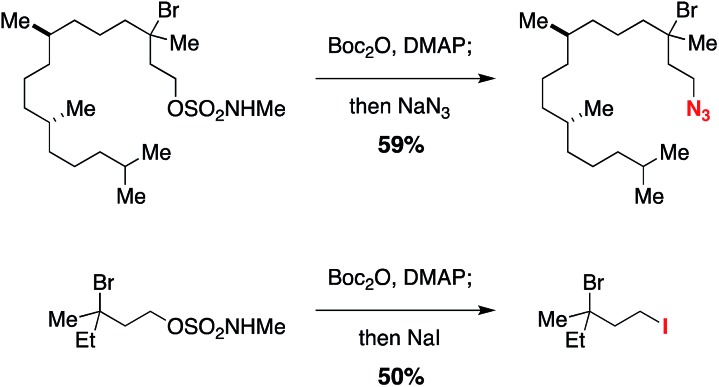
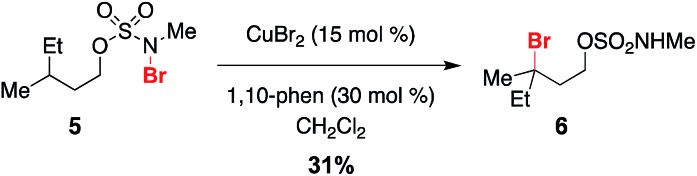
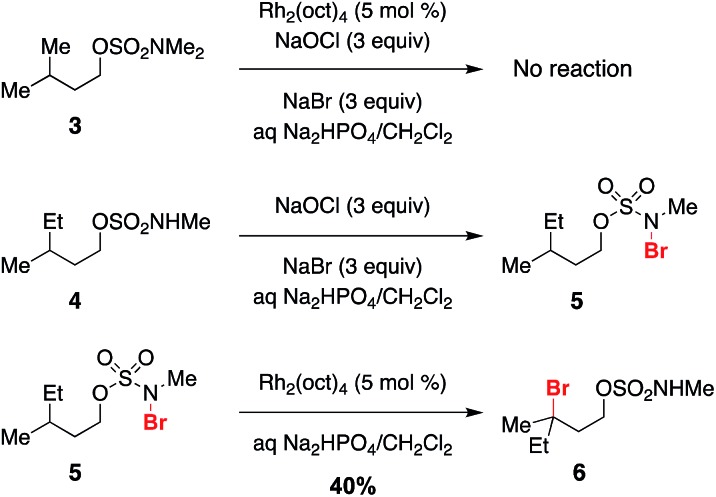
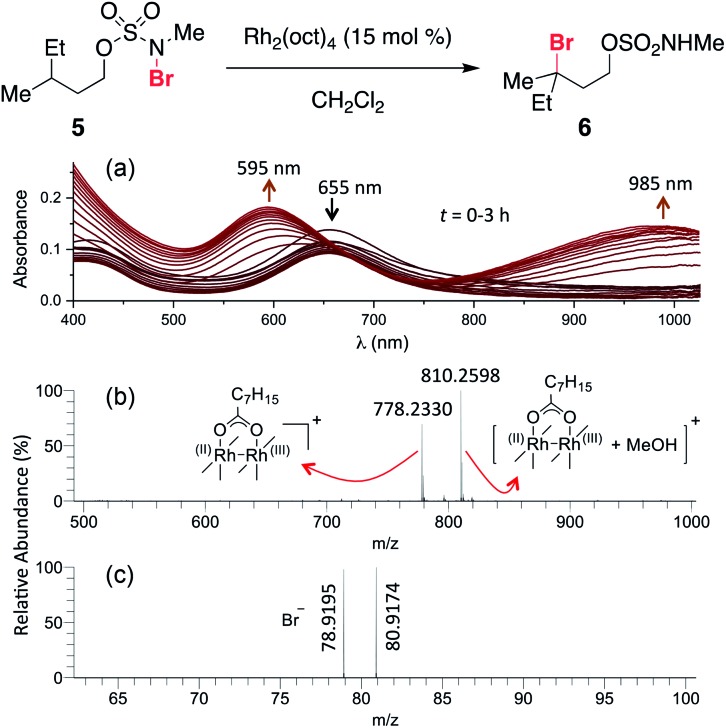
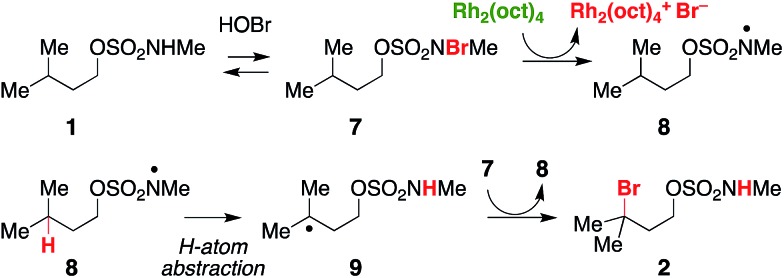
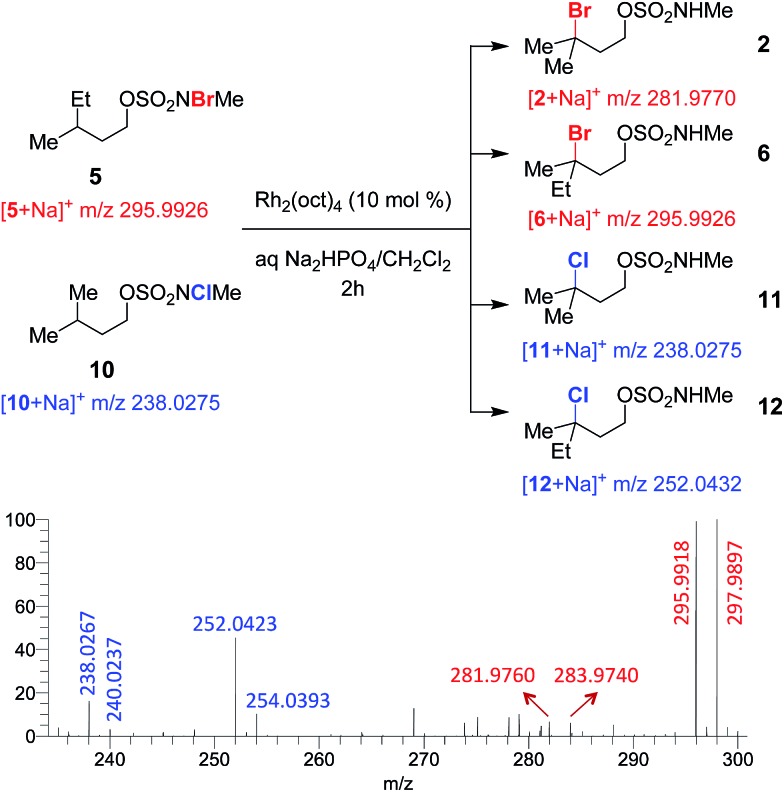
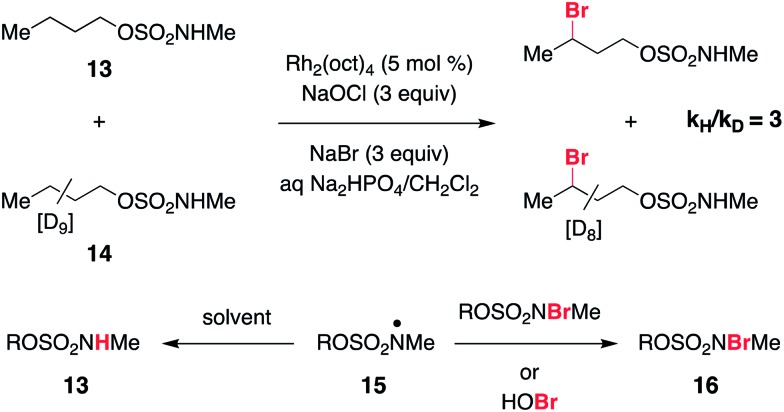
A method for converting sp C-H to C-Br bonds using an -methyl sulfamate directing group is described. The reaction employs Rh(oct) and a mixture of NaBr and NaOCl and is performed in aqueous solution open to air. For all sulfamates examined, oxidation occurs with high selectivity at the γ-carbon, affording a uniquely predictable method for C-H bond halogenation. Results from a series of mechanistic experiments suggest that substrate oxidation likely proceeds by a radical chain process. Initial formation of an -halogenated sulfamate followed by Rh-mediated homolysis generates an N-centered radical, which serves as the active oxidant.
描述了一种使用α-甲基氨基磺酸酯导向基团将sp C-H转化为C-Br键的方法。该反应使用Rh(oct)以及NaBr和NaOCl的混合物,在敞口于空气的水溶液中进行。对于所有研究的氨基磺酸酯,氧化在γ-碳上具有高选择性地发生,为C-H键卤化提供了一种独特的可预测方法。一系列机理实验的结果表明,底物氧化可能通过自由基链过程进行。首先形成α-卤代氨基磺酸酯,然后由Rh介导的均裂产生一个以N为中心的自由基,该自由基作为活性氧化剂。