Daehn Ilse Sofia
Division of Nephrology, Department of Medicine, Icahn School of Medicine at Mount Sinai, The Charles Bronfman Institute for Personalized Medicine, New York City, NY, United States.
Front Med (Lausanne). 2018 Mar 23;5:76. doi: 10.3389/fmed.2018.00076. eCollection 2018.
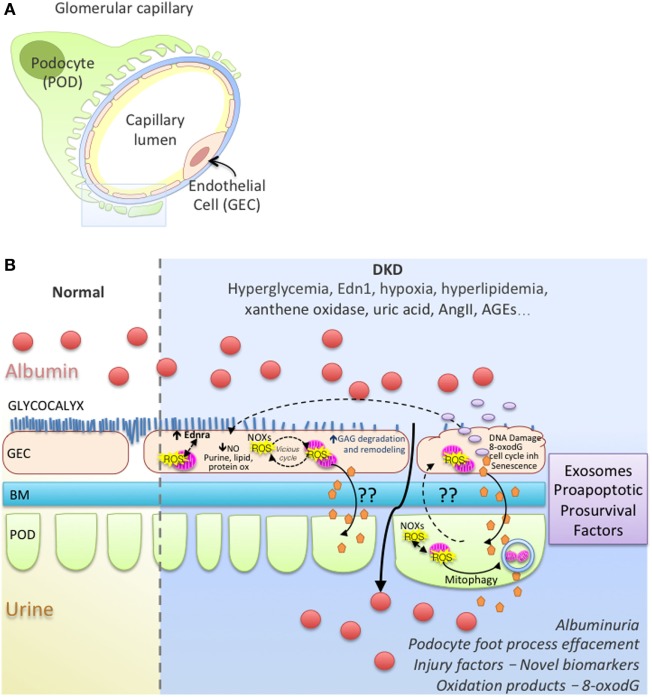
Diabetic kidney disease (DKD) is one of the major causes of morbidity and mortality in diabetic patients and also the leading single cause of end-stage renal disease in the United States. A large proportion of diabetic patients develop DKD and others don't, even with comparable blood glucose levels, indicating a significant genetic component of disease susceptibility. The glomerulus is the primary site of diabetic injury in the kidney, glomerular hypertrophy and podocyte depletion are glomerular hallmarks of progressive DKD, and the degree of podocyte loss correlates with severity of the disease. We know that chronic hyperglycemia contributes to both microvascular and macrovascular complications, as well as podocyte injury. We are beginning to understand the role of glomerular endothelial injury, as well as the involvement of reactive oxygen species and mitochondrial stress, which play a direct role in DKD and in other diabetic complications. There is, however, a gap in our knowledge that links genetic susceptibility to early molecular mechanisms and proteinuria in DKD. Emerging research that explores glomerular cell's specific responses to diabetes and cell cross-talk will provide mechanistic clues that underlie DKD and provide novel avenues for therapeutic intervention.
糖尿病肾病(DKD)是糖尿病患者发病和死亡的主要原因之一,也是美国终末期肾病的首要单一病因。很大一部分糖尿病患者会患上DKD,而其他患者即使血糖水平相当也不会患病,这表明疾病易感性存在显著的遗传因素。肾小球是肾脏中糖尿病损伤的主要部位,肾小球肥大和足细胞耗竭是进行性DKD的肾小球特征,足细胞丢失的程度与疾病严重程度相关。我们知道,慢性高血糖会导致微血管和大血管并发症以及足细胞损伤。我们开始了解肾小球内皮损伤的作用,以及活性氧和线粒体应激的参与情况,它们在DKD和其他糖尿病并发症中起直接作用。然而,在将遗传易感性与DKD的早期分子机制和蛋白尿联系起来方面,我们的知识存在空白。探索肾小球细胞对糖尿病的特异性反应以及细胞间相互作用的新兴研究将提供DKD潜在机制的线索,并为治疗干预提供新途径。