Airas Laura, Nylund Marjo, Rissanen Eero
Division of Clinical Neurosciences, Turku University Hospital and University of Turku, Turku, Finland.
Turku PET Centre, Turku University Hospital and University of Turku, Turku, Finland.
Front Neurol. 2018 Mar 26;9:181. doi: 10.3389/fneur.2018.00181. eCollection 2018.
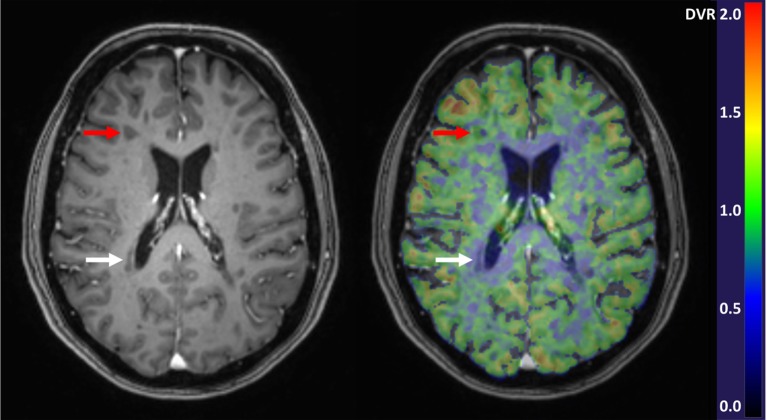
Understanding the mechanisms underlying progression in multiple sclerosis (MS) is one of the key elements contributing to the identification of appropriate therapeutic targets for this under-managed condition. In addition to plaque-related focal inflammatory pathology typical for relapsing remitting MS there are, in progressive MS, widespread diffuse alterations in brain areas outside the focal lesions. This diffuse pathology is tightly related to microglial activation and is co-localized with signs of neurodegeneration. Microglia are brain-resident cells of the innate immune system and overactivation of microglia is associated with several neurodegenerative diseases. Understanding the role of microglial activation in relation to developing neurodegeneration and disease progression may provide a key to developing therapies to target progressive MS. 18-kDa translocator protein (TSPO) is a mitochondrial molecule upregulated in microglia upon their activation. Positron emission tomography (PET) imaging using TSPO-binding radioligands provides a method to assess microglial activation in patients . In this , we summarize the current status of TSPO imaging in the field of MS. In addition, the review discusses new insights into the potential use of this method in treatment trials and in clinical assessment of progressive MS.
了解多发性硬化症(MS)进展的潜在机制是为这种治疗不足的疾病确定合适治疗靶点的关键因素之一。除了复发缓解型MS典型的与斑块相关的局灶性炎症病理外,在进展型MS中,局灶性病变以外的脑区还存在广泛的弥漫性改变。这种弥漫性病理与小胶质细胞活化密切相关,并与神经退行性变的迹象共定位。小胶质细胞是固有免疫系统中驻留在大脑中的细胞,小胶质细胞的过度活化与多种神经退行性疾病有关。了解小胶质细胞活化在神经退行性变发展和疾病进展中的作用可能为开发针对进展型MS的治疗方法提供关键。18 kDa转位蛋白(TSPO)是一种线粒体分子,在小胶质细胞活化时上调。使用TSPO结合放射性配体的正电子发射断层扫描(PET)成像提供了一种评估患者小胶质细胞活化的方法。在此,我们总结了MS领域中TSPO成像的现状。此外,本综述还讨论了该方法在治疗试验和进展型MS临床评估中的潜在应用的新见解。