Fekete Rebeka, Simats Alba, Bíró Eduárd, Pósfai Balázs, Cserép Csaba, Schwarcz Anett D, Szabadits Eszter, Környei Zsuzsanna, Tóth Krisztina, Fichó Erzsébet, Szalma János, Vida Sára, Kellermayer Anna, Dávid Csaba, Acsády László, Kontra Levente, Silvestre-Roig Carlos, Moldvay Judit, Fillinger János, Csikász-Nagy Attila, Hortobágyi Tibor, Liesz Arthur, Benkő Szilvia, Dénes Ádám
Momentum Laboratory of Neuroimmunology, HUN-REN Institute of Experimental Medicine, Budapest, Hungary.
Institute for Stroke and Dementia Research, LMU University Hospital, LMU Munich, Munich, Germany.
Nat Neurosci. 2025 Mar;28(3):558-576. doi: 10.1038/s41593-025-01871-z. Epub 2025 Mar 6.
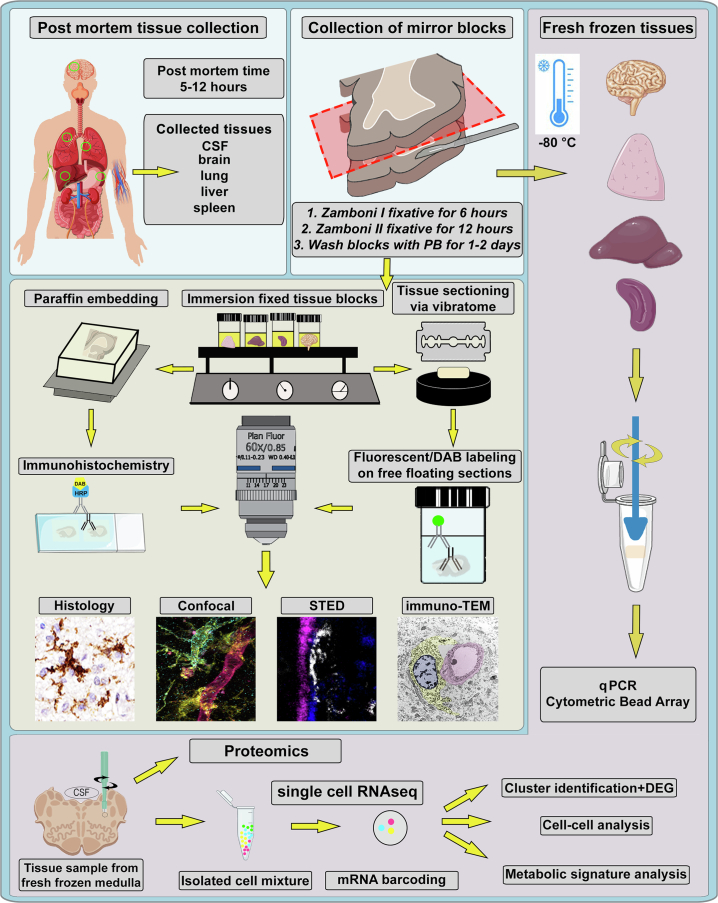
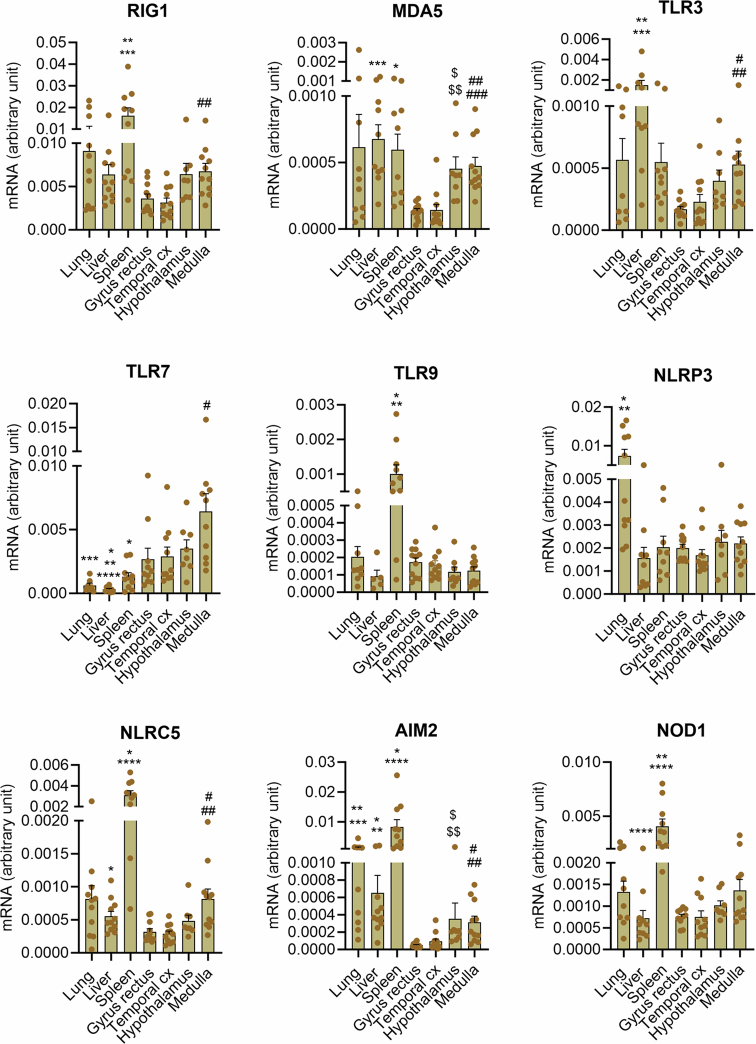
COVID-19 is associated with diverse neurological abnormalities, but the underlying mechanisms are unclear. We hypothesized that microglia, the resident immune cells of the brain, are centrally involved in this process. To study this, we developed an autopsy platform allowing the integration of molecular anatomy, protein and mRNA datasets in postmortem mirror blocks of brain and peripheral organ samples from cases of COVID-19. We observed focal loss of microglial P2Y12R, CX3CR1-CX3CL1 axis deficits and metabolic failure at sites of virus-associated vascular inflammation in severely affected medullary autonomic nuclei and other brain areas. Microglial dysfunction is linked to mitochondrial injury at sites of excessive synapse and myelin phagocytosis and loss of glutamatergic terminals, in line with proteomic changes of synapse assembly, metabolism and neuronal injury. Furthermore, regionally heterogeneous microglial changes are associated with viral load and central and systemic inflammation related to interleukin (IL)-1 or IL-6 via virus-sensing pattern recognition receptors and inflammasomes. Thus, SARS-CoV-2-induced inflammation might lead to a primarily gliovascular failure in the brain, which could be a common contributor to diverse COVID-19-related neuropathologies.
新型冠状病毒肺炎(COVID-19)与多种神经功能异常相关,但潜在机制尚不清楚。我们推测,大脑中的常驻免疫细胞——小胶质细胞在这一过程中起核心作用。为了研究这一点,我们开发了一个尸检平台,该平台能够整合COVID-19病例的脑和外周器官样本的死后镜像块中的分子解剖学、蛋白质和mRNA数据集。我们观察到,在严重受影响的延髓自主神经核和其他脑区,病毒相关血管炎症部位存在小胶质细胞P2Y12R局灶性缺失、CX3CR1-CX3CL1轴缺陷和代谢衰竭。小胶质细胞功能障碍与过度突触和髓鞘吞噬部位的线粒体损伤以及谷氨酸能终末的丧失有关,这与突触组装、代谢和神经元损伤的蛋白质组学变化一致。此外,通过病毒传感模式识别受体和炎性小体,区域异质性小胶质细胞变化与病毒载量以及与白细胞介素(IL)-1或IL-6相关的中枢和全身炎症有关。因此,严重急性呼吸综合征冠状病毒2(SARS-CoV-2)诱导的炎症可能导致大脑中主要的神经胶质血管功能衰竭,这可能是多种COVID-19相关神经病理学的共同原因。