Yao Lan, Yoo Chang Geun, Meng Xianzhi, Li Mi, Pu Yunqiao, Ragauskas Arthur J, Yang Haitao
1School of Pulp & Paper Engineering, Hubei University of Technology, Wuhan, 430068 China.
2Hubei Provincial Key Laboratory of Green Materials for Light Industry, Hubei University of Technology, Wuhan, 430068 China.
Biotechnol Biofuels. 2018 Apr 4;11:96. doi: 10.1186/s13068-018-1087-y. eCollection 2018.
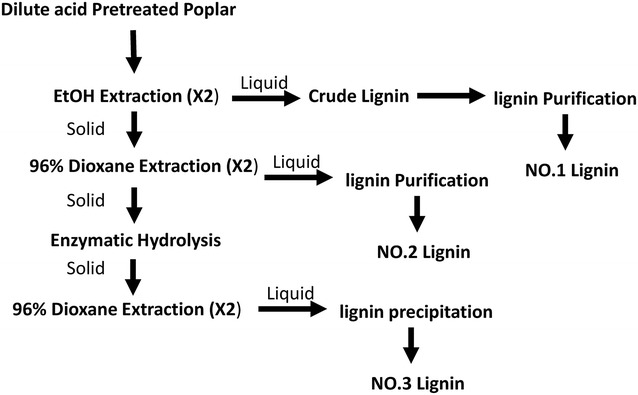
Cellulase adsorption to lignin is considered a cost barrier for bioethanol production; however, its detailed association mechanism is still not fully understood. In this study, two natural poplar variants with high and low sugar release performance were selected as the low and high recalcitrant raw materials (named and , respectively). Three different lignin fractions were extracted using ethanol, followed by -dioxane and then cellulase treatment from the dilute acid pretreated poplar solids (fraction 1, 2, and 3, respectively).
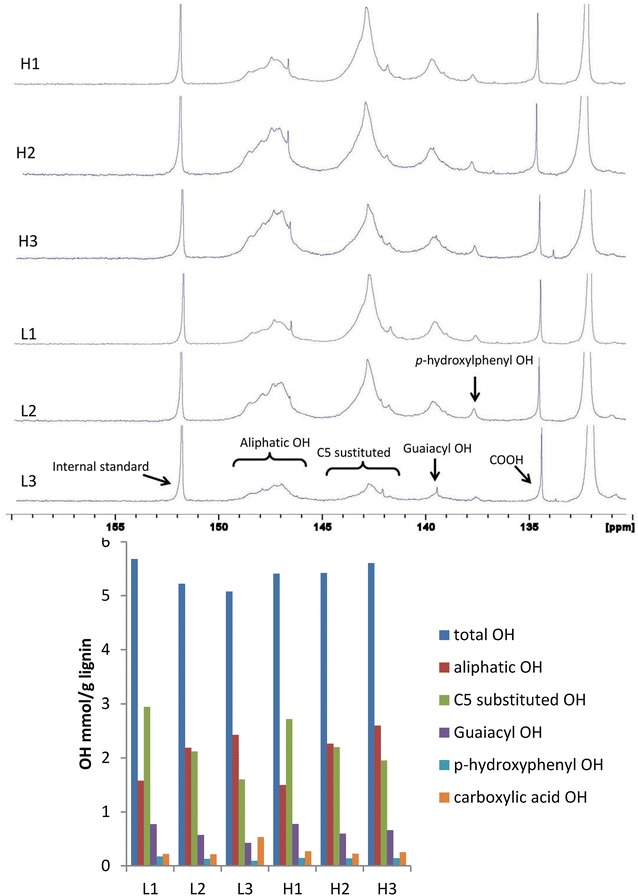
Each lignin fraction had different physicochemical properties. Ethanol-extracted lignin had the lowest weight average molecular weight, while the molecular weights for the other two lignin fractions were similar. P NMR analysis revealed that lignin fraction with higher molecular weight contained more aliphatic hydroxyl groups and less phenolic hydroxyl groups. Semi-quantitative analysis by 2D HSQC NMR indicated that the lignin fractions isolated from the natural variants had different contents of syringyl (S), guaiacyl (G) and interunit linkages. Lignin extracted by ethanol contained the largest amount of S units, the smallest amounts of G and -hydroxybenzoate (PB) subunits, while the contents of these lignin subunits in the other two lignin fractions were similar. The lignin fraction obtained after cellulase treatment was primarily comprised of β--4 linkages with small amounts of β-5 and β-β linkages. The binding strength of these three lignin fractions obtained by Langmuir equations were in the order of > > for the low recalcitrance poplar and > > for the high recalcitrance poplar.
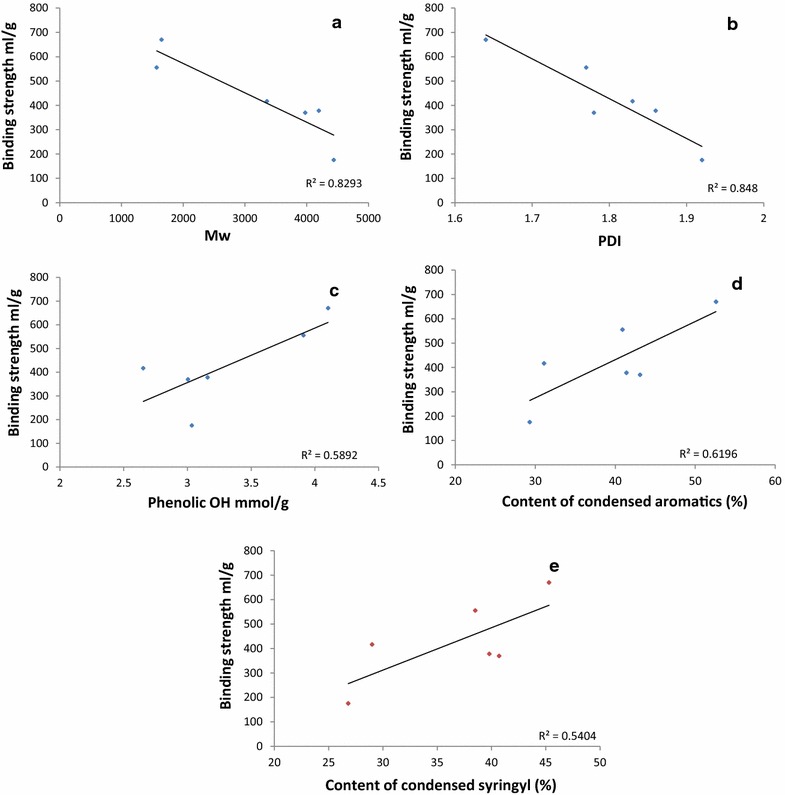
Overall, adsorption ability of lignin was correlated with the sugar release of poplar. Structural features of lignin were associated with its binding to CBH. For natural poplar variants, lignin fractions with lower molecular weight and polydispersity index (PDI) exhibited more CBH adsorption ability. Lignins with more phenolic hydroxyl groups had higher CBH binding strength. It was also found that lignin fractions with more condensed aromatics adsorbed more CBH likely attributed to stronger hydrophobic interactions.
纤维素酶吸附到木质素上被认为是生物乙醇生产的成本障碍;然而,其详细的结合机制仍未完全了解。在本研究中,选择了两种具有高糖释放性能和低糖释放性能的天然杨树变种作为低抗解聚原料和高抗解聚原料(分别命名为 和 )。使用乙醇提取三种不同的木质素级分,然后用1,4 - 二氧六环提取,接着对稀酸预处理的杨树固体进行纤维素酶处理(分别为级分1、2和3)。
每个木质素级分具有不同的物理化学性质。乙醇提取的木质素具有最低的重均分子量,而其他两种木质素级分的分子量相似。磷核磁共振分析表明,分子量较高的木质素级分含有更多的脂肪族羟基和更少的酚羟基。二维异核单量子相干核磁共振的半定量分析表明,从天然变种中分离出的木质素级分具有不同的紫丁香基(S)、愈创木基(G)和单元间连接含量。乙醇提取的木质素含有最大量的S单元,最小量的G和对羟基苯甲酸酯(PB)亚基,而其他两种木质素级分中这些木质素亚基的含量相似。纤维素酶处理后得到的木质素级分主要由β - O - 4连接组成,并含有少量的β - 5和β - β连接。通过朗缪尔方程得到的这三种木质素级分的结合强度对于低抗解聚杨树为 > > ,对于高抗解聚杨树为 > > 。
总体而言,木质素的吸附能力与杨树的糖释放相关。木质素的结构特征与其与纤维二糖水解酶(CBH)的结合有关。对于天然杨树变种,分子量和多分散指数(PDI)较低的木质素级分表现出更强的CBH吸附能力。具有更多酚羟基的木质素具有更高的CBH结合强度。还发现具有更多稠合芳烃的木质素级分吸附更多的CBH,这可能归因于更强的疏水相互作用。