Department of Physiology and Cell Biology, University of Nevada School of Medicine, Reno, NV 89557.
Department of Pharmacology, University of Vermont, Burlington, VT 05405.
eNeuro. 2018 Apr 6;5(2). doi: 10.1523/ENEURO.0080-18.2018. eCollection 2018 Mar-Apr.
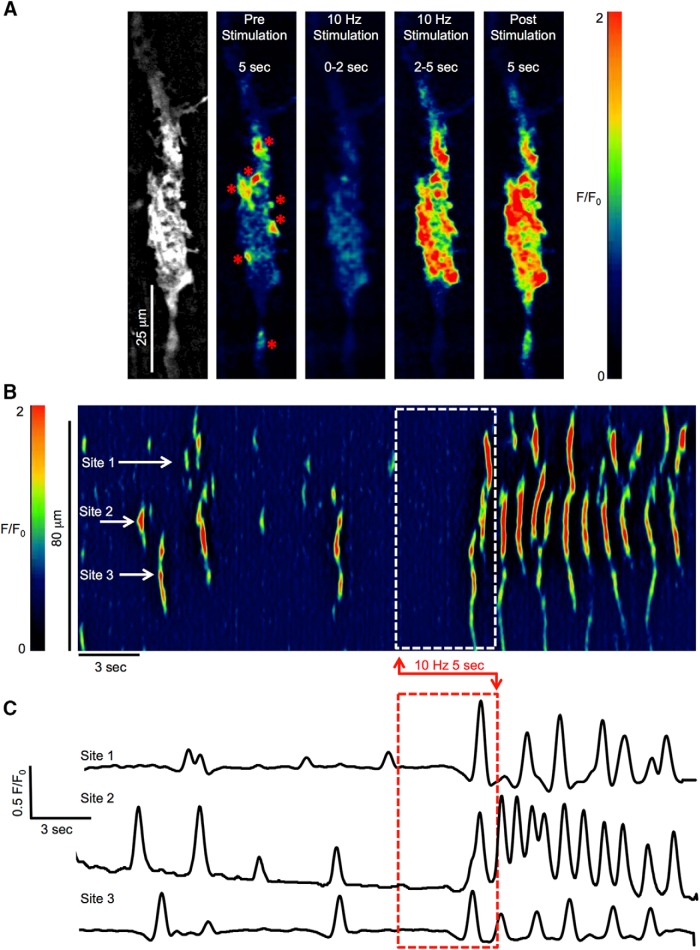
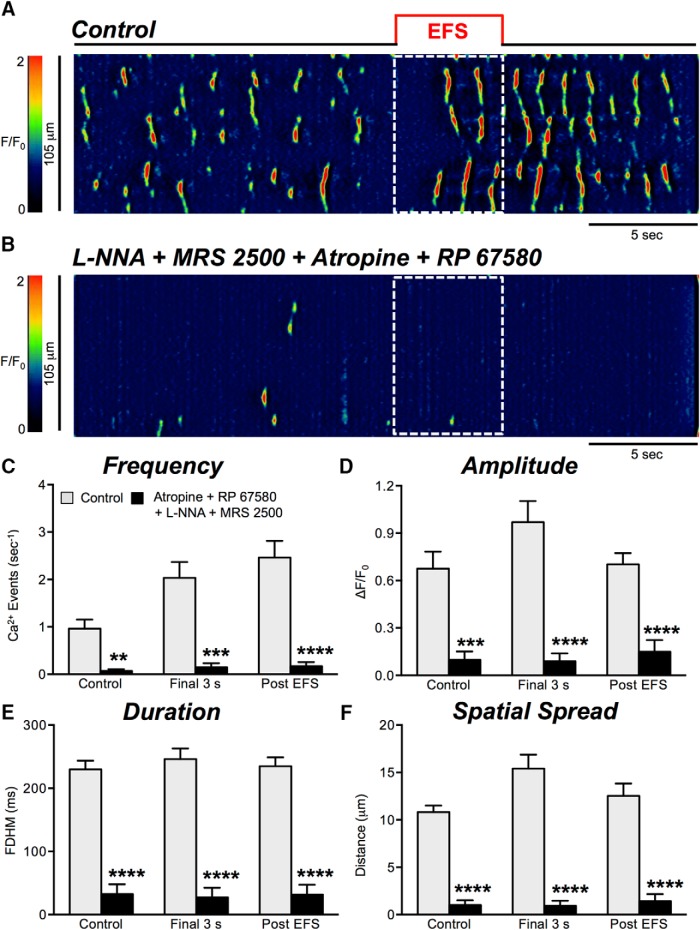
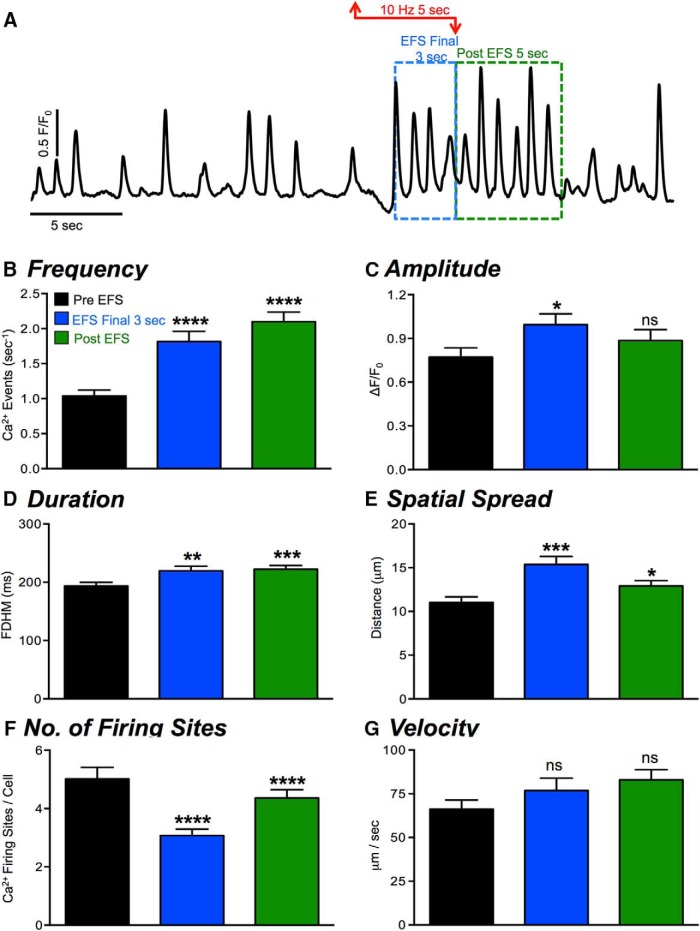
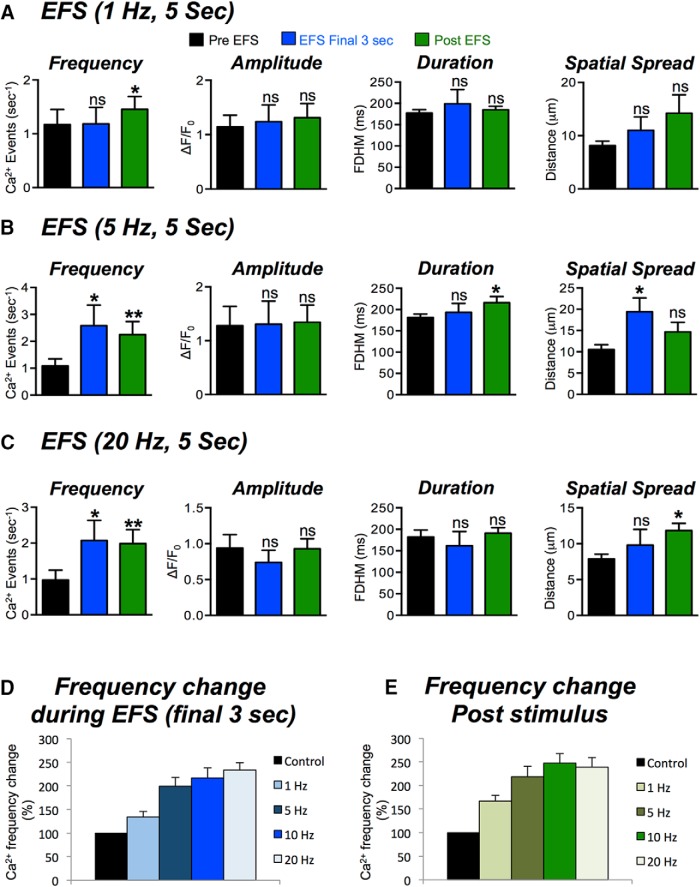
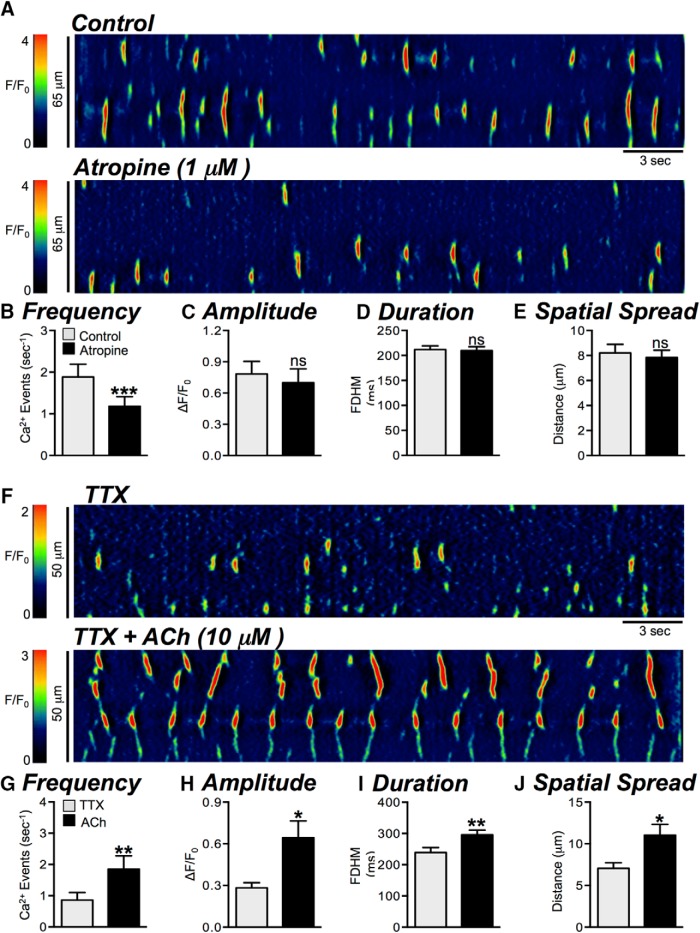
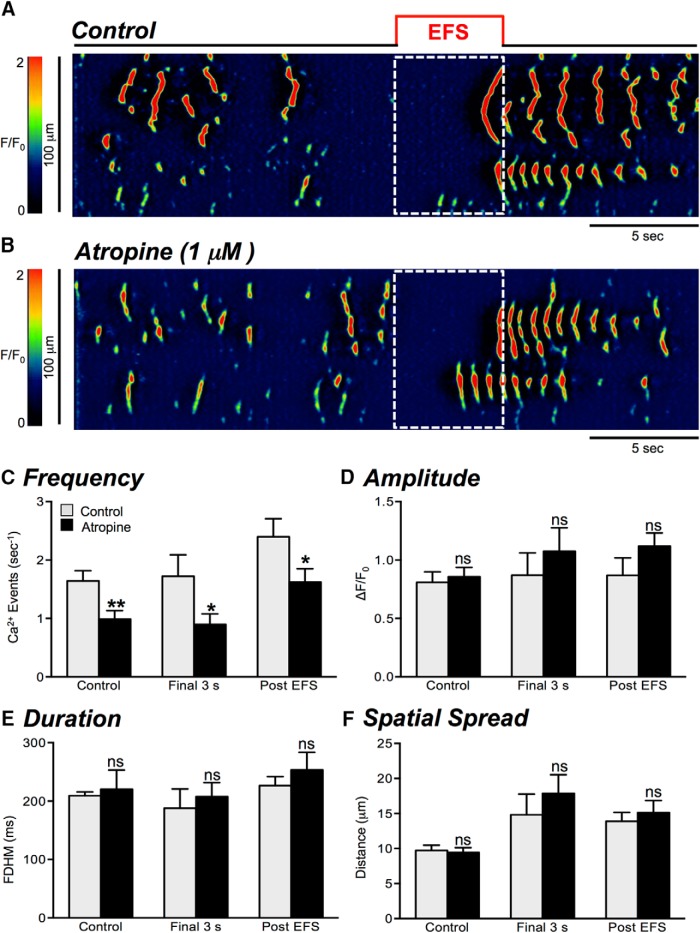
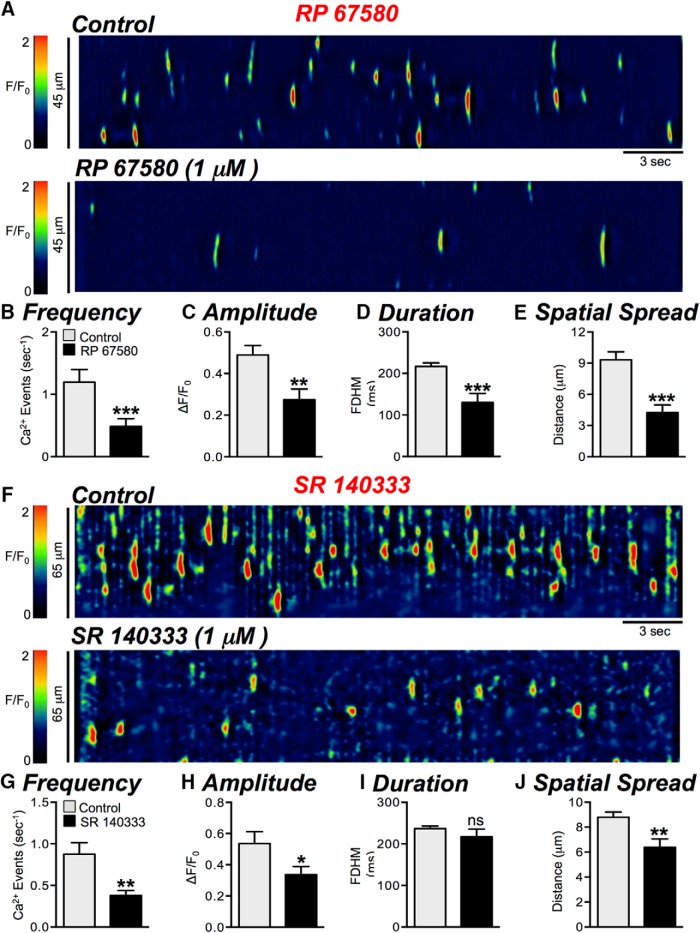
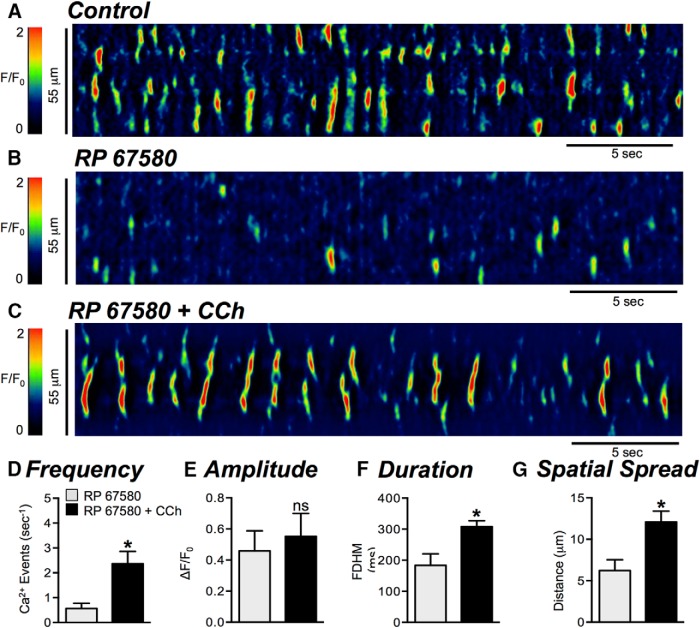
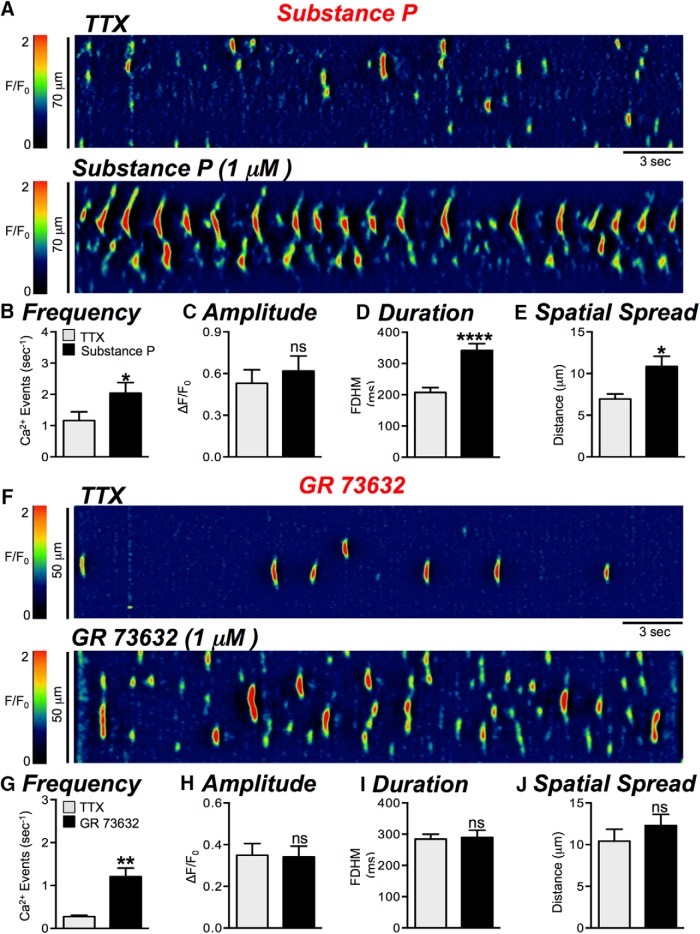
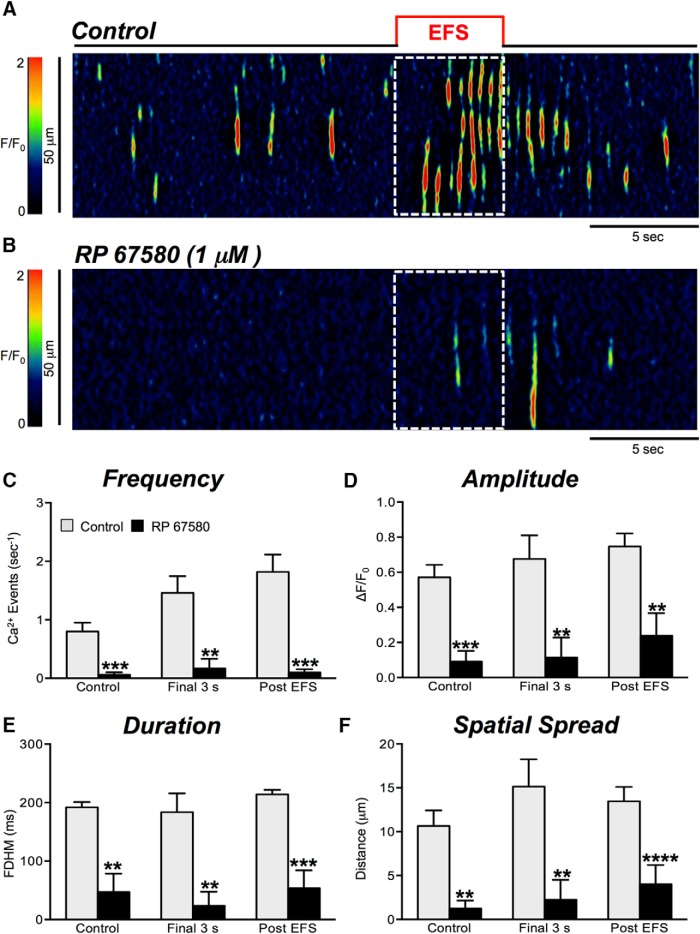
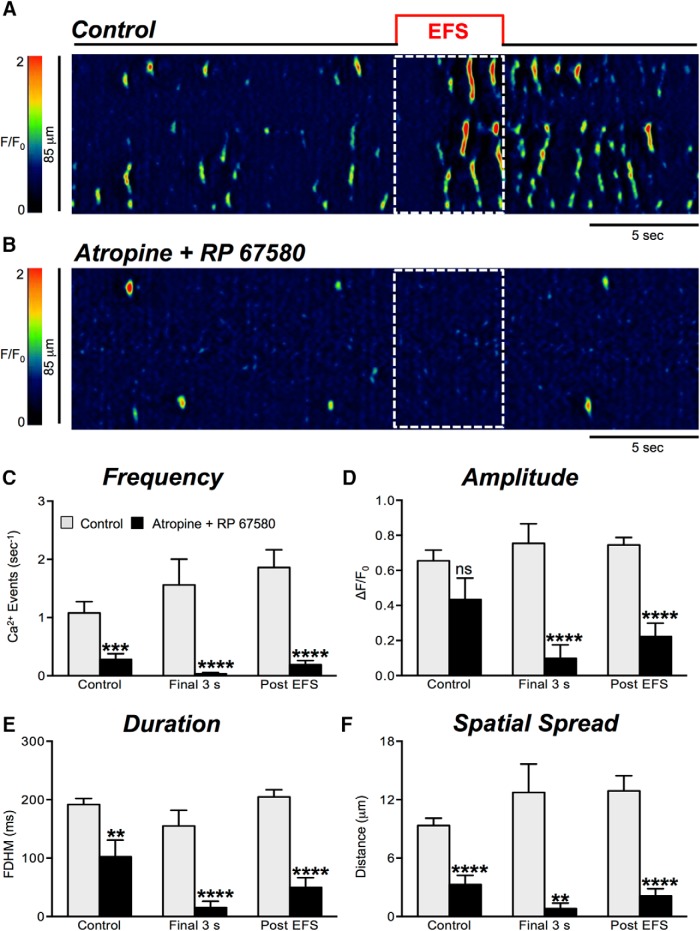
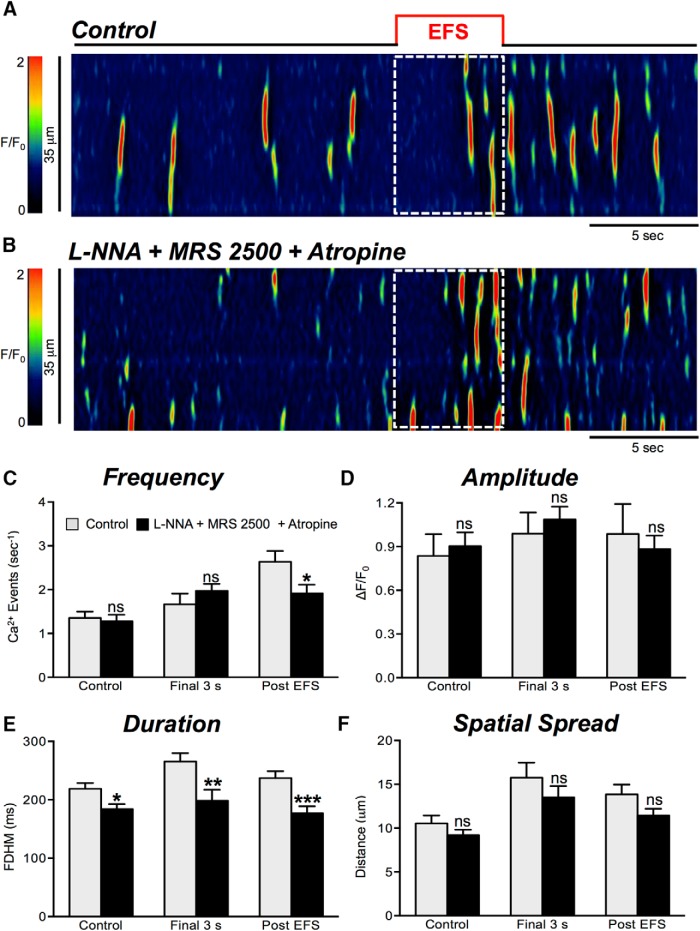
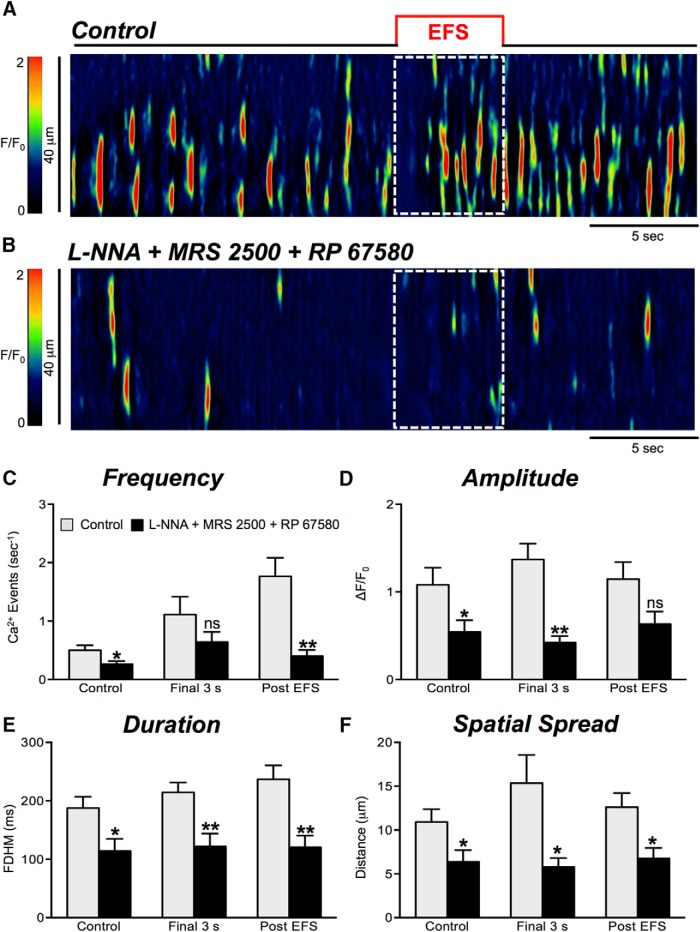
Interstitial cells of Cajal (ICC) regulate smooth muscle excitability and motility in the gastrointestinal (GI) tract. ICC in the deep muscular plexus (ICC-DMP) of the small intestine are aligned closely with varicosities of enteric motor neurons and thought to transduce neural responses. ICC-DMP generate Ca transients that activate Ca activated Cl channels and generate electrophysiological responses. We tested the hypothesis that excitatory neurotransmitters regulate Ca transients in ICC-DMP as a means of regulating intestinal muscles. High-resolution confocal microscopy was used to image Ca transients in ICC-DMP within murine small intestinal muscles with cell-specific expression of GCaMP3. Intrinsic nerves were stimulated by electrical field stimulation (EFS). ICC-DMP exhibited ongoing Ca transients before stimuli were applied. EFS caused initial suppression of Ca transients, followed by escape during sustained stimulation, and large increases in Ca transients after cessation of stimulation. Basal Ca activity and the excitatory phases of Ca responses to EFS were inhibited by atropine and neurokinin 1 receptor (NK1) antagonists, but not by NK2 receptor antagonists. Exogenous ACh and substance P (SP) increased Ca transients, atropine and NK1 antagonists decreased Ca transients. Neurokinins appear to be released spontaneously (tonic excitation) in small intestinal muscles and are the dominant excitatory neurotransmitters. Subcellular regulation of Ca release events in ICC-DMP may be a means by which excitatory neurotransmission organizes intestinal motility patterns.
Cajal 间质细胞(ICC)调节胃肠道(GI)中的平滑肌兴奋性和运动。小肠深部肌丛中的 ICC(ICC-DMP)与肠运动神经元的轴突密切排列,并被认为能传递神经反应。ICC-DMP 产生 Ca 瞬变,激活 Ca 激活的 Cl 通道并产生电生理反应。我们检验了这样一个假设,即兴奋性神经递质调节 ICC-DMP 中的 Ca 瞬变,作为调节肠道肌肉的一种手段。使用具有 GCaMP3 细胞特异性表达的高分辨率共聚焦显微镜来成像小鼠小肠肌肉中的 ICC-DMP 中的 Ca 瞬变。通过电刺激(EFS)刺激内在神经。在施加刺激之前,ICC-DMP 表现出持续的 Ca 瞬变。EFS 最初抑制 Ca 瞬变,随后在持续刺激期间逃逸,并在刺激停止后 Ca 瞬变大幅增加。基础 Ca 活性和对 EFS 的 Ca 反应的兴奋相被阿托品和神经激肽 1 受体(NK1)拮抗剂抑制,但不受 NK2 受体拮抗剂抑制。外源性 ACh 和 P 物质(SP)增加 Ca 瞬变,而阿托品和 NK1 拮抗剂则降低 Ca 瞬变。神经激肽似乎在小肠肌肉中自发释放(紧张性兴奋),是主要的兴奋性神经递质。ICC-DMP 中 Ca 释放事件的亚细胞调节可能是兴奋性神经传递组织肠道运动模式的一种方式。