1 Department of Biology, Georgetown University , Washington, DC.
2 Science, Technology, and International Affairs Program, Georgetown University , Washington, DC.
Astrobiology. 2018 Jul;18(7):915-922. doi: 10.1089/ast.2017.1712. Epub 2018 Mar 8.
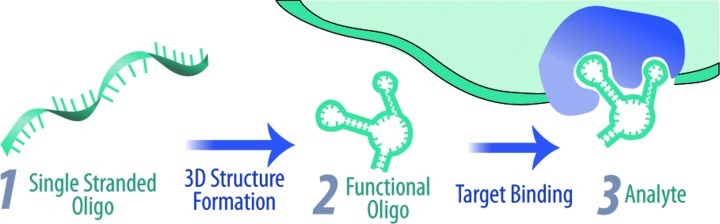
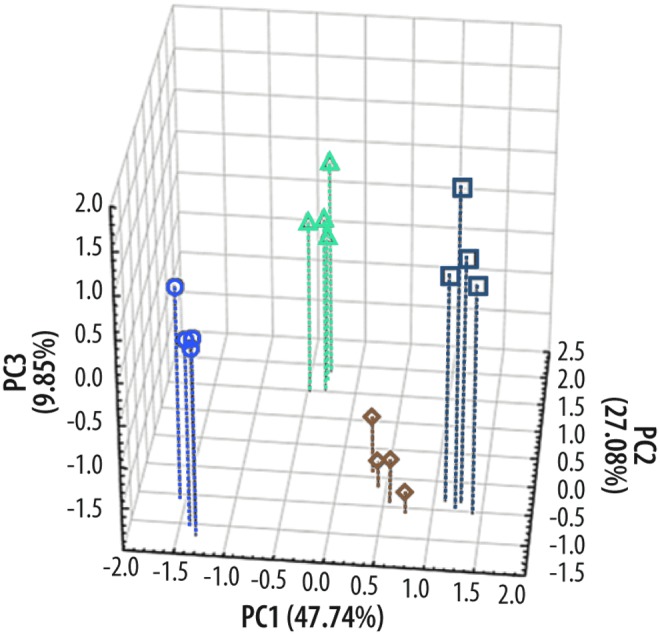
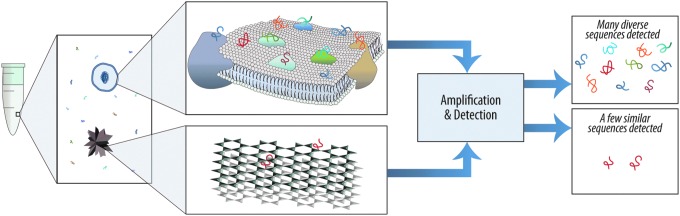
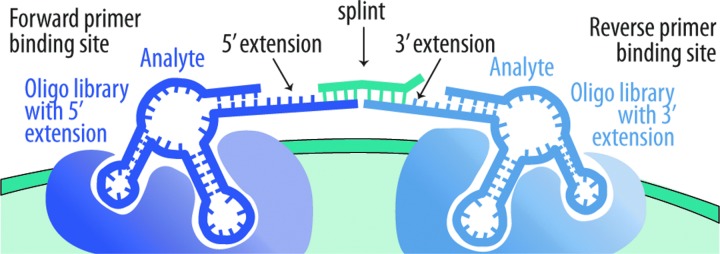
Most strategies for life detection rely upon finding features known to be associated with terran life, such as particular classes of molecules. But life may be vastly different on other planets and moons, particularly as we expand our efforts to explore ocean worlds like Europa and Enceladus. We propose a new concept for life detection that harnesses the power of DNA sequencing to yield intricate informatics fingerprints, even for life that is not nucleic acid-based. The concept is based on the fact that folded nucleic acid structures (aptamers) have been shown to be capable of binding a wide variety of compounds, whether inorganic, organic, or polymeric, and irrespective of being from a biotic or abiotic source. Each nucleic acid sequence can be thought of as a code, and a combination of codes as a "fingerprint." Over multiple analytes, the "fingerprint" of a non-terran sample can be analyzed by chemometric protocols to provide a classifier of molecular patterns and complexity. Ultimately the chemometric fingerprints of living systems, which may differ significantly from nonliving systems, could provide an empirical, agnostic means of detecting life. Because nucleic acids are exponentially amplified by the polymerase chain reaction, even very small input signals could be translated into a robust readable output. The derived sequences could be identified by a small, portable sequencing device or by capture and optical imaging on a DNA microarray. Without presupposing any particular molecular framework, this agnostic approach to life detection could be used from Mars to the far reaches of the Solar System, all within the framework of an instrument drawing little heat and power. Key Words: Agnostic biosignatures-Astrobiology-Chemometrics-DNA sequencing-Life detection-Proximity ligation assay. Astrobiology 18, 915-922.
大多数生命探测策略都依赖于寻找已知与地球生命相关的特征,例如特定类别的分子。但是,在其他行星和卫星上,生命可能有很大的不同,特别是当我们扩大探索木卫二和土卫二等海洋世界的努力时。我们提出了一种新的生命探测概念,利用 DNA 测序的力量产生复杂的信息指纹,即使对于非核酸为基础的生命也是如此。该概念基于以下事实:已证明折叠的核酸结构(适体)能够结合各种化合物,无论是无机的、有机的还是聚合的,并且与生物或非生物来源无关。每个核酸序列都可以被视为一种代码,而代码的组合则可以被视为“指纹”。对于多个分析物,可以通过化学计量学协议分析非地球样本的“指纹”,以提供分子模式和复杂性的分类器。最终,生命系统的化学计量指纹可能与非生命系统有很大的不同,这可能为检测生命提供一种经验性的、不可知论的方法。由于聚合酶链反应可以使核酸指数扩增,即使输入信号非常小,也可以转化为强大的可读输出。可以通过小型便携式测序设备或在 DNA 微阵列上进行捕获和光学成像来识别衍生序列。无需预先假定任何特定的分子框架,这种不可知论的生命探测方法可以从火星到太阳系的遥远边缘使用,所有这些都在仪器的框架内,该仪器几乎不消耗热量和电力。关键词:不可知论生物特征-天体生物学-化学计量学-DNA 测序-生命探测-接近连接分析。天体生物学 18,915-922。