Guttenberg Nicholas, Chen Huan, Mochizuki Tomohiro, Cleaves H James
Earth-Life Science Institute, Tokyo Institute of Technology, Ookayama, Tokyo 152-8550, Japan.
Cross Labs, Cross Compass Ltd., 2-9-11-9F Shinkawa, Chuo-ku, Tokyo 104-0033, Japan.
Life (Basel). 2021 Mar 12;11(3):234. doi: 10.3390/life11030234.
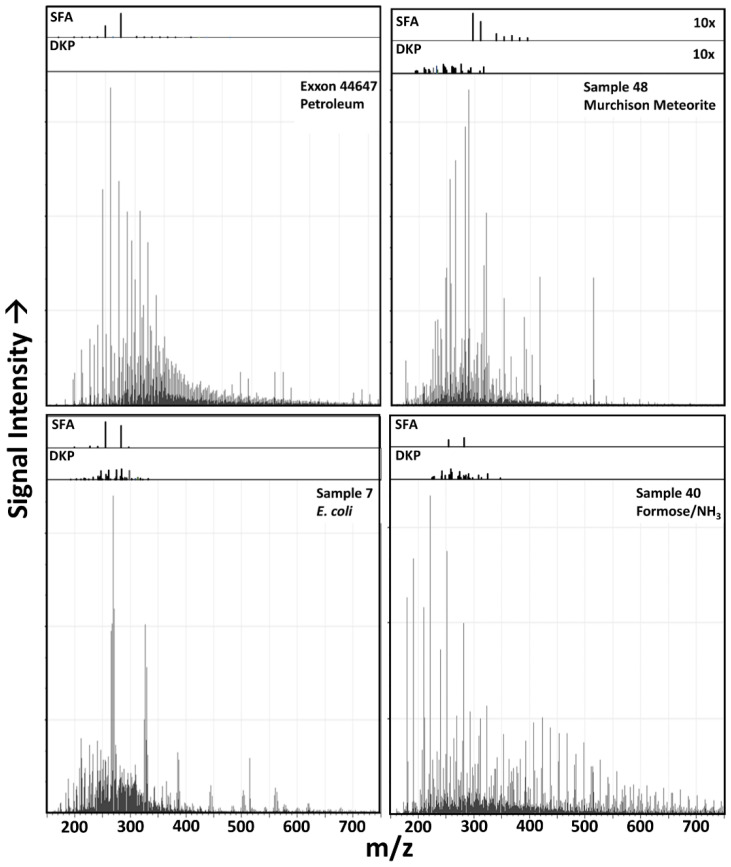
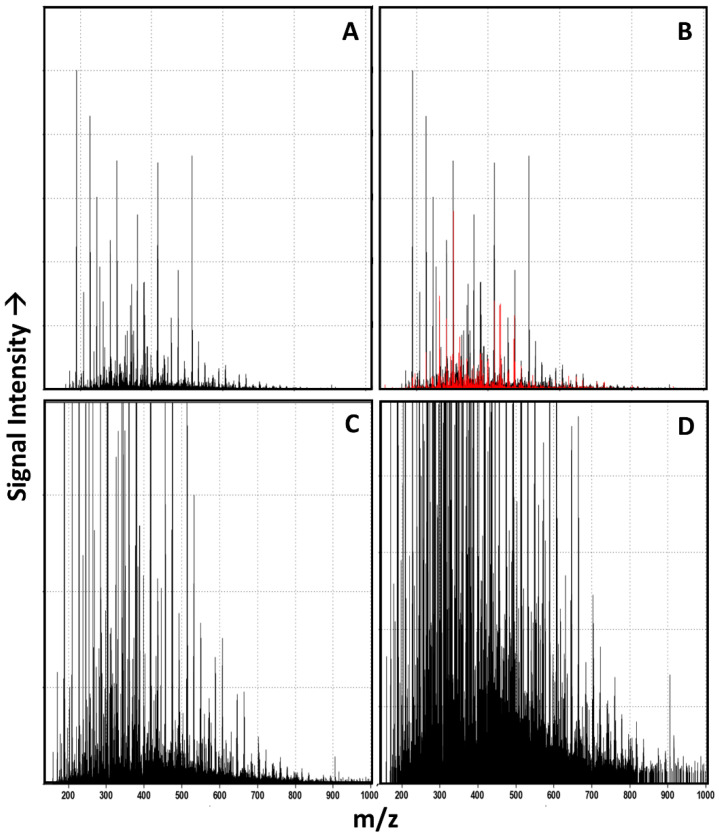
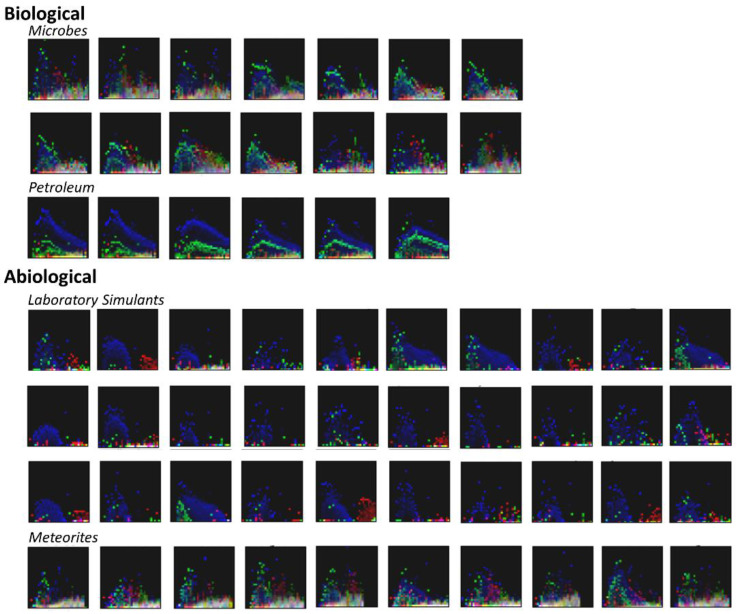
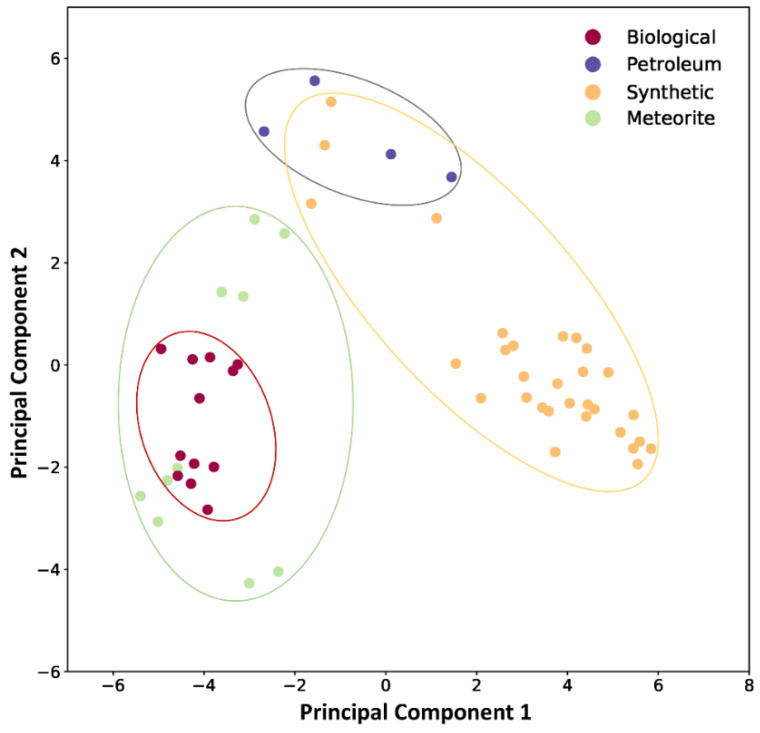
Searching for life in the Universe depends on unambiguously distinguishing biological features from background signals, which could take the form of chemical, morphological, or spectral signatures. The discovery and direct measurement of organic compounds unambiguously indicative of extraterrestrial (ET) life is a major goal of Solar System exploration. Biology processes matter and energy differently from abiological systems, and materials produced by biological systems may become enriched in planetary environments where biology is operative. However, ET biology might be composed of different components than terrestrial life. As ET sample return is difficult, in situ methods for identifying biology will be useful. Mass spectrometry (MS) is a potentially versatile life detection technique, which will be used to analyze numerous Solar System environments in the near future. We show here that simple algorithmic analysis of MS data from abiotic synthesis (natural and synthetic), microbial cells, and thermally processed biological materials (lab-grown organisms and petroleum) easily identifies relational organic compound distributions that distinguish pristine and aged biological and abiological materials, which likely can be attributed to the types of compounds these processes produce, as well as how they are formed and decompose. To our knowledge this is the first comprehensive demonstration of the utility of this analytical technique for the detection of biology. This method is independent of the detection of particular masses or molecular species samples may contain. This suggests a general method to agnostically detect evidence of biology using MS given a sufficiently strong signal in which the majority of the material in a sample has either a biological or abiological origin. Such metrics are also likely to be useful for studies of possible emergent living phenomena, and paleobiological samples.
在宇宙中寻找生命,依赖于明确区分生物特征与背景信号,这些背景信号可能表现为化学、形态或光谱特征。发现并直接测量明确指示外星生命的有机化合物,是太阳系探索的一个主要目标。生物处理物质和能量的方式与非生物系统不同,生物系统产生的物质可能会在有生物活动的行星环境中富集。然而,外星生物的组成成分可能与地球生命不同。由于外星样本返回困难,用于识别生物的原位方法将很有用。质谱分析(MS)是一种潜在的通用生命探测技术,在不久的将来将用于分析众多太阳系环境。我们在此表明,对来自非生物合成(天然和合成)、微生物细胞以及热加工生物材料(实验室培养的生物体和石油)的质谱数据进行简单的算法分析,能够轻松识别出区分原始和老化生物及非生物材料的相关有机化合物分布,这很可能归因于这些过程产生的化合物类型,以及它们的形成和分解方式。据我们所知,这是首次全面证明这种分析技术在探测生物方面的实用性。该方法不依赖于对样本可能含有的特定质量或分子种类的检测。这表明在给定足够强的信号(其中样本中的大多数物质要么源于生物,要么源于非生物)的情况下,一种使用质谱分析来不可知地检测生物证据的通用方法。这样的指标对于研究可能出现的生命现象以及古生物学样本也可能很有用。