Department of Geology & Geophysics, University of Utah, Salt Lake City, Utah.
Department of Geosciences, University of Montana, Missoula, Montana.
Astrobiology. 2019 Sep;19(9):1075-1102. doi: 10.1089/ast.2018.1903. Epub 2019 Jul 22.
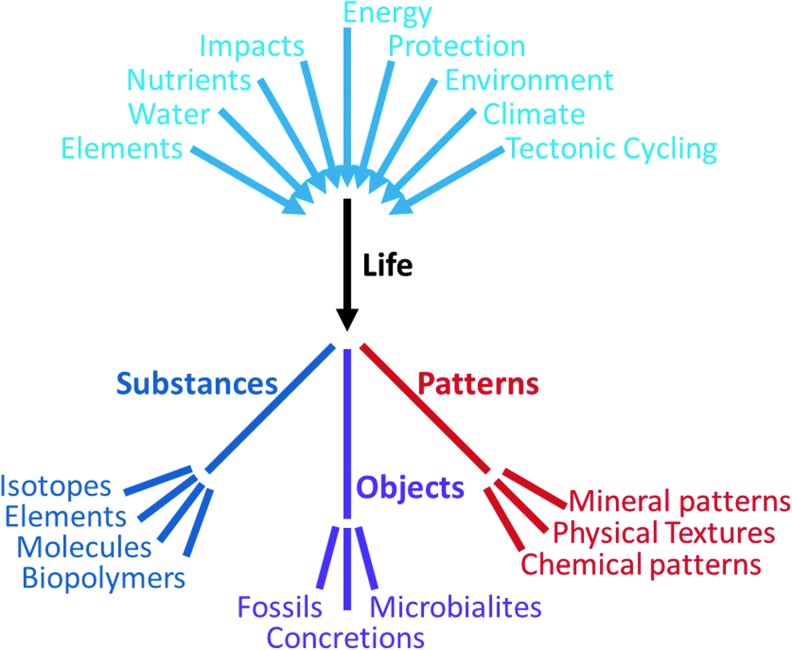
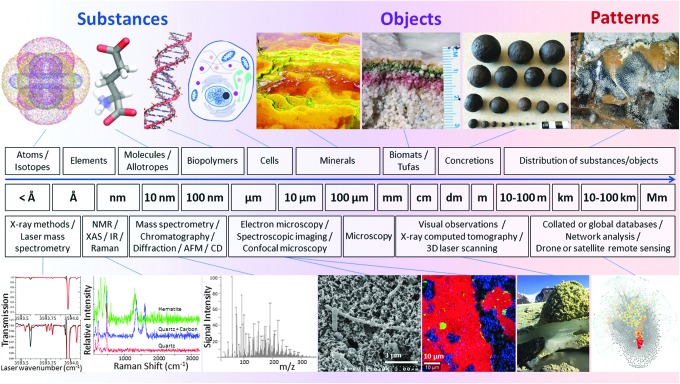
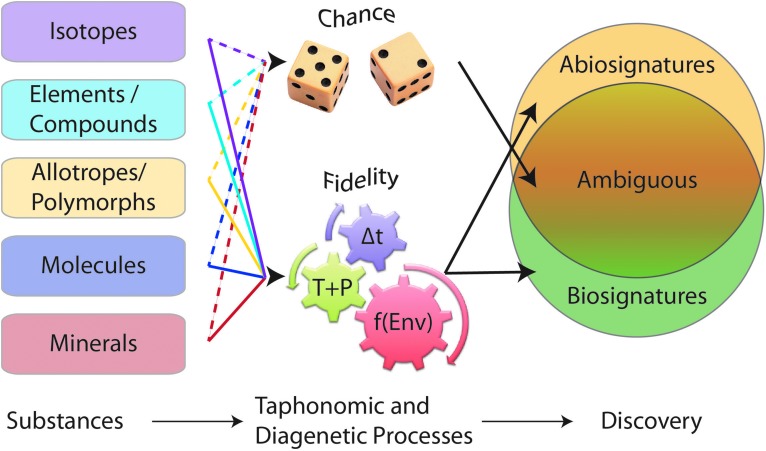
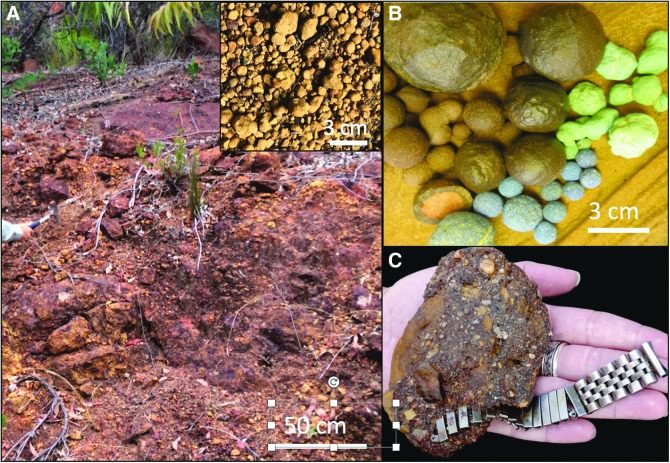
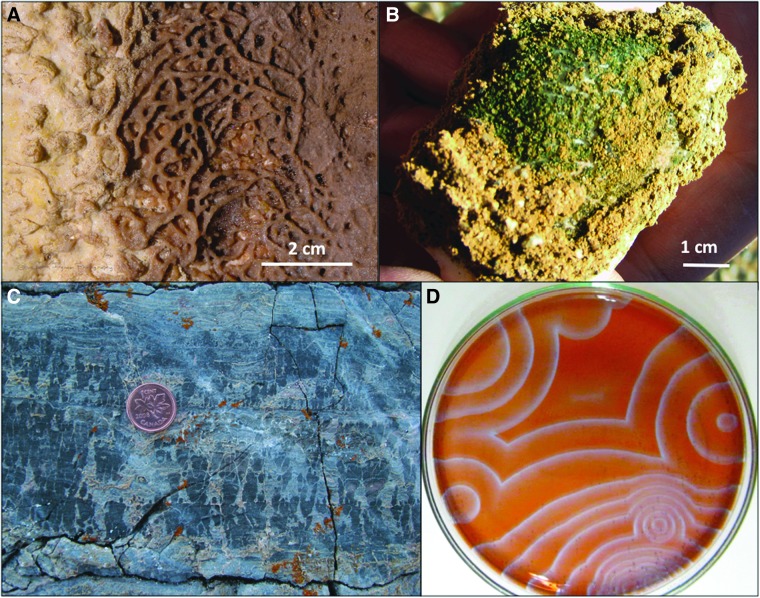
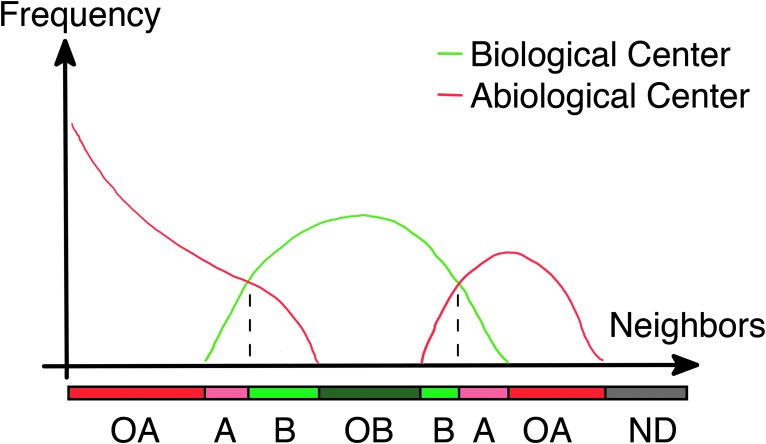
Microbial life permeates Earth's critical zone and has likely inhabited nearly all our planet's surface and near subsurface since before the beginning of the sedimentary rock record. Given the vast time that Earth has been teeming with life, do astrobiologists truly understand what geological features untouched by biological processes would look like? In the search for extraterrestrial life in the Universe, it is critical to determine what constitutes a biosignature across multiple scales, and how this compares with "abiosignatures" formed by nonliving processes. Developing standards for abiotic and biotic characteristics would provide quantitative metrics for comparison across different data types and observational time frames. The evidence for life detection falls into three categories of biosignatures: (1) substances, such as elemental abundances, isotopes, molecules, allotropes, enantiomers, minerals, and their associated properties; (2) objects that are physical features such as mats, fossils including trace-fossils and microbialites (stromatolites), and concretions; and (3) patterns, such as physical three-dimensional or conceptual -dimensional relationships of physical or chemical phenomena, including patterns of intermolecular abundances of organic homologues, and patterns of stable isotopic abundances between and within compounds. Five key challenges that warrant future exploration by the astrobiology community include the following: (1) examining phenomena at the "right" spatial scales because biosignatures may elude us if not examined with the appropriate instrumentation or modeling approach at that specific scale; (2) identifying the precise context across multiple spatial and temporal scales to understand how tangible biosignatures may or may not be preserved; (3) increasing capability to mine big data sets to reveal relationships, for example, how Earth's mineral diversity may have evolved in conjunction with life; (4) leveraging cyberinfrastructure for data management of biosignature types, characteristics, and classifications; and (5) using three-dimensional to -D representations of biotic and abiotic models overlain on multiple overlapping spatial and temporal relationships to provide new insights.
微生物生命渗透地球的关键带,并且可能在有沉积记录之前就已经居住在我们星球的几乎所有表面和近地表。鉴于地球充满生命的时间如此漫长,天体生物学家真的了解没有生物过程影响的地质特征会是什么样子吗?在宇宙中寻找外星生命时,关键是要确定在多个尺度上构成生物特征的因素,以及这与由非生命过程形成的“非生物特征”有何不同。制定关于非生物和生物特征的标准将为不同数据类型和观测时间框架的比较提供定量指标。生命探测的证据分为三类生物特征:(1)物质,如元素丰度、同位素、分子、同素异形体、对映体、矿物及其相关特性;(2)物体,如垫子、化石(包括痕迹化石和微生物岩(叠层石))和结核;(3)模式,如物理三维或概念维度的物理或化学现象的关系,包括有机同系物的分子丰度模式以及化合物之间和内部稳定同位素丰度的模式。天体生物学界需要未来探索的五个关键挑战包括以下内容:(1)在“正确”的空间尺度上检查现象,因为如果不在特定尺度上使用适当的仪器或建模方法,生物特征可能会被我们忽略;(2)跨多个空间和时间尺度确定精确的上下文,以了解有形生物特征是否可能得到保留;(3)提高挖掘大数据集以揭示关系的能力,例如,地球的矿物多样性如何与生命一起演变;(4)利用网络基础设施管理生物特征类型、特征和分类的数据;(5)使用三维到三维的生物和非生物模型表示,叠加在多个重叠的空间和时间关系上,以提供新的见解。