Department of Biological and Environmental Sciences, University of Gothenburg, Göteborg, Sweden.
Norwegian Polar Institute, Fram Centre, Tromsø, Norway.
PLoS One. 2018 Apr 10;13(4):e0195587. doi: 10.1371/journal.pone.0195587. eCollection 2018.
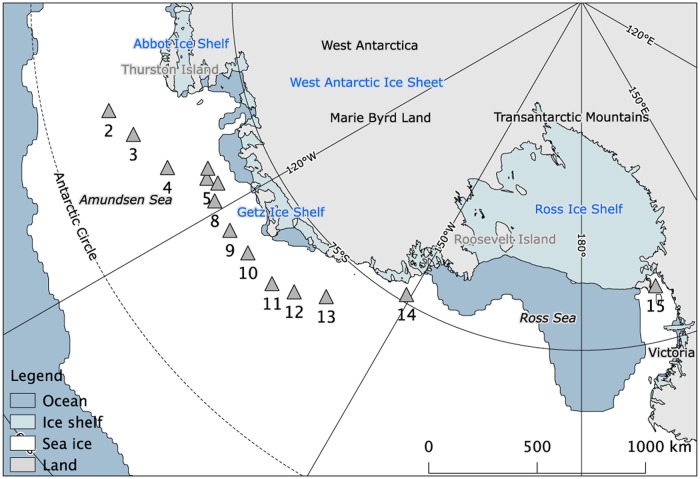
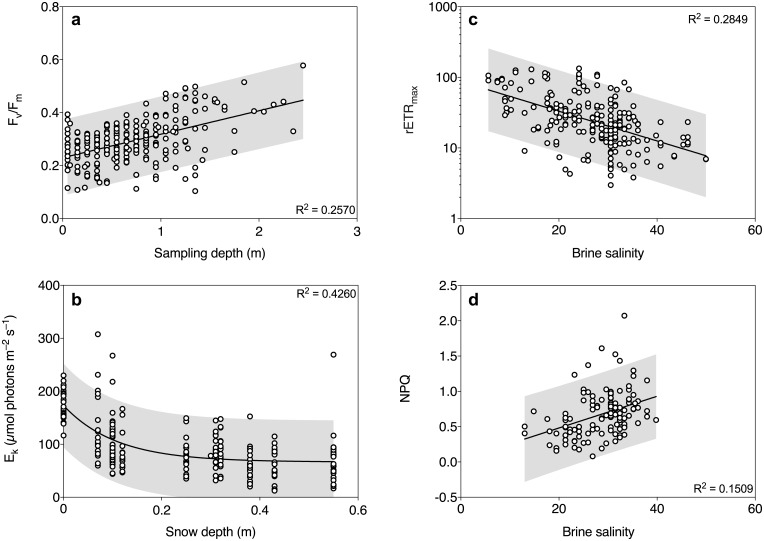
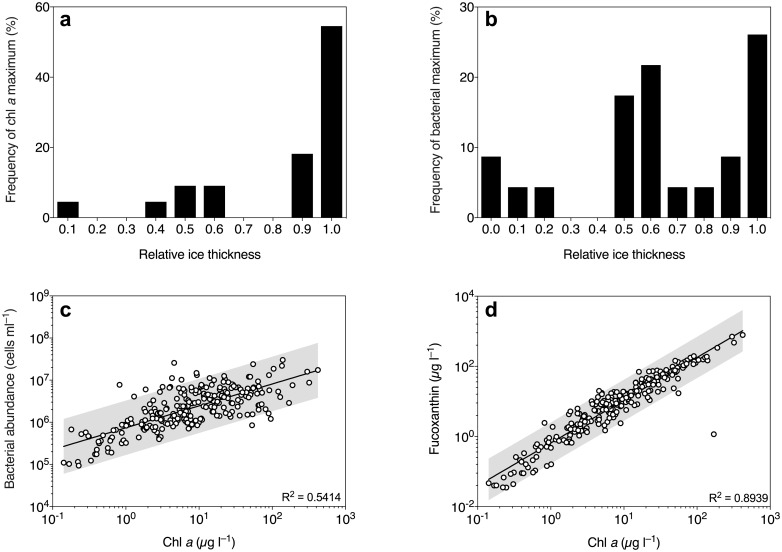
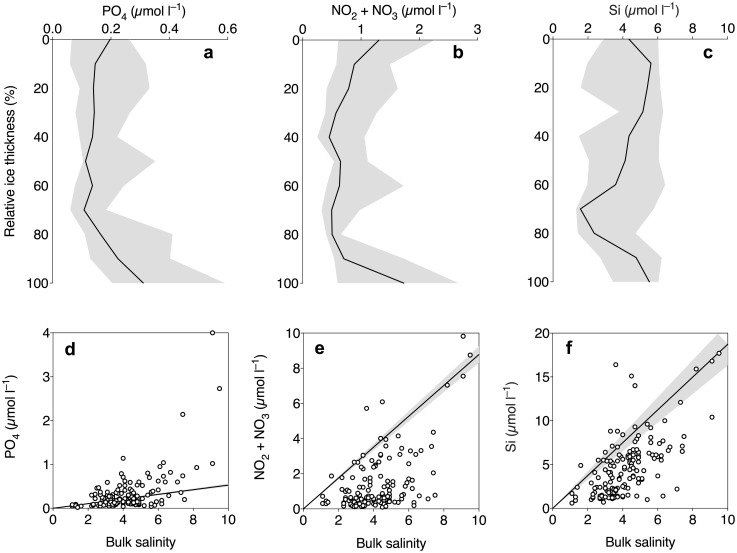
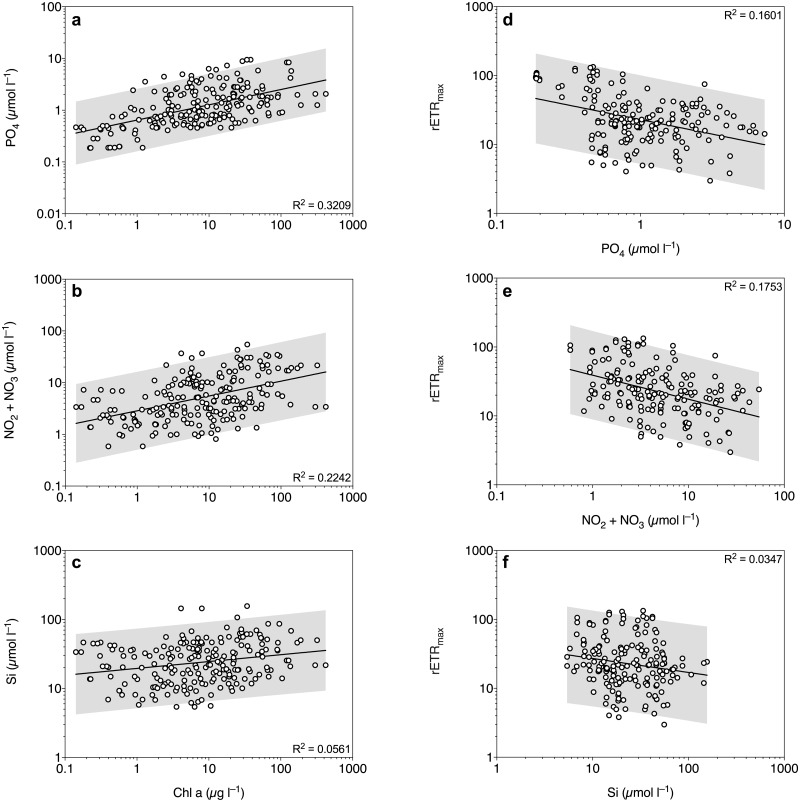
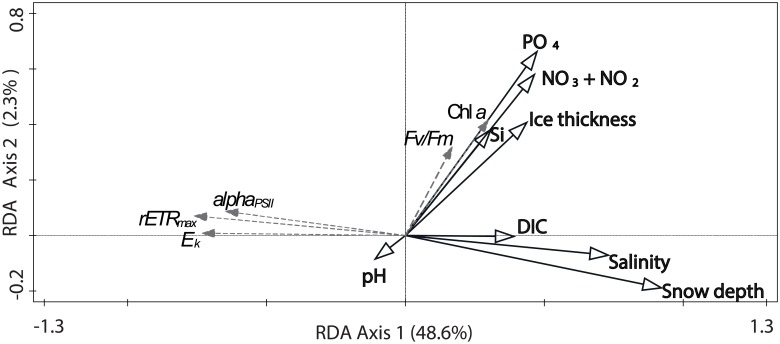
Our study addresses how environmental variables, such as macronutrients concentrations, snow cover, carbonate chemistry and salinity affect the photophysiology and biomass of Antarctic sea-ice algae. We have measured vertical profiles of inorganic macronutrients (phosphate, nitrite + nitrate and silicic acid) in summer sea ice and photophysiology of ice algal assemblages in the poorly studied Amundsen and Ross Seas sectors of the Southern Ocean. Brine-scaled bacterial abundance, chl a and macronutrient concentrations were often high in the ice and positively correlated with each other. Analysis of photosystem II rapid light curves showed that microalgal cells in samples with high phosphate and nitrite + nitrate concentrations had reduced maximum relative electron transport rate and photosynthetic efficiency. We also observed strong couplings of PSII parameters to snow depth, ice thickness and brine salinity, which highlights a wide range of photoacclimation in Antarctic pack-ice algae. It is likely that the pack ice was in a post-bloom situation during the late sea-ice season, with low photosynthetic efficiency and a high degree of nutrient accumulation occurring in the ice. In order to predict how key biogeochemical processes are affected by future changes in sea ice cover, such as in situ photosynthesis and nutrient cycling, we need to understand how physicochemical properties of sea ice affect the microbial community. Our results support existing hypothesis about sea-ice algal photophysiology, and provide additional observations on high nutrient concentrations in sea ice that could influence the planktonic communities as the ice is retreating.
我们的研究探讨了环境变量,如大量营养物浓度、雪盖、碳酸盐化学和盐度如何影响南极海冰藻类的光合生理学和生物量。我们已经测量了夏季海冰中的无机大量营养物(磷酸盐、亚硝酸盐+硝酸盐和硅酸)的垂直分布,以及南大洋的阿蒙森和罗斯海扇区中研究较少的冰藻组合的光合生理学。盐水尺度细菌丰度、chl a 和大量营养物浓度在冰中通常很高,并相互正相关。对光合系统 II 快速光曲线的分析表明,高磷酸盐和亚硝酸盐+硝酸盐浓度样品中的微藻细胞的最大相对电子传递率和光合效率降低。我们还观察到 PSII 参数与雪深、冰厚和盐水盐度的强烈耦合,这突出了南极冰架藻类的广泛光驯化范围。在海冰后期季节,冰架很可能处于后开花状态,冰中光合作用效率低,营养物积累程度高。为了预测未来海冰覆盖变化如何影响关键的生物地球化学过程,如原位光合作用和养分循环,我们需要了解海冰的物理化学性质如何影响微生物群落。我们的结果支持关于海冰藻类光合生理学的现有假设,并提供了关于海冰中高营养物浓度的额外观察结果,这些浓度可能会影响冰融化时的浮游生物群落。