• 文献检索
  • 文档翻译
  • 深度研究
  • 学术资讯
  • Suppr Zotero 插件Zotero 插件
  • 邀请有礼
  • 套餐&价格
  • 历史记录
应用&插件
Suppr Zotero 插件Zotero 插件浏览器插件Mac 客户端Windows 客户端微信小程序
定价
高级版会员购买积分包购买API积分包
服务
文献检索文档翻译深度研究API 文档MCP 服务
关于我们
关于 Suppr公司介绍联系我们用户协议隐私条款
关注我们

Suppr 超能文献

核心技术专利:CN118964589B侵权必究
粤ICP备2023148730 号-1Suppr @ 2026

文献检索

告别复杂PubMed语法,用中文像聊天一样搜索,搜遍4000万医学文献。AI智能推荐,让科研检索更轻松。

立即免费搜索

文件翻译

保留排版,准确专业,支持PDF/Word/PPT等文件格式,支持 12+语言互译。

免费翻译文档

深度研究

AI帮你快速写综述,25分钟生成高质量综述,智能提取关键信息,辅助科研写作。

立即免费体验

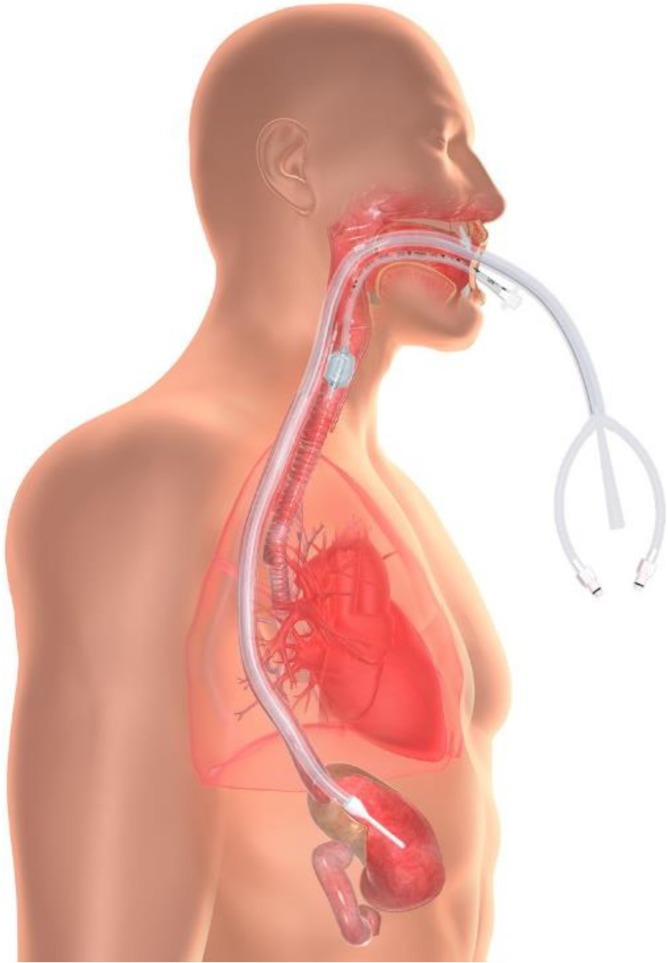
心脏骤停后、难治性发热及烧伤患者主动体温管理的食管热传递回顾性分析

Retrospective Analysis of Esophageal Heat Transfer for Active Temperature Management in Post-cardiac Arrest, Refractory Fever, and Burn Patients.

作者信息

Naiman Melissa, Markota Andrej, Hegazy Ahmed, Dingley John, Kulstad Erik

机构信息

Collaborative for Advanced Research, Design, and Evaluation, University of Illinois at Chicago, 2121W. Taylor Street #540, Chicago, IL 60612.

Medical Intensive Care Unit, University Medical Center Maribor, Ljubljanska 5, 2000 Maribor, Slovenia.

出版信息

Mil Med. 2018 Mar 1;183(suppl_1):162-168. doi: 10.1093/milmed/usx207.

DOI:10.1093/milmed/usx207
PMID:29635598
原文链接:https://pmc.ncbi.nlm.nih.gov/articles/PMC6490293/
Abstract

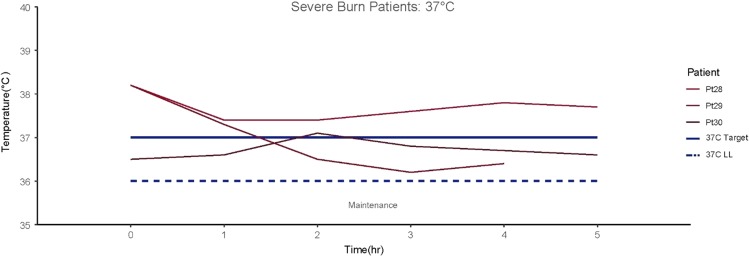
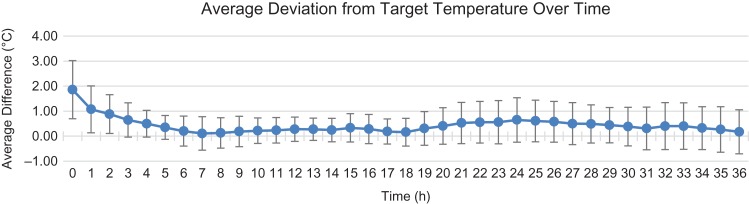
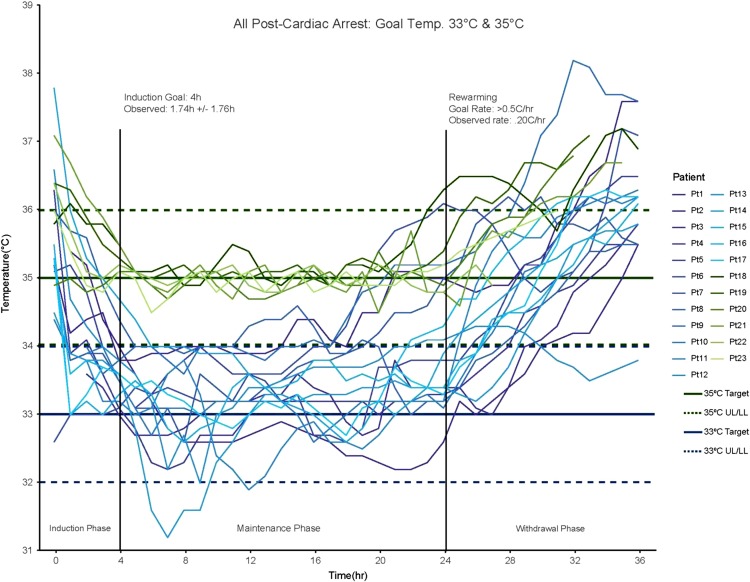
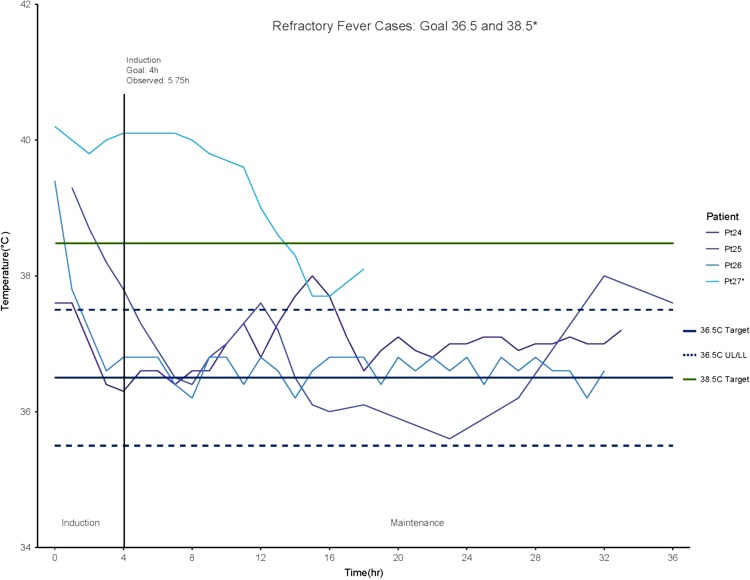
Core temperature management is an important aspect of critical care; preventing unintentional hypothermia, reducing fever, and inducing therapeutic hypothermia when appropriate are each tied to positive health outcomes. The purpose of this study is to evaluate the performance of a new temperature management device that uses the esophageal environment to conduct heat transfer. De-identified patient data were aggregated from three clinical sites where an esophageal heat transfer device (EHTD) was used to provide temperature management. The device was evaluated against temperature management guidelines and best practice recommendations, including performance during induction, maintenance, and cessation of therapy. Across all active cooling protocols, the average time-to-target was 2.37 h and the average maintenance phase was 22.4 h. Patients spent 94.9% of the maintenance phase within ±1.0°C and 67.2% within ±0.5°C (574 and 407 measurements, respectively, out of 605 total). For warming protocols, all of the patient temperature readings remained above 36°C throughout the surgical procedure (average 4.66 h). The esophageal heat transfer device met performance expectations across a range of temperature management applications in intensive care and burn units. Patients met and maintained temperature goals without any reported adverse events.

摘要

核心体温管理是重症监护的一个重要方面;预防意外体温过低、降低发热以及在适当的时候诱导治疗性低温均与良好的健康结果相关。本研究的目的是评估一种利用食管环境进行热传递的新型体温管理设备的性能。从三个使用食管热传递设备(EHTD)进行体温管理的临床站点汇总了去识别化的患者数据。根据体温管理指南和最佳实践建议对该设备进行评估,包括治疗诱导、维持和停止期间的性能。在所有主动降温方案中,平均达到目标温度的时间为2.37小时,平均维持阶段为22.4小时。患者在维持阶段有94.9%的时间体温在±1.0°C范围内,67.2%的时间体温在±0.5°C范围内(在总共605次测量中,分别为574次和407次测量)。对于升温方案,在整个手术过程中(平均4.66小时),所有患者的体温读数均保持在36°C以上。食管热传递设备在重症监护病房和烧伤病房的一系列体温管理应用中均达到了性能预期。患者达到并维持了体温目标,且未报告任何不良事件。
https://cdn.ncbi.nlm.nih.gov/pmc/blobs/7f07/6490293/1fb6441a9ff3/usx207f05.jpg
https://cdn.ncbi.nlm.nih.gov/pmc/blobs/7f07/6490293/facdaa415c9e/usx207f01.jpg
https://cdn.ncbi.nlm.nih.gov/pmc/blobs/7f07/6490293/c5b8d07180f0/usx207f02.jpg
https://cdn.ncbi.nlm.nih.gov/pmc/blobs/7f07/6490293/7e2a5a2b69d0/usx207f03.jpg
https://cdn.ncbi.nlm.nih.gov/pmc/blobs/7f07/6490293/8c3da65f6df7/usx207f04.jpg
https://cdn.ncbi.nlm.nih.gov/pmc/blobs/7f07/6490293/1fb6441a9ff3/usx207f05.jpg
https://cdn.ncbi.nlm.nih.gov/pmc/blobs/7f07/6490293/facdaa415c9e/usx207f01.jpg
https://cdn.ncbi.nlm.nih.gov/pmc/blobs/7f07/6490293/c5b8d07180f0/usx207f02.jpg
https://cdn.ncbi.nlm.nih.gov/pmc/blobs/7f07/6490293/7e2a5a2b69d0/usx207f03.jpg
https://cdn.ncbi.nlm.nih.gov/pmc/blobs/7f07/6490293/8c3da65f6df7/usx207f04.jpg
https://cdn.ncbi.nlm.nih.gov/pmc/blobs/7f07/6490293/1fb6441a9ff3/usx207f05.jpg

相似文献

1
Retrospective Analysis of Esophageal Heat Transfer for Active Temperature Management in Post-cardiac Arrest, Refractory Fever, and Burn Patients.心脏骤停后、难治性发热及烧伤患者主动体温管理的食管热传递回顾性分析
Mil Med. 2018 Mar 1;183(suppl_1):162-168. doi: 10.1093/milmed/usx207.
2
Evaluation of advanced cooling therapy's esophageal cooling device for core temperature control.评估先进冷却疗法的食管冷却装置对核心体温的控制效果。
Expert Rev Med Devices. 2016 May;13(5):423-33. doi: 10.1080/17434440.2016.1174573. Epub 2016 Apr 15.
3
The introduction of an esophageal heat transfer device into a therapeutic hypothermia protocol: A prospective evaluation.将食管热传递装置引入治疗性低温方案:一项前瞻性评估。
Am J Emerg Med. 2016 Apr;34(4):741-5. doi: 10.1016/j.ajem.2016.01.028. Epub 2016 Jan 28.
4
Induction, maintenance, and reversal of therapeutic hypothermia with an esophageal heat transfer device.经食管热传递装置诱导、维持和逆转治疗性低温。
Resuscitation. 2013 Nov;84(11):1619-24. doi: 10.1016/j.resuscitation.2013.06.019. Epub 2013 Jul 1.
5
Heating and Cooling Rates With an Esophageal Heat Exchange System.食管热交换系统的加热和冷却速率。
Anesth Analg. 2018 Apr;126(4):1190-1195. doi: 10.1213/ANE.0000000000002691.
6
Esophageal Heat Transfer for Patient Temperature Control and Targeted Temperature Management.用于患者体温控制和目标温度管理的食管热传递
J Vis Exp. 2017 Nov 21(129):56579. doi: 10.3791/56579.
7
The esophageal cooling device: A new temperature control tool in the intensivist's arsenal.食管冷却装置:重症监护医生武器库中的一种新型温度控制工具。
Heart Lung. 2017 May-Jun;46(3):143-148. doi: 10.1016/j.hrtlng.2017.03.001. Epub 2017 Apr 11.
8
Temperature modulation with an esophageal heat transfer device - a pediatric swine model study.使用食管传热装置进行温度调节——一项小儿猪模型研究。
BMC Anesthesiol. 2015 Feb 4;15(1):16. doi: 10.1186/1471-2253-15-16. eCollection 2015.
9
Esophageal temperature after out-of-hospital cardiac arrest: an observational study.院外心脏骤停后的食管温度:一项观察性研究。
Resuscitation. 2010 Jul;81(7):867-71. doi: 10.1016/j.resuscitation.2010.03.017. Epub 2010 Apr 21.
10
Targeted temperature management using the "Esophageal Cooling Device" after cardiac arrest (the COOL study): A feasibility and safety study.心脏停搏后使用“食管冷却装置”进行目标温度管理(COOL 研究):一项可行性和安全性研究。
Resuscitation. 2017 Dec;121:54-61. doi: 10.1016/j.resuscitation.2017.09.021. Epub 2017 Sep 23.

引用本文的文献

1
Mechanisms of action behind the protective effects of proactive esophageal cooling during radiofrequency catheter ablation in the left atrium.左心房射频导管消融术中主动食管冷却保护作用背后的作用机制。
Heart Rhythm O2. 2024 May 15;5(6):403-416. doi: 10.1016/j.hroo.2024.05.002. eCollection 2024 Jun.
2
Better Control of Body Temperature Is Not Associated with Improved Hemodynamic and Respiratory Parameters in Mechanically Ventilated Patients with Sepsis.体温更好的控制与脓毒症机械通气患者血流动力学和呼吸参数的改善无关。
J Clin Med. 2022 Feb 24;11(5):1211. doi: 10.3390/jcm11051211.
3
Esophageal Heat Transfer for Patient Temperature Control and Targeted Temperature Management.

本文引用的文献

1
Targeted temperature management using the "Esophageal Cooling Device" after cardiac arrest (the COOL study): A feasibility and safety study.心脏停搏后使用“食管冷却装置”进行目标温度管理(COOL 研究):一项可行性和安全性研究。
Resuscitation. 2017 Dec;121:54-61. doi: 10.1016/j.resuscitation.2017.09.021. Epub 2017 Sep 23.
2
Clinical Effect of Rebound Hyperthermia After Cooling Postcardiac Arrest: A Meta-Analysis.心脏骤停后降温后复温的临床效果:一项荟萃分析。
Ther Hypothermia Temp Manag. 2017 Dec;7(4):206-209. doi: 10.1089/ther.2017.0009. Epub 2017 Jul 21.
3
Hypothermia as a predictor for mortality in trauma patients at admittance to the Intensive Care Unit.
用于患者体温控制和目标温度管理的食管热传递
J Vis Exp. 2017 Nov 21(129):56579. doi: 10.3791/56579.
体温过低作为创伤患者入住重症监护病房时死亡率的预测指标。
J Emerg Trauma Shock. 2016 Jul-Sep;9(3):97-102. doi: 10.4103/0974-2700.185276.
4
Evaluation of advanced cooling therapy's esophageal cooling device for core temperature control.评估先进冷却疗法的食管冷却装置对核心体温的控制效果。
Expert Rev Med Devices. 2016 May;13(5):423-33. doi: 10.1080/17434440.2016.1174573. Epub 2016 Apr 15.
5
Use of an Esophageal Heat Exchanger to Maintain Core Temperature during Burn Excisions and to Attenuate Pyrexia on the Burns Intensive Care Unit.在烧伤切除手术期间使用食管热交换器维持核心体温,并减轻烧伤重症监护病房的发热。
Case Rep Anesthesiol. 2016;2016:7306341. doi: 10.1155/2016/7306341. Epub 2016 Feb 25.
6
The introduction of an esophageal heat transfer device into a therapeutic hypothermia protocol: A prospective evaluation.将食管热传递装置引入治疗性低温方案:一项前瞻性评估。
Am J Emerg Med. 2016 Apr;34(4):741-5. doi: 10.1016/j.ajem.2016.01.028. Epub 2016 Jan 28.
7
Temperature control in critically ill patients with a novel esophageal cooling device: a case series.使用新型食管冷却装置对重症患者进行体温控制:病例系列
BMC Anesthesiol. 2015 Oct 19;15:152. doi: 10.1186/s12871-015-0133-6.
8
European Resuscitation Council and European Society of Intensive Care Medicine Guidelines for Post-resuscitation Care 2015: Section 5 of the European Resuscitation Council Guidelines for Resuscitation 2015.欧洲复苏委员会和欧洲重症监护医学学会2015年复苏后护理指南:欧洲复苏委员会2015年复苏指南第5节。
Resuscitation. 2015 Oct;95:202-22. doi: 10.1016/j.resuscitation.2015.07.018.
9
Part 8: Post-Cardiac Arrest Care: 2015 American Heart Association Guidelines Update for Cardiopulmonary Resuscitation and Emergency Cardiovascular Care.第8部分:心脏骤停后护理:2015年美国心脏协会心肺复苏及心血管急救指南更新
Circulation. 2015 Nov 3;132(18 Suppl 2):S465-82. doi: 10.1161/CIR.0000000000000262.
10
Endovascular Versus External Targeted Temperature Management for Patients With Out-of-Hospital Cardiac Arrest: A Randomized, Controlled Study.血管内与外部靶向体温管理治疗院外心脏骤停患者的随机对照研究。
Circulation. 2015 Jul 21;132(3):182-93. doi: 10.1161/CIRCULATIONAHA.114.012805. Epub 2015 Jun 19.