Department of Chemistry, University of Toronto, 3359 Mississauga Road North, Mississauga, ON, L5L 1C6, Canada.
Department of Biochemistry, University of Toronto, 1 King's College Circle, Toronto, ON, M5S 1A8, Canada.
Nat Commun. 2018 Apr 10;9(1):1372. doi: 10.1038/s41467-018-03314-9.
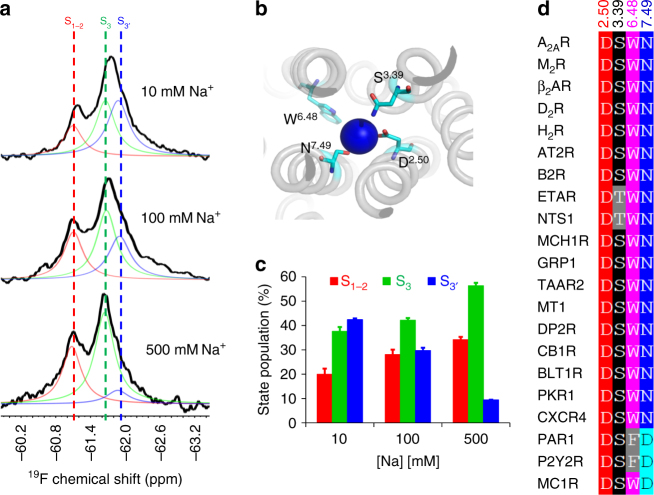
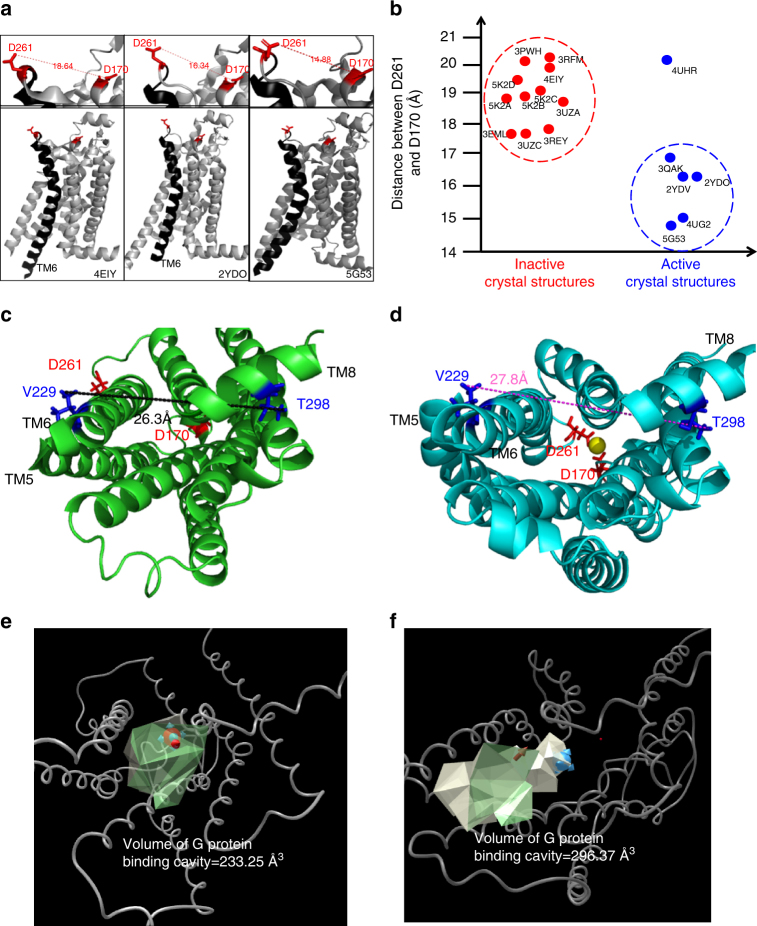
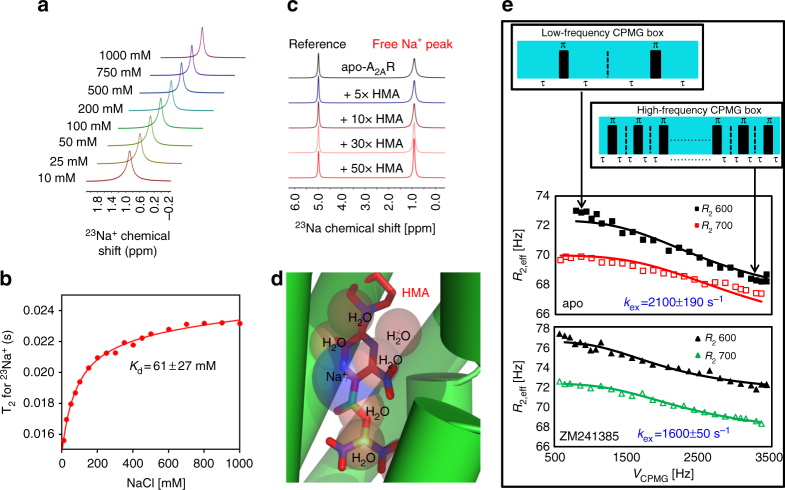
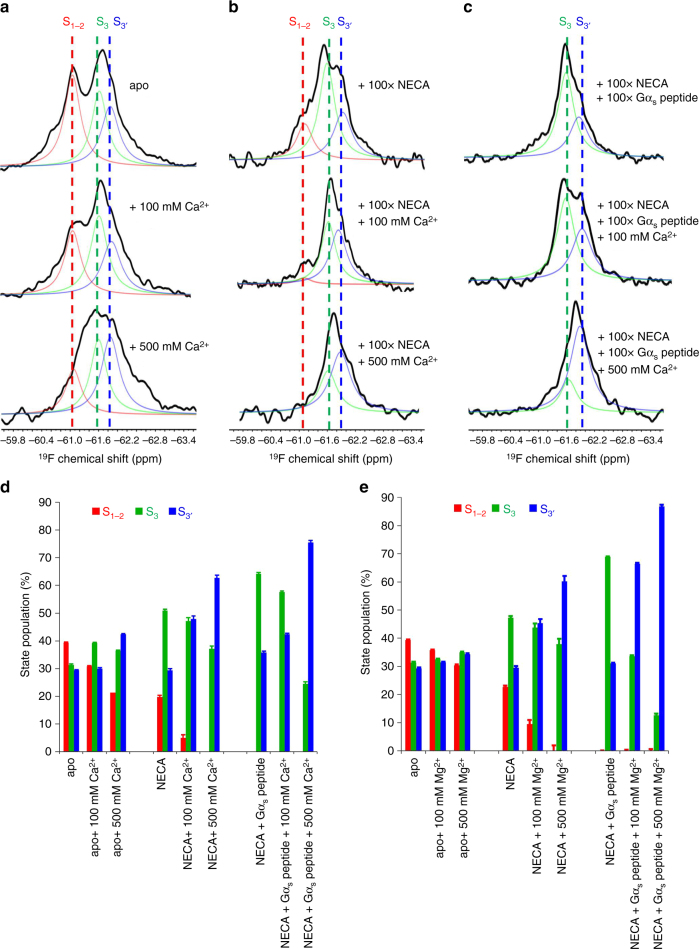
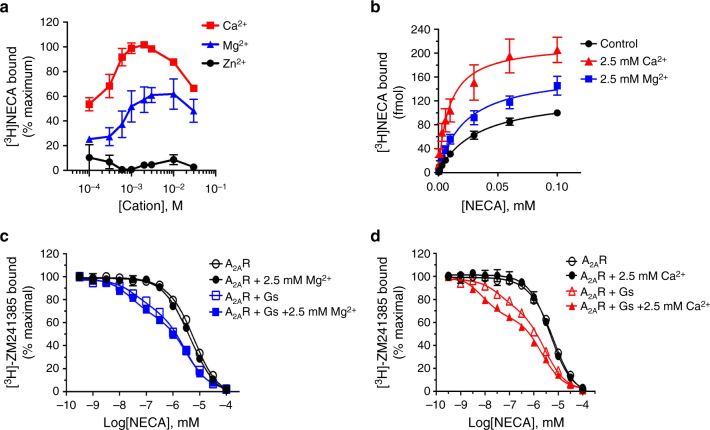
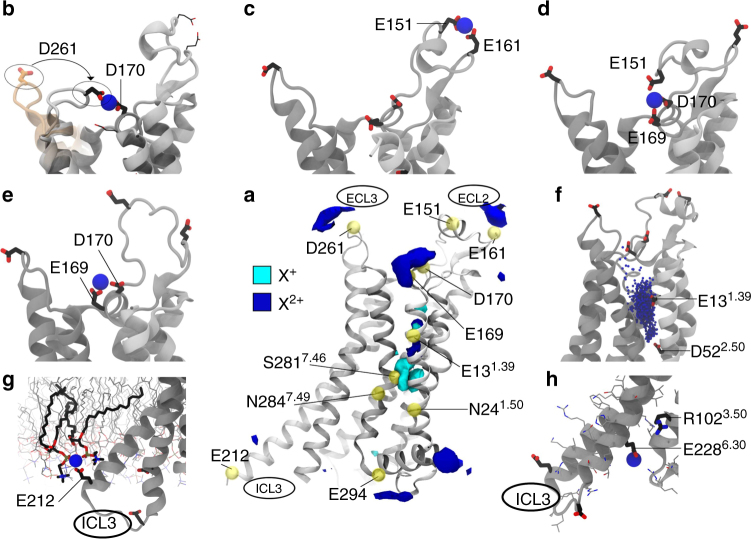
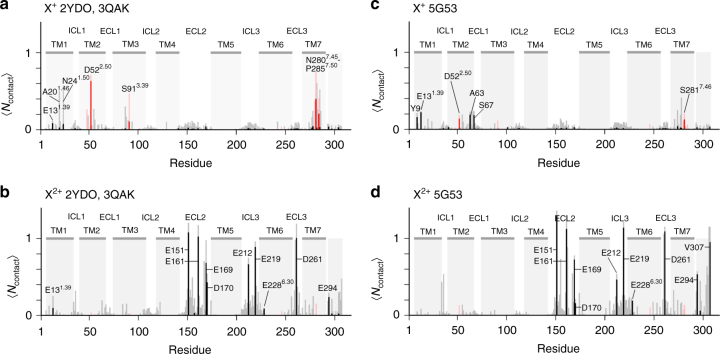
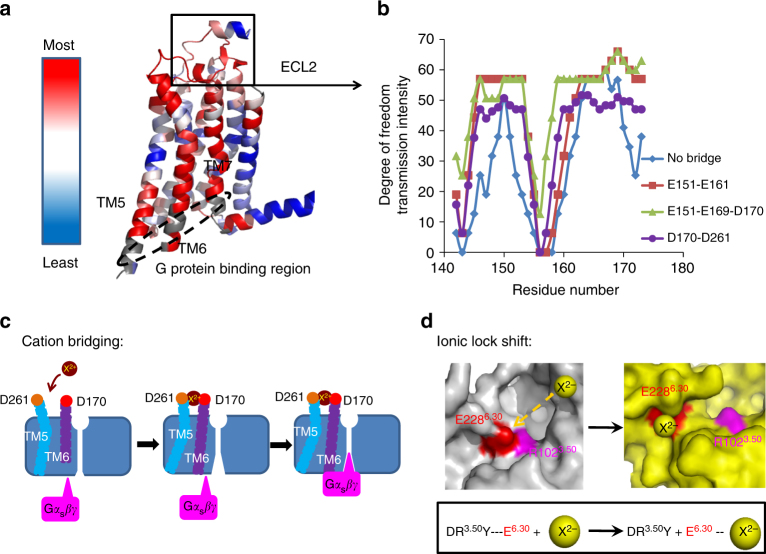
Cations play key roles in regulating G-protein-coupled receptors (GPCRs), although their mechanisms are poorly understood. Here, F NMR is used to delineate the effects of cations on functional states of the adenosine A GPCR. While Na reinforces an inactive ensemble and a partial-agonist stabilized state, Ca and Mg shift the equilibrium toward active states. Positive allosteric effects of divalent cations are more pronounced with agonist and a G-protein-derived peptide. In cell membranes, divalent cations enhance both the affinity and fraction of the high affinity agonist-bound state. Molecular dynamics simulations suggest high concentrations of divalent cations bridge specific extracellular acidic residues, bringing TM5 and TM6 together at the extracellular surface and allosterically driving open the G-protein-binding cleft as shown by rigidity-transmission allostery theory. An understanding of cation allostery should enable the design of allosteric agents and enhance our understanding of GPCR regulation in the cellular milieu.
阳离子在调节 G 蛋白偶联受体 (GPCR) 方面发挥着关键作用,尽管其机制尚不清楚。在这里,使用 F NMR 来描绘阳离子对腺苷 A GPCR 功能状态的影响。虽然 Na 增强了非活性整体和部分激动剂稳定状态,但 Ca 和 Mg 使平衡向活性状态移动。与激动剂和 G 蛋白衍生肽一起,二价阳离子的正变构效应更为明显。在细胞膜中,二价阳离子既增强了亲和力,又增加了高亲和力激动剂结合状态的分数。分子动力学模拟表明,高浓度的二价阳离子桥接特定的细胞外酸性残基,使 TM5 和 TM6 在细胞外表面结合在一起,并通过刚性传递变构理论显示出变构驱动 G 蛋白结合裂隙的打开。对阳离子变构的理解应该能够设计变构剂,并增强我们对细胞环境中 GPCR 调节的理解。