Department of Molecular Biology, College of Natural Sciences, Pusan National University, Pusan 609-735, Republic of Korea.
DNA Identification Center, National Forensic Service, Seoul 158-707, Republic of Korea.
Oxid Med Cell Longev. 2018 Jan 31;2018:3537471. doi: 10.1155/2018/3537471. eCollection 2018.
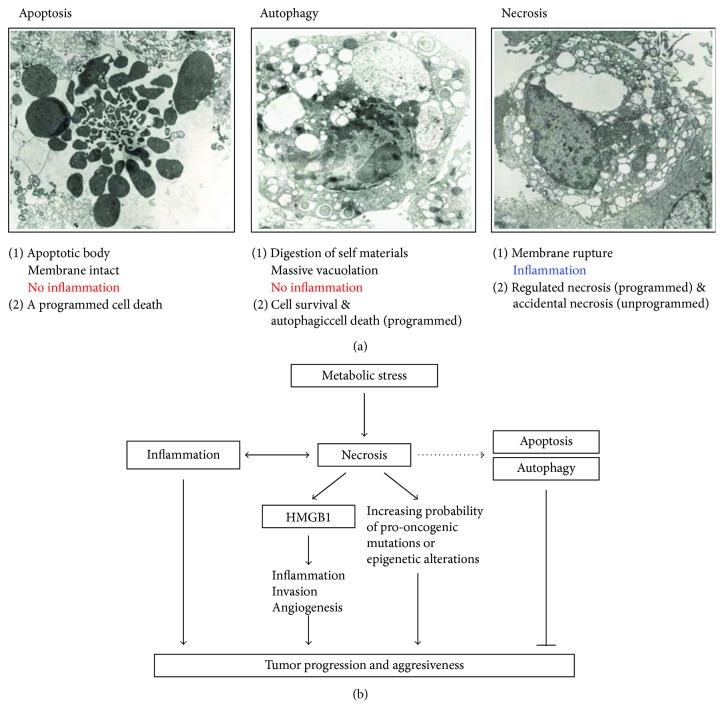
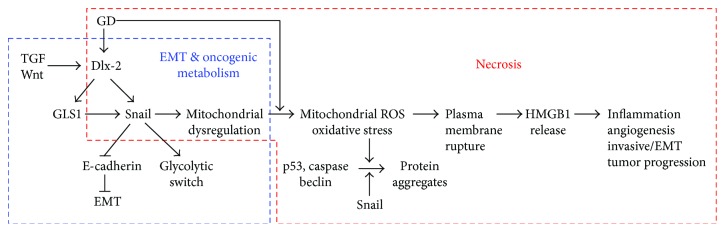
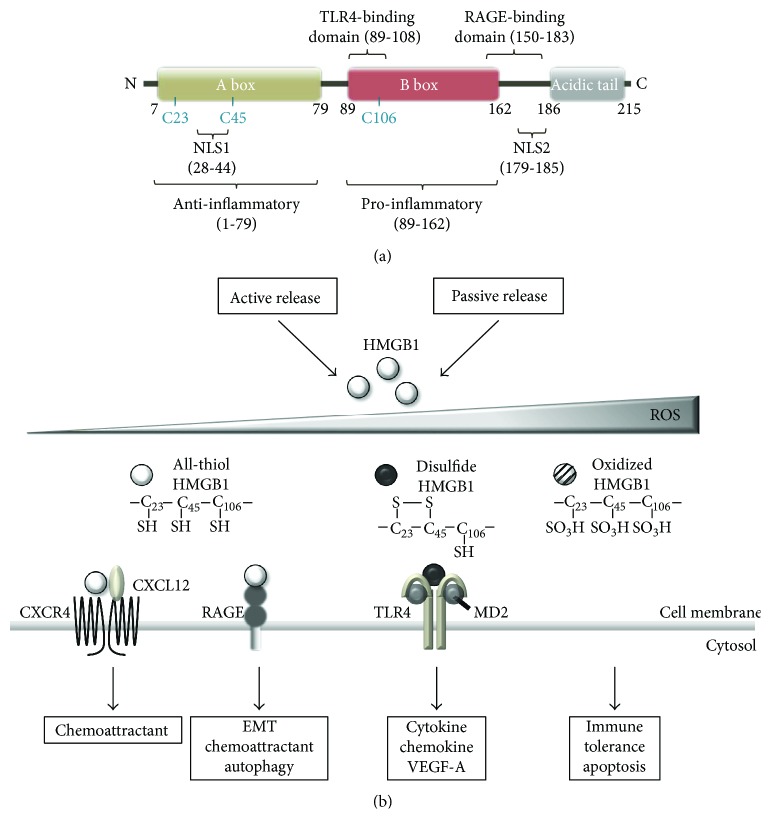
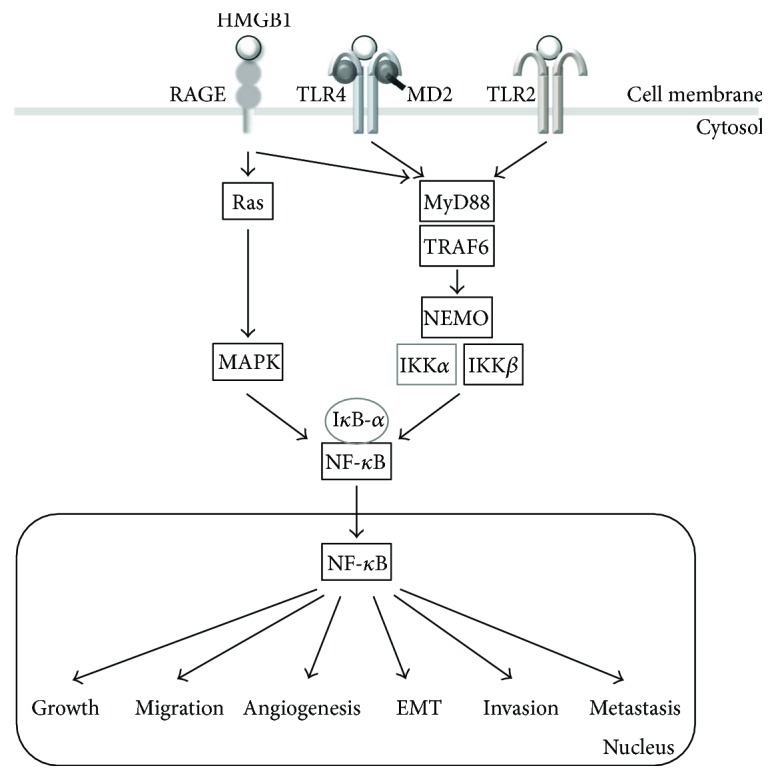
Rapidly growing malignant tumors frequently encounter hypoxia and nutrient (e.g., glucose) deprivation, which occurs because of insufficient blood supply. This results in necrotic cell death in the core region of solid tumors. Necrotic cells release their cellular cytoplasmic contents into the extracellular space, such as high mobility group box 1 (HMGB1), which is a nonhistone nuclear protein, but acts as a proinflammatory and tumor-promoting cytokine when released by necrotic cells. These released molecules recruit immune and inflammatory cells, which exert tumor-promoting activity by inducing angiogenesis, proliferation, and invasion. Development of a necrotic core in cancer patients is also associated with poor prognosis. Conventionally, necrosis has been thought of as an unregulated process, unlike programmed cell death processes like apoptosis and autophagy. Recently, necrosis has been recognized as a programmed cell death, encompassing processes such as oncosis, necroptosis, and others. Metabolic stress-induced necrosis and its regulatory mechanisms have been poorly investigated until recently. Snail and Dlx-2, EMT-inducing transcription factors, are responsible for metabolic stress-induced necrosis in tumors. Snail and Dlx-2 contribute to tumor progression by promoting necrosis and inducing EMT and oncogenic metabolism. Oncogenic metabolism has been shown to play a role(s) in initiating necrosis. Here, we discuss the molecular mechanisms underlying metabolic stress-induced programmed necrosis that promote tumor progression and aggressiveness.
快速生长的恶性肿瘤经常遇到缺氧和营养(例如葡萄糖)剥夺,这是由于血液供应不足造成的。这导致实体瘤核心区域的坏死性细胞死亡。坏死细胞将其细胞细胞质内容物释放到细胞外空间,例如高迁移率族蛋白 B1(HMGB1),它是非组蛋白核蛋白,但当由坏死细胞释放时,它作为一种促炎和促进肿瘤的细胞因子发挥作用。这些释放的分子招募免疫和炎症细胞,通过诱导血管生成、增殖和侵袭发挥促进肿瘤的活性。癌症患者中坏死核心的发展也与预后不良有关。传统上,坏死被认为是一种不受调节的过程,与程序性细胞死亡过程(如细胞凋亡和自噬)不同。最近,坏死已被认为是一种程序性细胞死亡,包括胀亡、坏死性凋亡等过程。代谢应激诱导的坏死及其调控机制直到最近才得到深入研究。Snail 和 Dlx-2,诱导 EMT 的转录因子,负责肿瘤中的代谢应激诱导的坏死。Snail 和 Dlx-2 通过促进坏死和诱导 EMT 和致癌代谢促进肿瘤进展。致癌代谢已被证明在引发坏死中发挥作用。在这里,我们讨论了促进肿瘤进展和侵袭性的代谢应激诱导程序性坏死的分子机制。