Gupta Neena, Maranda Louise, Gupta Rakesh
1University of Massachusetts Children's Medical Center, Division of Pediatric Nephrology, 55 Lake Avenue North, Benedict Bldg, A2 210, Worcester, MA 01655 USA.
2University of Massachusetts Memorial Medical Center, Quantitative Health Sciences, Worcester, MA 01655 USA.
Clin Hypertens. 2018 Apr 5;24:7. doi: 10.1186/s40885-018-0092-6. eCollection 2018.
The data on the association of sleep duration and blood pressure in the pediatric age group have been mixed and most studies have focused on weekday sleep duration. The purpose of this study was to compare the weekday and weekend sleep patterns between children and adolescents with newly diagnosed primary hypertension and a normotensive control group.
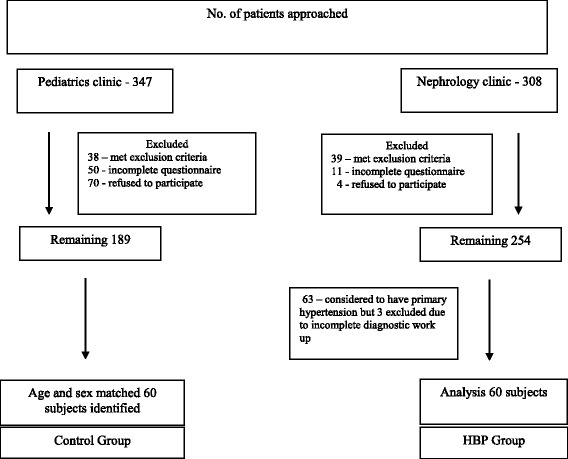
Children and adolescents from a pediatric nephrology clinic, aged 6-18 years with newly diagnosed primary hypertension were compared to an age and sex matched normotensive control group from a general pediatric clinic. The questions about bed time and getting out of bed times from the Pediatric Sleep Questionnaire (PSQ) were used to obtain weekday and weekend bed time, getting out of bed time and sleep duration. The Pediatric Daytime Sleepiness Scale (PDSS) was used to assess subjective sleepiness.
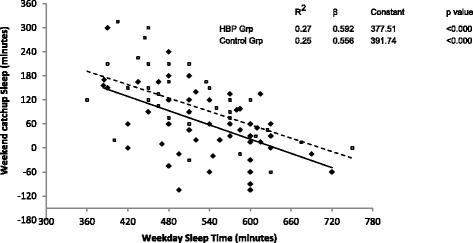
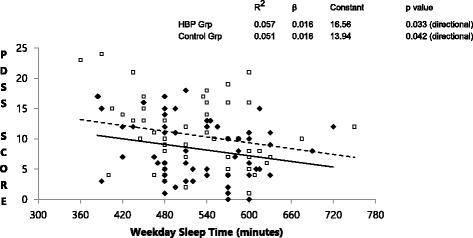
In both groups of 60 subjects each, weekday total sleep time was similar. Subjects in both groups went to bed later and woke up later on the weekends. However, in the hypertensive group, weekend getting out of the bed time was earlier (8:52 AM ±93 min vs. 9:36 AM ±88 min, = 0.013) and weekend catchup sleep was about 40 min less (62.8 ± 85.5 vs. 102.7 ± 84.9, = 0.035). Hypertensive children perceived less subjective sleepiness (PDSS scores 8.28 ± 4.88 vs. 10.63 ± 5.41, = 0.007). The values were calculated after adjusting for body mass index (BMI), race, daytime nap, caffeine use, sleep related breathing disorder (SRBD) scale and periodic limb movement of sleep (PLMS) scale subcomponents of the PSQ.
Hypertensive children obtained less weekend catch up sleep and reported less subjective sleepiness compared to the control group. More weekend sleep may potentially mitigate the effect of weekday sleep deprivation on blood pressure.
关于儿童年龄组睡眠时间与血压之间关联的数据并不一致,且大多数研究集中在工作日睡眠时间。本研究的目的是比较新诊断的原发性高血压儿童和青少年与血压正常对照组之间工作日和周末的睡眠模式。
将来自儿科肾病诊所、年龄在6至18岁且新诊断为原发性高血压的儿童和青少年与来自普通儿科诊所的年龄和性别匹配的血压正常对照组进行比较。使用儿科睡眠问卷(PSQ)中关于上床时间和起床时间的问题来获取工作日和周末的上床时间、起床时间和睡眠时间。使用儿科日间嗜睡量表(PDSS)来评估主观嗜睡程度。
两组各有60名受试者,工作日总睡眠时间相似。两组受试者在周末上床时间更晚且起床时间更晚。然而,高血压组在周末起床时间更早(上午8:52±93分钟对上午9:36±88分钟,P = 0.013),周末补觉时间少约40分钟(62.8±85.5对102.7±84.9,P = 0.035)。高血压儿童主观嗜睡感较低(PDSS评分8.28±4.88对10.63±5.41,P = 0.007)。这些P值是在对PSQ的体重指数(BMI)、种族、日间小睡、咖啡因使用、睡眠相关呼吸障碍(SRBD)量表和睡眠周期性肢体运动(PLMS)量表子成分进行调整后计算得出的。
与对照组相比,高血压儿童周末补觉时间更少,主观嗜睡感更低。更多的周末睡眠可能会减轻工作日睡眠剥夺对血压的影响。