Curtis Brian J, Williams Paula G, Jones Christopher R, Anderson Jeffrey S
Department of Psychology University of Utah Salt Lake City UT USA.
Department of Neurology University of Utah Salt Lake City UT USA.
Brain Behav. 2016 Sep 15;6(12):e00576. doi: 10.1002/brb3.576. eCollection 2016 Dec.
Approximately 30% of the U.S. population reports recurrent short sleep; however, perceived sleep need varies widely among individuals. Some "habitual short sleepers" routinely sleep 4-6 hr/night without self-reported adverse consequences. Identifying neural mechanisms underlying individual differences in perceived sleep-related dysfunction has important implications for understanding associations between sleep duration and health.
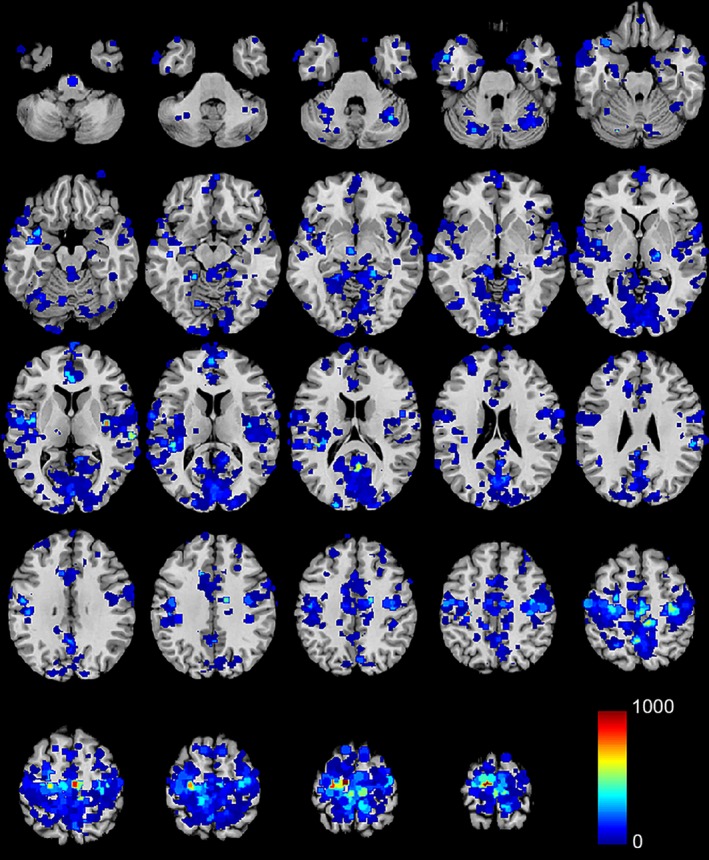
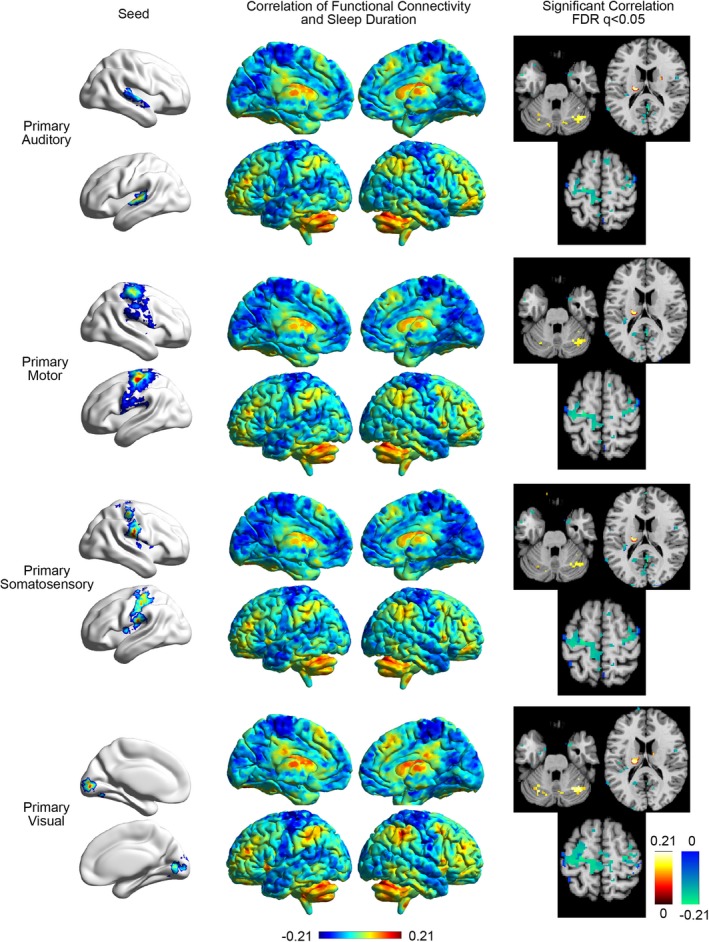
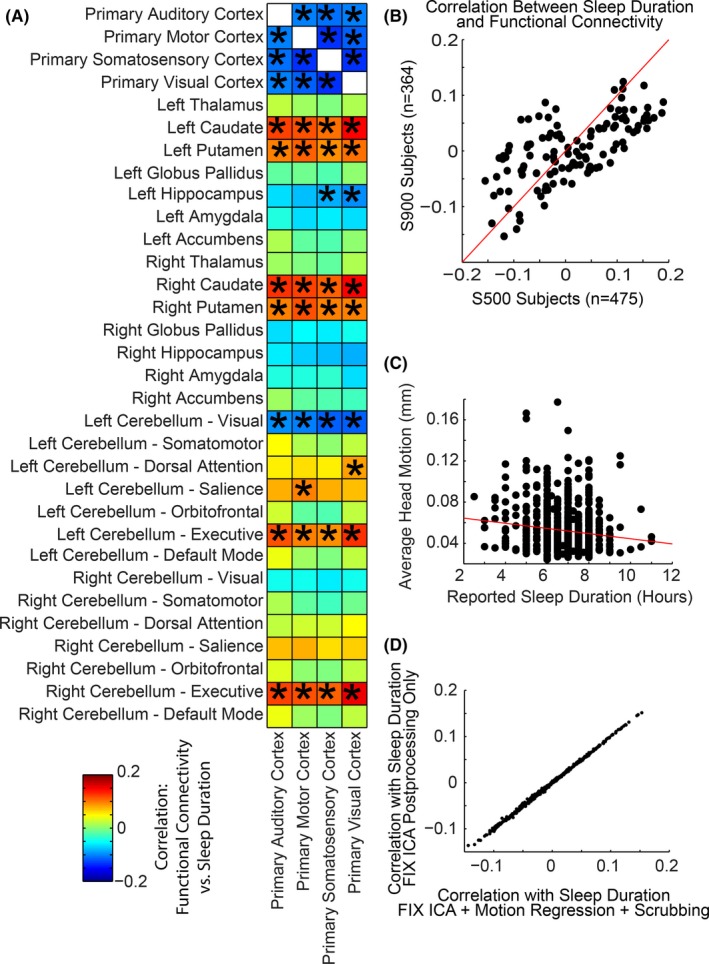
This study utilized data from 839 subjects of the Human Connectome Project to examine resting functional connectivity associations with self-reported short sleep duration, as well as differences between short sleepers with versus without reported dysfunction. Functional connectivity was analyzed using a parcellation covering the cortical, subcortical, and cerebellar gray matter at 5 mm resolution.
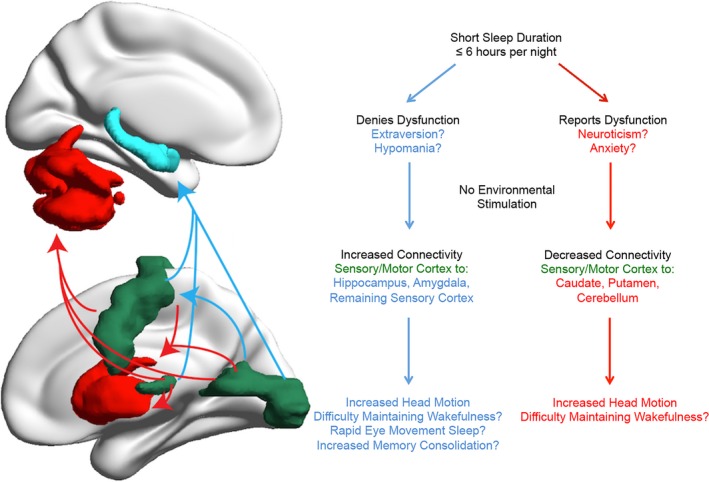
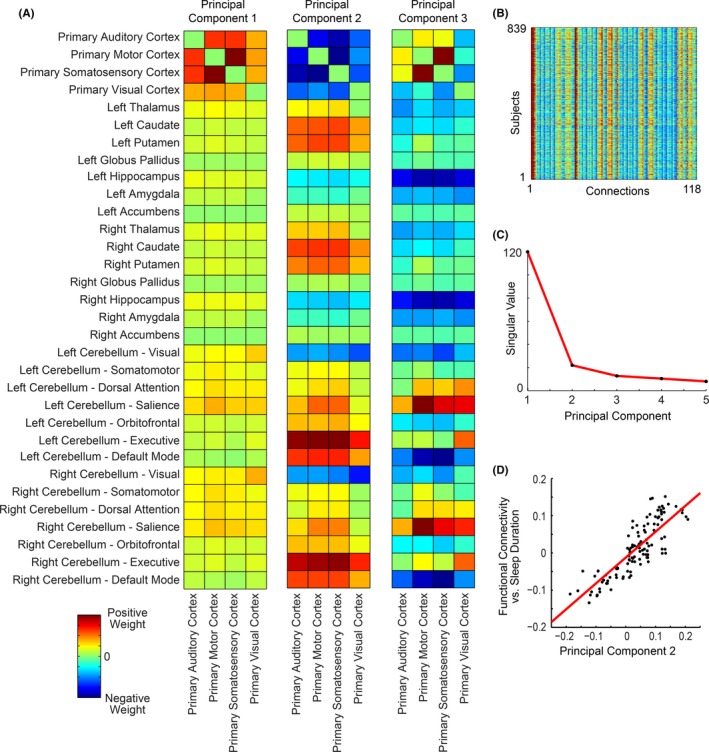
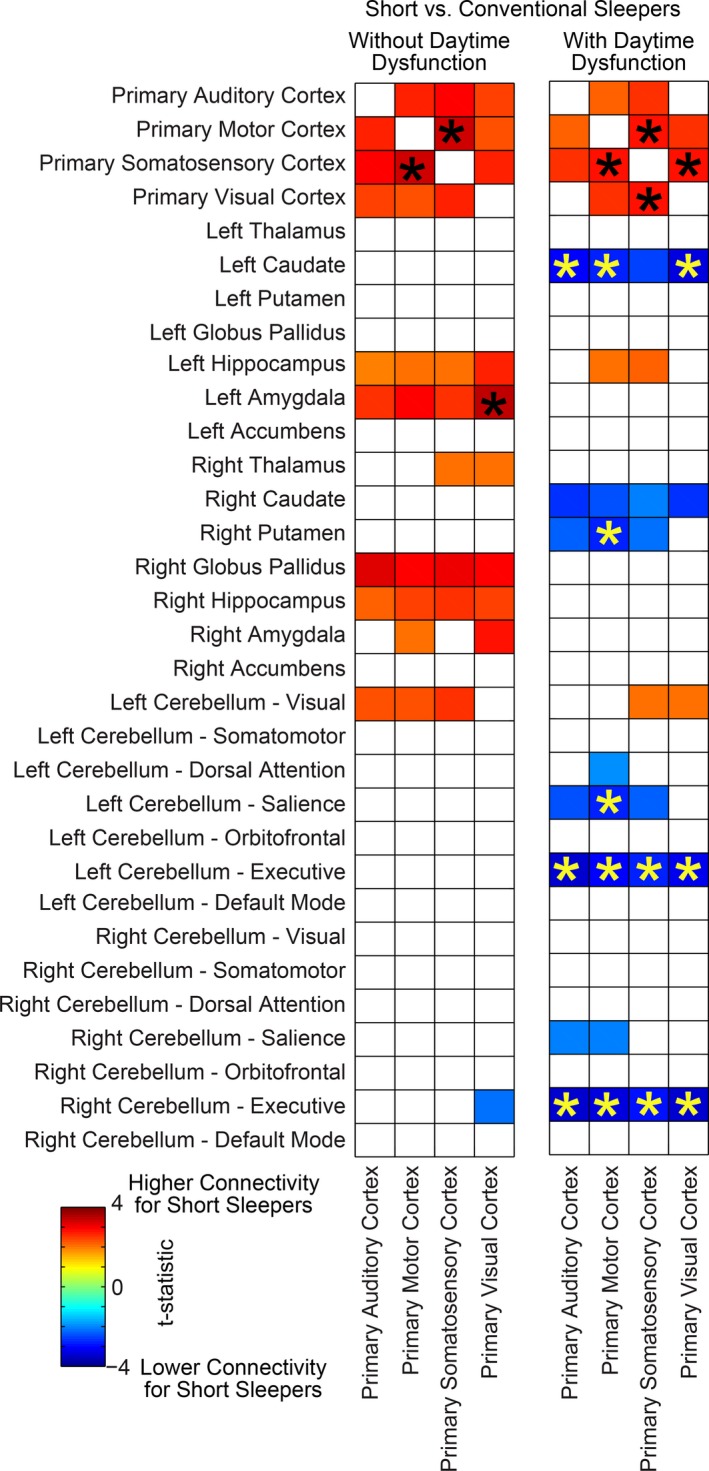
Self-reported sleep duration predicts one of the primary patterns of intersubject variance in resting functional connectivity. Compared to conventional sleepers, both short sleeper subtypes exhibited resting fMRI (R-fMRI) signatures consistent with diminished wakefulness, potentially indicating inaccurate perception of functionality among those denying dysfunction. Short sleepers denying dysfunction exhibited increased connectivity between sensory cortices and bilateral amygdala and hippocampus, suggesting that efficient sleep-related memory consolidation may partly explain individual differences in perceived daytime dysfunction.
Overall, current findings indicate that R-fMRI investigations should include assessment of average sleep duration during the prior month. Furthermore, short sleeper subtype findings provide a candidate neural mechanism underlying differences in perceived daytime impairment associated with short sleep duration.
约30%的美国人口报告有反复的短睡眠情况;然而,个体对睡眠需求的感知差异很大。一些“习惯性短睡眠者”每晚常规睡眠时间为4 - 6小时,且无自我报告的不良后果。确定个体在感知睡眠相关功能障碍方面差异的神经机制,对于理解睡眠时间与健康之间的关联具有重要意义。
本研究利用人类连接组计划中839名受试者的数据,来检查静息功能连接与自我报告的短睡眠时间之间的关联,以及有与无报告功能障碍的短睡眠者之间的差异。使用分辨率为5毫米的脑区划分对皮质、皮质下和小脑灰质进行功能连接分析。
自我报告的睡眠时间可预测静息功能连接中受试者间差异的一种主要模式。与常规睡眠者相比,两种短睡眠者亚型均表现出与清醒度降低一致的静息功能磁共振成像(R-fMRI)特征,这可能表明那些否认功能障碍的人对功能的感知不准确。否认功能障碍的短睡眠者在感觉皮层与双侧杏仁核和海马体之间的连接增加,这表明有效的睡眠相关记忆巩固可能部分解释了在感知白天功能障碍方面的个体差异。
总体而言,当前研究结果表明,R-fMRI研究应包括对前一个月平均睡眠时间的评估。此外,短睡眠者亚型的研究结果为与短睡眠时间相关的白天功能障碍感知差异提供了一种潜在的神经机制。