a Research group on microbial adaptation (EA 2656) Normandie University, UNIROUEN , Rouen , France.
b Invasive bacterial Infections Unit and National reference center on meningococci , Institut Pasteur , Paris , France.
Virulence. 2018 Dec 31;9(1):923-929. doi: 10.1080/21505594.2018.1460064.
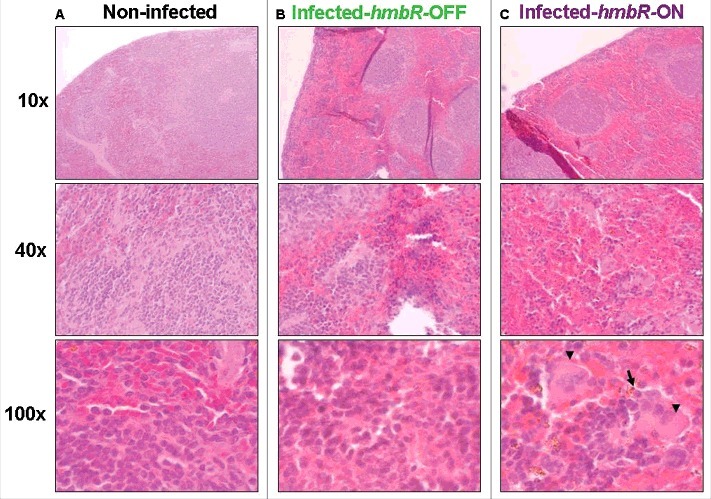
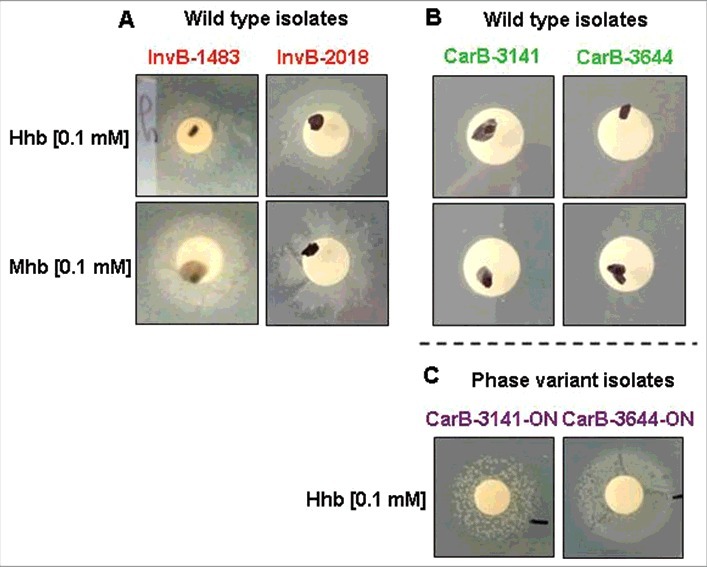
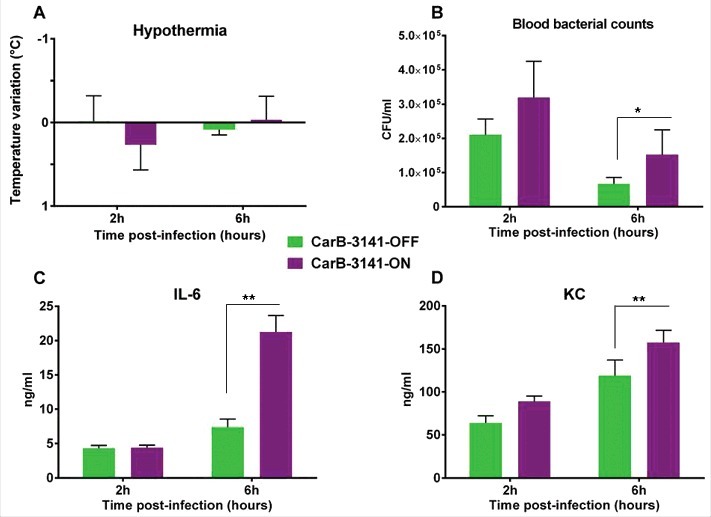
Carriage and invasion balance in the pathogenesis of Neisseria meningitidis was analyzed during a recent clonal outbreak of meningococcal B in Normandy, France, that offered the opportunity to compare six isolates undistinguable by conventional typing (B:14:P1.7,16:F3-3/ST-32) isolated from invasive disease or pharyngeal asymptomatic carriage. Data from animal model (transgenic mice rendered susceptible to N. meningitidis infection) showed an absence of virulence for two non-capsulated carriage isolates, an intermediate virulence for two capsulated carriage isolates and a marked virulence for two capsulated invasive isolates. This differential pathogenesis well correlated with whole genome sequencing analysis that clustered both isolates of each group together, forming their own arm within the Norman cluster. Gene-by-gene analysis specified that genes involved in iron acquisition were among the elements differentially represented in cluster of invasive isolates compared to cluster of capsulated carriage isolates. The hemoglobin receptor encoding gene hmbR was in an ON-phase in the capsulated invasive isolates while carriage capsulated isolates were in an OFF-phase. An ON-phase variant of a capsulated carriage isolate showed enhanced virulence. These data underline the role of phase variation (ON/OFF) of HmbR in the balance between disease isolates/carriage isolates.
在法国诺曼底最近发生的 B 群脑膜炎奈瑟菌克隆性暴发期间,对脑膜炎奈瑟菌发病机制中的携带和侵袭平衡进行了分析,这为比较 6 株不可通过常规分型区分的分离株提供了机会(B:14:P1.7,16:F3-3/ST-32),这些分离株来自侵袭性疾病或咽部无症状携带。动物模型(使转基因小鼠易感染脑膜炎奈瑟菌)的数据显示,两种无荚膜携带分离株无毒性,两种有荚膜携带分离株的毒性中等,两种有荚膜侵袭性分离株的毒性明显。这种不同的发病机制与全基因组测序分析很好地相关,全基因组测序分析将每组的两个分离株聚类在一起,在诺曼底簇内形成自己的分支。基因间分析表明,与有荚膜携带分离株簇相比,侵袭性分离株簇中差异表达的基因包括铁摄取相关基因。荚膜侵袭性分离株中编码血红蛋白受体的 hmbR 基因处于 ON 相,而荚膜携带分离株处于 OFF 相。携带荚膜的分离株的 ON 相变体显示出增强的毒力。这些数据强调了 HmbR 相位变异(ON/OFF)在疾病分离株/携带分离株之间平衡中的作用。