Ordinelli Alessandra, Bernabò Nicola, Orsini Massimiliano, Mattioli Mauro, Barboni Barbara
Faculty of Bioscience and Technology for Food, Agriculture and Environment, University of Teramo, Teramo, Italy.
Istituto Zooprofilattico Sperimentale "G. Caporale", Teramo, Italy.
BMC Syst Biol. 2018 Apr 11;12(1):52. doi: 10.1186/s12918-018-0578-6.
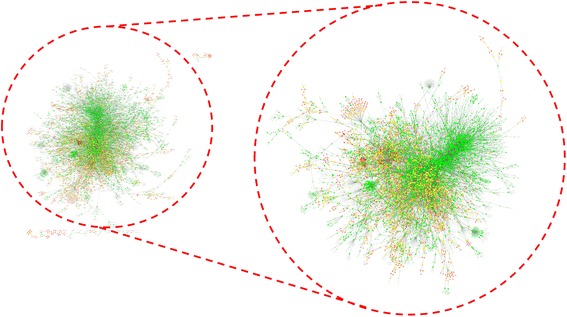
For over sixty years, it has been known that mammalian spermatozoa immediately after ejaculation are virtually infertile. They became able to fertilize only after they reside for long time (hours to days) within female genital tract where they complete their functional maturation, the capacitation. This process is finely regulated by the interaction with the female environment and involves, in spermatozoa, a myriad of molecules as messengers and target of signals. Since, to date, a model able to represent the molecular interaction that characterize sperm physiology does not exist, we realized the Human Sperm Interactme Network3.0 (HSIN3.0) and its main component (HSNI3.0_MC), starting from the pathway active in male germ cells.
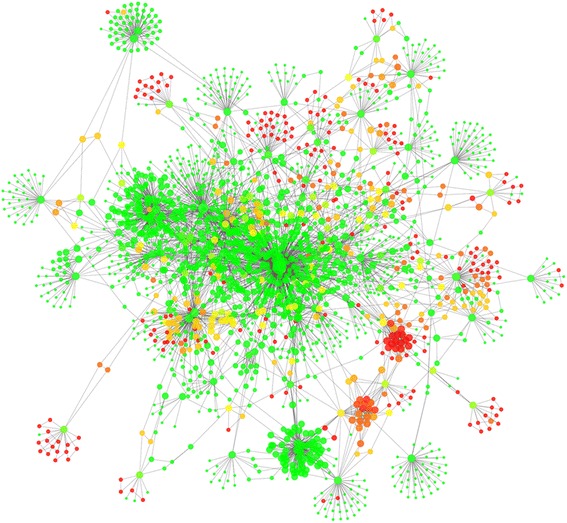
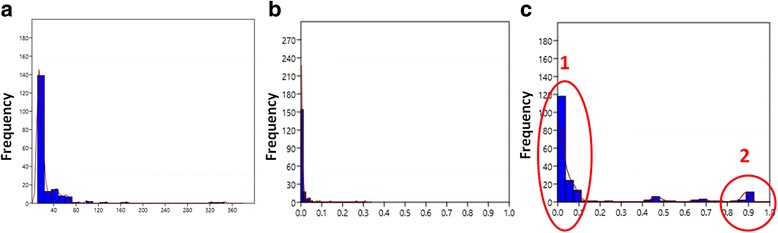
HSIN3.0 and HSIN3.0_MC are scale free networks, adherent to the Barabasi-Albert model, and are characterised by an ultra-small world topology. We found that they are resistant to random attacks and that are designed to respond quickly and specifically to external inputs. In addition, it has been possible to identify the most connected nodes (the hubs) and the bottlenecks nodes. This result allowed us to explore the control mechanisms active in driving sperm biochemical machinery and to verify the different levels of controls: party vs. date hubs and hubs vs. bottlenecks, thanks the availability of data from KO mice. Finally, we found that several key nodes represent molecules specifically involved in function that are thought to be not present or not active in sperm cells, such as control of cell cycle, proteins synthesis, nuclear trafficking, and immune response, thus potentially open new perspectives on the study of sperm biology.
For the first time we present a network representing putative human sperm interactome. This result gives very intriguing biological information and could contribute to the knowledge of spermatozoa, either in physiological or pathological conditions.
六十多年来,人们一直知道哺乳动物射精后的精子实际上是不育的。只有在它们在雌性生殖道中长时间(数小时至数天)停留后,完成功能成熟即获能后,才能够受精。这个过程受到与雌性环境相互作用的精细调节,并且在精子中涉及无数作为信号信使和信号靶点的分子。由于迄今为止不存在能够代表精子生理特征的分子相互作用模型,我们从雄性生殖细胞中活跃的通路出发,构建了人类精子相互作用网络3.0(HSIN3.0)及其主要组件(HSNI3.0_MC)。
HSIN3.0和HSIN3.0_MC是无标度网络,符合巴拉巴西-阿尔伯特模型,具有超小世界拓扑结构。我们发现它们对随机攻击具有抗性,并且设计用于快速、特异性地响应外部输入。此外,还能够识别连接最多的节点(枢纽节点)和瓶颈节点。这一结果使我们能够探索驱动精子生化机制的活性控制机制,并通过敲除小鼠的数据验证不同层次的控制:派对型枢纽节点与约会型枢纽节点以及枢纽节点与瓶颈节点。最后,我们发现几个关键节点代表了被认为在精子细胞中不存在或不活跃的、特别参与某些功能的分子,如细胞周期控制、蛋白质合成、核运输和免疫反应,从而可能为精子生物学研究开辟新的视角。
我们首次提出了一个代表推测的人类精子相互作用组的网络。这一结果提供了非常有趣的生物学信息,可能有助于在生理或病理条件下对精子的认识。