Bernabò Nicola, Mattioli Mauro, Barboni Barbara
Department of Comparative Biomedical Sciences, University of Teramo, 64100 Teramo, Italy.
BMC Syst Biol. 2010 Jun 18;4:87. doi: 10.1186/1752-0509-4-87.
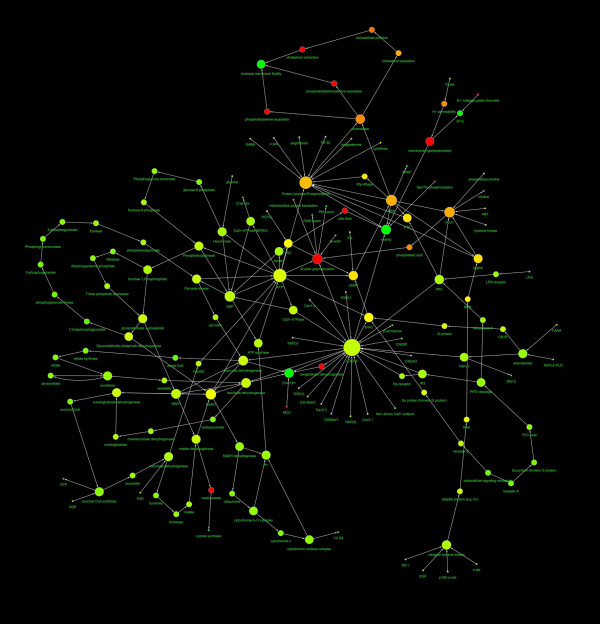
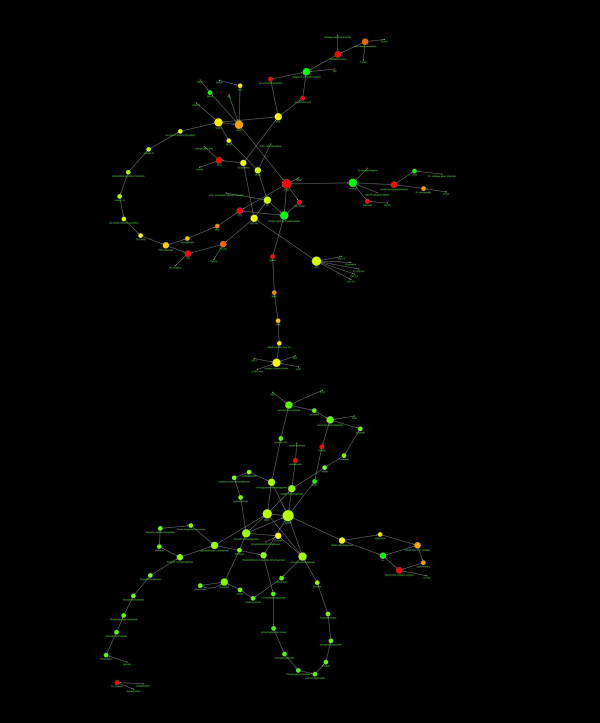
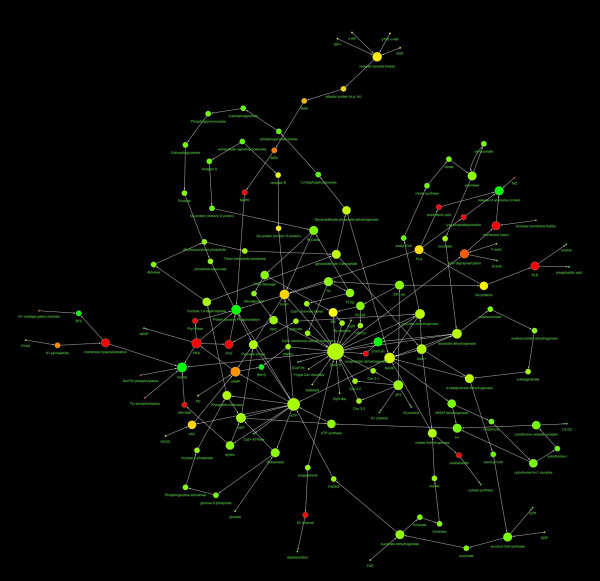
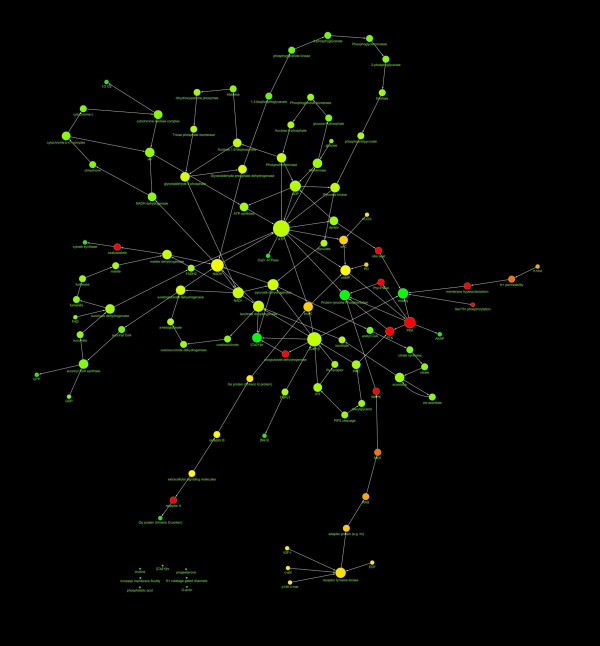
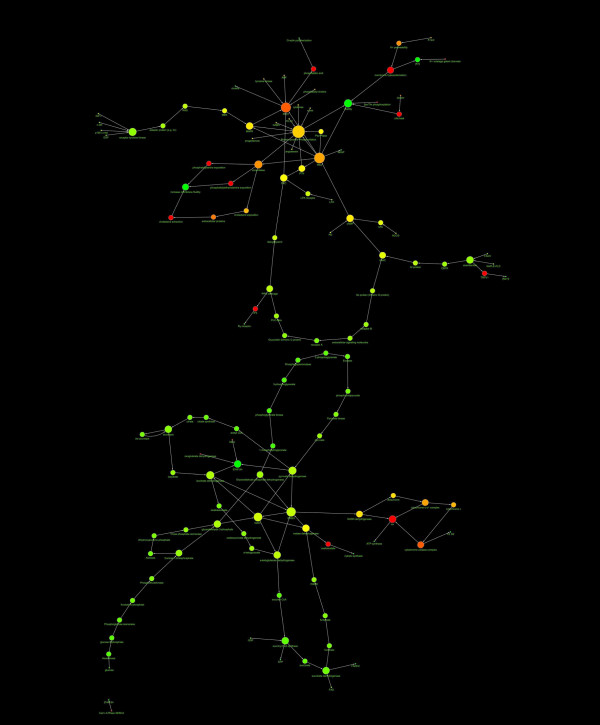
Mammalian spermatozoa, immediately after the ejaculation are unable to fertilize the oocyte. To reach their fertilizing ability the male gametes must complete a process of functional maturation, the capacitation, within the female genital tract. Only once the capacitation is completed the spermatozoa can respond to the oocyte interaction with the exocytosis of acrosome content, acrosome reaction (AR). These post-ejaculatory events are under the attention of Researchers from more than fifty years but their basic knowledge is still unsatisfactory. This failure could be due not to the insufficiency of available data, but to the inability to manage them in a descriptive model. Thus, to overlap this problem, the capacitation and the AR were represented using the biological networks formalism. In addition the effect of elimination from both the networks of the most linked (the hubs) or of random selected nodes was verified and the network representing the common element of capacitation and AR (C intersectionA) was realized.
The statistical analysis of resulting graphs showed that capacitation, AR and C intersectionA networks follow the scale free topology and are characterized by low clustering. In all cases it was possible to identify the key molecules (Ca2+, ATP, P-Tyr, PKA, PLD1 in capacitation, Ca2+, ATP in AR and C intersectionA) and to describe their role in signalling transduction. The effect of hubs elimination caused the collapse of networks structure, while the elimination of random selected nodes did not affected it.
It was demonstrated that the post-ejaculatory life of male gametes is a series of events characterised by a high signalling efficiency and robustness against random failure. This strengthens the evidence that the adoption of biological networks modelization of capacitation and AR could increase the understanding of spermatozoa physiology, potentially opening new perspective in drug discovery, diagnosis and therapy of male infertility.
哺乳动物精子在射精后即刻无法使卵母细胞受精。为获得受精能力,雄配子必须在雌性生殖道内完成功能成熟过程,即获能。只有获能完成后,精子才能通过顶体内容物的胞吐作用(顶体反应,AR)对卵母细胞的相互作用做出反应。这些射精后的事件五十多年来一直受到研究人员的关注,但其基础知识仍不尽人意。这种不足可能并非由于可用数据不足,而是由于无法在描述性模型中对其进行管理。因此,为解决这个问题,使用生物网络形式表示获能和顶体反应。此外,验证了从两个网络中去除连接最多的节点(枢纽节点)或随机选择的节点的效果,并构建了代表获能和顶体反应共同元素的网络(C交A)。
对所得图形的统计分析表明,获能、顶体反应和C交A网络遵循无标度拓扑结构,且聚类系数较低。在所有情况下,都有可能识别关键分子(获能过程中的Ca2+、ATP、P-Tyr、PKA、PLD1,顶体反应和C交A中的Ca2+、ATP)并描述它们在信号转导中的作用。去除枢纽节点导致网络结构崩溃,而去除随机选择的节点则没有影响。
结果表明,雄配子射精后的生命历程是一系列具有高信号效率和抗随机故障鲁棒性的事件。这进一步证明,采用获能和顶体反应的生物网络建模可以增进对精子生理学的理解,有可能为男性不育症的药物发现、诊断和治疗开辟新的前景。