Department of Gynaecology and Obstetrics, Beijing Chaoyang Hospital, Capital Medical University, No. 8 South Road, workers' Stadium, Chaoyang District, Beijing, 100020, China.
The First Affiliated Hospital of Jinzhou Medical University, No.2, people's street, Jinzhou, 121001, China.
J Ovarian Res. 2018 Apr 11;11(1):29. doi: 10.1186/s13048-018-0397-9.
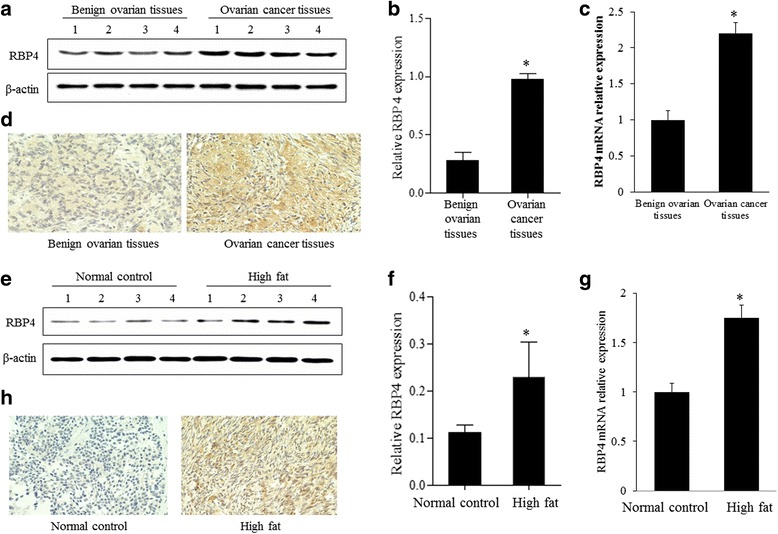
Obesity has been linked to several types of cancers including ovarian cancer. Retinol binding protein 4 (RBP4) is an adipokine that drives the development of hyperinsulinemia and type II diabetes in obesity patients and animals. Previously, we have identified RBP4 as a serum marker for ovarian cancer. Here we further explored the consequence of RBP4 upregulation in ovarian cancer cells and its molecular mechanism.
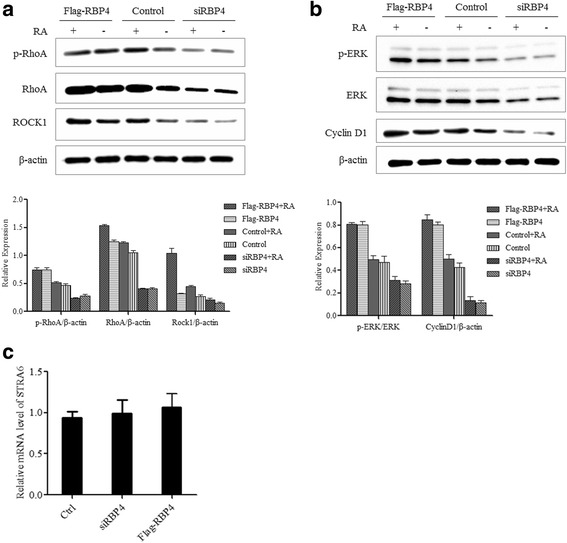
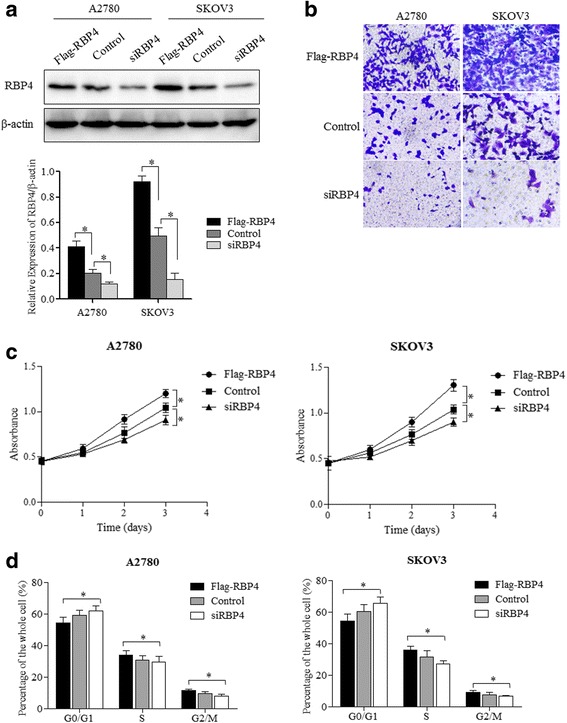
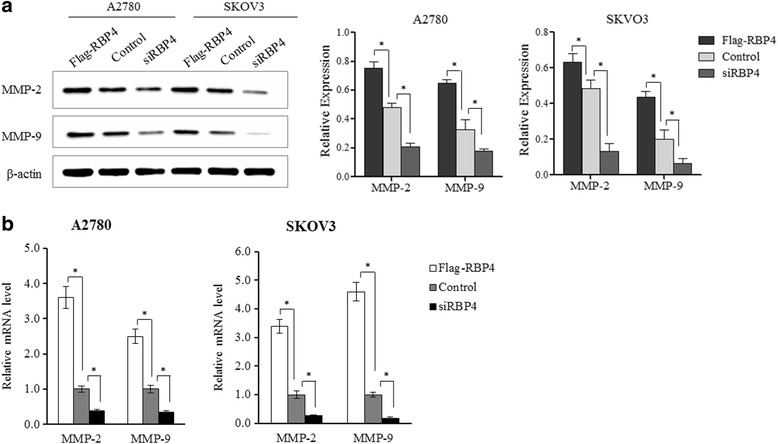
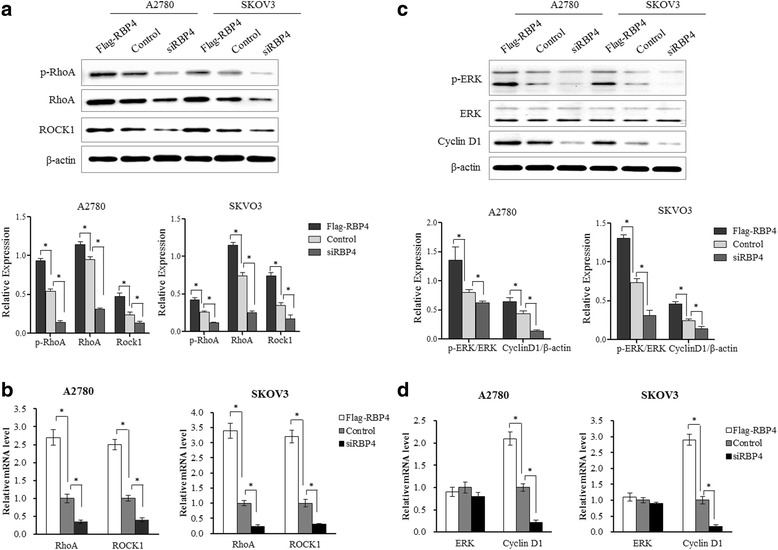
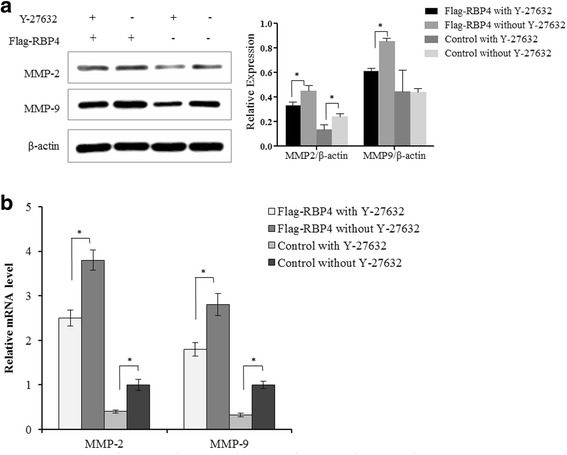
Our results show that RBP4 is overexpressed in ovarian cancer cells to the same extent as in adipose tissues. The overexpression of RBP4 in ovarian cancer cells promotes cancer cell migration and proliferation. At molecular level, cancer progression factors MMP2 and MMP9 are induced in response to RBP4 overexpression. We further investigated which signaling pathways are utilized by RBP4 to activate ovarian cancer cell migration. We found RhoA/Rock1 pathway is turned on and CyclinD1 is upregulated in RBP4 overexpressed cells. Inhibition of RhoA/Rock1 pathway reduces the RBP4-induced MMP2 and MMP9 expression. The RBP4 action is depend on its associated ligand vitamin A/retinol acid (RA) and possibly involves similar pathways as for conferring insulin resistance. Moreover, we show that knockdown of RBP4 significantly reduce cancer cell migration and proliferation as well as expressions of oncogenic factors.
Our results indicated that RBP4 can drive ovarian cancer cell migration and proliferation via RhoA/Rock1 and ERK pathway. It suggests that RBP4 act as a oncogene in ovarian cancer cells. Thus, RBP4 could be a molecular bridge between obesity and cancers and a potential target for treating obese cancer patients.
肥胖与多种癌症有关,包括卵巢癌。视黄醇结合蛋白 4(RBP4)是一种脂肪因子,可导致肥胖患者和动物发生高胰岛素血症和 2 型糖尿病。此前,我们已将 RBP4 鉴定为卵巢癌的血清标志物。在此,我们进一步探讨了 RBP4 在卵巢癌细胞中的上调及其分子机制所产生的后果。
我们的结果表明,RBP4 在卵巢癌细胞中的表达与脂肪组织中的表达程度相同。RBP4 在卵巢癌细胞中的过表达促进了癌细胞的迁移和增殖。在分子水平上,RBP4 过表达会诱导癌症进展因子 MMP2 和 MMP9 的表达。我们进一步研究了 RBP4 利用哪些信号通路激活卵巢癌细胞迁移。我们发现,RBP4 过表达会激活 RhoA/Rock1 通路并上调细胞周期蛋白 D1。RhoA/Rock1 通路的抑制可减少 RBP4 诱导的 MMP2 和 MMP9 的表达。RBP4 的作用依赖于其结合配体维生素 A/视黄醇酸(RA),并且可能涉及与胰岛素抵抗相同的途径。此外,我们还表明,RBP4 的敲低可显著降低癌细胞的迁移和增殖以及致癌因子的表达。
我们的结果表明,RBP4 可以通过 RhoA/Rock1 和 ERK 通路驱动卵巢癌细胞的迁移和增殖。这表明 RBP4 在卵巢癌细胞中充当癌基因。因此,RBP4 可能是肥胖与癌症之间的分子桥梁,也是治疗肥胖癌症患者的潜在靶标。