Department of Microbiology, The University of Alabama at Birmingham, 845 19th Street South, Birmingham, Alabama, 35294-2170, USA.
Division of Pulmonology, South Texas Veterans Health Care System, San Antonio, Texas, 78229, USA.
Sci Rep. 2018 Apr 11;8(1):5846. doi: 10.1038/s41598-018-24210-8.
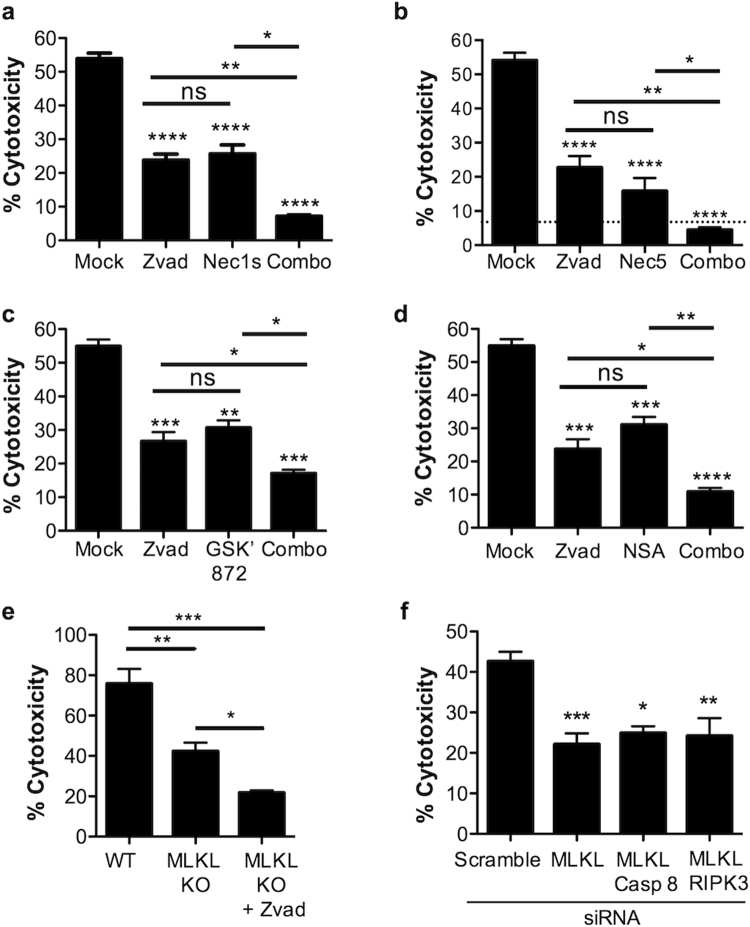
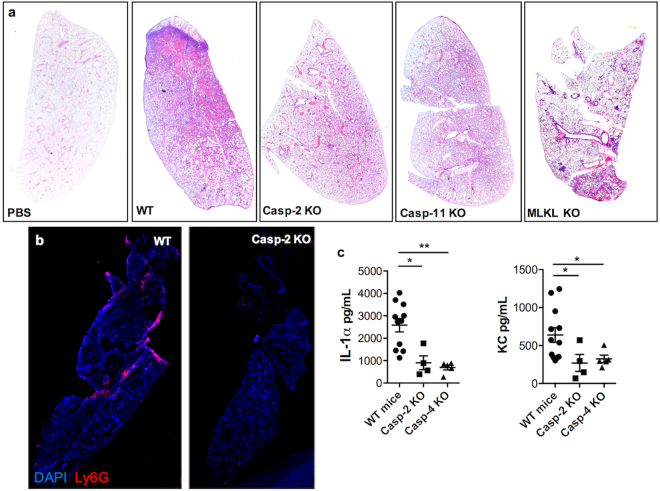
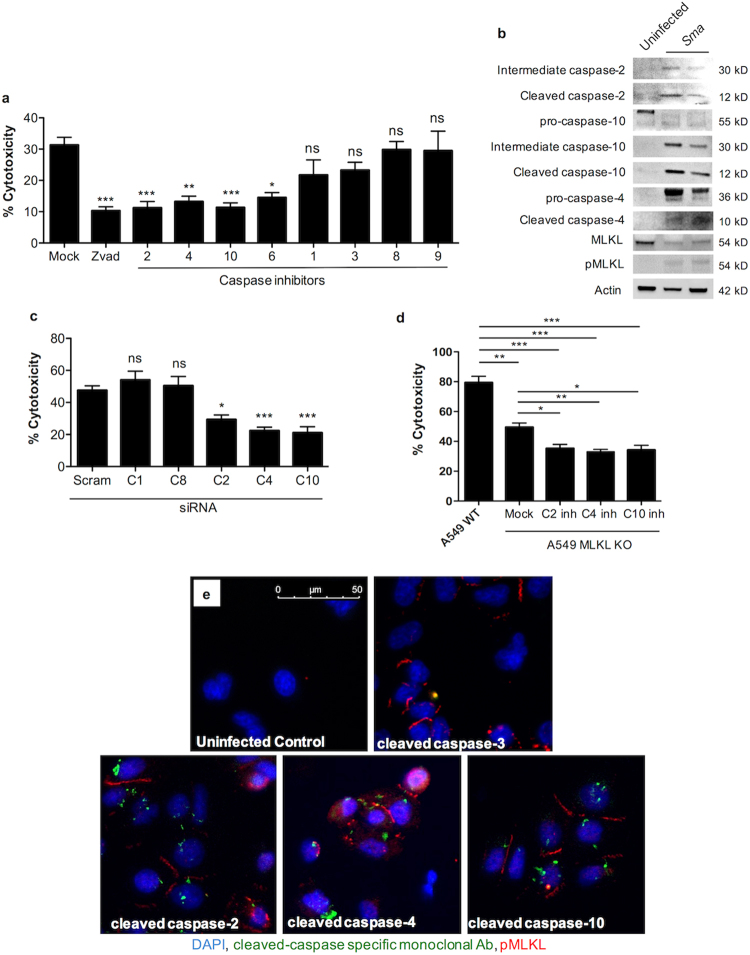
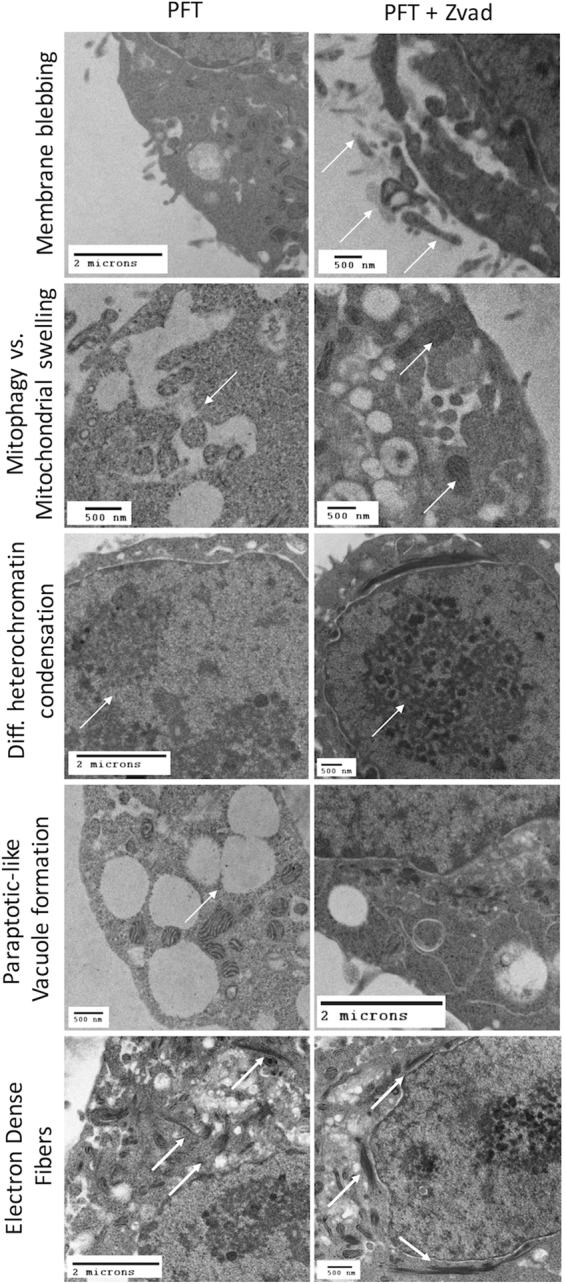
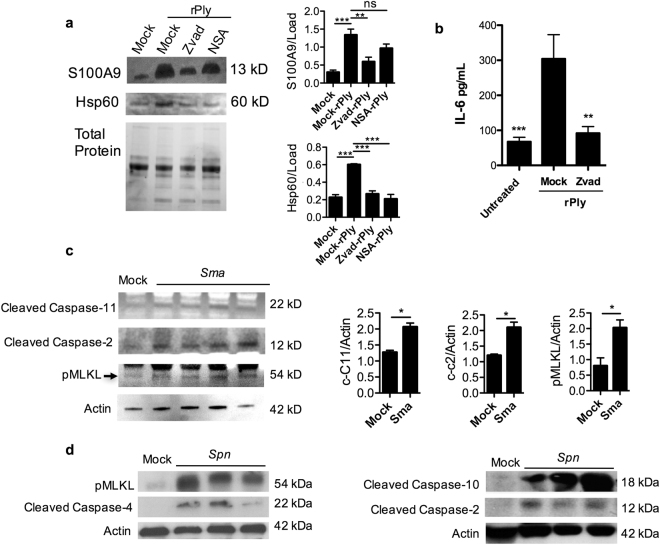
Pore-forming toxins are the most common virulence factor in pathogenic bacteria. They lead to membrane permeabilization and cell death. Herein, we show that respiratory epithelial cells (REC) undergoing bacterial pore-forming toxin (PFT)-induced necroptosis simultaneously experienced caspase activation independently of RIPK3. MLKL deficient REC treated with a pan-caspase inhibitor were protected in an additive manner against PFT-induced death. Subsequently, cleaved versions of caspases-2, -4 and -10 were detected within REC undergoing necroptosis by immunoblots and monoclonal antibody staining. Caspase activation was observed in lung samples from mice and non-human primates experiencing Gram-negative and Gram-positive bacterial pneumonia, respectively. During apoptosis, caspase activation normally leads to cell shrinkage, nuclear condensation, and immunoquiescent death. In contrast, caspase activity during PFT-induced necroptosis increased the release of alarmins to the extracellular milieu. Caspase-mediated alarmin release was found sufficient to activate resting macrophages, leading to Interleukin-6 production. In a mouse model of Gram-negative pneumonia, deletion of caspases -2 and -11, the mouse orthologue of caspase-4, reduced pulmonary inflammation, immune cell infiltration and lung damage. Thus, our study describes a previously unrecognized role for caspase activation in parallel to necroptosis, and indicates that their activity plays a critical pro-inflammatory role during bacterial pneumonia.
穿孔毒素是致病性细菌中最常见的毒力因子。它们导致细胞膜通透性增加和细胞死亡。在此,我们表明,经历细菌穿孔毒素(PFT)诱导的细胞坏死的呼吸上皮细胞(REC)同时经历独立于 RIPK3 的半胱天冬酶激活。用泛半胱天冬酶抑制剂处理的 MLKL 缺陷型 REC 以附加方式受到 PFT 诱导的死亡的保护。随后,通过免疫印迹和单克隆抗体染色在经历坏死的 REC 中检测到半胱天冬酶-2、-4 和 -10 的裂解形式。在经历革兰氏阴性和革兰氏阳性细菌肺炎的小鼠和非人类灵长类动物的肺样本中观察到 caspase 激活。在细胞凋亡过程中,半胱天冬酶的激活通常导致细胞收缩、核浓缩和免疫惰性死亡。相比之下,PFT 诱导的坏死过程中的半胱天冬酶活性增加了警报素向细胞外环境的释放。发现 caspase 介导致敏素释放足以激活静止的巨噬细胞,导致白细胞介素 6 的产生。在革兰氏阴性肺炎的小鼠模型中,半胱天冬酶 -2 和 -11(半胱天冬酶-4 的小鼠同源物)的缺失减少了肺部炎症、免疫细胞浸润和肺损伤。因此,我们的研究描述了 caspase 激活在与坏死平行的过程中的先前未被认识的作用,并表明它们的活性在细菌性肺炎中发挥了关键的促炎作用。