Kruckow Katherine L, Zhao Kevin, Bowdish Dawn M E, Orihuela Carlos J
Department of Microbiology, University of Alabama at Birmingham, Birmingham, AL, USA.
McMaster Immunology Research Centre and the Firestone Institute for Respiratory Health, McMaster University, Hamilton, Canada.
Pneumonia (Nathan). 2023 Mar 5;15(1):5. doi: 10.1186/s41479-023-00110-y.
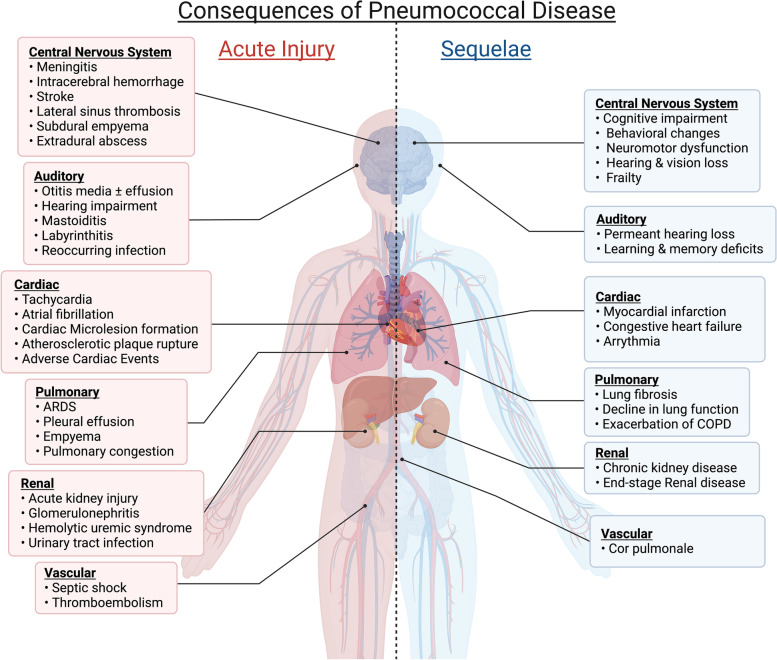
Streptococcus pneumoniae (Spn) is a major public health problem, as it is a main cause of otitis media, community-acquired pneumonia, bacteremia, sepsis, and meningitis. Acute episodes of pneumococcal disease have been demonstrated to cause organ damage with lingering negative consequences. Cytotoxic products released by the bacterium, biomechanical and physiological stress resulting from infection, and the corresponding inflammatory response together contribute to organ damage accrued during infection. The collective result of this damage can be acutely life-threatening, but among survivors, it also contributes to the long-lasting sequelae of pneumococcal disease. These include the development of new morbidities or exacerbation of pre-existing conditions such as COPD, heart disease, and neurological impairments. Currently, pneumonia is ranked as the 9 leading cause of death, but this estimate only considers short-term mortality and likely underestimates the true long-term impact of disease. Herein, we review the data that indicates damage incurred during acute pneumococcal infection can result in long-term sequelae which reduces quality of life and life expectancy among pneumococcal disease survivors.
肺炎链球菌(Spn)是一个重大的公共卫生问题,因为它是中耳炎、社区获得性肺炎、菌血症、败血症和脑膜炎的主要病因。肺炎球菌疾病的急性发作已被证明会导致器官损伤,并产生长期的负面后果。细菌释放的细胞毒性产物、感染引起的生物力学和生理应激,以及相应的炎症反应共同导致感染期间累积的器官损伤。这种损伤的综合结果可能会在急性期危及生命,但在幸存者中,它也会导致肺炎球菌疾病的长期后遗症。这些后遗症包括出现新的疾病或使慢性阻塞性肺疾病、心脏病和神经功能障碍等原有疾病加重。目前,肺炎被列为第九大死因,但这一估计仅考虑了短期死亡率,可能低估了该疾病真正的长期影响。在此,我们回顾相关数据,这些数据表明急性肺炎球菌感染期间造成的损伤可导致长期后遗症,从而降低肺炎球菌疾病幸存者的生活质量和预期寿命。