a Departments of Microbiology, Medicine, Global Health, and Laboratory Medicine , University of Washington , Seattle , WA , US.
b Washington National Primate Research Center , Seattle , WA , US.
Hum Vaccin Immunother. 2018 Jul 3;14(7):1820-1831. doi: 10.1080/21645515.2018.1448328. Epub 2018 Apr 12.
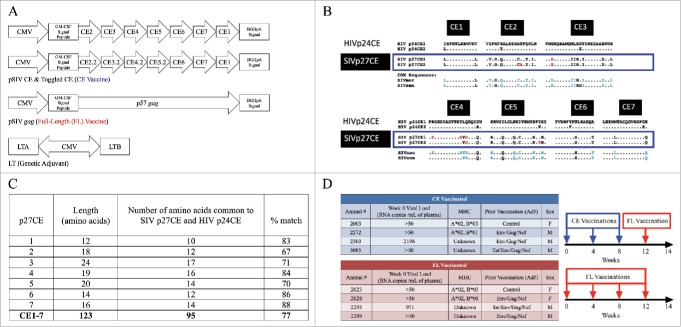
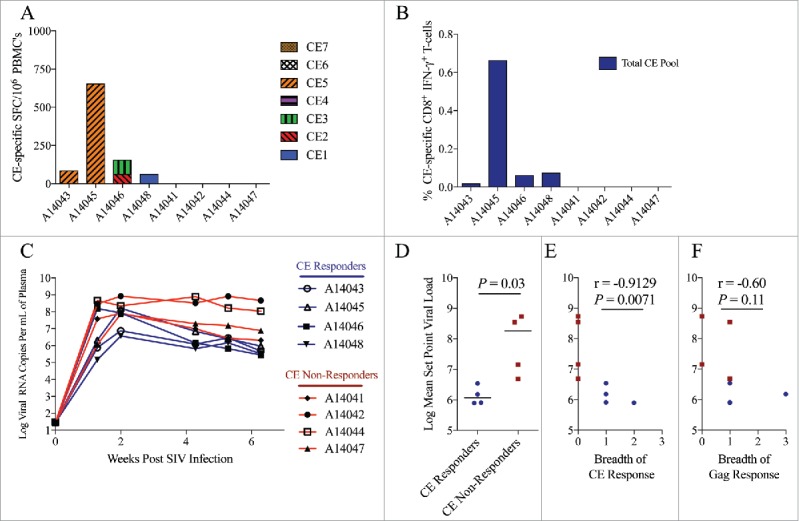
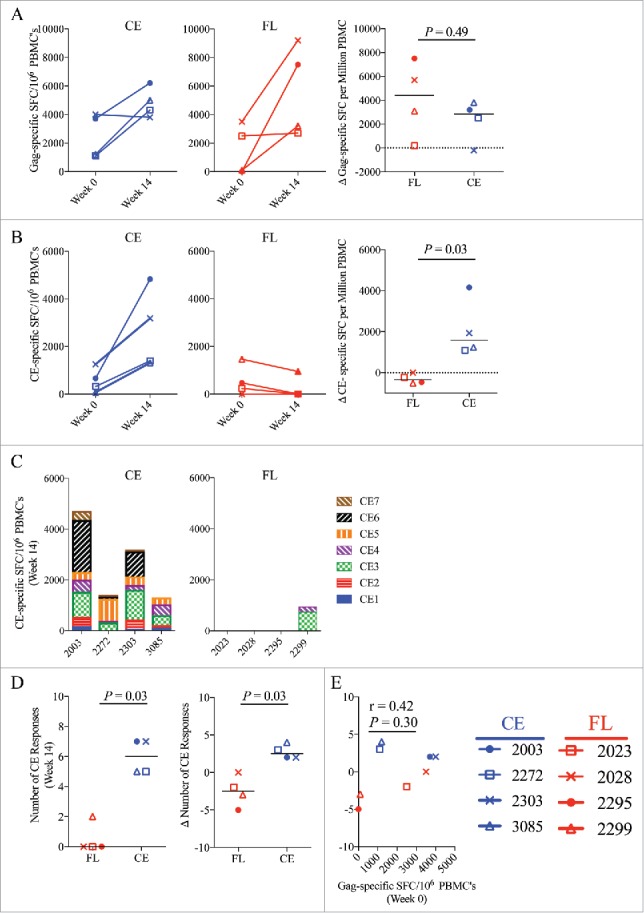
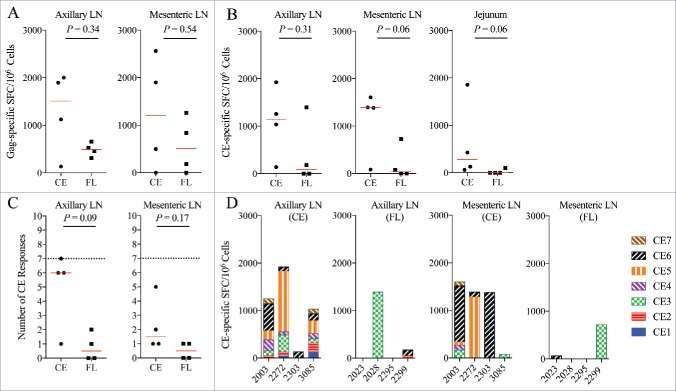
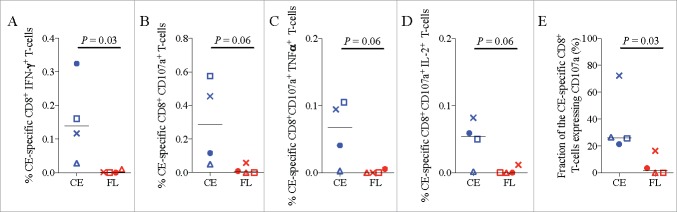
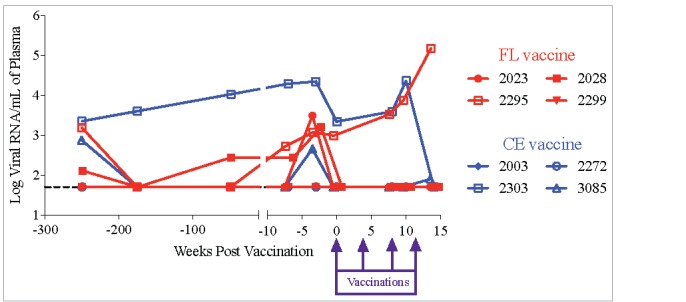
HIV-specific T-cell responses play a key role in controlling HIV infection, and therapeutic vaccines for HIV that aim to improve viral control will likely need to improve on the T-cell responses induced by infection. However, in the setting of chronic infection, an effective therapeutic vaccine must overcome the enormous viral genetic diversity and the presence of pre-existing T-cell responses that are biased toward immunodominant T-cell epitopes that can readily mutate to evade host immunity and thus potentially provide inferior protection. To address these issues, we investigated a novel, epidermally administered DNA vaccine expressing SIV capsid (p27) homologues of highly conserved elements (CE) of the HIV proteome in macaques experiencing chronic but controlled SHIV infection. We assessed the ability to boost or induce de novo T-cell responses against the conserved but immunologically subdominant CE epitopes. Two groups of animals were immunized with either the CE DNA vaccine or a full-length SIV p57 DNA vaccine. Prior to vaccination, CE responses were similar in both groups. The full-length p57 DNA vaccine, which contains the CE, increased overall Gag-specific responses but did not increase CE responses in any animals (0/4). In contrast, the CE DNA vaccine increased CE responses in all (4/4) vaccinated macaques. In SIV infected but unvaccinated macaques, those that developed stronger CE-specific responses during acute infection exhibited lower viral loads. We conclude that CE DNA vaccination can re-direct the immunodominance hierarchy towards CE in the setting of attenuated chronic infection and that induction of these responses by therapeutic vaccination may improve immune control of HIV.
HIV 特异性 T 细胞反应在控制 HIV 感染中起着关键作用,而旨在改善病毒控制的 HIV 治疗性疫苗可能需要改善感染引起的 T 细胞反应。然而,在慢性感染的情况下,有效的治疗性疫苗必须克服巨大的病毒遗传多样性和存在的偏向于免疫优势 T 细胞表位的预先存在的 T 细胞反应,这些表位可以很容易地突变以逃避宿主免疫,从而可能提供较差的保护。为了解决这些问题,我们研究了一种新型的表皮给药 DNA 疫苗,该疫苗表达了慢性但受控制的 SIV 感染猕猴中 HIV 蛋白组中高度保守元件(CE)的 SIV 衣壳(p27)同源物。我们评估了针对保守但免疫亚优势 CE 表位增强或诱导新的 T 细胞反应的能力。两组动物分别用 CE DNA 疫苗或全长 SIV p57 DNA 疫苗进行免疫。在接种疫苗之前,两组动物的 CE 反应相似。全长 p57 DNA 疫苗包含 CE,增加了总体 Gag 特异性反应,但没有增加任何动物的 CE 反应(0/4)。相比之下,CE DNA 疫苗增加了所有(4/4)接种疫苗的猕猴的 CE 反应。在未接种疫苗的 SIV 感染但未接种疫苗的猕猴中,在急性感染期间产生更强的 CE 特异性反应的猕猴表现出更低的病毒载量。我们得出结论,CE DNA 疫苗可以在减弱的慢性感染中重新定向免疫优势等级向 CE,并且这些反应的诱导通过治疗性疫苗接种可能改善 HIV 的免疫控制。