Xia Xian, Zhou Zijie, Wu Shijuan, Wang Dan, Zheng Shixue, Wang Gejiao
State Key Laboratory of Agricultural Microbiology, College of Life Sciences and Technology, Huazhong Agricultural University, Wuhan 430070, China.
Nanomaterials (Basel). 2018 Apr 12;8(4):234. doi: 10.3390/nano8040234.
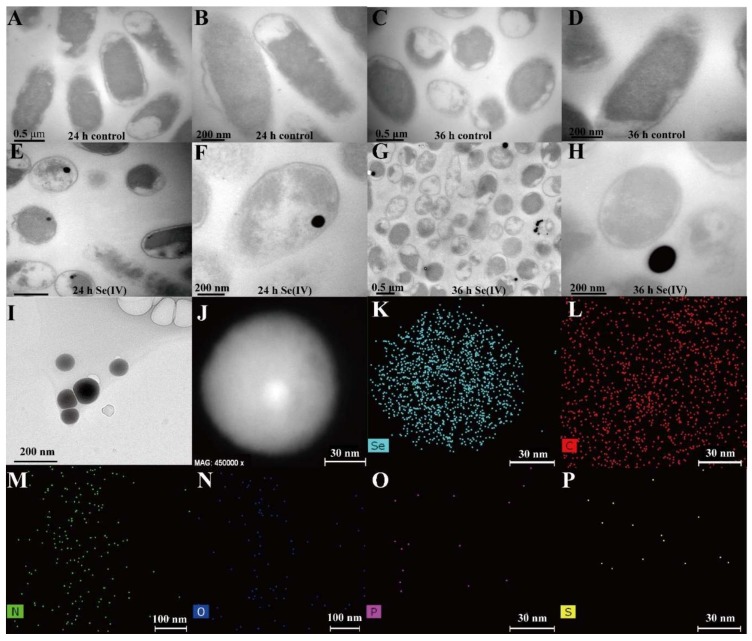
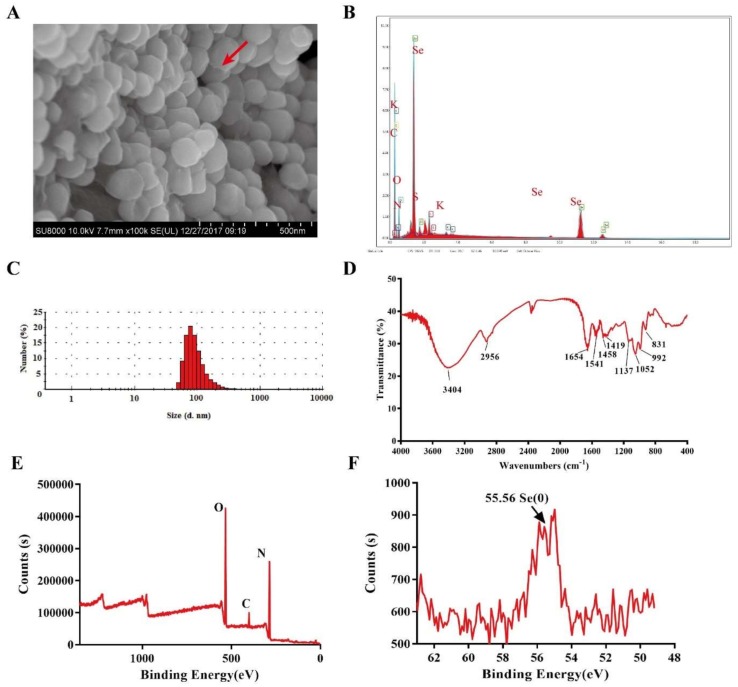
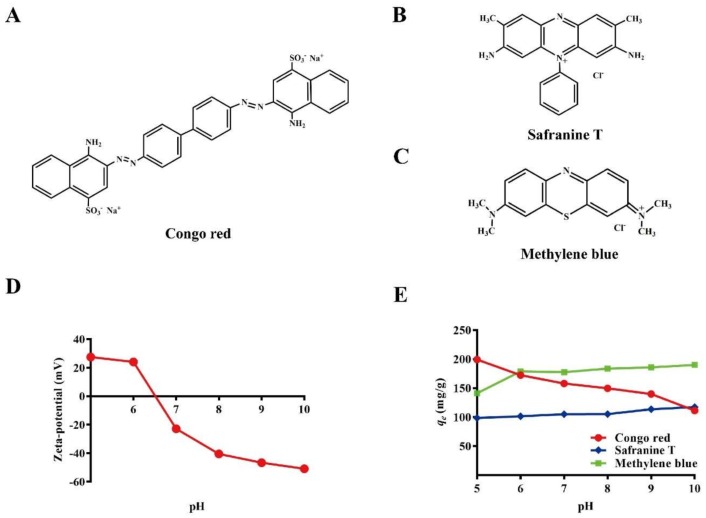
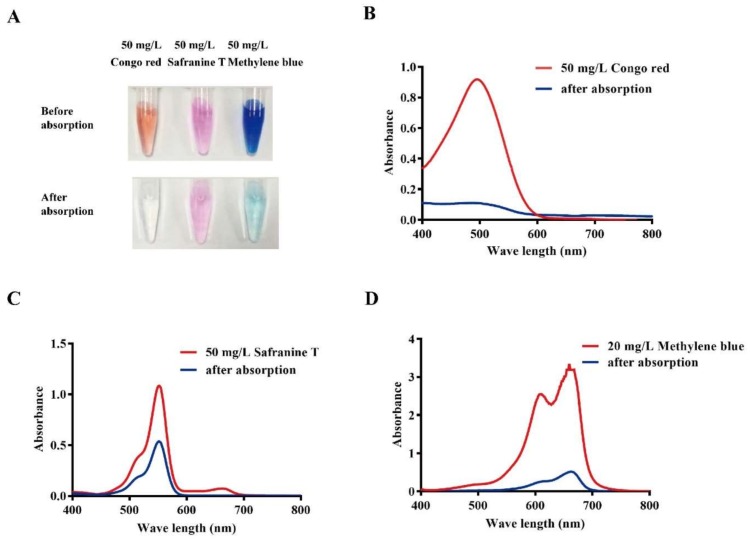
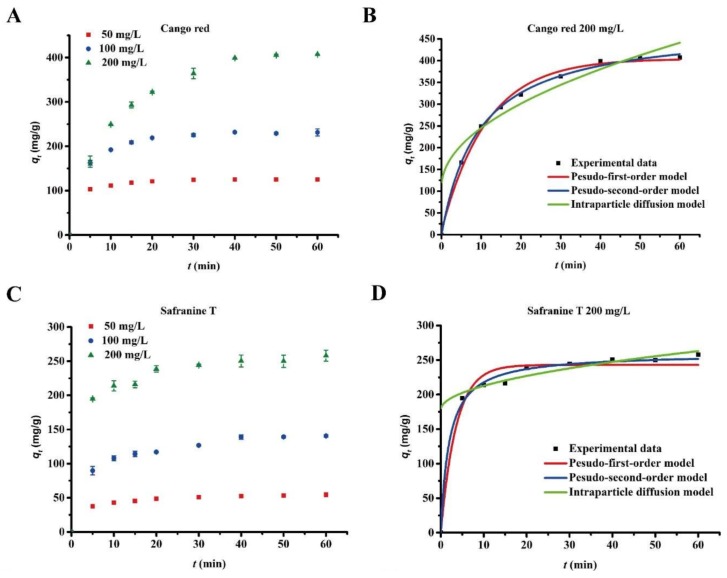
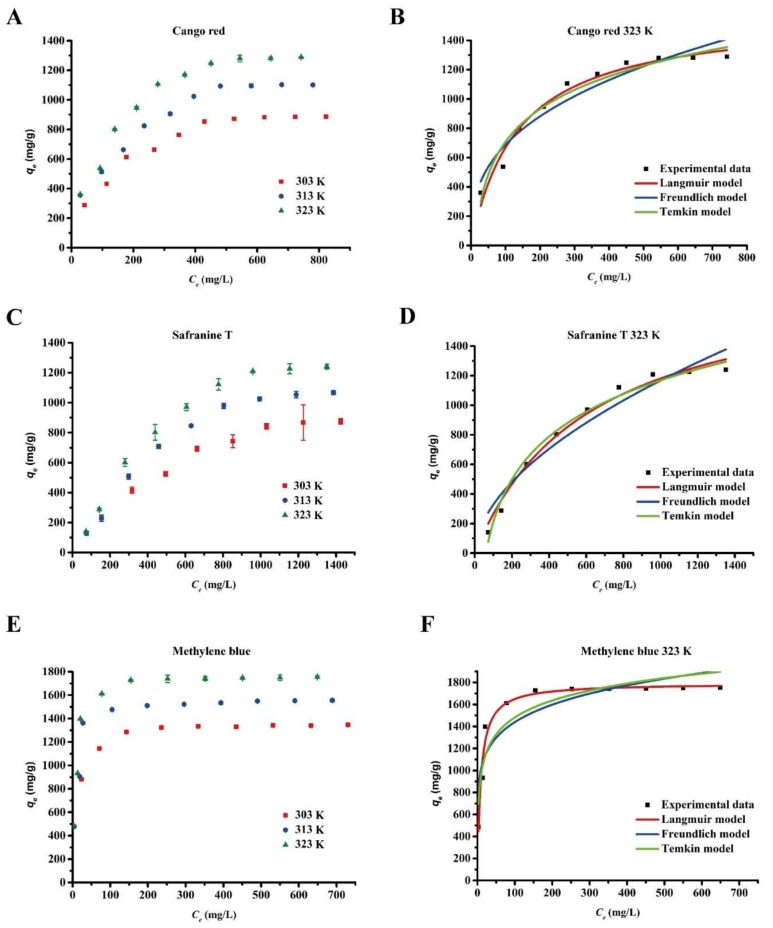
Selenite reductase CsrF overexpressed was used as a microbial factory to produce Se(0) nanoparticles (Bio-SeNPs). The Bio-SeNPs were characterized by transmission electronic microscopy, element mapping, scanning electron microscopy, energy-dispersive X-ray spectrographs, Zeta-potential, dynamic light scattering, Fourier transform infrared spectroscopy and X-ray photoelectron spectroscopy analyses. The results indicated that Bio-SeNPs are irregular spheres with diameters from 60 to105 nm and mainly consist of Se(0), proteins and lipids. Furthermore, it exhibited maximum adsorption capacity for anionic dye (congo red) at acidic pH and cationic dyes (safranine T and methylene blue) at alkaline pH. To gain more insight, adsorption kinetics, adsorption isotherms and adsorption thermodynamics studies were carried out. These results showed that the adsorption capacities of congo red, safranine T and methylene blue were 1577.7, 1911.0 and 1792.2 mg/g, respectively. These adsorption processes were spontaneous and primarily physical reactions. In addition, Bio-SeNPs can be effectively reused by 200 mmol/L NaCl. To the best of our knowledge, this is the first report of adsorption removal dyes by Bio-SeNPs. The adsorption capacities of Bio-SeNPs for congo red, safranine T and methylene blue were 6.8%, 25.2% and 49.0% higher than that for traditional bio-based materials, respectively.
过表达的亚硒酸盐还原酶CsrF被用作微生物工厂来生产零价硒纳米颗粒(生物硒纳米颗粒)。通过透射电子显微镜、元素映射、扫描电子显微镜、能量色散X射线光谱仪、Zeta电位、动态光散射、傅里叶变换红外光谱和X射线光电子能谱分析对生物硒纳米颗粒进行了表征。结果表明,生物硒纳米颗粒为直径60至105nm的不规则球体,主要由零价硒、蛋白质和脂质组成。此外,它在酸性pH下对阴离子染料(刚果红)以及在碱性pH下对阳离子染料(番红T和亚甲基蓝)表现出最大吸附容量。为了深入了解,进行了吸附动力学、吸附等温线和吸附热力学研究。这些结果表明,刚果红、番红T和亚甲基蓝的吸附容量分别为1577.7、1911.0和1792.2mg/g。这些吸附过程是自发的且主要是物理反应。此外,生物硒纳米颗粒可以用200mmol/L的氯化钠有效地重复使用。据我们所知,这是关于生物硒纳米颗粒吸附去除染料的首次报道。生物硒纳米颗粒对刚果红、番红T和亚甲基蓝的吸附容量分别比传统生物基材料高6.8%、25.2%和49.0%。