Kupai Jozsef, Razali Mayamin, Buyuktiryaki Sibel, Kecili Rustem, Szekely Gyorgy
School of Chemical Engineering & Analytical Science , The University of Manchester , The Mill , Sackville Street , Manchester , M13 9PL and UK . Email:
Department of Organic Chemistry & Technology , Budapest University of Technology & Economics , Szent Gellert ter 4 , Budapest , 1117 , Hungary.
Polym Chem. 2017 Jan 28;8(4):666-673. doi: 10.1039/c6py01853j. Epub 2016 Nov 24.
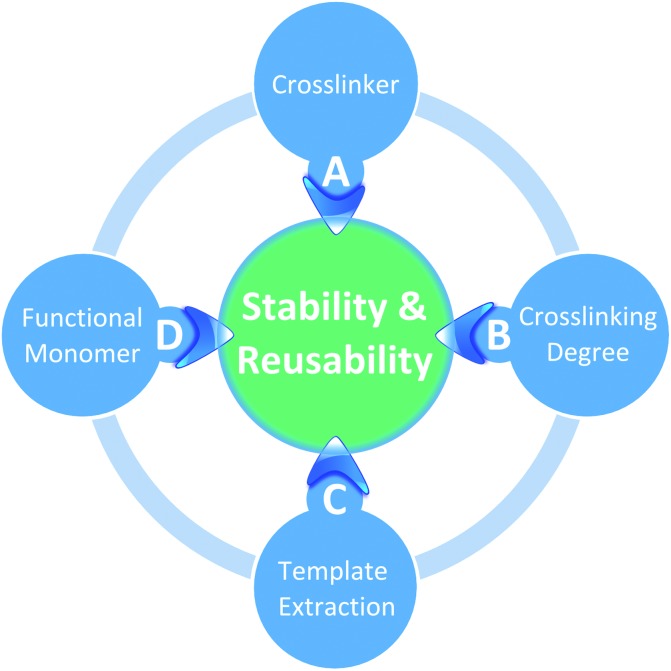
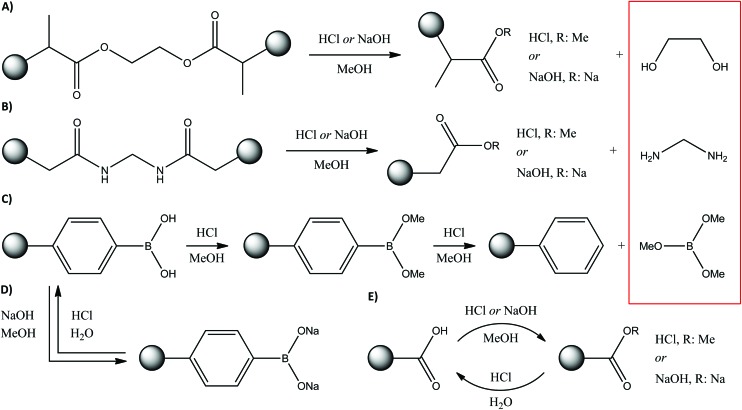
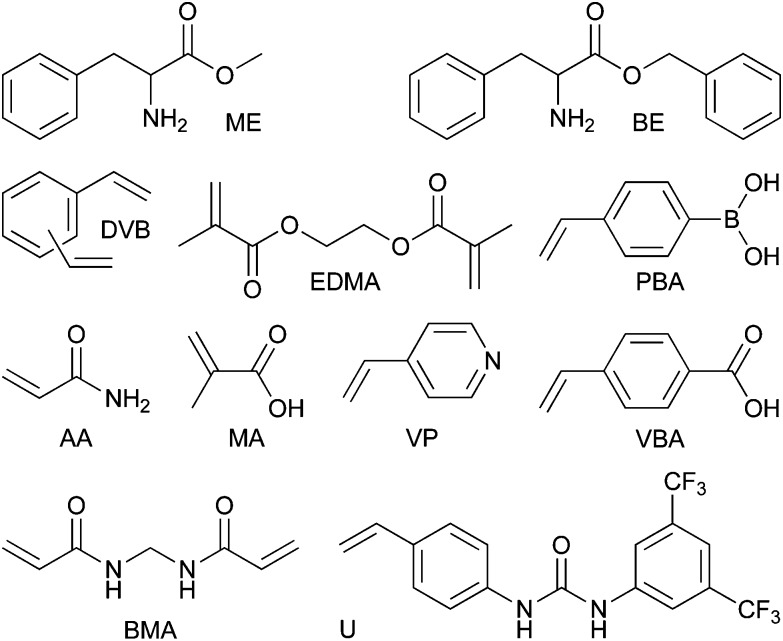
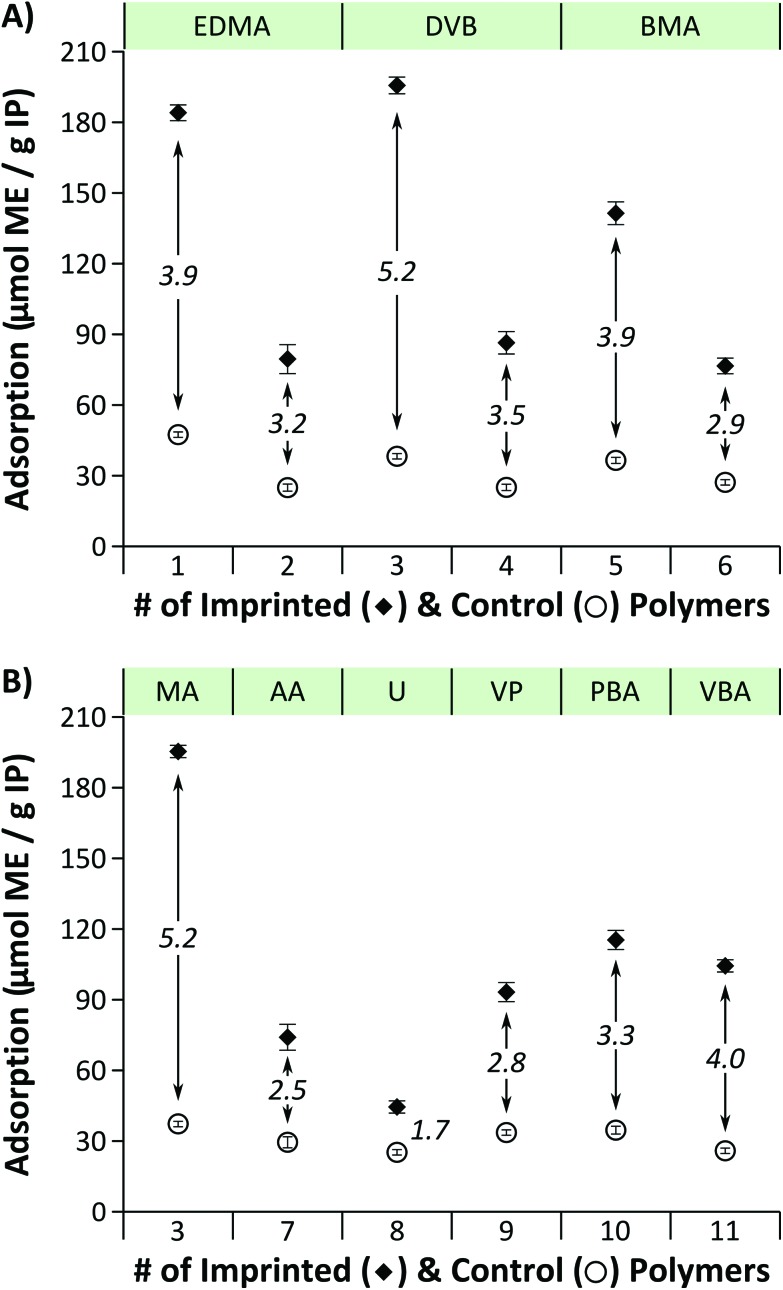
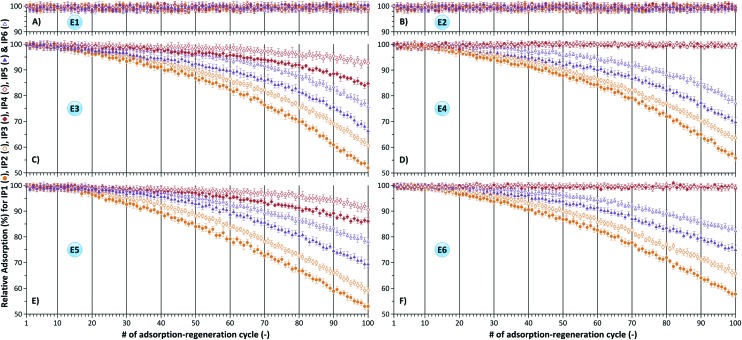
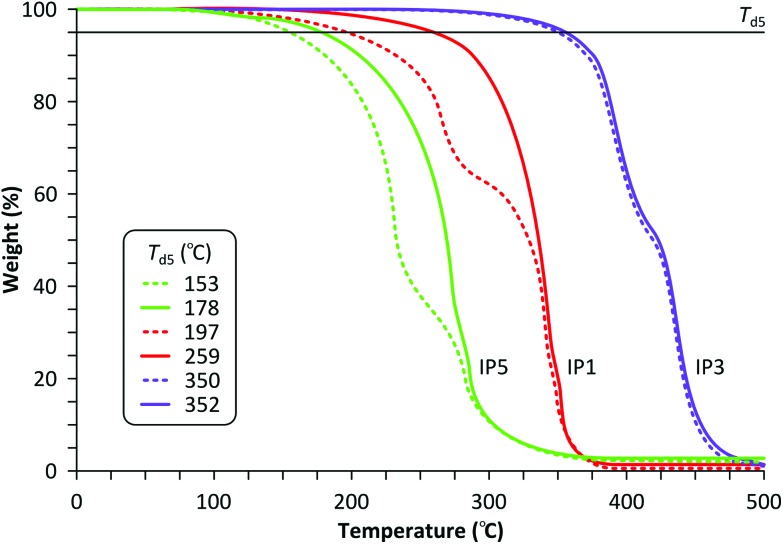
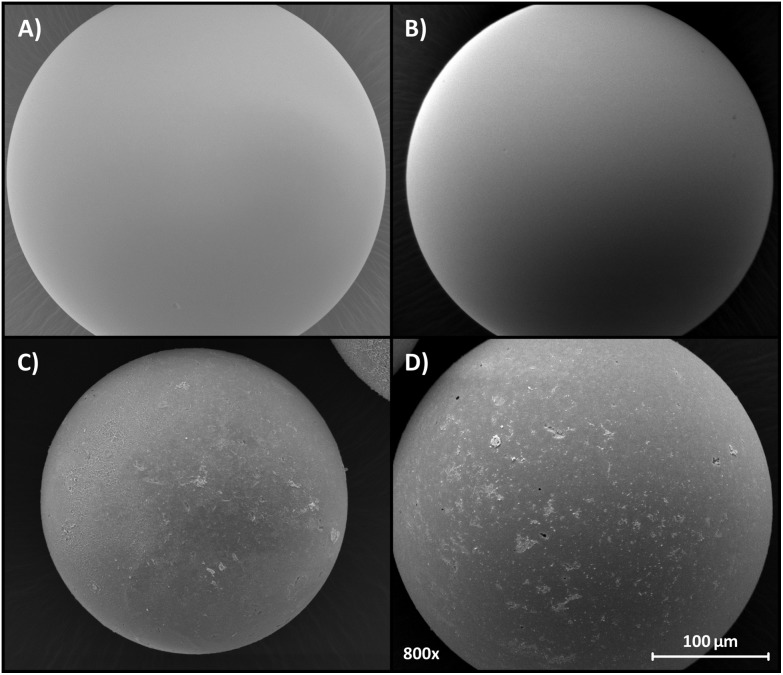
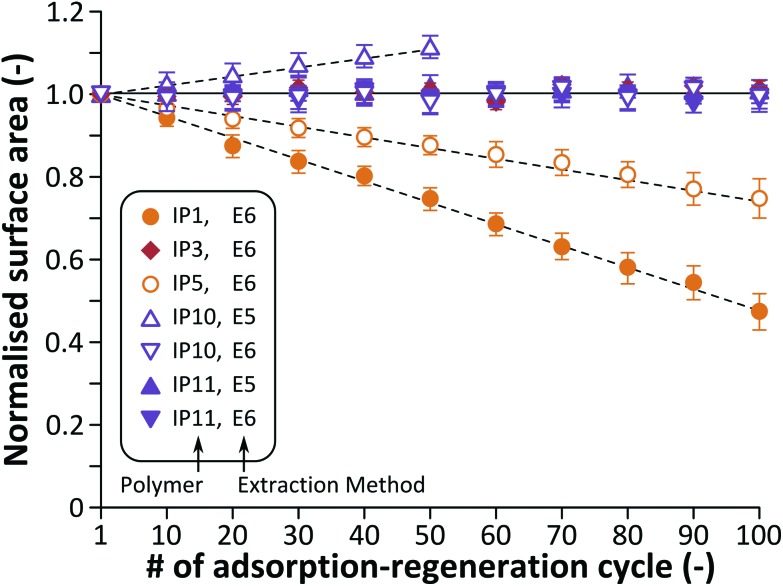
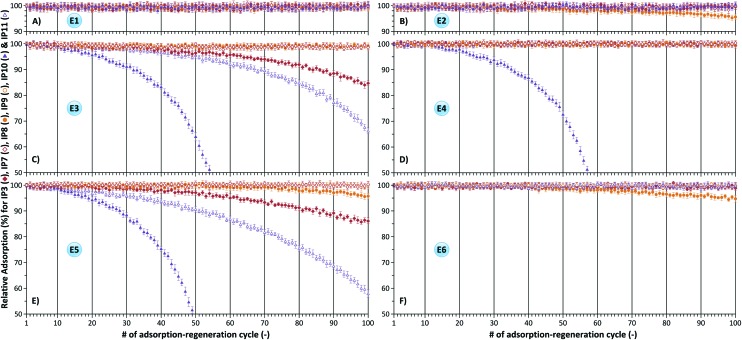
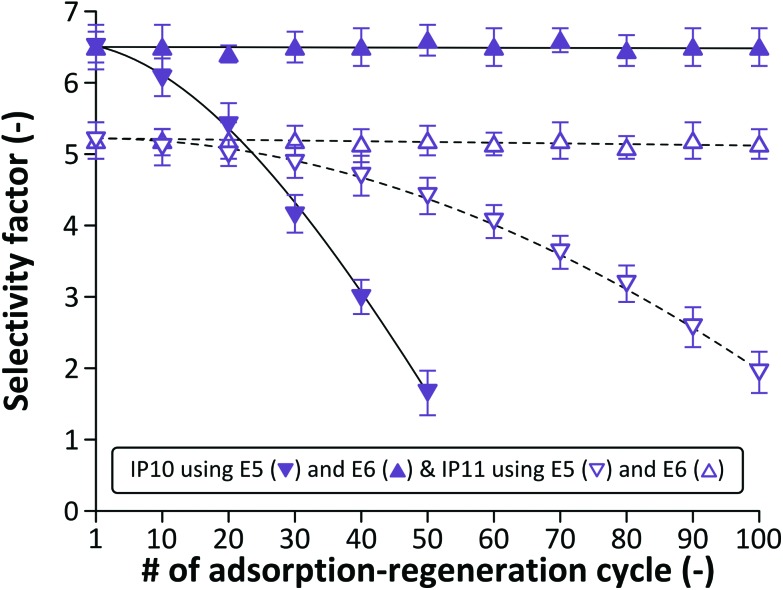
Molecularly imprinted materials are man-made mimics of biological receptors. Their polymer network has recognition sites complementary to a substrate in terms of size, shape and chemical functionality. They have diverse applications in various chemical, biomedical and engineering fields such as solid phase extraction, catalysis, drug delivery, pharmaceutical purification, (bio)sensors, water treatment, membrane separations and proteomics. The stability and reusability of molecularly imprinted polymers (IPs) have crucial roles in developing applications that are reliable, economic and sustainable. In the present article the effect of crosslinkers, functional monomers and conditions for template extraction on the long-term stability and reusability of IPs was systematically investigated. Adsorption capacity, selectivity, morphology and thermal decomposition of eleven different l-phenylalanine methyl ester imprinted polymers were studied to reveal performance loss over 100 adsorption-regeneration cycles. Furthermore, crosslinker and functional monomer specific reversible and irreversible decomposition of imprinted polymers as a result of adsorbent regeneration were investigated through adsorption studies, electron microscopy, N adsorption and thermogravimetric analysis. A decomposition mechanism was proposed and revealed using NMR spectroscopy. Solutions to avoid or overcome the limitations of the most common crosslinkers, functional monomers and extraction techniques were proposed and experimentally validated.
分子印迹材料是生物受体的人工模拟物。它们的聚合物网络具有在尺寸、形状和化学功能方面与底物互补的识别位点。它们在各种化学、生物医学和工程领域有着广泛应用,如固相萃取、催化、药物递送、药物纯化、(生物)传感器、水处理、膜分离和蛋白质组学。分子印迹聚合物(MIPs)的稳定性和可重复使用性在开发可靠、经济和可持续的应用中起着关键作用。在本文中,系统地研究了交联剂、功能单体和模板去除条件对MIPs长期稳定性和可重复使用性的影响。研究了11种不同的L-苯丙氨酸甲酯印迹聚合物的吸附容量、选择性、形态和热分解,以揭示在100次吸附-再生循环中的性能损失。此外,通过吸附研究、电子显微镜、N吸附和热重分析,研究了交联剂和功能单体导致的印迹聚合物在吸附剂再生过程中的特定可逆和不可逆分解。利用核磁共振光谱提出并揭示了一种分解机制。提出了避免或克服最常见交联剂、功能单体和萃取技术局限性的解决方案,并通过实验进行了验证。