LBN, University of Montpellier, Montpellier, France.
L2C, University of Montpellier, CNRS, Montpellier, France.
Stem Cell Res Ther. 2018 Apr 12;9(1):103. doi: 10.1186/s13287-018-0831-3.
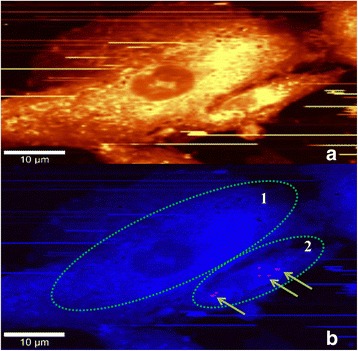
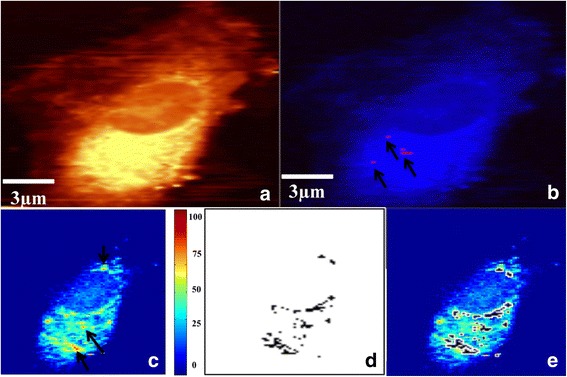
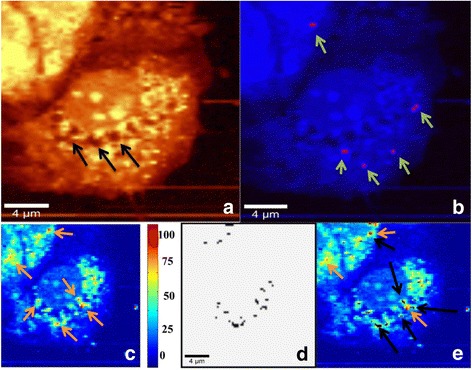
Understanding stem cell behavior as a delivery tool in cancer therapy is essential for evaluating their future clinical potential. Previous in-vivo studies proved the use of mesenchymal stem cells (MSCs) for local delivery of the commonest anticancer drug, paclitaxel (PTX). Dental pulp is a relatively abundant noninvasive source of MSCs. We assess dental pulp stem cells (DPSCs), for the first time, as anticancer drug carriers. Confocal Raman microscopy is a unique tool to trace drug and cell viability without labeling.
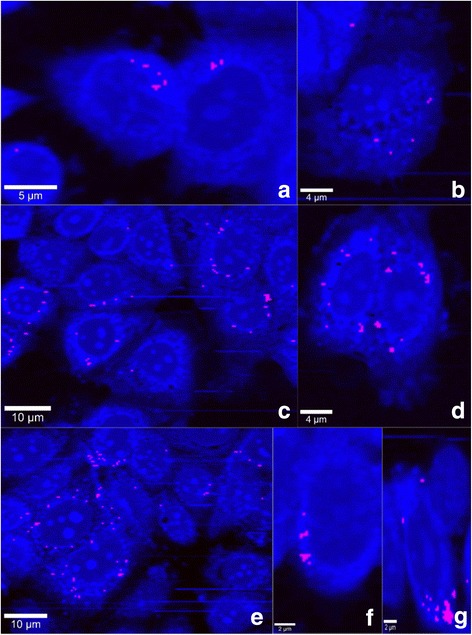
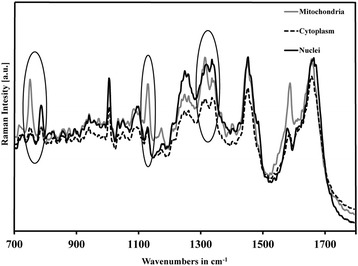
Drug uptake and cell apoptosis are identified through confocal Raman microscope. We traced translocation of cytochrome c enzyme from the mitochondria, as a biomarker for apoptosis, after testing both cancer and stem cells. The viability of stem cells was checked by means of confocal Raman microscope and by cytotoxicity assays.
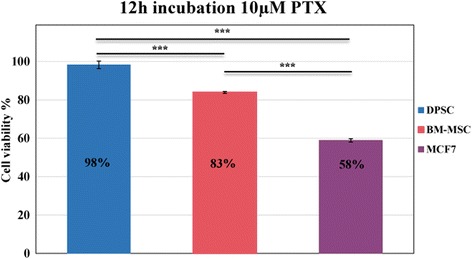
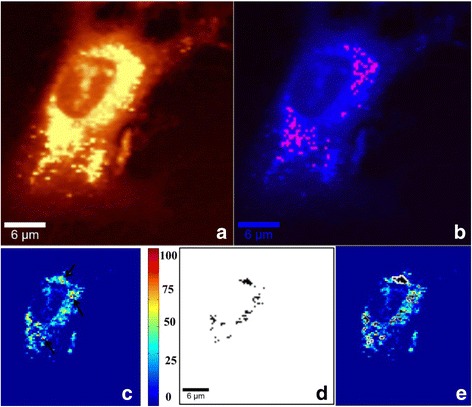
In this study, we prove that DPSCs can be loaded in vitro with the anticancerous drug without affecting their viability, which is later released in the culture medium of breast cancer cells (MCF-7 cells) in a time-dependent fashion. The induced cytotoxic damage in MCF-7 cells was observed consequently after PTX release by DPSCs. Additionally, quantitative Raman images of intracellular drug uptake in DPSCs and MCF-7 cells were obtained. Cytotoxic assays prove the DPSCs to be more resistant to PTX as compared to bone marrow-derived MSCs, provided similar conditions.
Applications of dental stem cells for targeted treatment of cancer could be a revolution to reduce morbidity due to chemotherapy, and to increase the efficacy of systemic cancer treatment.
理解作为癌症治疗中输送工具的干细胞行为对于评估其未来的临床潜力至关重要。先前的体内研究证明了间充质干细胞(MSCs)在局部递送最常用的抗癌药物紫杉醇(PTX)方面的用途。牙髓是相对丰富的非侵入性 MSC 来源。我们首次评估牙髓干细胞(DPSCs)作为抗癌药物载体。共焦拉曼显微镜是一种无需标记即可追踪药物和细胞活力的独特工具。
通过共焦拉曼显微镜识别药物摄取和细胞凋亡。我们通过测试癌症和干细胞,追踪细胞色素 c 酶从线粒体的易位,作为细胞凋亡的生物标志物。通过共焦拉曼显微镜和细胞毒性测定来检查干细胞的活力。
在这项研究中,我们证明 DPSCs 可以在体外加载抗癌药物而不影响其活力,随后以时间依赖的方式在乳腺癌细胞(MCF-7 细胞)的培养基中释放。在 DPSCs 释放 PTX 后,观察到 MCF-7 细胞中诱导的细胞毒性损伤。此外,还获得了 DPSCs 和 MCF-7 细胞中细胞内药物摄取的定量拉曼图像。细胞毒性测定证明,在提供相似条件下,与骨髓来源的 MSC 相比,DPSCs 对 PTX 的耐药性更高。
牙科干细胞在癌症靶向治疗中的应用可能会减少化疗引起的发病率,并提高全身癌症治疗的疗效。