Department of Microbiology and Molecular Genetics, IMRIC, Faculty of Medicine, Hebrew University, Jerusalem, Israel.
CREATE-NUS-HUJ Program and the Department of Microbiology, Yong Loo Lin School of Medicine, National University of Singapore, Singapore, Singapore.
Sci Rep. 2018 Apr 12;8(1):5903. doi: 10.1038/s41598-018-24068-w.
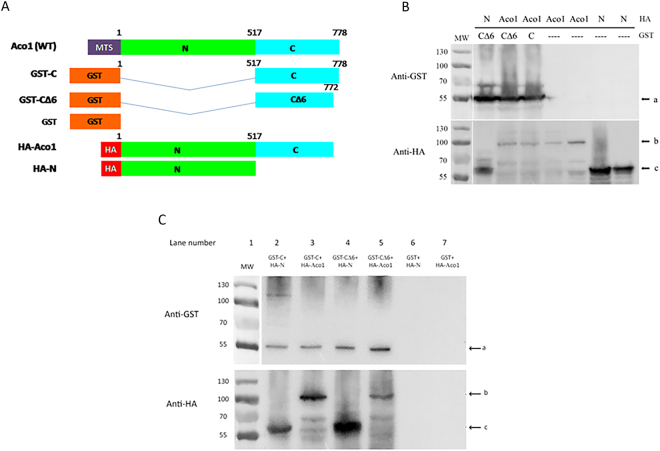
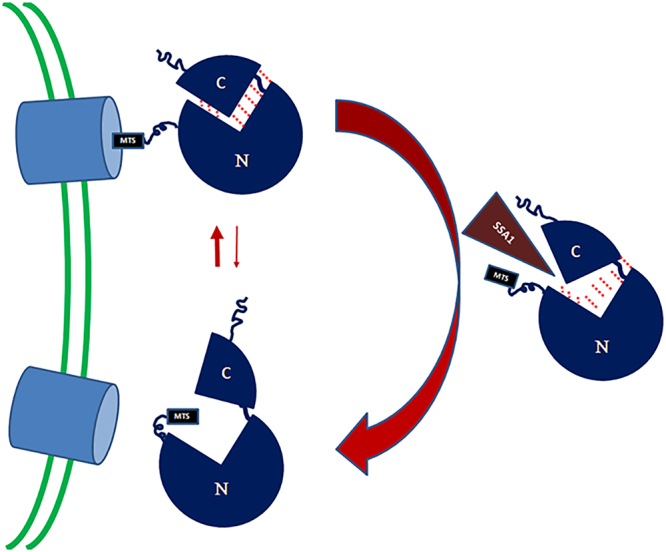
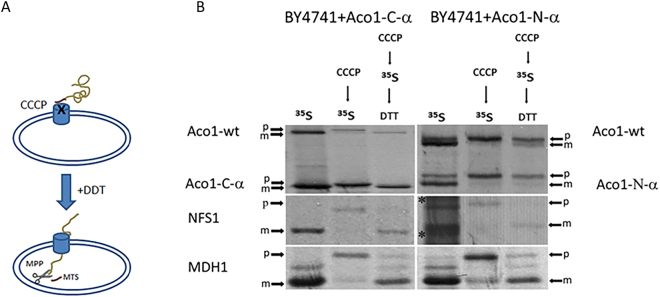
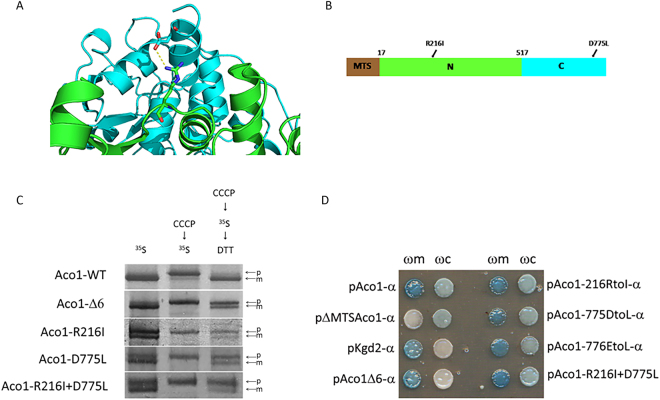
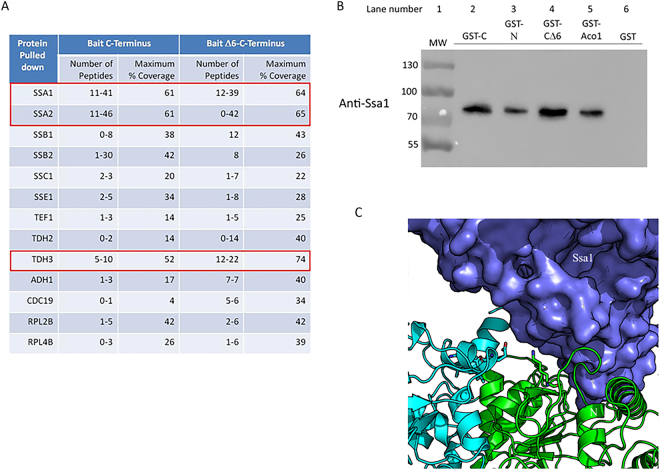
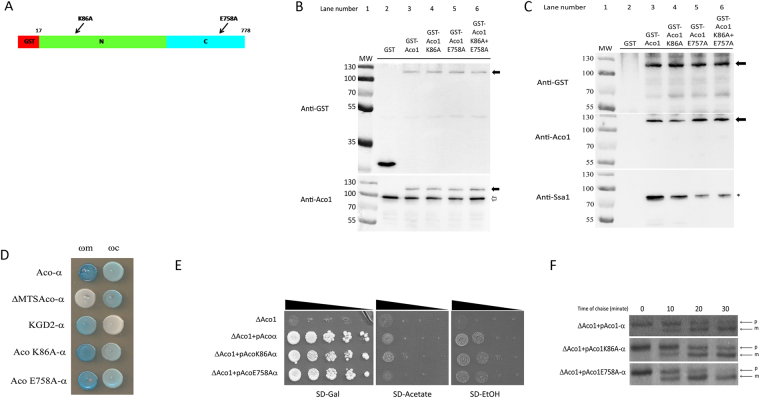
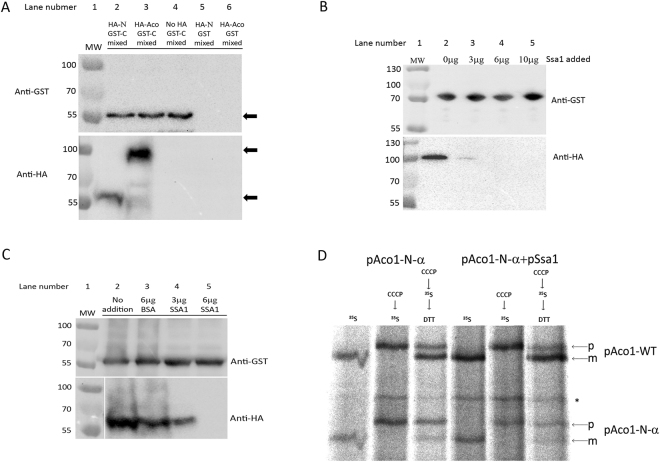
Molecules of single proteins, echoforms, can be distributed between two (or more) subcellular locations, a phenomenon which we refer to as dual targeting or dual localization. The yeast aconitase gene ACO1 (778 amino acids), encodes a single translation product that is nonetheless dual localized to the cytosol and mitochondria by a reverse translocation mechanism. The solved crystal structure of aconitase isolated from porcine heart mitochondria shows that it has four domains. The first three tightly associated N-terminal domains are tethered to the larger C-terminal fourth domain (C-terminal amino acids 517-778). We have previously shown that the aconitase C terminal domain constitutes an independent dual targeting signal when fused to mitochondria-targeted passenger-proteins. We show that the aconitase N and C-terminal domains interact and that this interaction is important for efficient aconitase post translational import into mitochondria and for aconitase dual targeting (relative levels of aconitase echoforms). Our results suggest a "chaperone-like function" of the C terminal domain towards the N terminal domains which can be modulated by Ssa1/2 (cytosolic Hsp70).
单个蛋白质分子,即回声形式,可以分布在两个(或更多)亚细胞位置之间,这种现象我们称之为双重靶向或双重定位。酵母 aconitase 基因 ACO1(778 个氨基酸)编码的单一翻译产物,通过反向易位机制被双重定位于细胞质和线粒体。从猪心线粒体中分离出的 aconitase 的已解决晶体结构表明,它有四个结构域。紧密相关的前三个 N 端结构域与较大的 C 端第四结构域(C 端氨基酸 517-778)相连。我们之前已经表明,aconitase 的 C 端结构域构成了独立的双重靶向信号,当与靶向线粒体的载体蛋白融合时。我们表明 aconitase 的 N 和 C 端结构域相互作用,并且这种相互作用对于 aconitase 有效的翻译后进入线粒体和 aconitase 的双重靶向(aconitase 回声形式的相对水平)很重要。我们的结果表明 C 端结构域对 N 端结构域具有“伴侣样功能”,这种功能可以被 Ssa1/2(细胞质 Hsp70)调节。