Division of Cardiovascular Medicine, British Heart Foundation Centre of Research Excellence, Radcliffe Department of Medicine, John Radcliffe Hospital, University of Oxford, Oxford, OX3 9DU, UK; Wellcome Centre for Human Genetics, University of Oxford, Oxford, OX3 7BN, UK.
Division of Cardiovascular Medicine, British Heart Foundation Centre of Research Excellence, Radcliffe Department of Medicine, John Radcliffe Hospital, University of Oxford, Oxford, OX3 9DU, UK; Wellcome Centre for Human Genetics, University of Oxford, Oxford, OX3 7BN, UK.
Vascul Pharmacol. 2018 Sep;108:15-22. doi: 10.1016/j.vph.2018.04.002. Epub 2018 Apr 11.
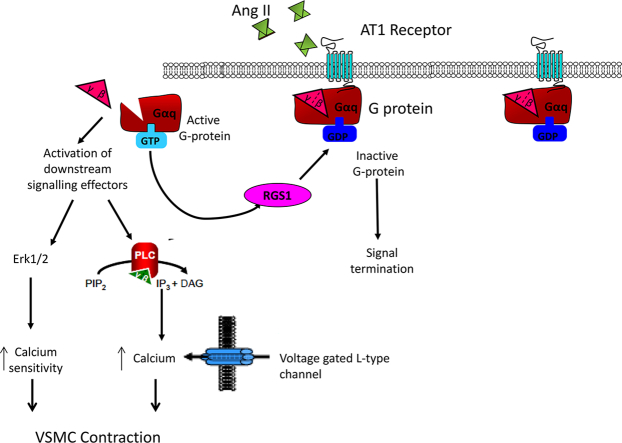
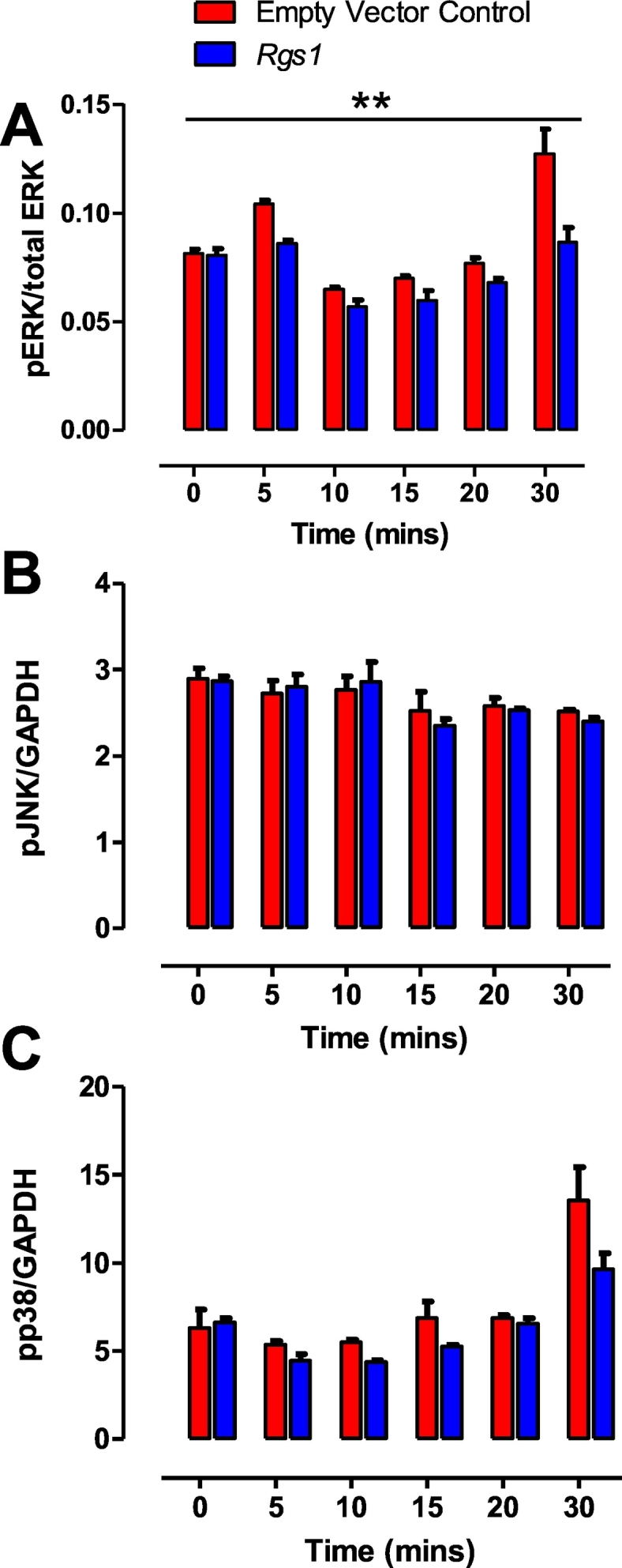
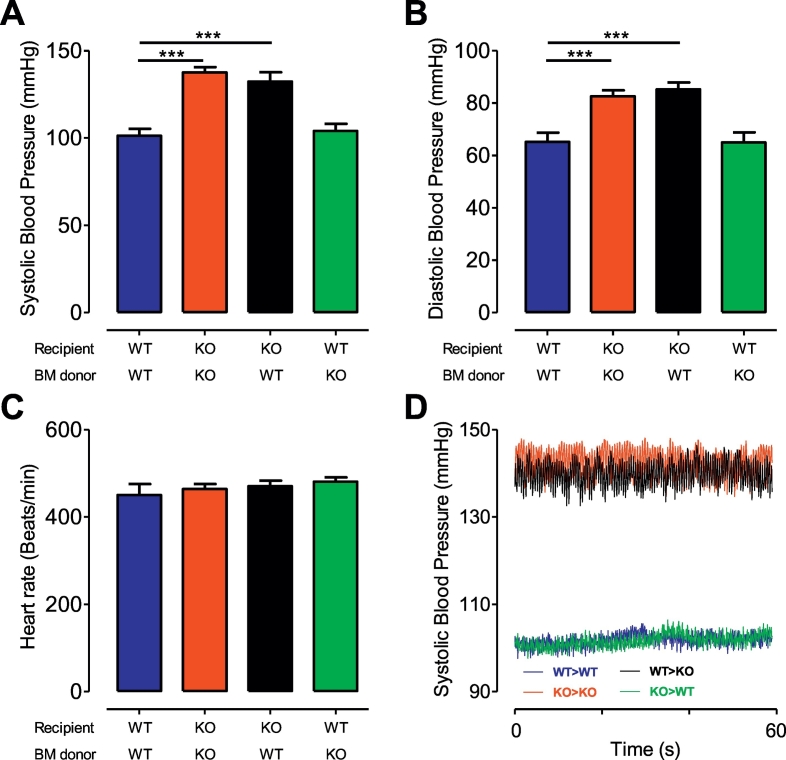
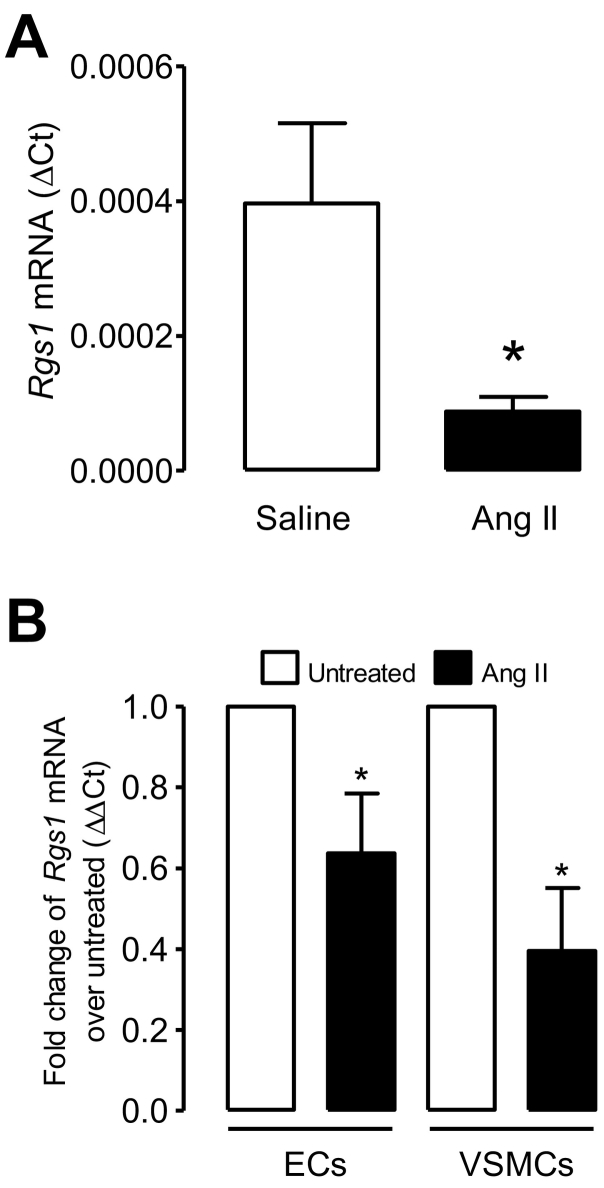
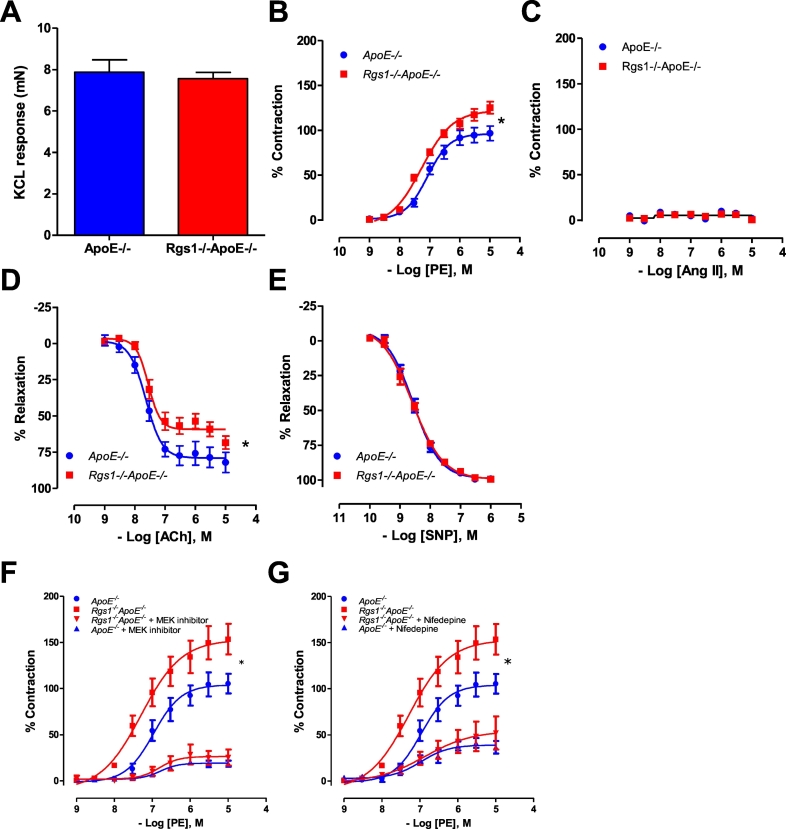
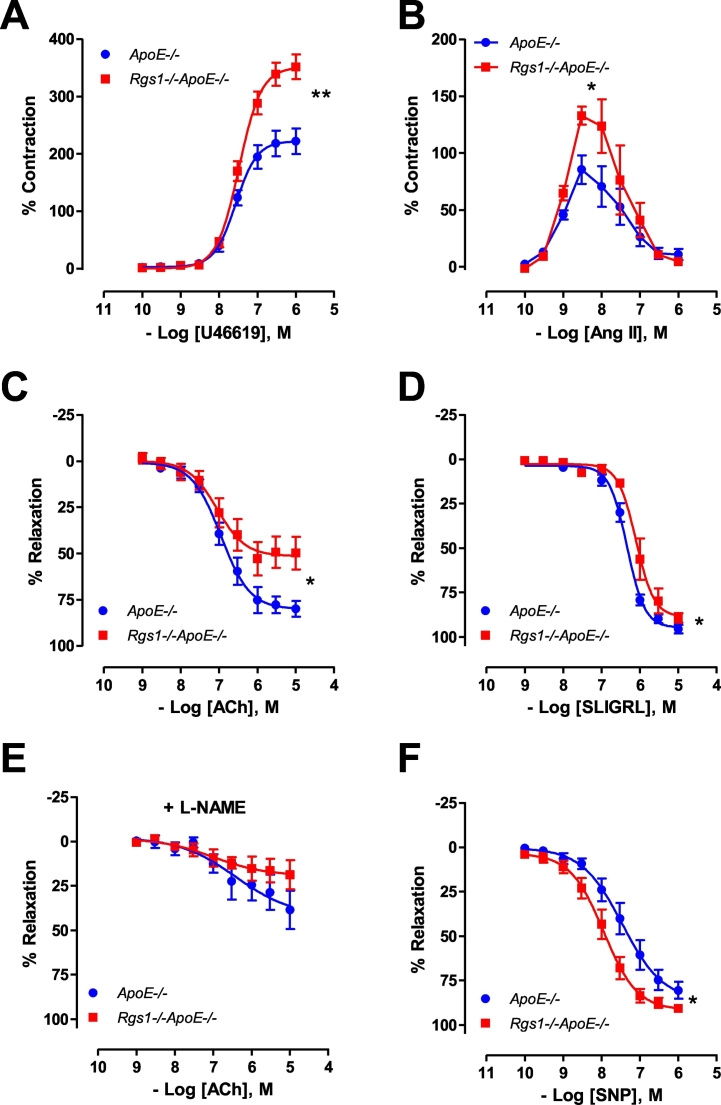
G-Protein coupled receptors (GPCRs) activate intracellular signalling pathways by coupling to heterotrimeric G-proteins that control many physiological processes including blood pressure homeostasis. The Regulator of G-Protein Signalling-1 (RGS1) controls the magnitude and duration of downstream GPCR signalling by acting as a GTPase-activating protein for specific Gα-proteins. RGS1 has contrasting roles in haematopoietic and non-haematopoietic cells. Rgs1ApoE mice are protected from Angiotensin II (Ang II)-induced aortic aneurysm rupture. Conversely, Ang II treatment increases systolic blood pressure to a greater extent in Rgs1ApoE mice than ApoE mice, independent of its role in myeloid cells. However the precise role of RGS1 in hypertension and vascular-derived cells remains unknown. We determined the effects of Rgs1 deletion on vascular function in ApoE mice. Rgs1 deletion led to enhanced vasoconstriction in aortas and mesenteric arteries from ApoE mice in response to phenylephrine (PE) and U46619 respectively. Rgs1 was shown to have a role in the vasculature, with endothelium-dependent vasodilation being impaired, and endothelium-independent dilatation to SNP being enhanced in Rgs1ApoE mesenteric arteries. To address the downstream signalling pathways in vascular smooth muscle cells (VSMCs) in response to Ang II-stimulation, we assessed pErk1/2, pJNK and pp38 MAPK activation in VSMCs transiently transfected with Rgs1. pErk1/2 signalling but not pJNK and pp38 signalling was impaired in the presence of Rgs1. Furthermore, we demonstrated that the enhanced contractile response to PE in Rgs1-/-ApoE-/- aortas was reduced by a MAPK/Erk (MEK) inhibitor and an L-type voltage gated calcium channel antagonist, suggesting that Erk1/2 signalling and calcium influx are major effectors of Rgs1-mediated vascular contractile responses, respectively. These findings indicate RGS1 is a novel regulator of blood pressure homeostasis and highlight RGS1-controlled signalling pathways in the vasculature that may be new drug development targets for hypertension.
G 蛋白偶联受体 (GPCRs) 通过与异三聚体 G 蛋白偶联激活细胞内信号通路,从而控制包括血压稳态在内的许多生理过程。G 蛋白信号调节因子-1 (RGS1) 通过作为特定 Gα 蛋白的 GTP 酶激活蛋白来控制下游 GPCR 信号的幅度和持续时间。RGS1 在造血细胞和非造血细胞中具有相反的作用。Rgs1ApoE 小鼠可防止血管紧张素 II (Ang II) 诱导的主动脉瘤破裂。相反,Ang II 处理使 Rgs1ApoE 小鼠的收缩压升高幅度大于 ApoE 小鼠,而与髓样细胞中的作用无关。然而,RGS1 在高血压和血管源性细胞中的确切作用仍不清楚。我们确定了 Rgs1 缺失对 ApoE 小鼠血管功能的影响。Rgs1 缺失导致 ApoE 小鼠的胸主动脉和肠系膜动脉对苯肾上腺素 (PE) 和 U46619 的血管收缩增强。结果表明 Rgs1 在血管中具有作用,内皮依赖性血管舒张受损,并且 Rgs1ApoE 肠系膜动脉中 SNP 的内皮非依赖性扩张增强。为了研究血管平滑肌细胞 (VSMCs) 对 Ang II 刺激的下游信号通路,我们评估了 Rgs1 瞬时转染的 VSMCs 中 pErk1/2、pJNK 和 pp38 MAPK 的激活。在存在 Rgs1 的情况下,pErk1/2 信号但不是 pJNK 和 pp38 信号受损。此外,我们证明 Rgs1-/-ApoE-/-主动脉中对 PE 的增强收缩反应在 MEK 抑制剂和 L 型电压门控钙通道拮抗剂存在下减少,这表明 Erk1/2 信号和钙内流分别是 Rgs1 介导的血管收缩反应的主要效应物。这些发现表明 RGS1 是血压稳态的新调节剂,并突出了 RGS1 控制的血管信号通路,这些信号通路可能是高血压的新药物开发靶点。