Department of Botany and Plant Sciences, Center for Plant Cell Biology (CEPCEB), Institute of Integrative Genome Biology (IIGB), University of California, Riverside, California, United States of America.
PLoS Genet. 2018 Apr 16;14(4):e1007351. doi: 10.1371/journal.pgen.1007351. eCollection 2018 Apr.
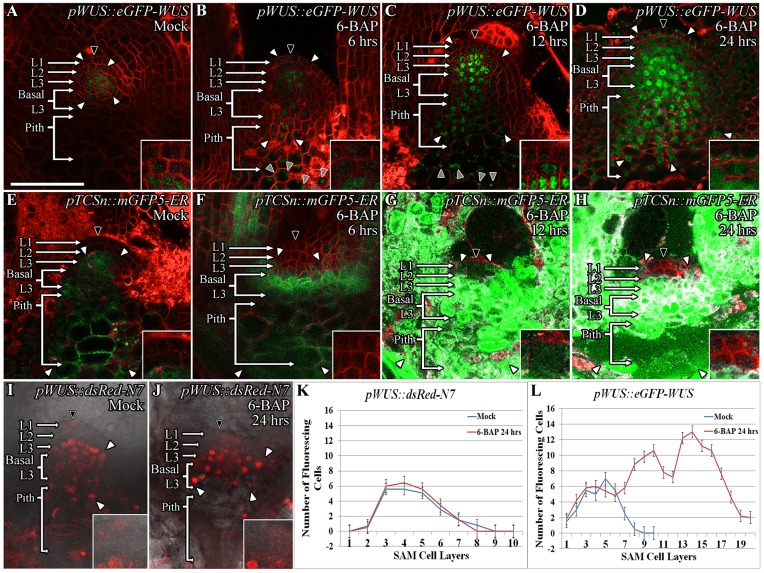
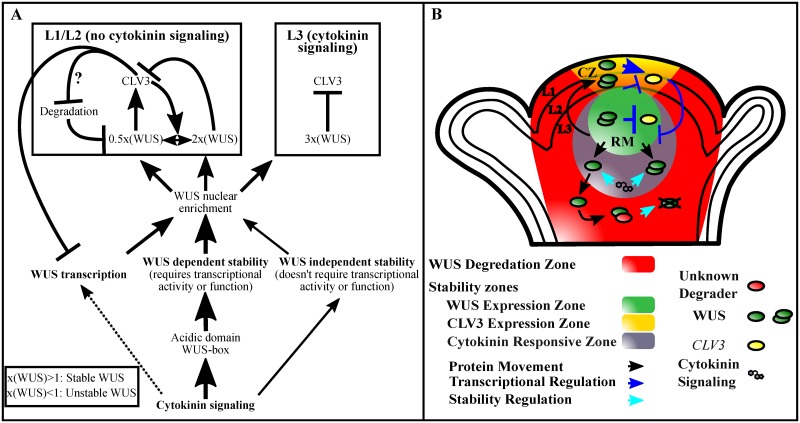
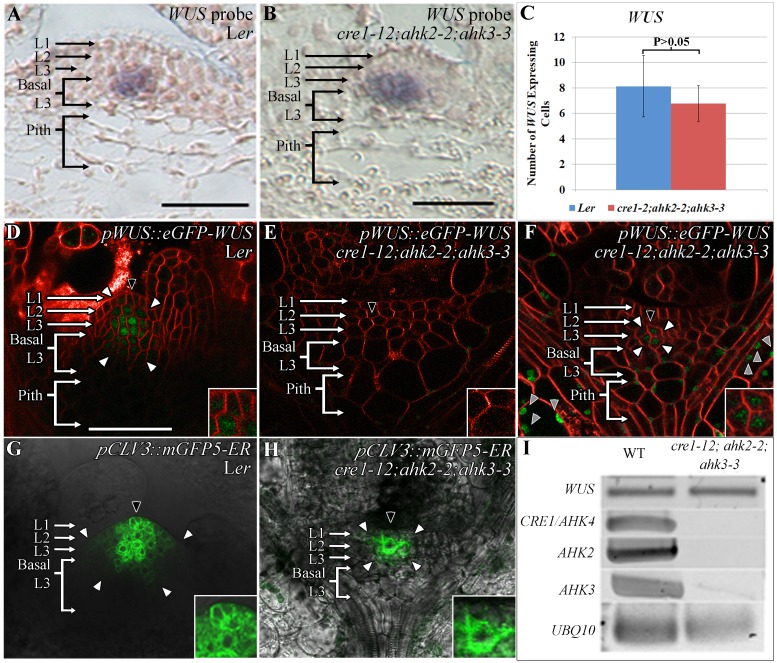
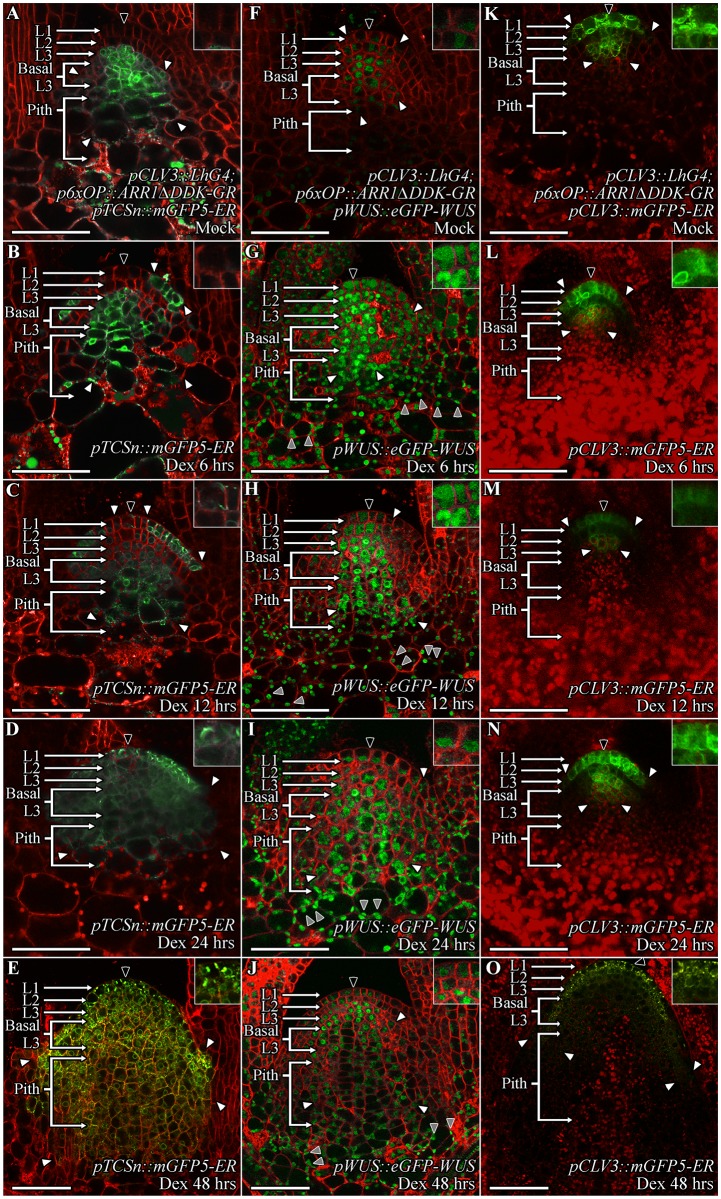
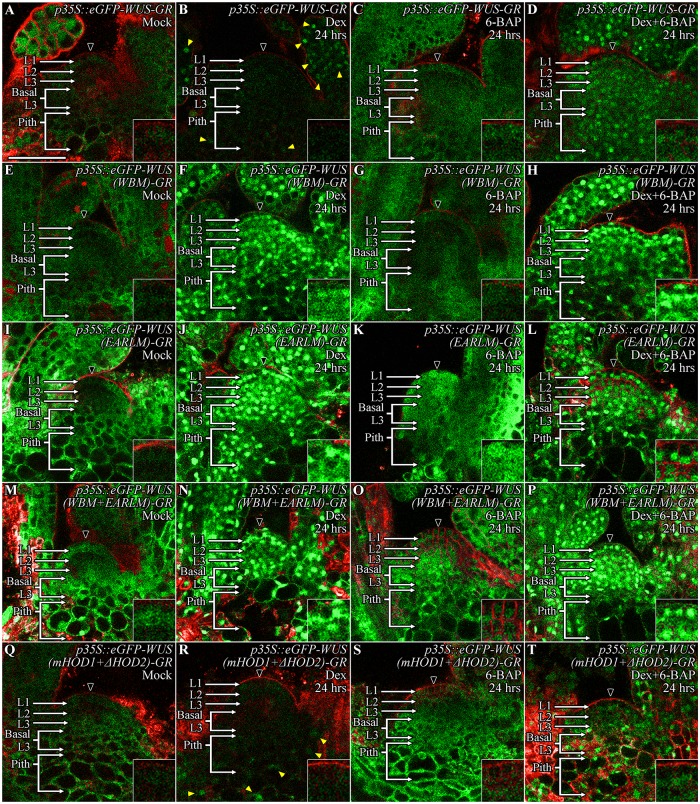
Concentration-dependent transcriptional regulation and the spatial regulation of transcription factor levels are poorly studied in plant development. WUSCHEL, a stem cell-promoting homeodomain transcription factor, accumulates at a higher level in the rib meristem than in the overlying central zone, which harbors stem cells in the shoot apical meristems of Arabidopsis thaliana. The differential accumulation of WUSCHEL in adjacent cells is critical for the spatial regulation and levels of CLAVATA3, a negative regulator of WUSCHEL transcription. Earlier studies have revealed that DNA-dependent dimerization, subcellular partitioning and protein destabilization control WUSCHEL protein levels and spatial accumulation. Moreover, the destabilization of WUSCHEL may also depend on the protein concentration. However, the roles of extrinsic spatial cues in maintaining differential accumulation of WUS are not understood. Through transient manipulation of hormone levels, hormone response patterns and analysis of the receptor mutants, we show that cytokinin signaling in the rib meristem acts through the transcriptional regulatory domains, the acidic domain and the WUSCHEL-box, to stabilize the WUS protein. Furthermore, we show that the same WUSCHEL-box functions as a degron sequence in cytokinin deficient regions in the central zone, leading to the destabilization of WUSCHEL. The coupled functions of the WUSCHEL-box in nuclear retention as described earlier, together with cytokinin sensing, reinforce higher nuclear accumulation of WUSCHEL in the rib meristem. In contrast a sub-threshold level may expose the WUSCHEL-box to destabilizing signals in the central zone. Thus, the cytokinin signaling acts as an asymmetric spatial cue in stabilizing the WUSCHEL protein to lead to its differential accumulation in neighboring cells, which is critical for concentration-dependent spatial regulation of CLAVATA3 transcription and meristem maintenance. Furthermore, our work shows that cytokinin response is regulated independently of the WUSCHEL function which may provide robustness to the regulation of WUSCHEL concentration.
在植物发育过程中,转录因子水平的浓度依赖性转录调控和空间调控研究甚少。WUSCHEL 是一种促进干细胞的同源域转录因子,在拟南芥茎尖分生组织的叶原基中,其在茎分生组织中积累的水平高于其上的中央区,中央区含有干细胞。WUSCHEL 在相邻细胞中的差异积累对于 CLAVATA3 的空间调控和水平至关重要,CLAVATA3 是 WUSCHEL 转录的负调控因子。早期的研究表明,DNA 依赖性二聚化、亚细胞分隔和蛋白质不稳定化控制 WUSCHEL 蛋白水平和空间积累。此外,WUSCHEL 的不稳定性也可能依赖于蛋白质浓度。然而,外在空间线索在维持 WUS 差异积累中的作用尚不清楚。通过激素水平的瞬时操纵、激素反应模式和受体突变体的分析,我们表明,在茎分生组织中的细胞分裂素信号通过转录调控结构域、酸性结构域和 WUSCHEL 盒作用于稳定 WUS 蛋白。此外,我们表明,在中央区的细胞分裂素缺乏区域中,相同的 WUSCHEL 盒作为一个降解序列起作用,导致 WUSCHEL 的不稳定性。如前所述,WUSCHEL 盒在核保留中的偶联功能,加上细胞分裂素的感应,共同增强了 WUSCHEL 在茎分生组织中的核积累。相反,亚阈值水平可能使 WUSCHEL 盒在中央区暴露于不稳定信号。因此,细胞分裂素信号作为一个不对称的空间线索,作用于稳定 WUSCHEL 蛋白,导致其在相邻细胞中的差异积累,这对于 CLAVATA3 转录的浓度依赖性空间调控和分生组织维持至关重要。此外,我们的工作表明,细胞分裂素反应独立于 WUSCHEL 功能调节,这可能为 WUSCHEL 浓度的调节提供鲁棒性。