Department of Molecular and Cell Biology, University of California Berkeley, Berkeley, CA, United States of America.
Department of Plant & Microbial Biology, University of California Berkeley, Berkeley, CA, United States of America.
PLoS Pathog. 2018 Apr 16;14(4):e1006995. doi: 10.1371/journal.ppat.1006995. eCollection 2018 Apr.
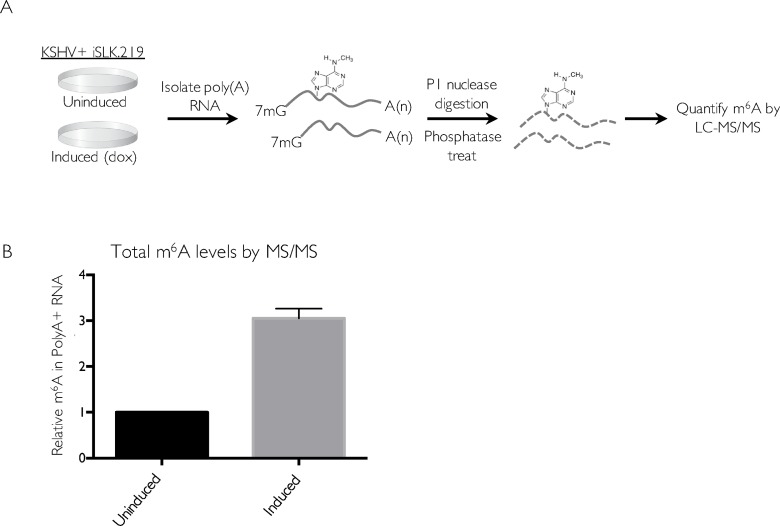
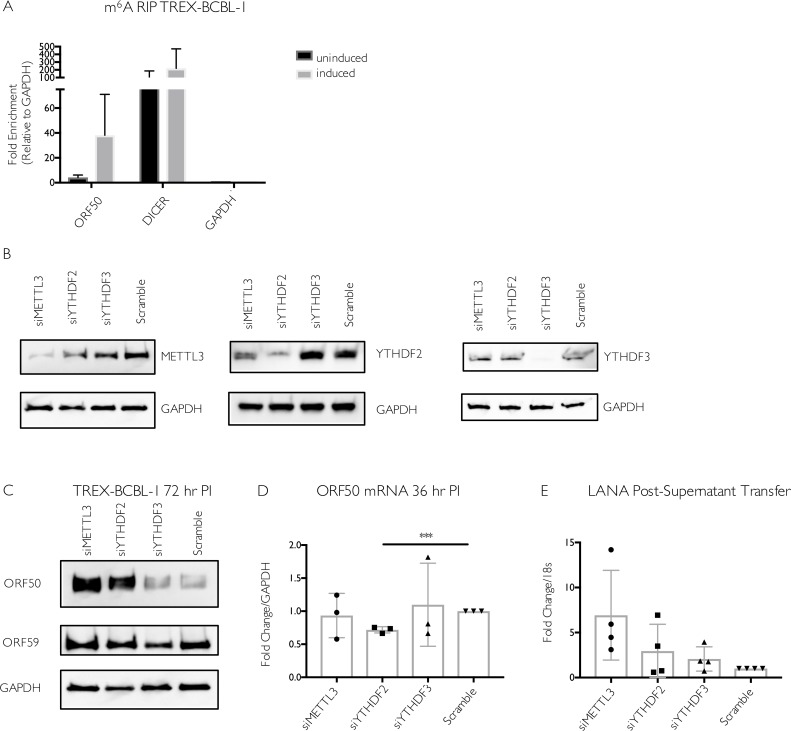
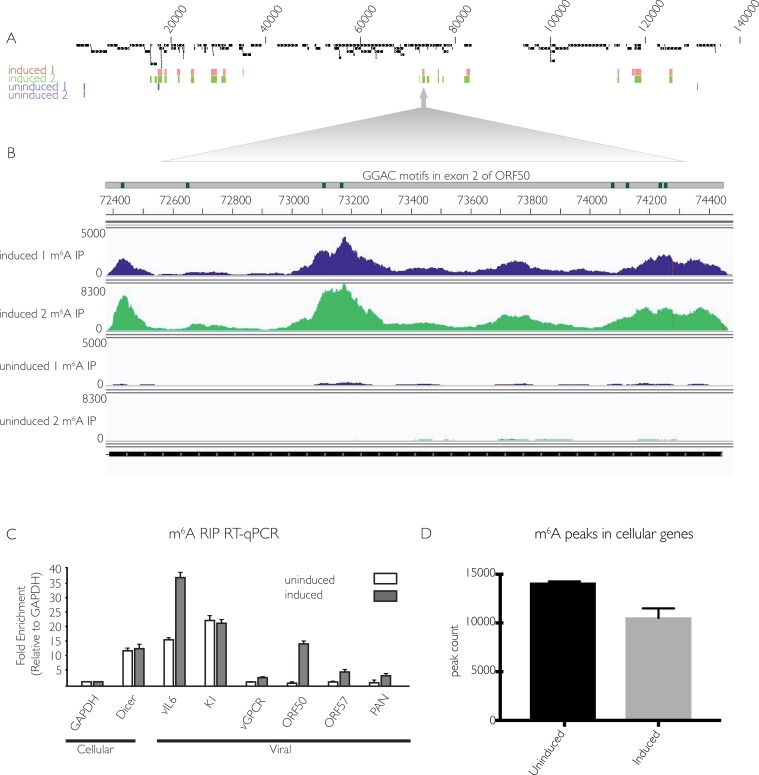
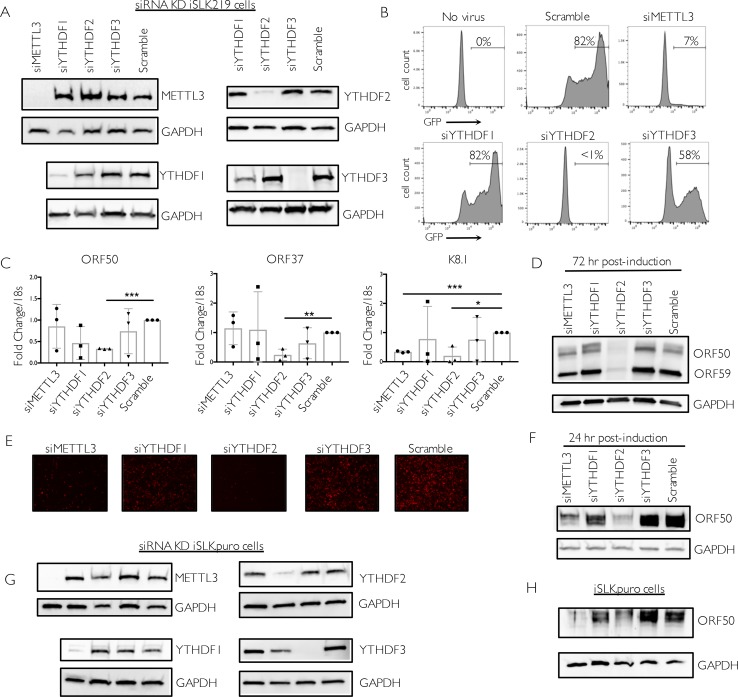
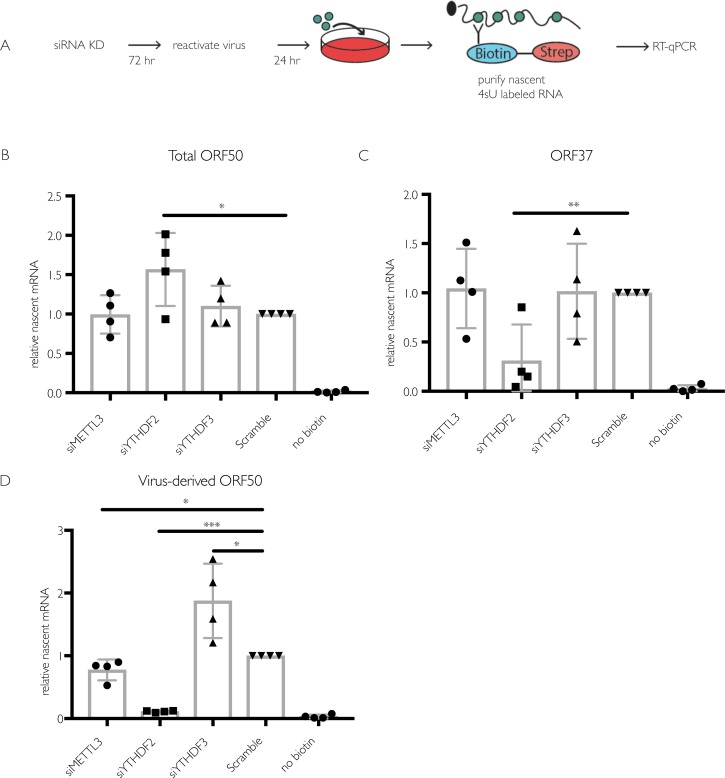
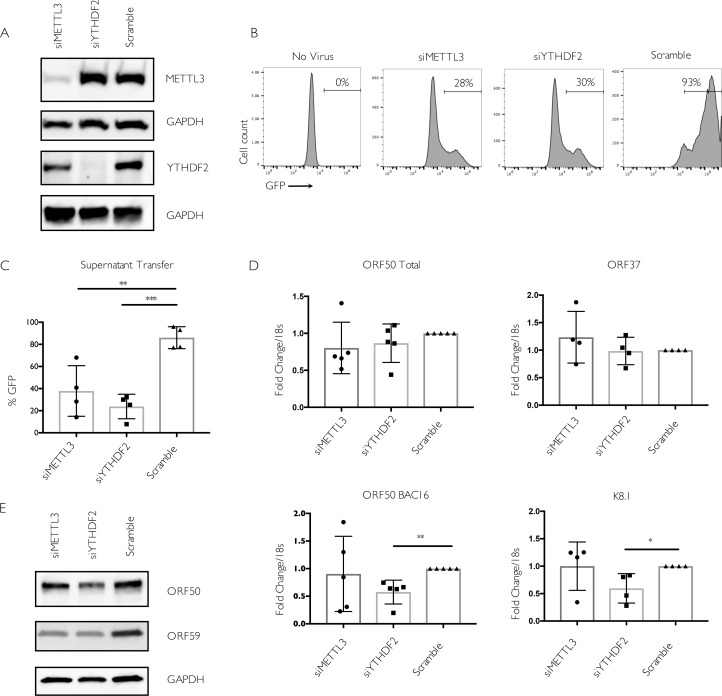
Methylation at the N6 position of adenosine (m6A) is a highly prevalent and reversible modification within eukaryotic mRNAs that has been linked to many stages of RNA processing and fate. Recent studies suggest that m6A deposition and proteins involved in the m6A pathway play a diverse set of roles in either restricting or modulating the lifecycles of select viruses. Here, we report that m6A levels are significantly increased in cells infected with the oncogenic human DNA virus Kaposi's sarcoma-associated herpesvirus (KSHV). Transcriptome-wide m6A-sequencing of the KSHV-positive renal carcinoma cell line iSLK.219 during lytic reactivation revealed the presence of m6A across multiple kinetic classes of viral transcripts, and a concomitant decrease in m6A levels across much of the host transcriptome. However, we found that depletion of the m6A machinery had differential pro- and anti-viral impacts on viral gene expression depending on the cell-type analyzed. In iSLK.219 and iSLK.BAC16 cells the pathway functioned in a pro-viral manner, as depletion of the m6A writer METTL3 and the reader YTHDF2 significantly impaired virion production. In iSLK.219 cells the defect was linked to their roles in the post-transcriptional accumulation of the major viral lytic transactivator ORF50, which is m6A modified. In contrast, although the ORF50 mRNA was also m6A modified in KSHV infected B cells, ORF50 protein expression was instead increased upon depletion of METTL3, or, to a lesser extent, YTHDF2. These results highlight that the m6A pathway is centrally involved in regulating KSHV gene expression, and underscore how the outcome of this dynamically regulated modification can vary significantly between cell types.
腺苷 N6 位的甲基化(m6A)是真核 mRNA 中一种高度普遍且可逆转的修饰,与 RNA 加工和命运的许多阶段都有关联。最近的研究表明,m6A 的沉积和涉及 m6A 通路的蛋白质在限制或调节某些病毒的生命周期方面发挥着多样化的作用。在这里,我们报告称,致癌性人类 DNA 病毒卡波济肉瘤相关疱疹病毒(KSHV)感染的细胞中 m6A 水平显著升高。在裂解性再激活期间,对 KSHV 阳性肾癌细胞系 iSLK.219 的转录组范围 m6A 测序显示,m6A 存在于多个病毒转录物的动力学类别中,同时宿主转录组的大部分区域 m6A 水平降低。然而,我们发现,根据分析的细胞类型,m6A 机制的耗竭对病毒基因表达具有不同的促病毒和抗病毒作用。在 iSLK.219 和 iSLK.BAC16 细胞中,该途径以促病毒的方式发挥作用,因为 METTL3 和 YTHDF2 的耗竭显著损害了病毒粒子的产生。在 iSLK.219 细胞中,这种缺陷与它们在主要病毒裂解转录激活物 ORF50 的转录后积累中的作用有关,ORF50 是 m6A 修饰的。相比之下,尽管 KSHV 感染的 B 细胞中 ORF50 mRNA 也被 m6A 修饰,但 METTL3 耗竭或在较小程度上 YTHDF2 耗竭会导致 ORF50 蛋白表达增加。这些结果强调了 m6A 途径在调节 KSHV 基因表达中起着核心作用,并突出了这种动态调节修饰的结果在细胞类型之间可能有很大差异。