Instituto de Tecnologia Química e Biológica António Xavier, Universidade Nova de Lisboa, Oeiras, Portugal.
Instituto de Biologia Experimental e Tecnológica, Oeiras, Portugal.
Mol Biol Evol. 2018 Jul 1;35(7):1690-1705. doi: 10.1093/molbev/msy060.
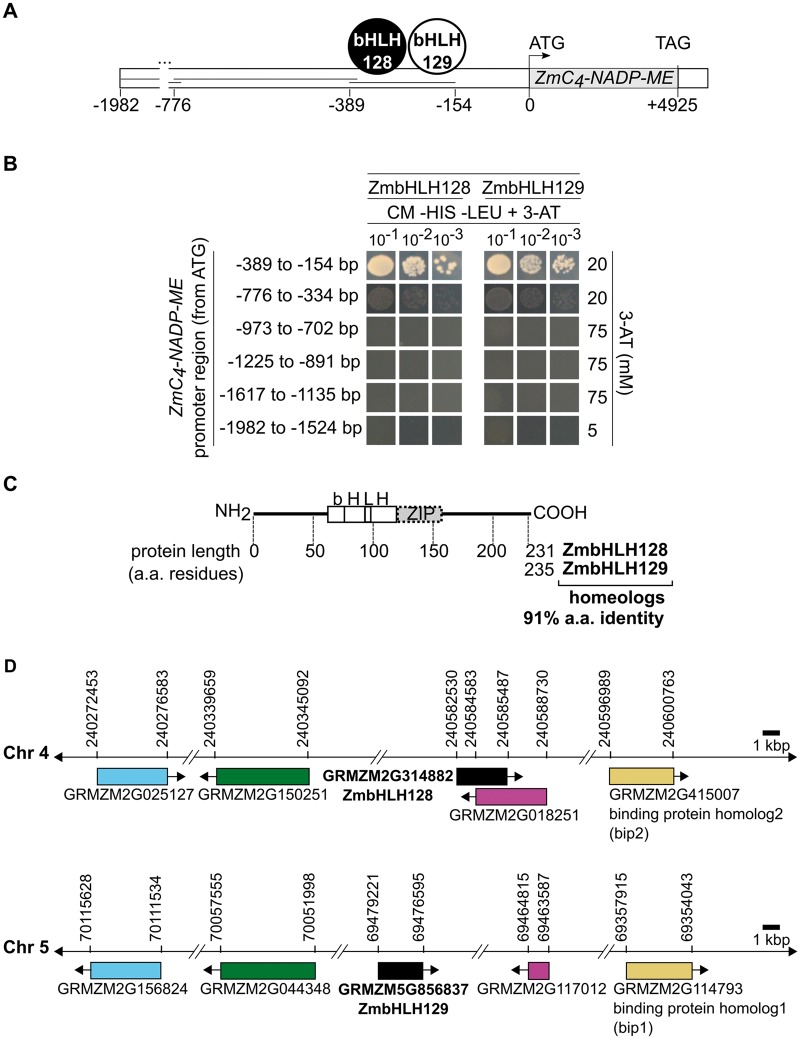
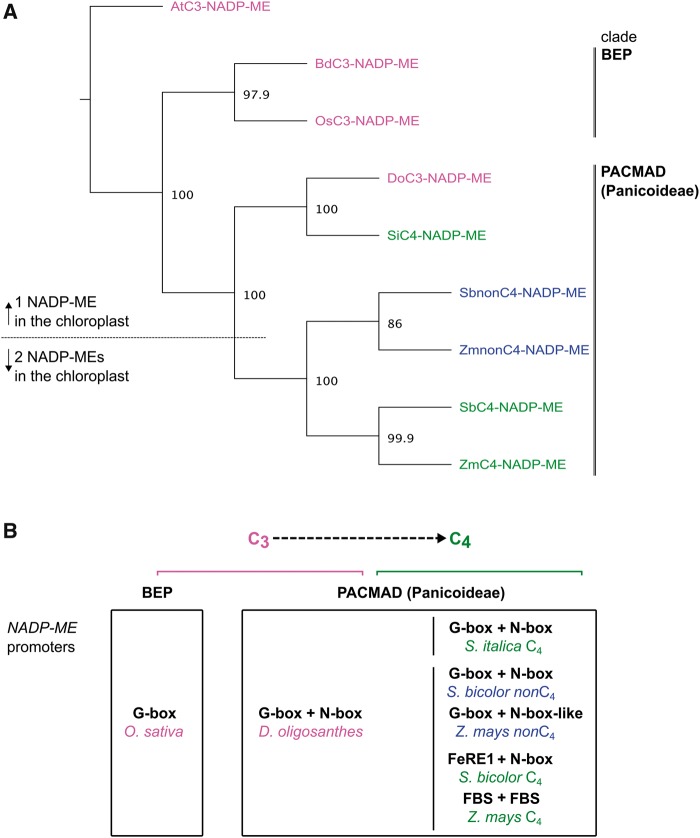
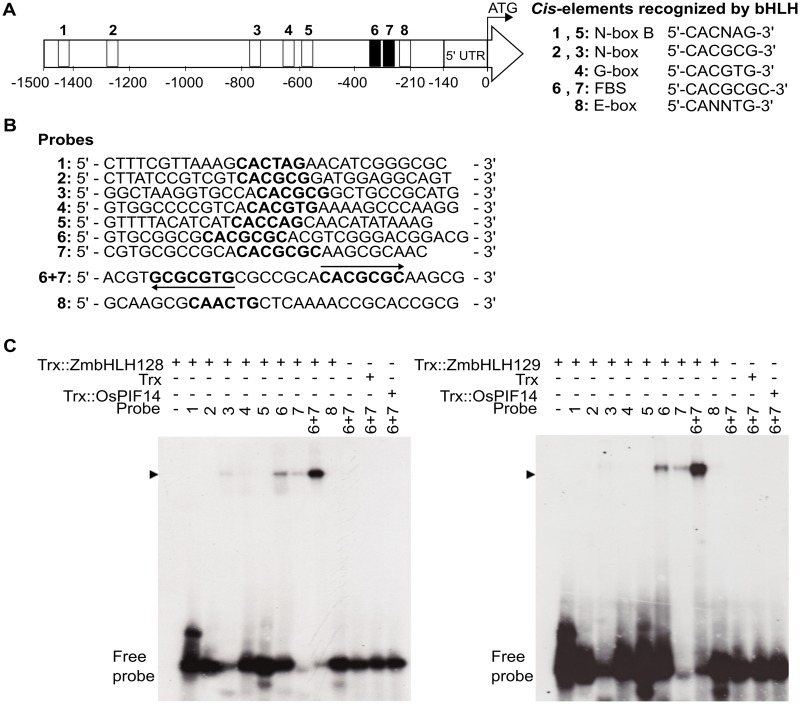
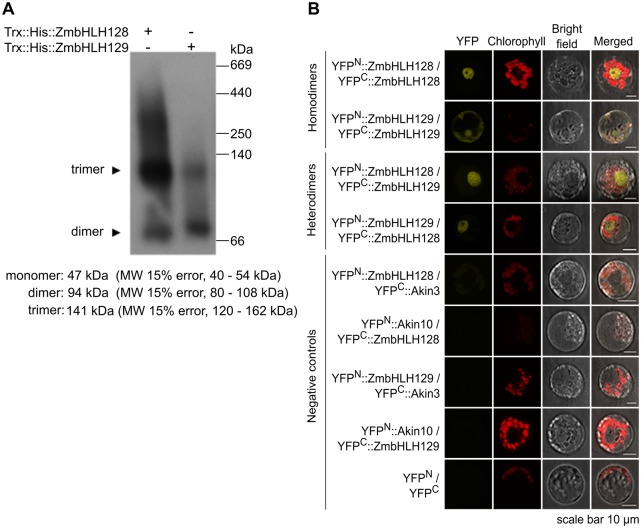
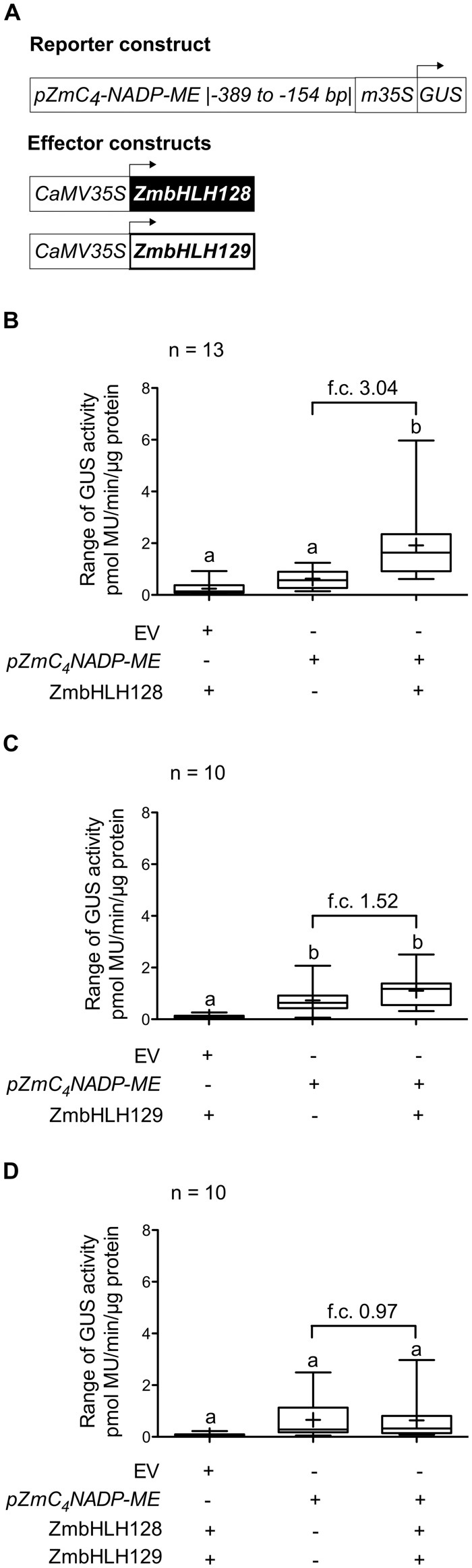
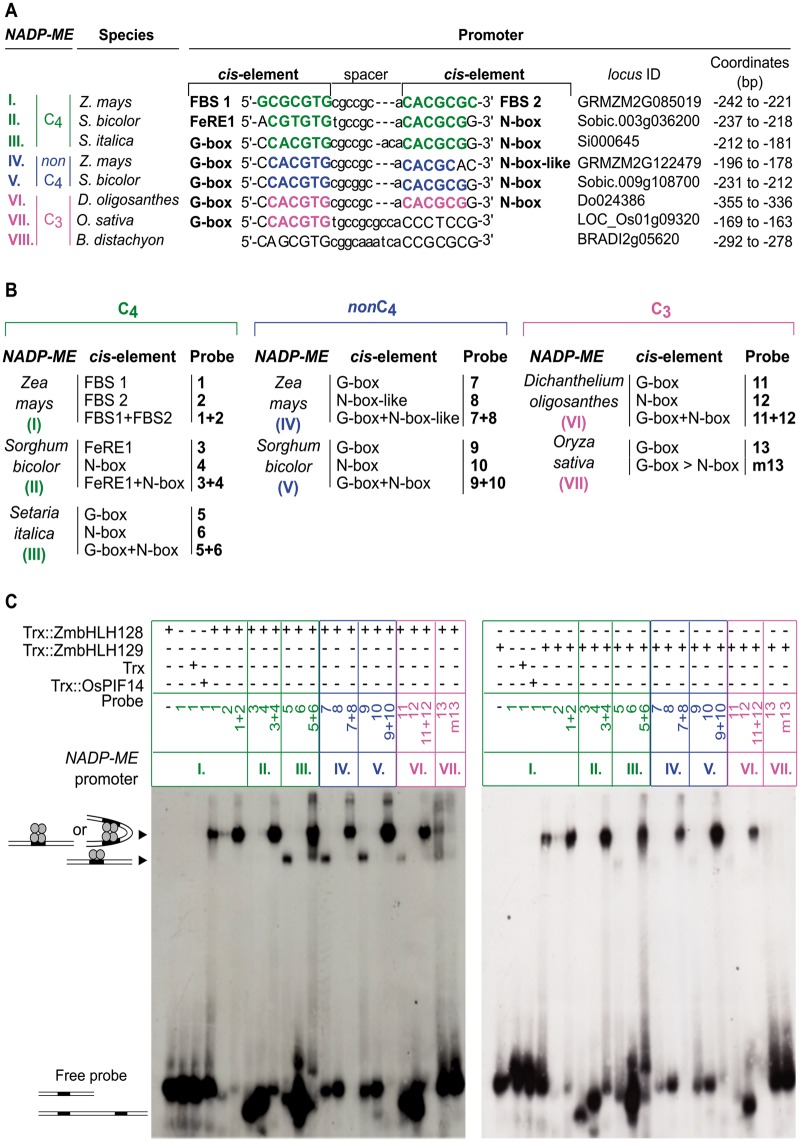
C4 photosynthesis has evolved repeatedly from the ancestral C3 state to generate a carbon concentrating mechanism that increases photosynthetic efficiency. This specialized form of photosynthesis is particularly common in the PACMAD clade of grasses, and is used by many of the world's most productive crops. The C4 cycle is accomplished through cell-type-specific accumulation of enzymes but cis-elements and transcription factors controlling C4 photosynthesis remain largely unknown. Using the NADP-Malic Enzyme (NADP-ME) gene as a model we tested whether mechanisms impacting on transcription in C4 plants evolved from ancestral components found in C3 species. Two basic Helix-Loop-Helix (bHLH) transcription factors, ZmbHLH128 and ZmbHLH129, were shown to bind the C4NADP-ME promoter from maize. These proteins form heterodimers and ZmbHLH129 impairs trans-activation by ZmbHLH128. Electrophoretic mobility shift assays indicate that a pair of cis-elements separated by a seven base pair spacer synergistically bind either ZmbHLH128 or ZmbHLH129. This pair of cis-elements is found in both C3 and C4 Panicoid grass species of the PACMAD clade. Our analysis is consistent with this cis-element pair originating from a single motif present in the ancestral C3 state. We conclude that C4 photosynthesis has co-opted an ancient C3 regulatory code built on G-box recognition by bHLH to regulate the NADP-ME gene. More broadly, our findings also contribute to the understanding of gene regulatory networks controlling C4 photosynthesis.
C4 光合作用从祖先的 C3 状态反复进化,产生了一种碳浓缩机制,提高了光合作用的效率。这种特殊形式的光合作用在禾本科的 PACMAD 分支中特别常见,并且被许多世界上最具生产力的作物所使用。C4 循环是通过细胞类型特异性积累酶来完成的,但控制 C4 光合作用的顺式元件和转录因子在很大程度上仍然未知。我们使用 NADP-苹果酸酶(NADP-ME)基因作为模型,测试了影响 C4 植物转录的机制是否是从 C3 物种中发现的祖先成分进化而来的。两个基本螺旋-环-螺旋(bHLH)转录因子 ZmbHLH128 和 ZmbHLH129 被证明可以结合玉米的 C4NADP-ME 启动子。这些蛋白质形成异二聚体,ZmbHLH129 会损害 ZmbHLH128 的转录激活。电泳迁移率变动分析表明,由七个碱基对间隔分开的一对顺式元件协同结合 ZmbHLH128 或 ZmbHLH129。这种顺式元件对存在于 PACMAD 分支的 C3 和 C4 Panicoid 禾本科物种中。我们的分析与这一对顺式元件起源于祖先 C3 状态中存在的单个基序的观点一致。我们得出结论,C4 光合作用已经采用了一种古老的 C3 调节密码,该密码基于 bHLH 对 G 框的识别,以调节 NADP-ME 基因。更广泛地说,我们的发现也有助于理解控制 C4 光合作用的基因调控网络。