Inaki Mikiko, Sasamura Takeshi, Matsuno Kenji
Department of Biological Sciences, Graduate School of Science, Osaka University, Osaka, Japan.
Front Cell Dev Biol. 2018 Apr 3;6:34. doi: 10.3389/fcell.2018.00034. eCollection 2018.
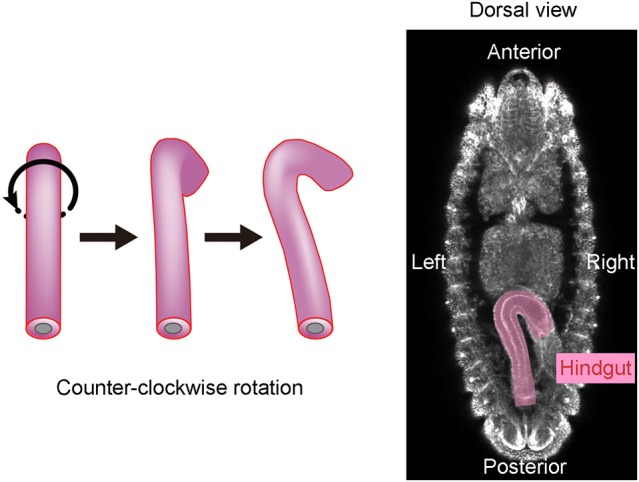
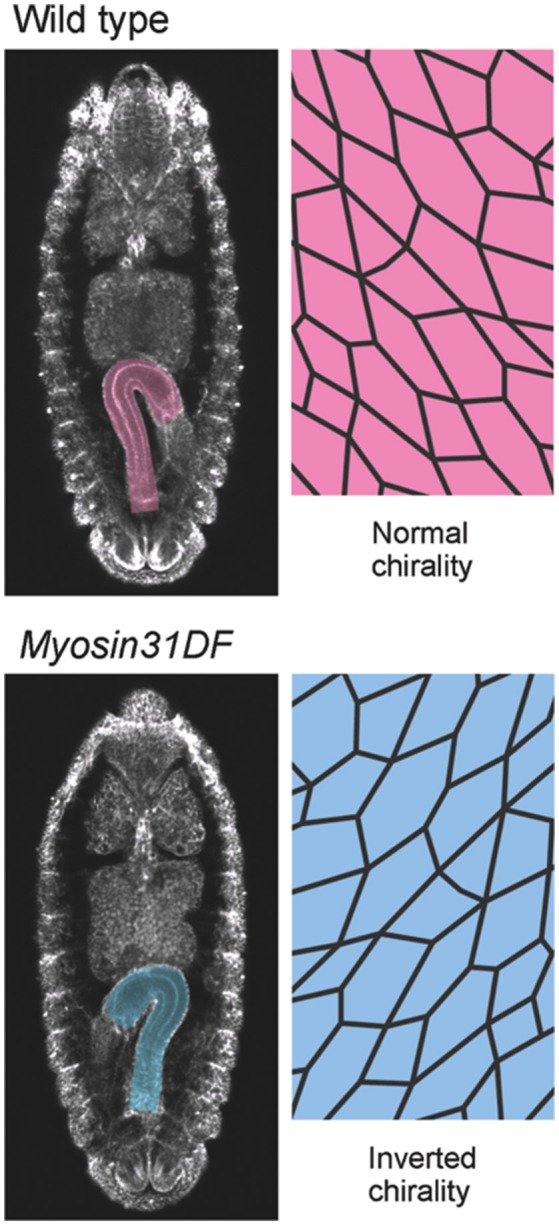
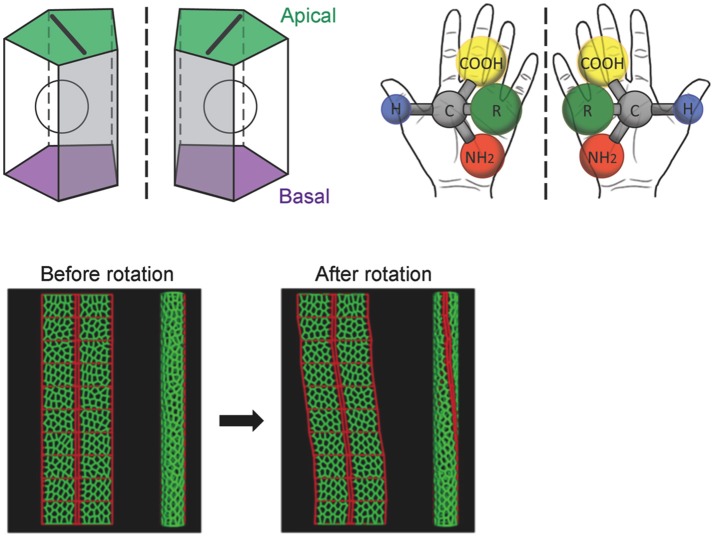
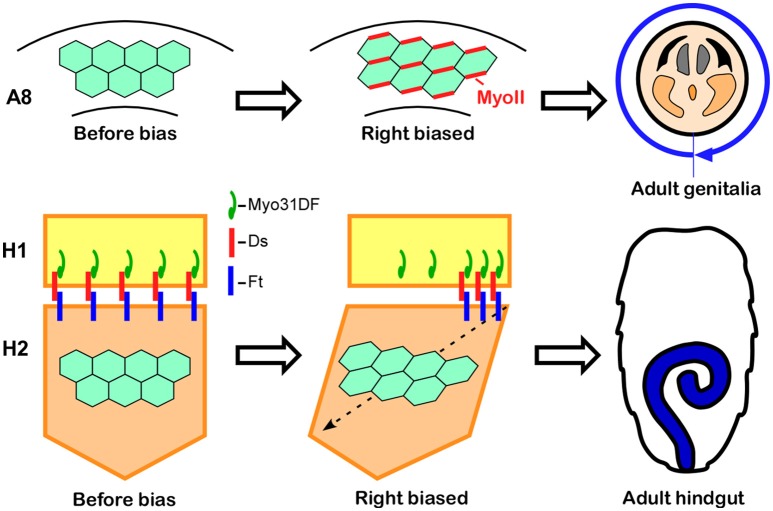
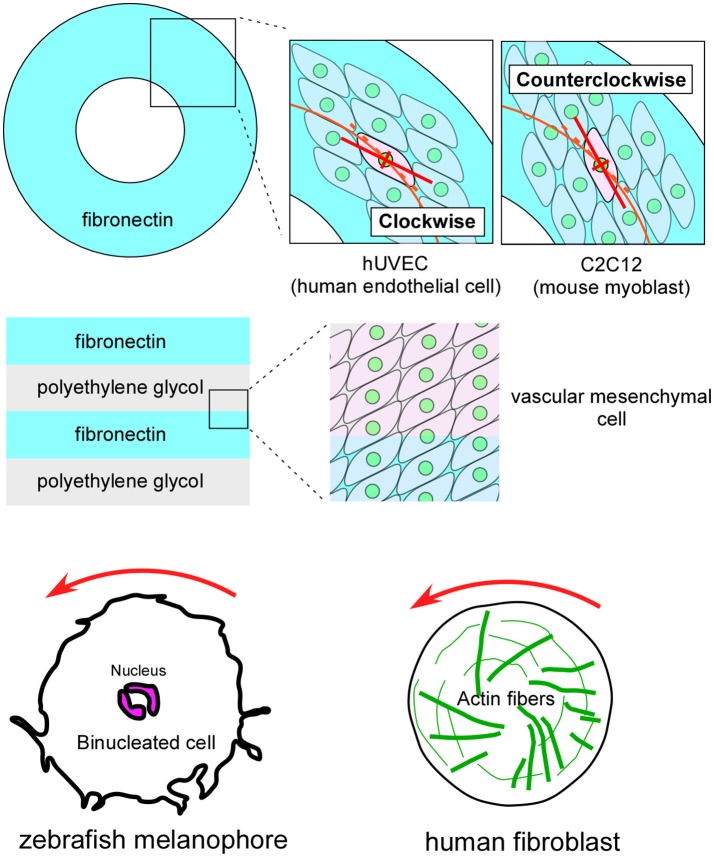
Most macromolecules found in cells are chiral, meaning that they cannot be superimposed onto their mirror image. However, cells themselves can also be chiral, a subject that has received little attention until very recently. In our studies on the mechanisms of left-right (LR) asymmetric development in , we discovered that cells can have an intrinsic chirality to their structure, and that this "cell chirality" is generally responsible for the LR asymmetric development of certain organs in this species. The actin cytoskeleton plays important roles in the formation of cell chirality. In addition, (), which encodes Myosin ID, was identified as a molecular switch for cell chirality. In other invertebrate species, including snails and , chirality of the blastomeres, another type of cell chirality, determines the LR asymmetry of structures in the body. Thus, chirality at the cellular level may broadly contribute to LR asymmetric development in various invertebrate species. Recently, cell chirality was also reported for various vertebrate cultured cells, and studies suggested that cell chirality is evolutionarily conserved, including the essential role of the actin cytoskeleton. Although the biological roles of cell chirality in vertebrates remain unknown, it may control LR asymmetric development or other morphogenetic events. The investigation of cell chirality has just begun, and this new field should provide valuable new insights in biology and medicine.
细胞中发现的大多数大分子都是手性的,这意味着它们无法与其镜像重叠。然而,细胞本身也可能是手性的,直到最近这个问题才受到很少的关注。在我们对[物种名称]左右(LR)不对称发育机制的研究中,我们发现细胞的结构可能具有内在手性,并且这种“细胞手性”通常是该物种某些器官LR不对称发育的原因。肌动蛋白细胞骨架在细胞手性的形成中起重要作用。此外,编码肌球蛋白ID的[基因名称]被确定为细胞手性的分子开关。在其他无脊椎动物物种中,包括蜗牛和[物种名称],卵裂球的手性(另一种细胞手性类型)决定了身体结构的LR不对称性。因此,细胞水平的手性可能广泛地促成各种无脊椎动物物种的LR不对称发育。最近,各种脊椎动物培养细胞也被报道具有细胞手性,并且研究表明细胞手性在进化上是保守的,包括肌动蛋白细胞骨架的重要作用。尽管细胞手性在脊椎动物中的生物学作用仍然未知,但它可能控制LR不对称发育或其他形态发生事件。细胞手性的研究刚刚开始,这个新领域应该会在生物学和医学方面提供有价值的新见解。