a School of Life Sciences , Tsinghua University , Beijing , PR China.
b School of Pharmaceutical Sciences (Shenzhen) , Sun Yat-sen University , Guangzhou , PR China.
Drug Deliv. 2018 Nov;25(1):985-994. doi: 10.1080/10717544.2018.1461954.
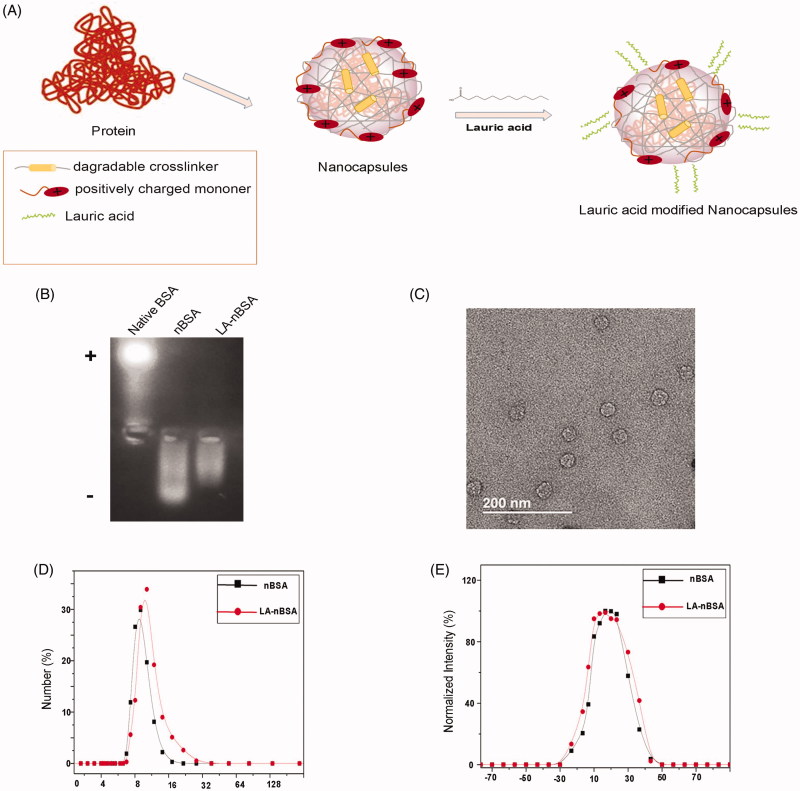
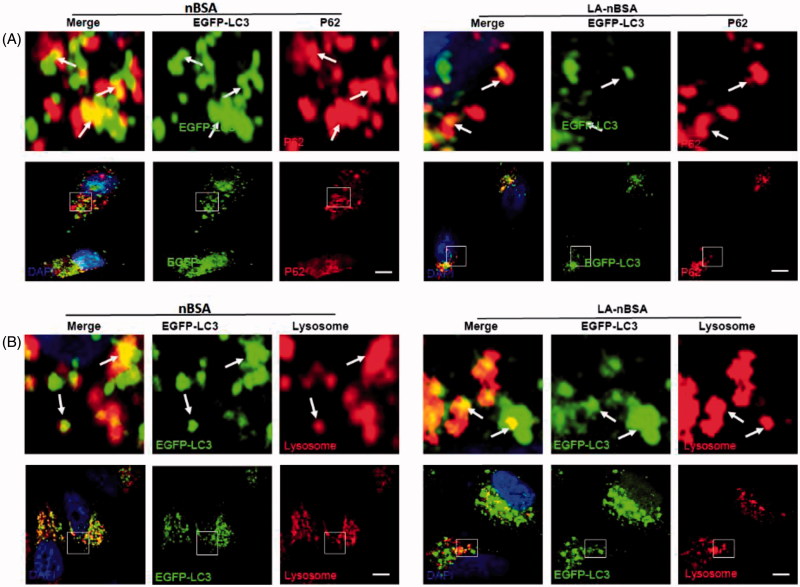
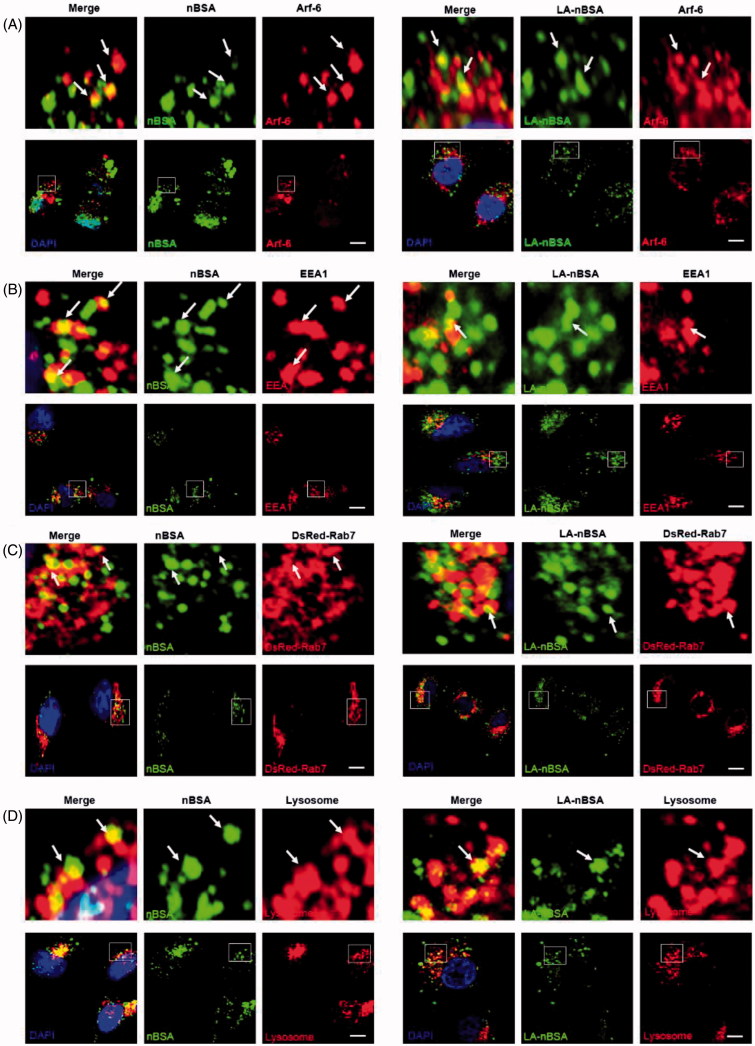
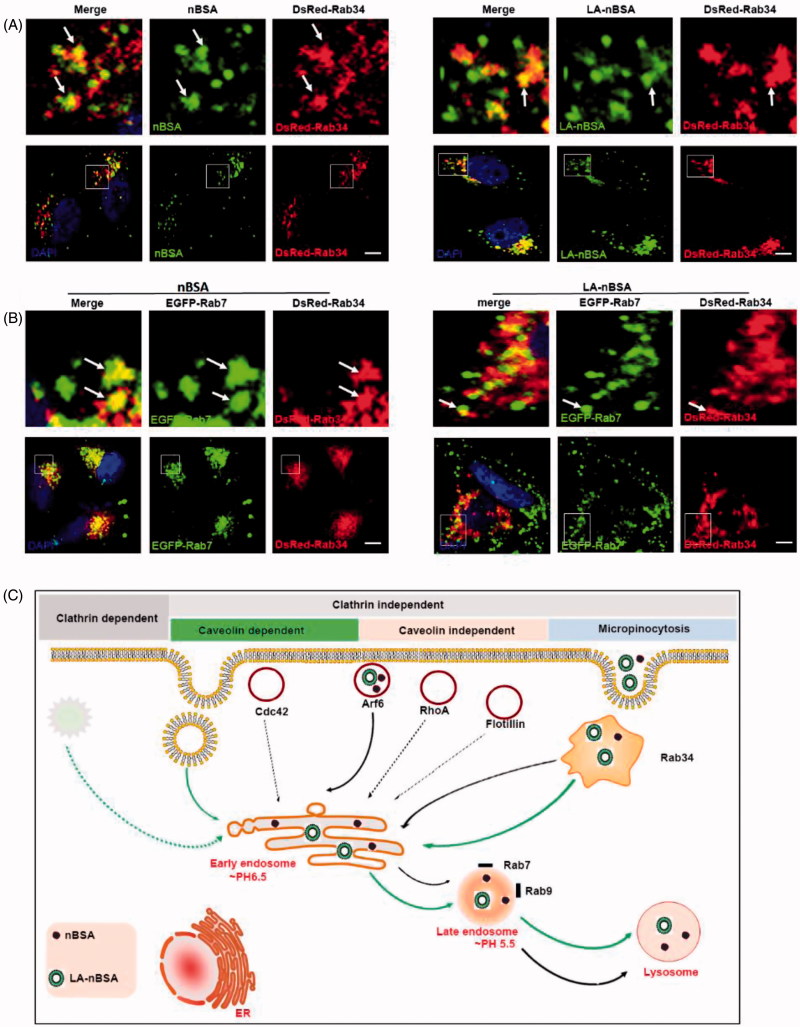
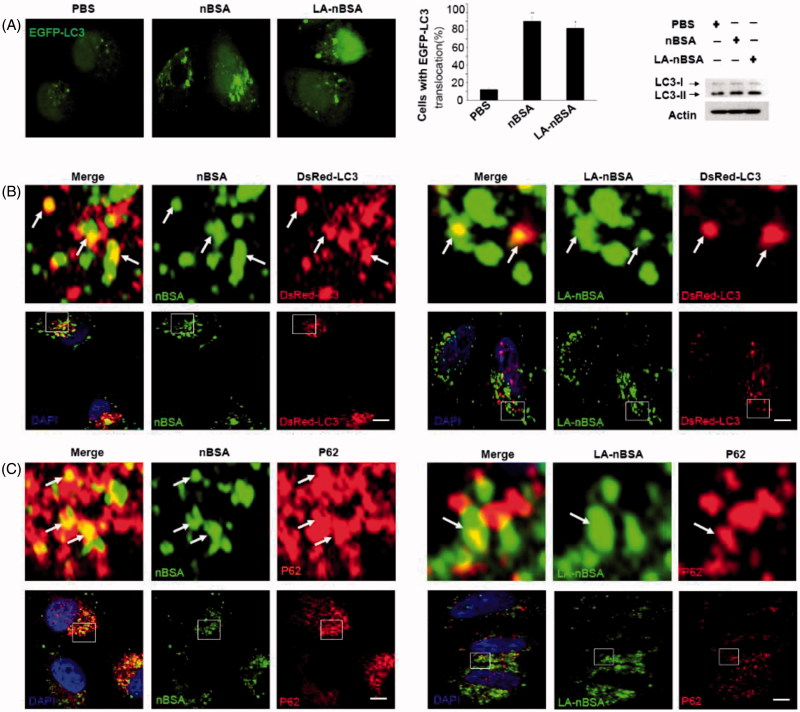
Protein nanocapsules have exhibited promising potential applications in the field of protein drug delivery. A major issue with various promising nano-sized biotherapeutics including protein nanocapsules is that owing to their particle size they are subject to cellular uptake via endocytosis, and become entrapped and then degraded within endolysosomes, which can significantly impair their therapeutic efficacy. In addition, many nano-sized biotherapeutics could be also sequestered by autophagosomes and degraded through the autolysosomal pathway. Thus, a limiting step in achieving an effective protein therapy is to facilitate the endosomal escape and auto-lysosomal escape to ensure cytosolic delivery of the protein drugs. Here, we prepared a protein nanocapsule based on BSA (nBSA) and the BSA nanocapsules modified with a bilayer of lauric acid (LA-nBSA) to investigate the escape effects from the endosome and autophagosome. The size distribution of nBSA and LA-nBSA analyzed using DLS presents a uniform diameter centered at 10 nm and 16 nm. The data also showed that FITC-labeled nBSA and LA-nBSA were taken up by the cells mainly through Arf-6-dependent endocytosis and Rab34-mediated macropinocytosis. In addition, LA-nBSA could efficiently escape from endosomal before the degradation in endo-lysosomes. Autophagy could also sequester the LA-nBSA through p62 autophagosome vesicles. These two types of nanocapsules underwent different intracellular destinies and lauric acid (LA) coating played a vital role in intracellular particle retention. In conclusion, the protein nanocapsules modified with LA could enhance the protein nanocapsules escape from intercellular trafficking vesicles, and protect the protein from degradation by the lysosomes.
蛋白纳米胶囊在蛋白药物递送领域表现出了有前景的应用潜力。各种有前景的纳米级生物疗法,包括蛋白纳米胶囊,主要存在一个问题,即由于其粒径,它们会通过胞吞作用被细胞摄取,并在内体溶酶体中被捕获和降解,这会显著降低它们的治疗效果。此外,许多纳米级生物疗法也可能被自噬体隔离,并通过自噬溶酶体途径降解。因此,实现有效蛋白治疗的一个限制步骤是促进内涵体逃逸和自噬溶酶体逃逸,以确保蛋白药物在细胞质中的递呈。在这里,我们制备了一种基于牛血清白蛋白(BSA)的蛋白纳米胶囊(nBSA)和用双层月桂酸(LA)修饰的 BSA 纳米胶囊(LA-nBSA),以研究从内涵体和自噬体逃逸的效果。通过 DLS 分析,nBSA 和 LA-nBSA 的粒径分布呈现出一个以 10nm 和 16nm 为中心的均匀直径。数据还表明,FITC 标记的 nBSA 和 LA-nBSA 主要通过 Arf-6 依赖性胞吞作用和 Rab34 介导的巨胞饮作用被细胞摄取。此外,LA-nBSA 可以在内涵体溶酶体降解之前有效地从内涵体中逃逸。自噬也可以通过 p62 自噬体囊泡隔离 LA-nBSA。这两种类型的纳米胶囊经历了不同的细胞内命运,月桂酸(LA)涂层在细胞内颗粒保留中起着至关重要的作用。总之,用 LA 修饰的蛋白纳米胶囊可以增强蛋白纳米胶囊从细胞内转运囊泡中的逃逸,并保护蛋白免受溶酶体的降解。