M Ameena, I Meignana Arumugham, Ramalingam Karthikeyan, S Rajeshkumar
Oral Pathology and Microbiology, Saveetha Dental College and Hospitals, Saveetha Institute of Medical and Technical Sciences, Saveetha University, Chennai, IND.
Public Health Dentistry, Saveetha Dental College and Hospitals, Saveetha Institute of Medical and Technical Sciences, Saveetha University, Chennai, IND.
Cureus. 2023 Sep 26;15(9):e46003. doi: 10.7759/cureus.46003. eCollection 2023 Sep.
The present study explored the anti-inflammatory, antimicrobial, antioxidant, and cytotoxic effects of a combination of chitosan thiocolchicoside and lauric acid (CTLA) nanogel. Materials and methods: A nanogel formulation of thiocolchicoside and lauric acid was developed and tested for potential applications. The antimicrobial activity was assessed using the well diffusion method, while the antioxidant activity was evaluated using the 2,2-diphenyl-1-picryl hydrazyl (DPPH) free radical scavenging assay and hydrogen peroxide (HO) antioxidant assay methods. The anti-inflammatory activity was determined through the egg albumin denaturation method, the bovine serum albumin denaturation method, and the membrane stabilization assay. A brine shrimp lethality assay was used to study the cytotoxic effect of the nanogel.
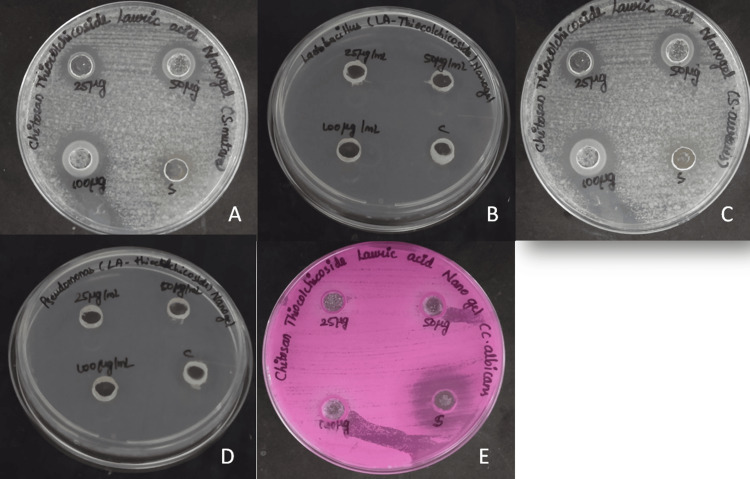
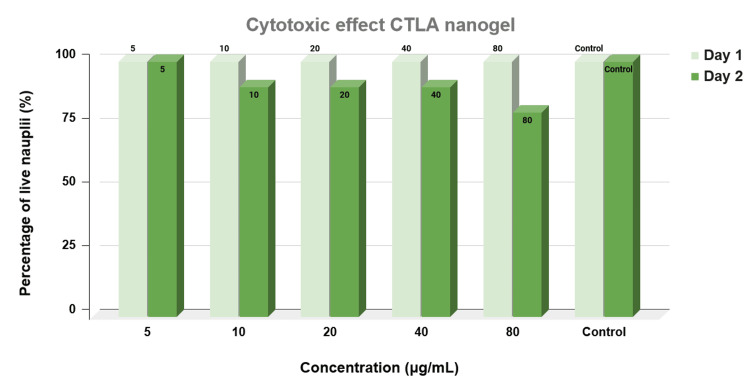
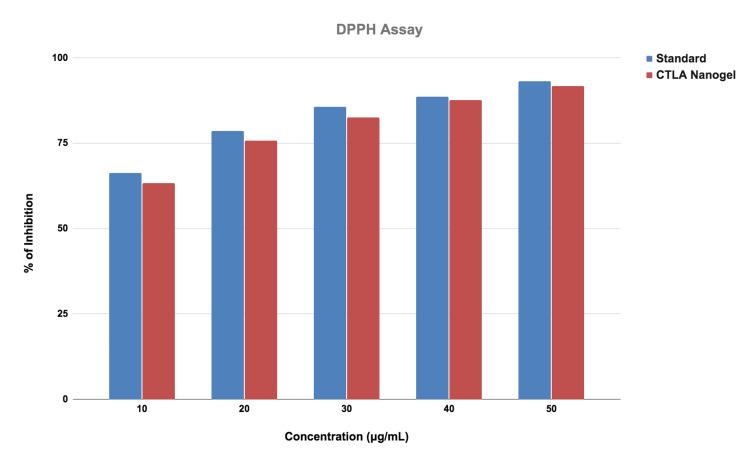
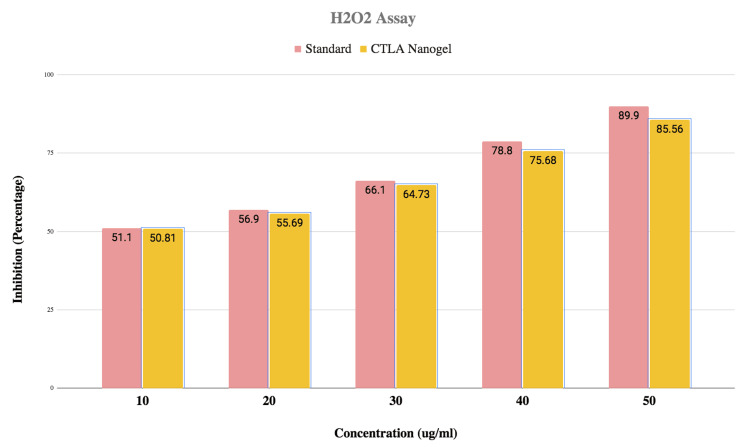
We identified significant positive outcomes for the CTLA nanogel. The results showed a percentage of inhibition of 81% at 50μg/mL, which showed the nanogel's significant anti-inflammatory activity by inhibiting bovine serum albumin denaturation. The anti-inflammatory properties of the nanogel were comparable to the standard diclofenac sodium at all tested concentrations. The egg albumin denaturation assay results revealed a percentage inhibition of 76% at 50 μg/mL. In the membrane stabilization assay, a percentage inhibition of 86% was obtained at a concentration of 50 μg/mL against 89% for the standard drug. The nanogel exhibited a zone of inhibition of 20 mm against and 22 mm with a dilution of 100 µg/mL of CTLA nanogel against . The antioxidant activity was studied by using the DPPH method, 50 μg/ml has an 89% inhibition, which was similar to the standard. The inhibitory activity of CTLA nanogel at 50 μg/ml was 81.6% in the hydroxyl free radical scavenging assay, which was comparable to the standard drug. At 5 μg/mL concentration of CTLA nanogel, approximately 90% of the nauplii remained alive after 48 hours.
The CTLA nanogel showed excellent anti-inflammatory and antioxidant properties suggesting its potential for managing inflammatory conditions and oxidative stress-related disorders.
本研究探讨壳聚糖硫代秋水仙碱与月桂酸(CTLA)纳米凝胶组合的抗炎、抗菌、抗氧化和细胞毒性作用。
开发了硫代秋水仙碱和月桂酸的纳米凝胶制剂并测试其潜在应用。采用平板扩散法评估抗菌活性,同时使用2,2-二苯基-1-苦基肼(DPPH)自由基清除试验和过氧化氢(HO)抗氧化试验方法评估抗氧化活性。通过蛋清蛋白变性法、牛血清白蛋白变性法和膜稳定试验测定抗炎活性。采用卤虫致死试验研究纳米凝胶的细胞毒性作用。
我们确定CTLA纳米凝胶有显著的阳性结果。结果显示,在50μg/mL时抑制率为81%,通过抑制牛血清白蛋白变性表明纳米凝胶具有显著的抗炎活性。在所有测试浓度下,纳米凝胶的抗炎特性与标准双氯芬酸钠相当。蛋清蛋白变性试验结果显示,在50μg/mL时抑制率为76%。在膜稳定试验中,在50μg/mL浓度下抑制率为86%,而标准药物为89%。纳米凝胶对[具体细菌1]的抑菌圈为20mm,对[具体细菌2]用100μg/mL的CTLA纳米凝胶稀释液的抑菌圈为22mm。采用DPPH法研究抗氧化活性,50μg/ml的抑制率为89%,与标准相当。在羟基自由基清除试验中,50μg/ml的CTLA纳米凝胶的抑制活性为81.6%,与标准药物相当。在5μg/mL的CTLA纳米凝胶浓度下,48小时后约90%的无节幼体存活。
CTLA纳米凝胶显示出优异的抗炎和抗氧化特性,表明其在治疗炎症性疾病和氧化应激相关疾病方面具有潜力。