Bioengineering and Therapeutic Sciences, Helen Diller Family Comprehensive Cancer Center and Institute for Computational Health Sciences. University of California, San Francisco, San Francisco, CA 94158, USA.
Clovis Oncology, Inc., Boulder, CO 80301, USA.
Cell Rep. 2018 Apr 17;23(3):918-929. doi: 10.1016/j.celrep.2018.03.093.
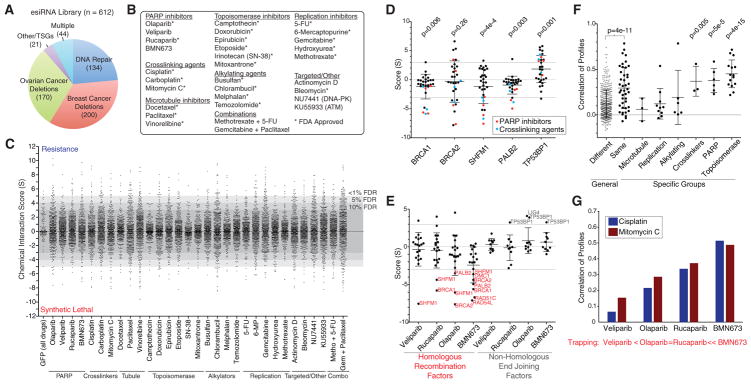
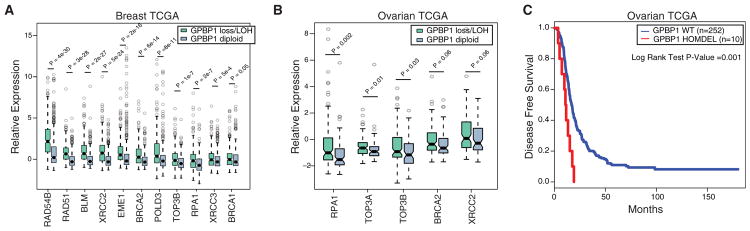
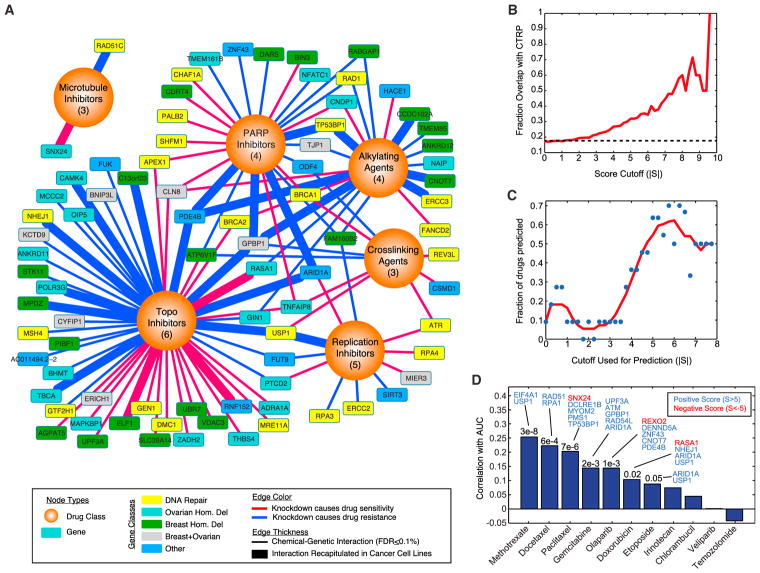
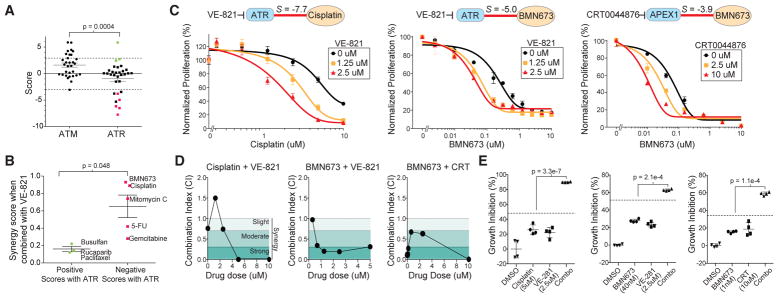
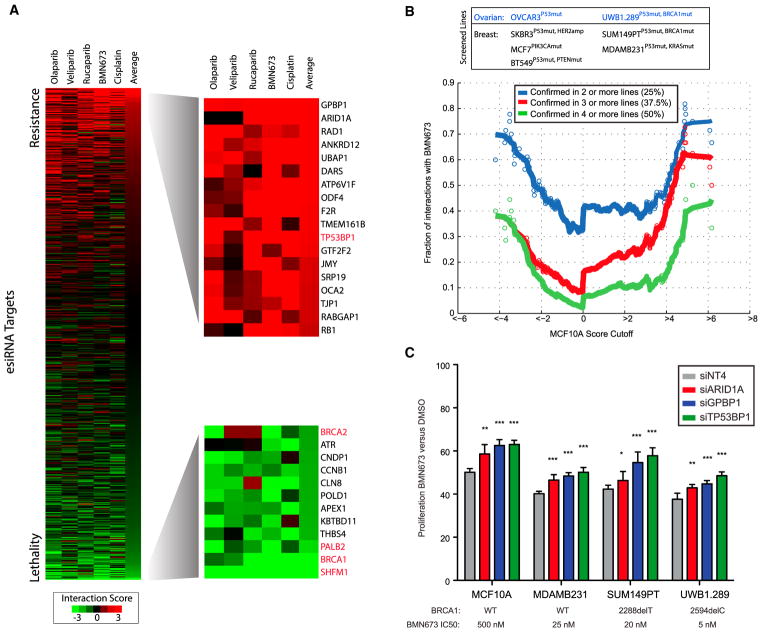
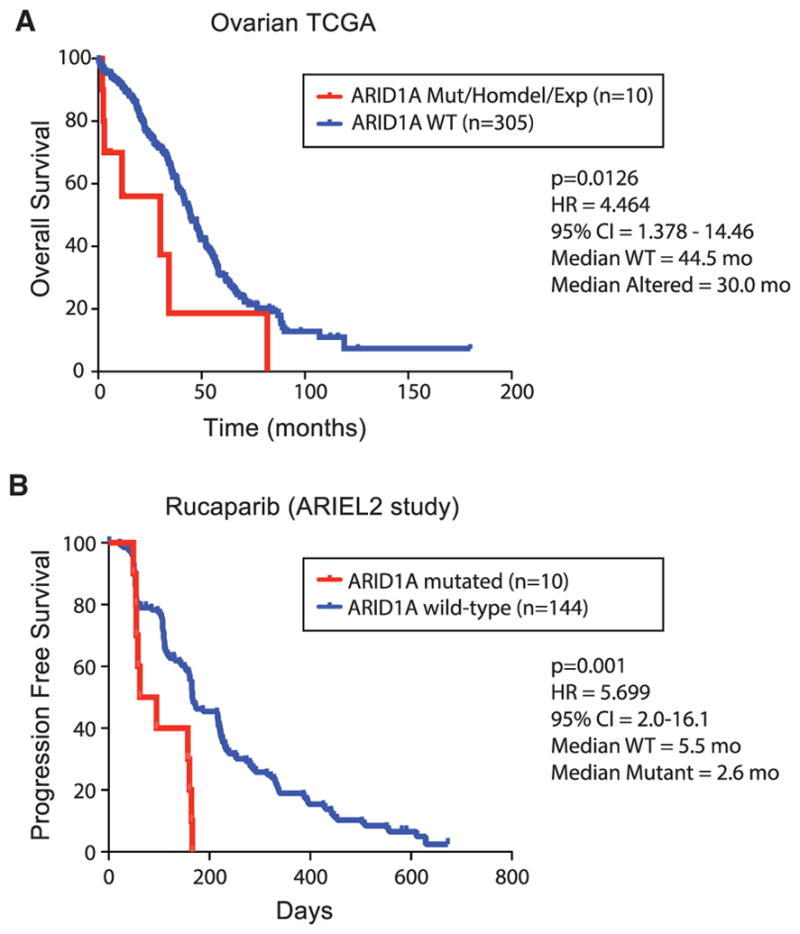
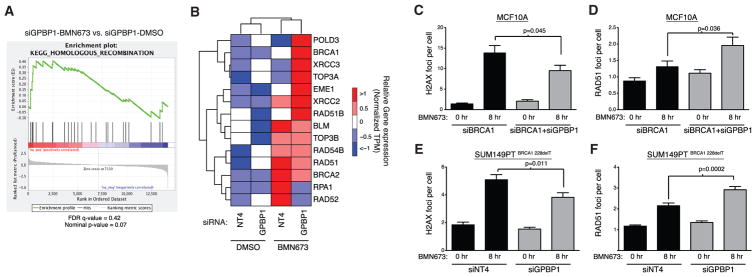
Chemotherapy is used to treat most cancer patients, yet our understanding of factors that dictate response and resistance to such drugs remains limited. We report the generation of a quantitative chemical-genetic interaction map in human mammary epithelial cells charting the impact of the knockdown of 625 genes related to cancer and DNA repair on sensitivity to 29 drugs, covering all classes of chemotherapy. This quantitative map is predictive of interactions maintained in other cell lines, identifies DNA-repair factors, predicts cancer cell line responses to therapy, and prioritizes synergistic drug combinations. We identify that ARID1A loss confers resistance to PARP inhibitors in cells and ovarian cancer patients and that loss of GPBP1 causes resistance to cisplatin and PARP inhibitors through the regulation of genes involved in homologous recombination. This map helps navigate patient genomic data and optimize chemotherapeutic regimens by delineating factors involved in the response to specific types of DNA damage.
化疗被用于治疗大多数癌症患者,但我们对于决定此类药物的反应和耐药性的因素的理解仍然有限。我们报告了一种在人乳腺上皮细胞中生成的定量化学遗传相互作用图谱,该图谱描述了敲低 625 个与癌症和 DNA 修复相关的基因对 29 种药物敏感性的影响,这些药物涵盖了所有化疗药物类别。该定量图谱可预测在其他细胞系中保持的相互作用,鉴定 DNA 修复因子,预测癌细胞系对治疗的反应,并对协同药物组合进行优先级排序。我们发现 ARID1A 的缺失会导致细胞和卵巢癌患者对 PARP 抑制剂产生耐药性,而 GPBP1 的缺失通过调节同源重组相关基因导致对顺铂和 PARP 抑制剂的耐药性。该图谱通过描绘参与特定类型 DNA 损伤反应的因素,有助于对患者的基因组数据进行导航,并优化化疗方案。