Baxter Laboratory for Stem Cell Biology, Department of Microbiology and Immunology, Institute for Stem Cell Biology and Regenerative Medicine, Stanford University School of Medicine, Stanford, CA, 94305, USA.
Genomics Institute of the Novartis Research Foundation, San Diego, CA, 92121, USA.
Nat Commun. 2018 Apr 18;9(1):1531. doi: 10.1038/s41467-018-03876-8.
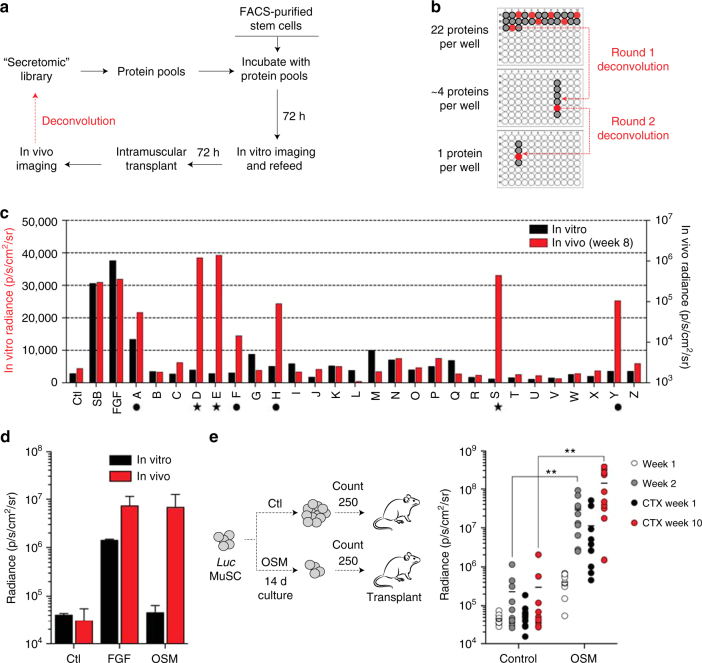
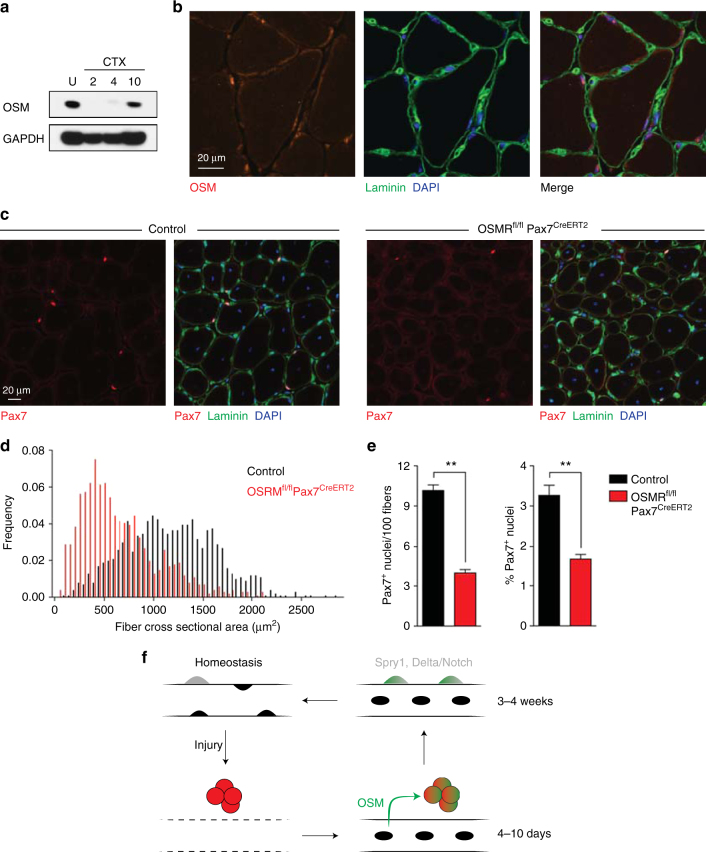
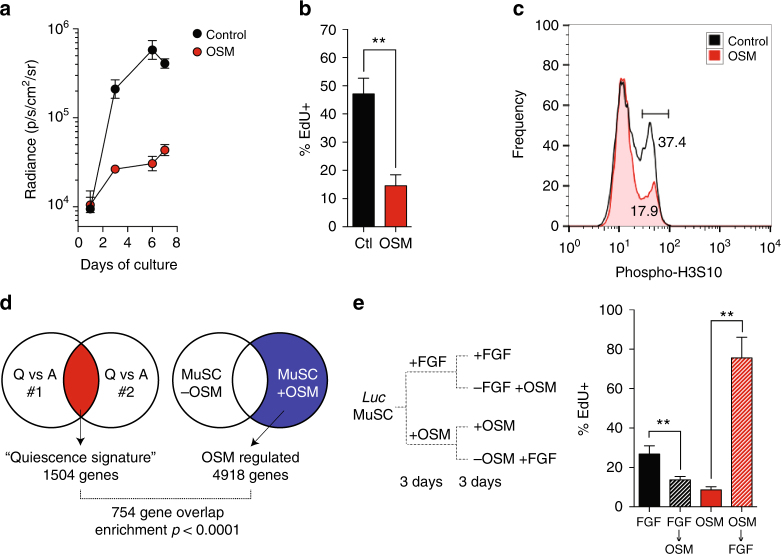
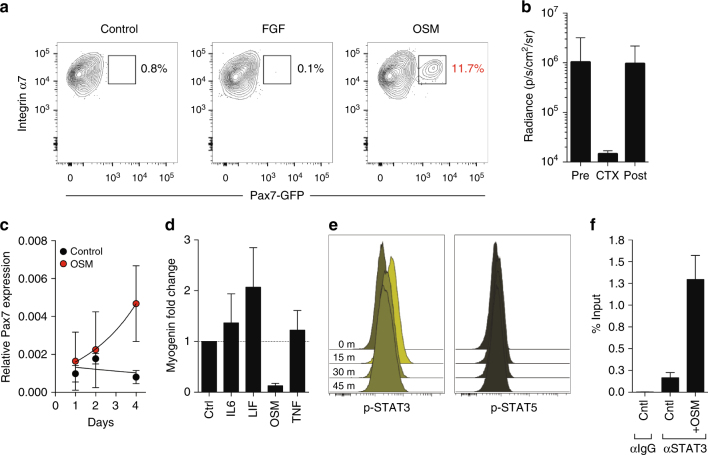
The balance between stem cell quiescence and proliferation in skeletal muscle is tightly controlled, but perturbed in a variety of disease states. Despite progress in identifying activators of stem cell proliferation, the niche factor(s) responsible for quiescence induction remain unclear. Here we report an in vivo imaging-based screen which identifies Oncostatin M (OSM), a member of the interleukin-6 family of cytokines, as a potent inducer of muscle stem cell (MuSC, satellite cell) quiescence. OSM is produced by muscle fibers, induces reversible MuSC cell cycle exit, and maintains stem cell regenerative capacity as judged by serial transplantation. Conditional OSM receptor deletion in satellite cells leads to stem cell depletion and impaired regeneration following injury. These results identify Oncostatin M as a secreted niche factor responsible for quiescence induction, and for the first time establish a direct connection between induction of quiescence, stemness, and transplantation potential in solid organ stem cells.
肌肉干细胞的静止和增殖之间的平衡受到严格控制,但在各种疾病状态下会失调。尽管在鉴定干细胞增殖的激活剂方面取得了进展,但负责诱导静止的生态位因子仍不清楚。在这里,我们报告了一种基于体内成像的筛选方法,该方法鉴定出白细胞介素 6 家族细胞因子之一的 Oncostatin M (OSM) 是肌肉干细胞 (MuSC,卫星细胞) 静止的有效诱导剂。OSM 由肌肉纤维产生,诱导 MuSC 细胞周期退出的可逆性,并通过连续移植判断维持干细胞的再生能力。卫星细胞中条件性 OSM 受体缺失会导致干细胞耗竭和损伤后再生受损。这些结果表明 Oncostatin M 是一种负责诱导静止、干性和实体器官干细胞移植潜力的分泌生态位因子,并首次在固体器官干细胞中建立了诱导静止、干性和移植潜力之间的直接联系。