Nanoscience Laboratory, Department of Physics, University of Trento, Via Sommarive 14, I-38123, Povo (Trento), Italy.
Institute of Biosciences and Bioresources, National Research Council of Italy, Via Pietro Castellino 111, 80131, Napoli, Italy.
Sci Rep. 2018 Apr 18;8(1):6163. doi: 10.1038/s41598-018-24499-5.
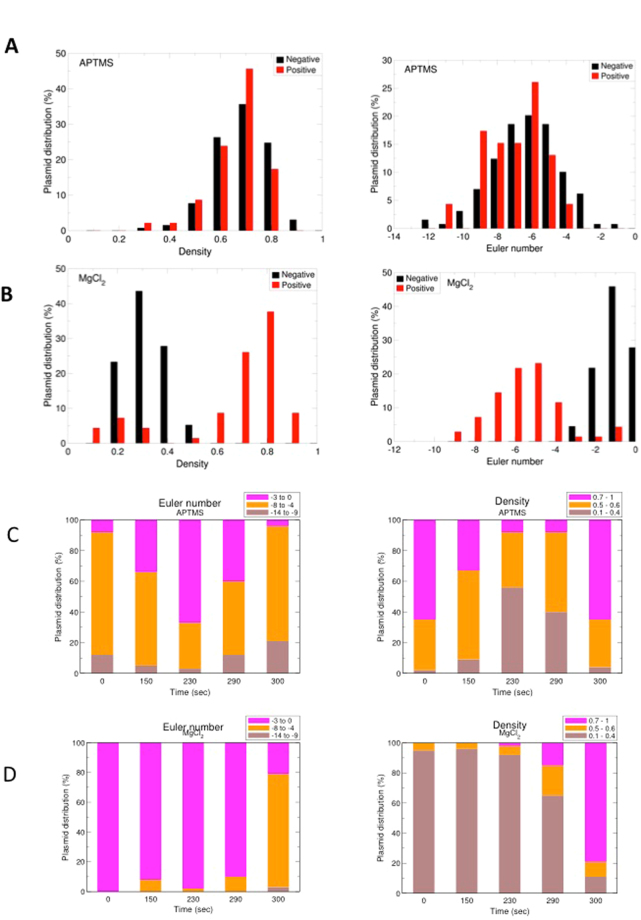
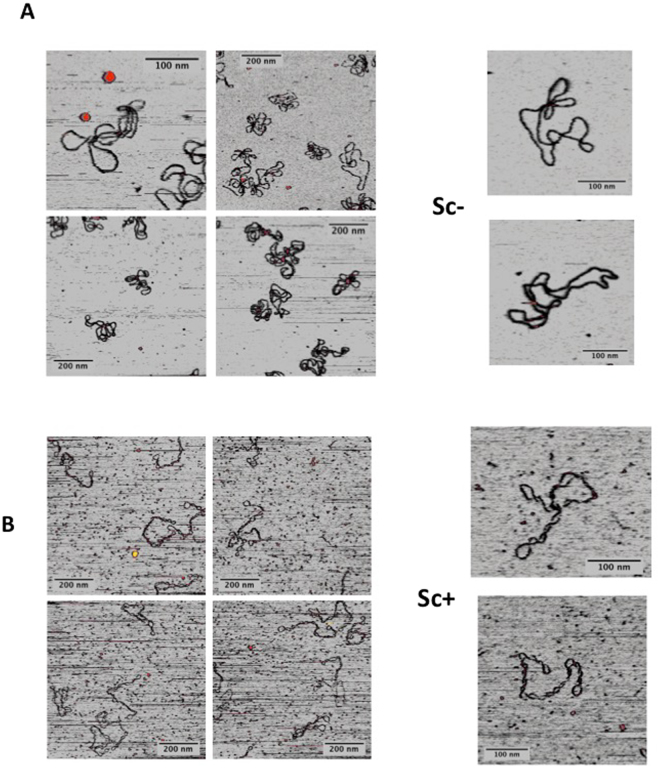
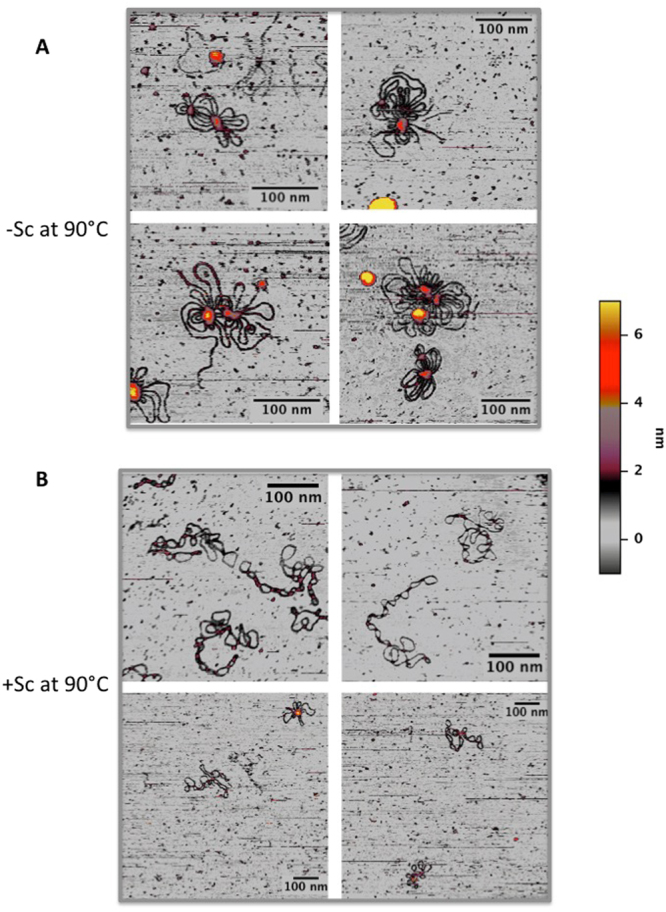
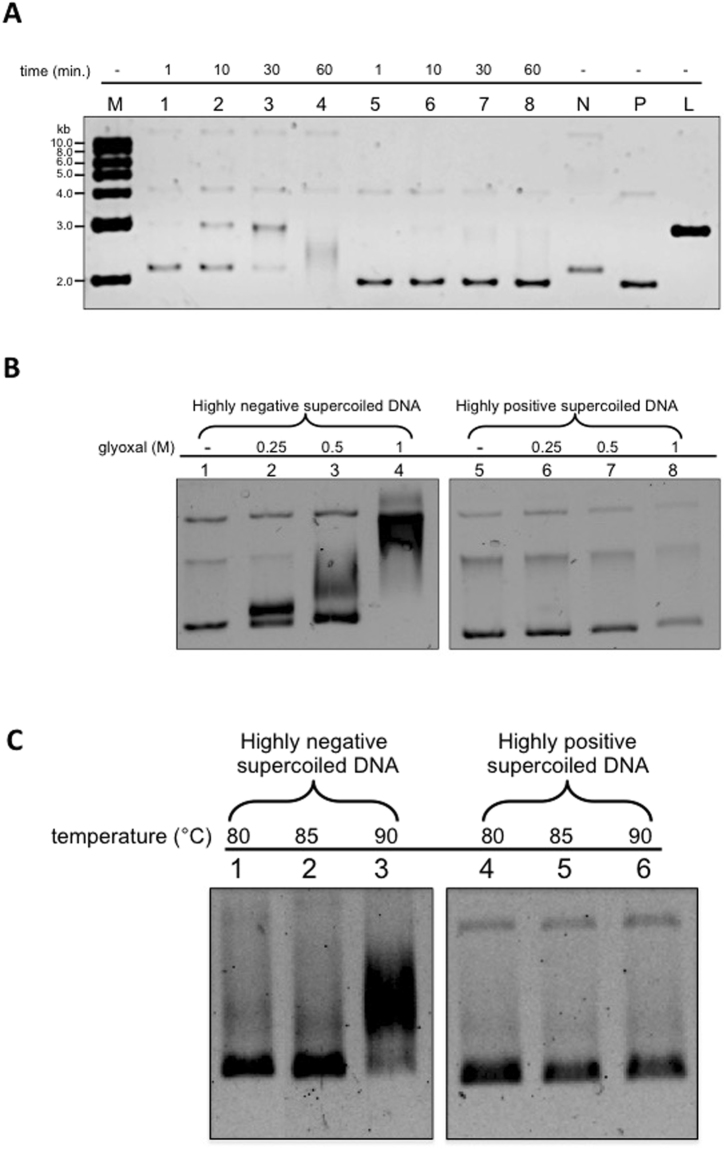
Topology affects physical and biological properties of DNA and impacts fundamental cellular processes, such as gene expression, genome replication, chromosome structure and segregation. In all organisms DNA topology is carefully modulated and the supercoiling degree of defined genome regions may change according to physiological and environmental conditions. Elucidation of structural properties of DNA molecules with different topology may thus help to better understand genome functions. Whereas a number of structural studies have been published on highly negatively supercoiled DNA molecules, only preliminary observations of highly positively supercoiled are available, and a description of DNA structural properties over the full range of supercoiling degree is lacking. Atomic Force Microscopy (AFM) is a powerful tool to study DNA structure at single molecule level. We here report a comprehensive analysis by AFM of DNA plasmid molecules with defined supercoiling degree, covering the full spectrum of biologically relevant topologies, under different observation conditions. Our data, supported by statistical and biochemical analyses, revealed striking differences in the behavior of positive and negative plasmid molecules.
拓扑结构会影响 DNA 的物理和生物学性质,并影响基因表达、基因组复制、染色体结构和分离等基本细胞过程。在所有生物体中,DNA 拓扑结构都被精心调控,特定基因组区域的超螺旋程度可能会根据生理和环境条件而改变。因此,阐明具有不同拓扑结构的 DNA 分子的结构特性,可能有助于更好地理解基因组的功能。虽然已经有许多关于高度负超螺旋 DNA 分子的结构研究,但只有初步的高度正超螺旋的观察结果,而且缺乏对整个超螺旋程度范围内 DNA 结构特性的描述。原子力显微镜(AFM)是研究单分子水平 DNA 结构的有力工具。在这里,我们通过 AFM 对具有确定超螺旋程度的 DNA 质粒分子进行了全面分析,涵盖了在不同观察条件下所有与生物学相关的拓扑结构。我们的数据,通过统计和生化分析得到支持,揭示了正、负质粒分子行为的显著差异。