Liu Bin, He Zhaoqi, Wang Jingjing, Xin Zhuoyuan, Wang Jiaxin, Li Fan, Fu Yunhe
Cardiovascular Disease Center, First Hospital of Jilin University, Changchun, China.
Department of Clinical Veterinary Medicine, College of Veterinary Medicine, Jilin University, Changchun, China.
Front Pharmacol. 2018 Apr 4;9:278. doi: 10.3389/fphar.2018.00278. eCollection 2018.
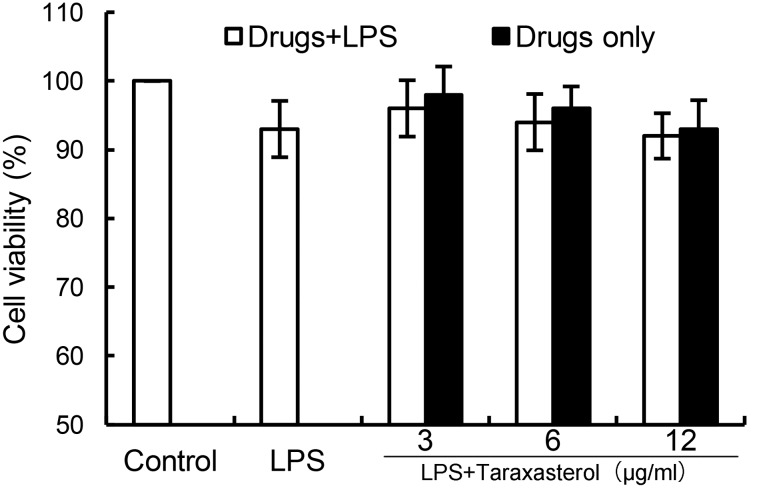
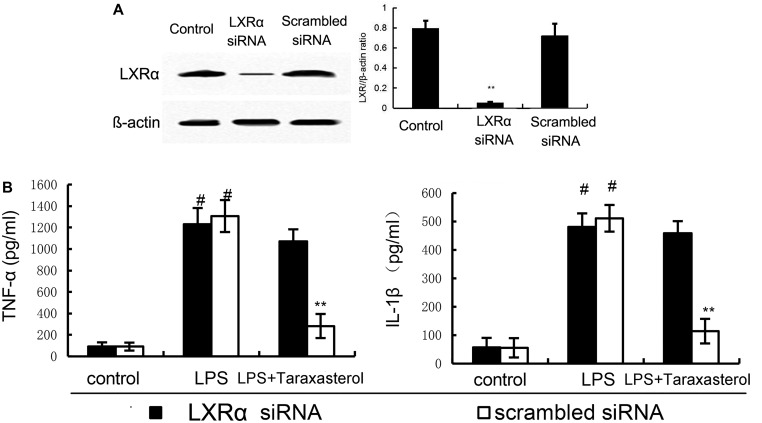
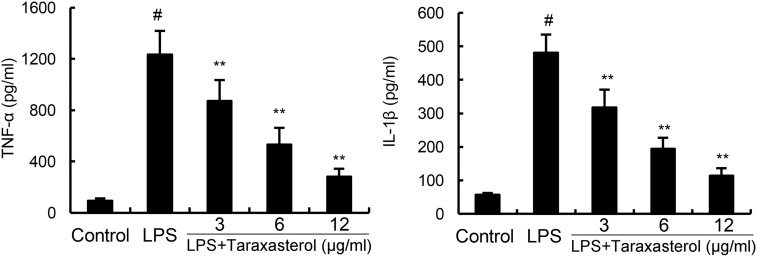
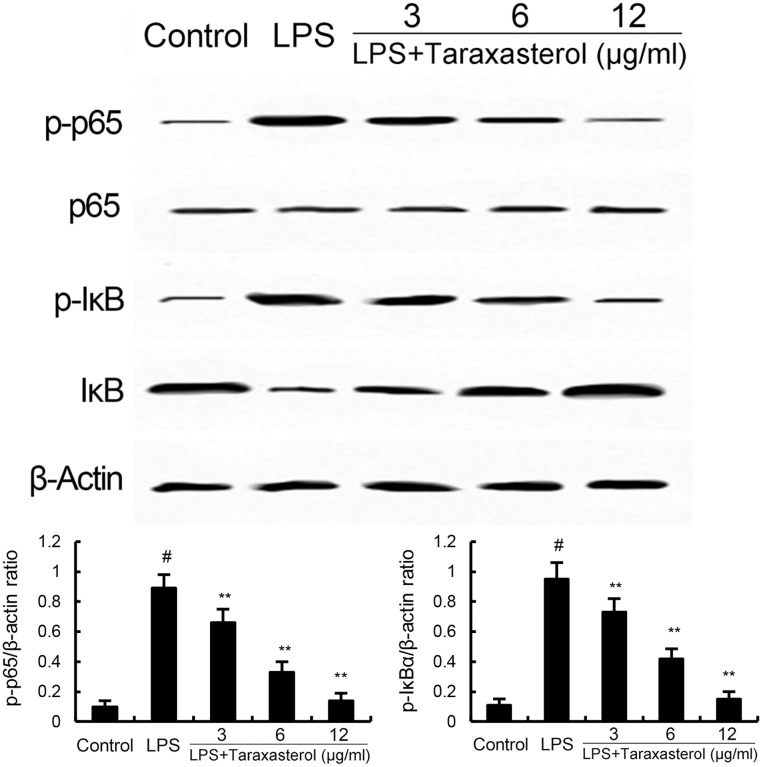
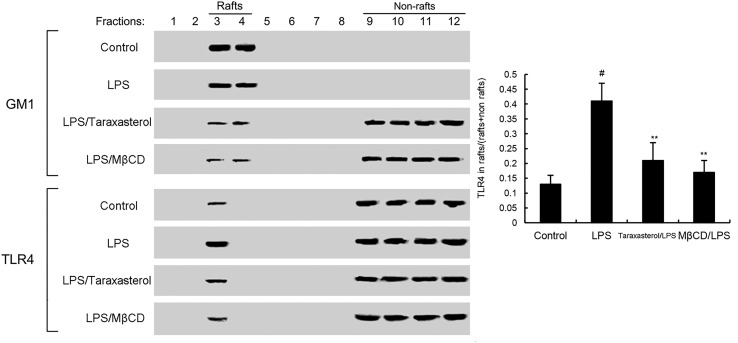
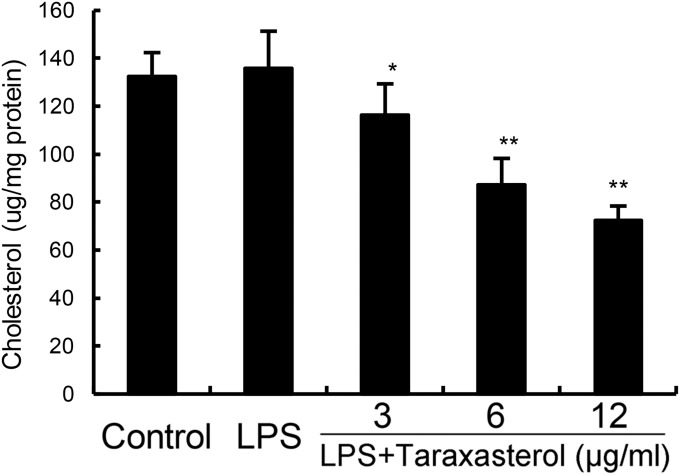
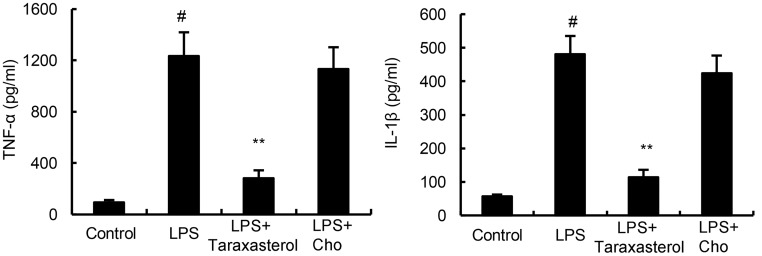
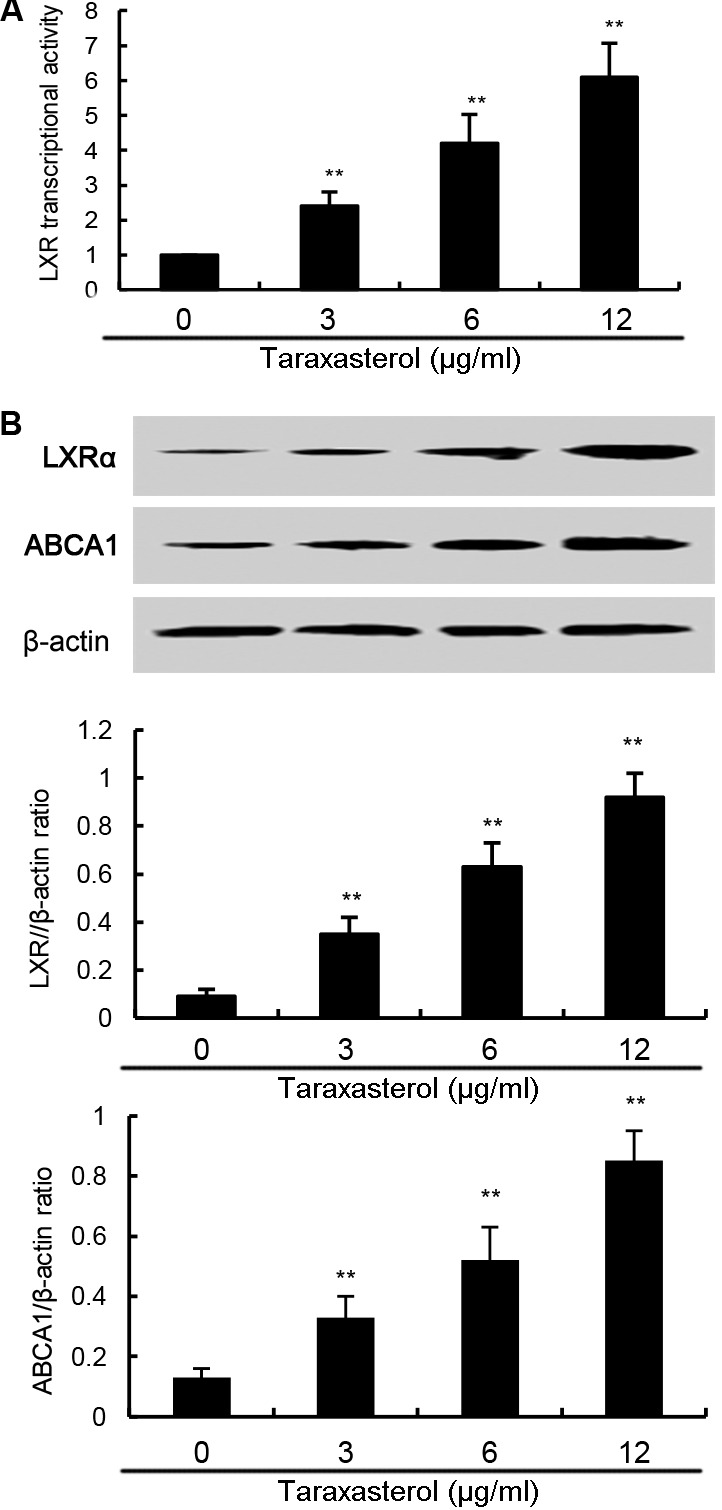
Neuroinflammation plays a critical role in the development of neurodegenerative diseases. Taraxasterol, a pentacyclic-triterpene isolated from , has been reported to have anti-inflammatory effect. The aim of this study was to investigate the anti-inflammatory effects and mechanism of taraxasterol in LPS-stimulated BV2 microglia cells. BV2 microglia cells were treated with taraxasterol 12 h before LPS stimulation. The effects of taraxasterol on LPS-induced TNF-α and IL-1β production were detected by ELISA. The effects of taraxasterol on LXRα, ABCA1, TLR4, and NF-κB expression were detected by western blot analysis. The results showed that taraxasterol dose-dependently inhibited LPS-induced TNF-α and IL-1β production and NF-κB activation. Taraxasterol also disrupted the formation of lipid rafts and inhibited translocation of TLR4 into lipid rafts. Furthermore, taraxasterol was found to activate LXRα-ABCA1 signaling pathway which induces cholesterol efflux from cells. In addition, our results showed that the anti-inflammatory effect of taraxasterol was attenuated by transfection with LXRα siRNA. In conclusion, these results suggested that taraxasterol inhibits LPS-induced inflammatory response in BV2 microglia cells by activating LXRα-ABCA1 signaling pathway.
神经炎症在神经退行性疾病的发展中起关键作用。蒲公英甾醇是一种从[具体来源未给出]中分离出的五环三萜,据报道具有抗炎作用。本研究的目的是探讨蒲公英甾醇在脂多糖(LPS)刺激的BV2小胶质细胞中的抗炎作用及其机制。在LPS刺激前12小时用蒲公英甾醇处理BV2小胶质细胞。通过酶联免疫吸附测定(ELISA)检测蒲公英甾醇对LPS诱导的肿瘤坏死因子-α(TNF-α)和白细胞介素-1β(IL-1β)产生的影响。通过蛋白质免疫印迹分析检测蒲公英甾醇对肝X受体α(LXRα)、ATP结合盒转运体A1(ABCA1)、Toll样受体4(TLR4)和核因子κB(NF-κB)表达的影响。结果表明,蒲公英甾醇剂量依赖性地抑制LPS诱导的TNF-α和IL-1β产生以及NF-κB激活。蒲公英甾醇还破坏脂筏的形成并抑制TLR4向脂筏的转位。此外,发现蒲公英甾醇激活LXRα-ABCA1信号通路,该通路诱导胆固醇从细胞中流出。此外,我们的结果表明,用LXRα小干扰RNA(siRNA)转染可减弱蒲公英甾醇的抗炎作用。总之,这些结果表明,蒲公英甾醇通过激活LXRα-ABCA1信号通路抑制LPS诱导的BV2小胶质细胞炎症反应。