Zou Weifeng, He Fang, Liu Sha, Pu Jinding, Hu Jinxing, Sheng Qing, Zhu Tao, Zhu Tianhua, Li Bing, Ran Pixin
The State Key Laboratory of Respiratory Disease, Guangzhou Chest Hospital, Guangzhou, Guangdong, China.
The Research Center of Experiment Medicine, Guangzhou Medical University, Guangzhou, Guangdong, China.
Can Respir J. 2018 Jan 28;2018:1817398. doi: 10.1155/2018/1817398. eCollection 2018.
The aim of the present study was to test whether fine particulate matter (PM2.5) induces the expression of platelet-derived growth factor-AB (PDGF-AB), PDGF-BB, and transforming growth factor-1 (TGF-1) in human bronchial epithelial cells (HBECs) in vitro via high-mobility group box 1 (HMGB1) receptor for advanced glycation end products (RAGE) signaling.
Sprague-Dawley rats were exposed to motor vehicle exhaust (MVE) or clean air. HBECs were either transfected with a small interfering RNA (siRNA) targeting HMGB1 or incubated with anti-RAGE antibodies and subsequently stimulated with PM2.5.
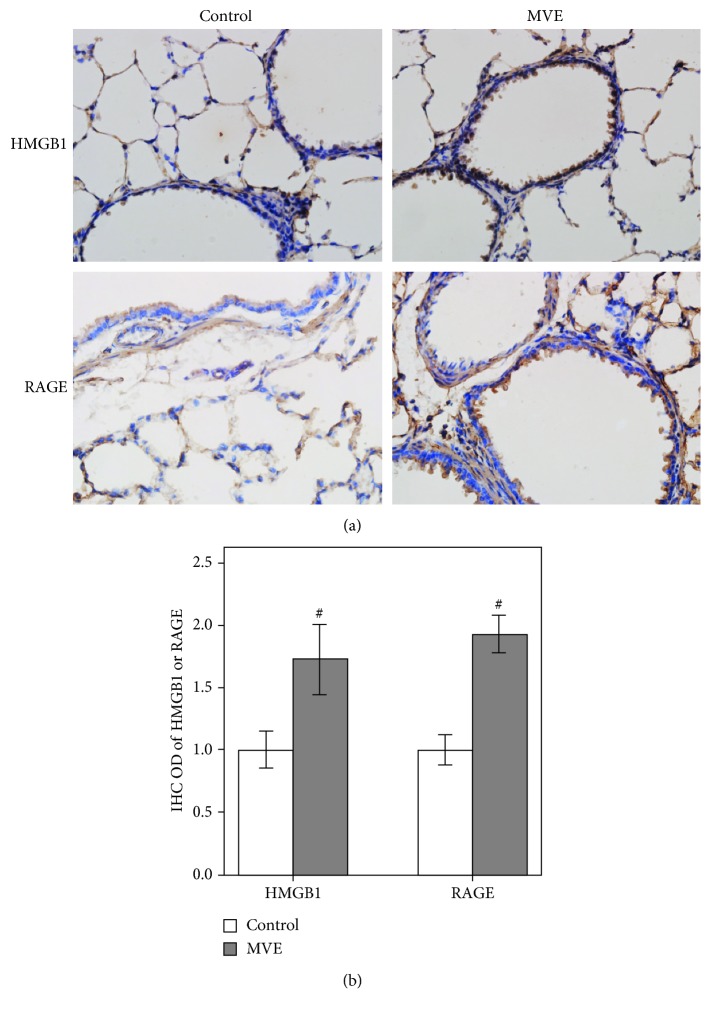
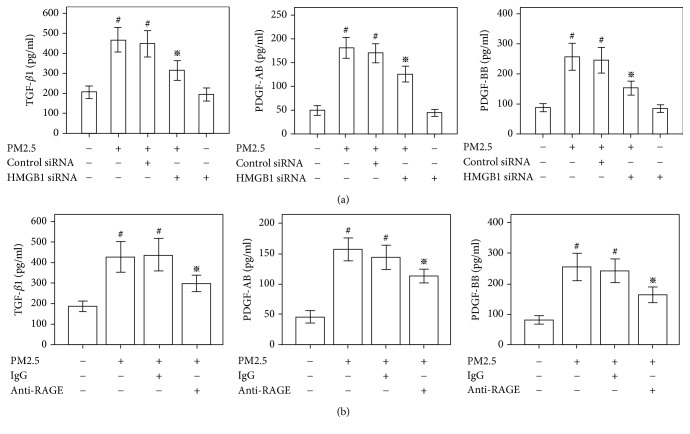
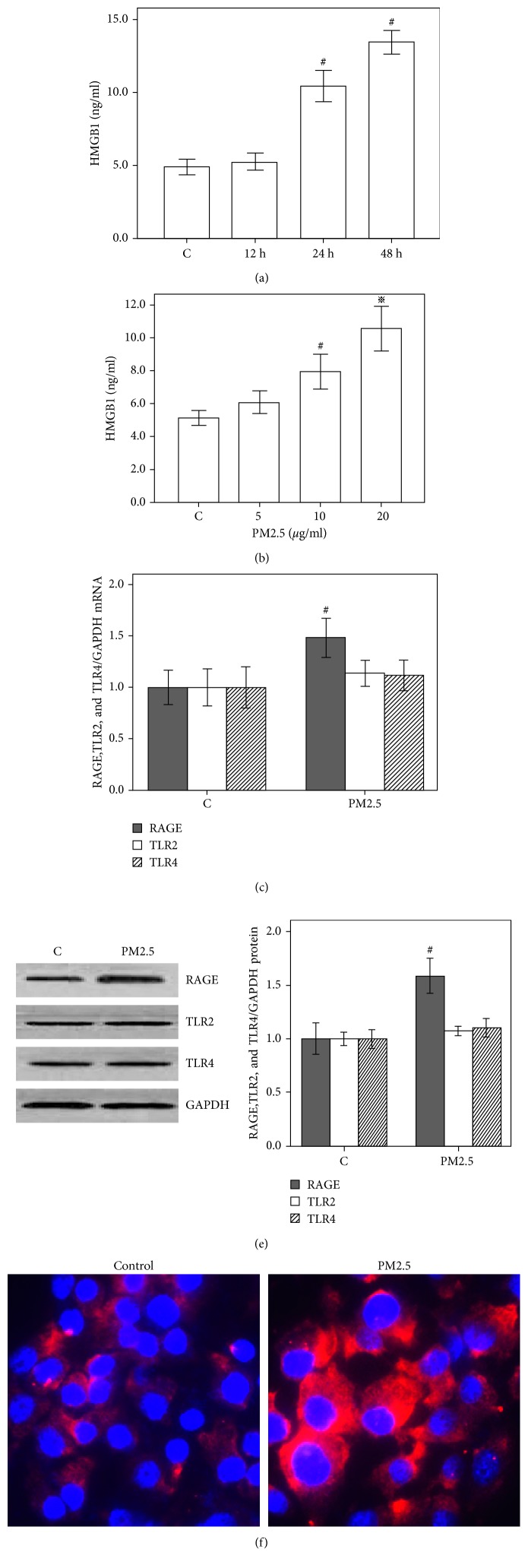
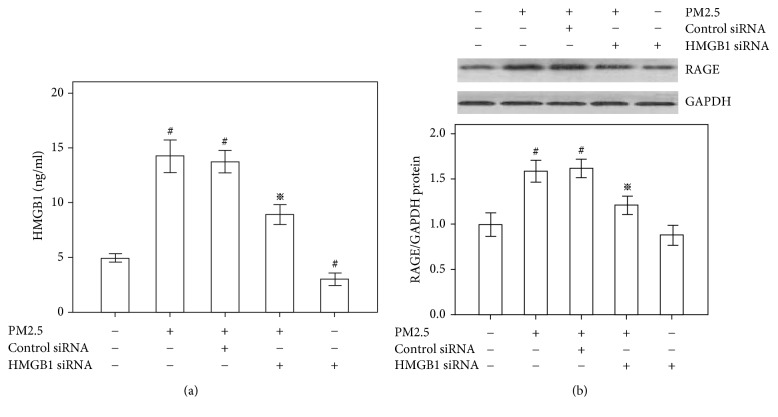
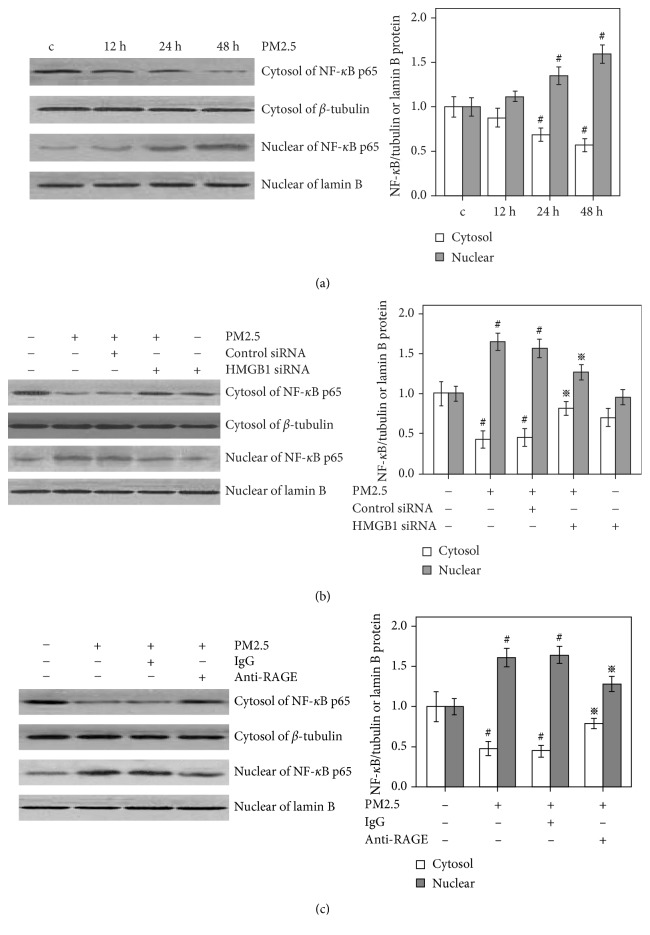
The expression of HMGB1 and RAGE was elevated in MVE-treated rats compared with untreated rats, and PM2.5 increased the secretion of HMGB1 and upregulated RAGE expression and the translocation of nuclear factor κB (NF-κB) into the nucleus of HBECs. This activation was accompanied by an increase in the expression of PDGF-AB, PDGF-BB, and TGF-1. The HMGB1 siRNA prevented these effects. Anti-RAGE antibodies attenuated the activation of NF-B and decreased the secretion of TGF-1, PDGF-AB, and PDGF-BB from HBECs.
PM2.5 induces the expression of TGF-1, PDGF-AB, and PDGF-BB in vitro via HMGB1-RAGE signaling, suggesting that this pathway may contribute to the airway remodeling observed in patients with COPD.
本研究旨在测试细颗粒物(PM2.5)是否通过高迁移率族蛋白B1(HMGB1)的晚期糖基化终产物受体(RAGE)信号通路在体外诱导人支气管上皮细胞(HBECs)中血小板衍生生长因子AB(PDGF-AB)、血小板衍生生长因子BB(PDGF-BB)和转化生长因子1(TGF-1)的表达。
将Sprague-Dawley大鼠暴露于机动车尾气(MVE)或清洁空气中。HBECs要么用靶向HMGB1的小干扰RNA(siRNA)转染,要么与抗RAGE抗体孵育,随后用PM2.5刺激。
与未处理的大鼠相比,MVE处理的大鼠中HMGB1和RAGE的表达升高,并且PM2.5增加了HMGB1的分泌,上调了RAGE的表达以及核因子κB(NF-κB)向HBECs细胞核的转位。这种激活伴随着PDGF-AB、PDGF-BB和TGF-1表达的增加。HMGB1 siRNA可阻止这些效应。抗RAGE抗体减弱了NF-κB的激活,并减少了HBECs中TGF-1、PDGF-AB和PDGF-BB的分泌。
PM2.5在体外通过HMGB1-RAGE信号通路诱导TGF-1、PDGF-AB和PDGF-BB的表达,表明该通路可能导致慢性阻塞性肺疾病(COPD)患者出现气道重塑。