van den Akker Focco, Bonomo Robert A
Department of Biochemistry, Case Western Reserve University School of Medicine, Cleveland, OH, United States.
Medicine, Pharmacology, Molecular Biology and Microbiology, Proteomics and Bioinformatics, Case Western Reserve University School of Medicine, Cleveland, OH, United States.
Front Microbiol. 2018 Apr 5;9:622. doi: 10.3389/fmicb.2018.00622. eCollection 2018.
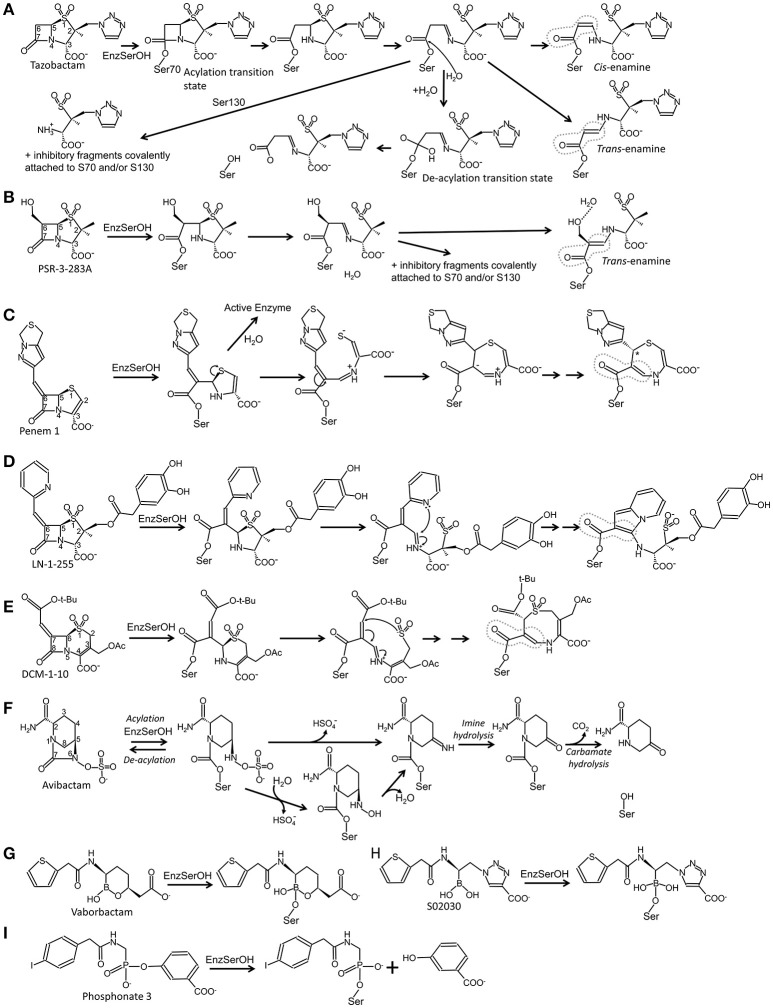
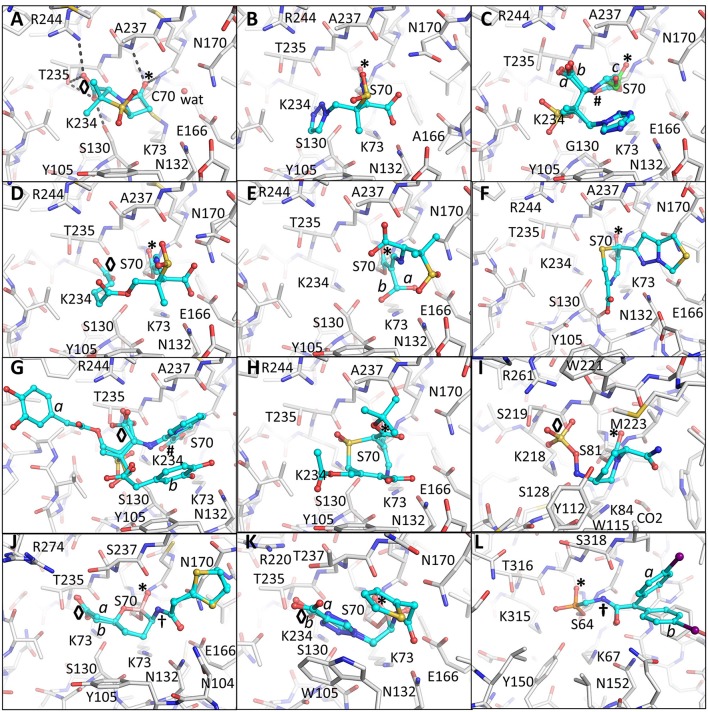
As a bacterial resistance strategy, serine β-lactamases have evolved from cell wall synthesizing enzymes known as penicillin-binding proteins (PBP), by not only covalently binding β-lactam antibiotics but, also acquiring mechanisms of deacylating these antibiotics. This critical deacylation step leads to release of hydrolyzed and inactivated β-lactams, thereby providing resistance for the bacteria against these antibiotics targeting the cell wall. To combat β-lactamase-mediated antibiotic resistance, numerous β-lactamase inhibitors were developed that utilize various strategies to inactivate the β-lactamase. Most of these compounds are "mechanism-based" inhibitors that in some manner mimic the β-lactam substrate, having a carbonyl moiety and a negatively charged carboxyl or sulfate group. These compounds form a covalent adduct with the catalytic serine via an initial acylation step. To increase the life-time of the inhibitory covalent adduct intermediates, a remarkable array of different strategies was employed to improve inhibition potency. Such approaches include post-acylation intra- and intermolecular chemical rearrangements as well as affecting the deacylation water. These approaches transform the inhibitor design process from a 3-dimensional problem (i.e., XYZ coordinates) to one with additional dimensions of complexity as the reaction coordinate and time spent at each chemical state need to be taken into consideration. This review highlights the mechanistic intricacies of the design efforts of the β-lactamase inhibitors which so far have resulted in the development of "two generations" and 5 clinically available inhibitors.
作为一种细菌耐药策略,丝氨酸β-内酰胺酶由被称为青霉素结合蛋白(PBP)的细胞壁合成酶进化而来,它不仅能与β-内酰胺抗生素共价结合,还获得了使这些抗生素脱酰基的机制。这一关键的脱酰基步骤导致水解和失活的β-内酰胺释放,从而使细菌对这些靶向细胞壁的抗生素产生耐药性。为了对抗β-内酰胺酶介导的抗生素耐药性,人们开发了许多β-内酰胺酶抑制剂,这些抑制剂采用各种策略使β-内酰胺酶失活。这些化合物大多是“基于机制”的抑制剂,它们以某种方式模拟β-内酰胺底物,具有羰基部分和带负电荷的羧基或硫酸根基团。这些化合物通过初始酰化步骤与催化丝氨酸形成共价加合物。为了延长抑制性共价加合物中间体的寿命,人们采用了一系列不同的策略来提高抑制效力。这些方法包括酰化后的分子内和分子间化学反应重排以及影响脱酰基水。这些方法将抑制剂设计过程从一个三维问题(即XYZ坐标)转变为一个具有额外复杂维度的问题,因为需要考虑反应坐标和在每个化学状态所花费的时间。本综述重点介绍了β-内酰胺酶抑制剂设计工作的机制复杂性,到目前为止,这些工作已促成了“两代”以及5种临床可用抑制剂的开发。