Casamayor Montserrat, DiDonato Karen, Hennebert Marc, Brazzi Luca, Prosen Gregor
IQVIA, Sardenya 537, 08024 Barcelona, Spain.
AcelRx, 351 Galveston Drive, Redwood City, CA 94063, USA.
Drugs Context. 2018 Apr 11;7:212524. doi: 10.7573/dic.212524. eCollection 2018.
Acute pain is among the leading causes of referral to the emergency department (ED) in industrialized countries. Its management mainly depends on intensity. Moderate-to-severe pain is treated with intravenous (IV) administered opioids, of which morphine is the most commonly used in the ED. We have estimated the burden of IV administration of morphine in the five key European countries (EU5) using a micro-costing approach.
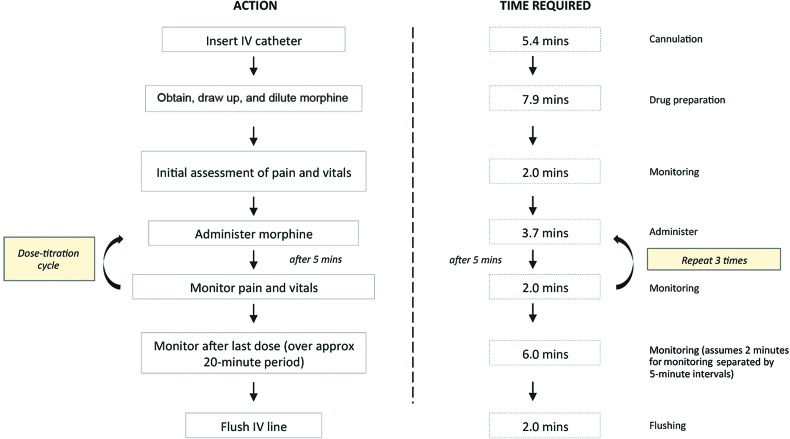
A structured literature review was conducted to identify clinical guidelines for acute pain management in EU5 and clinical studies conducted in the ED setting. The data identified in this literature review constituted the source for all model input parameters, which were clustered as analgesic (morphine), material used for IV morphine administration, nurse workforce time and management of morphine-related adverse events and IV-related complications.
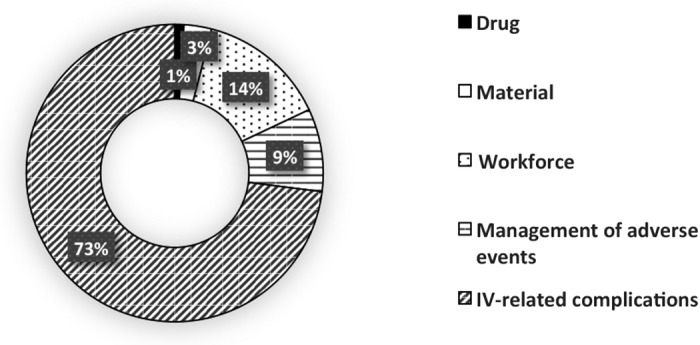
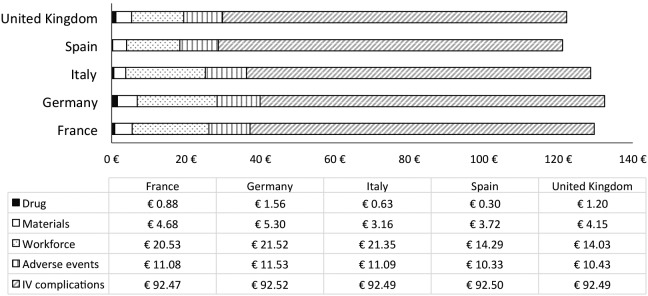
The cost per patient of IV morphine administration in the ED ranges between €18.31 in Spain and €28.38 in Germany. If costs associated with the management of morphine-related adverse events and IV-related complications are also considered, the total costs amount to €121.13-€132.43. The main driver of those total costs is the management of IV-related complications (phlebitis, extravasation and IV prescription errors; 73% of all costs) followed by workforce time (14%).
IV morphine provides effective pain relief in the ED, but the costs associated with the IV administration inflict an economic burden on the respective national health services in EU5. An equally rapid-onset and efficacious analgesic that does not require IV administration could reduce this burden.
在工业化国家,急性疼痛是患者前往急诊科就诊的主要原因之一。其治疗主要取决于疼痛强度。中重度疼痛采用静脉注射阿片类药物治疗,其中吗啡是急诊科最常用的药物。我们采用微观成本核算方法估算了欧洲五个主要国家(欧盟五国)静脉注射吗啡的负担。
开展了一项结构化文献综述,以确定欧盟五国急性疼痛管理的临床指南以及在急诊科环境中开展的临床研究。该文献综述中确定的数据构成了所有模型输入参数的来源,这些参数分为镇痛药(吗啡)、静脉注射吗啡所用材料、护士工作时间以及吗啡相关不良事件和静脉相关并发症的管理。
急诊科静脉注射吗啡的每位患者成本在西班牙为18.31欧元,在德国为28.38欧元。如果还考虑与吗啡相关不良事件和静脉相关并发症管理相关的成本,总成本为121.13欧元至132.43欧元。这些总成本的主要驱动因素是静脉相关并发症的管理(静脉炎、外渗和静脉处方错误;占所有成本的73%),其次是劳动力时间(14%)。
静脉注射吗啡在急诊科能有效缓解疼痛,但静脉注射相关成本给欧盟五国各自的国家医疗服务体系带来了经济负担。一种起效同样迅速且有效的非静脉注射镇痛药可以减轻这一负担。