Guo Michael, Chang Phat, Hauke Eric, Girard Beatrice M, Tooke Katharine, Ojala Jacqueline, Malley Susan M, Hsiang Harrison, Vizzard Margaret A
Department of Neurological Sciences, The Robert Larner, M.D. College of Medicine, The University of Vermont, Burlington, VT, United States.
Front Syst Neurosci. 2018 Apr 6;12:9. doi: 10.3389/fnsys.2018.00009. eCollection 2018.
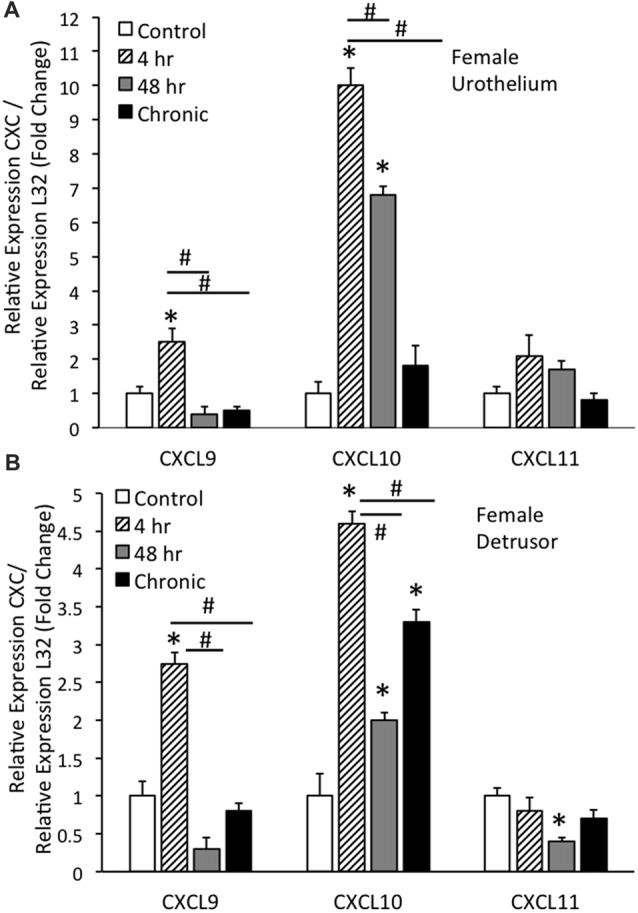
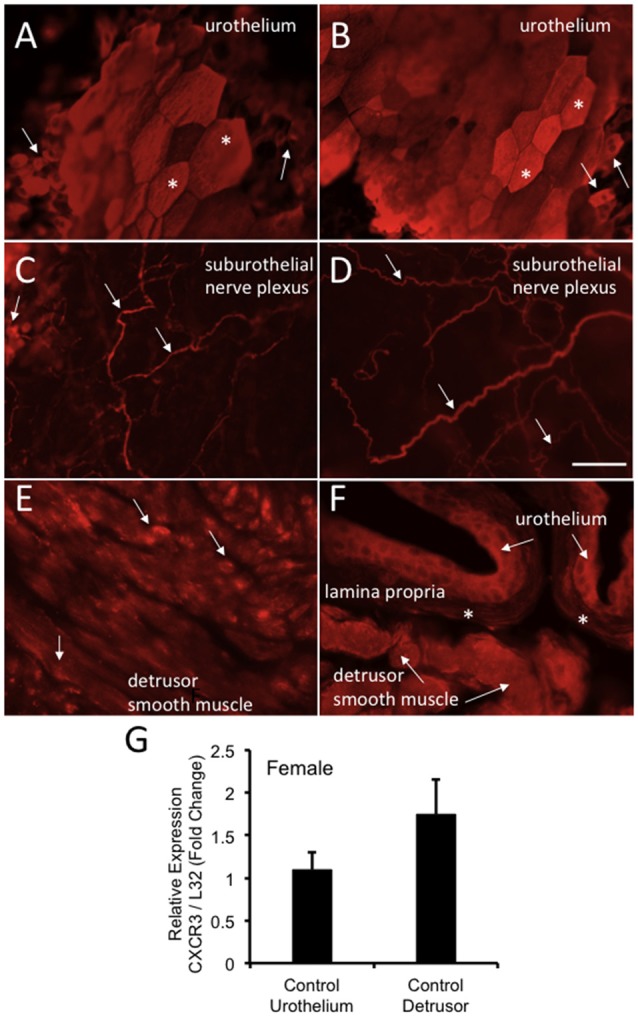
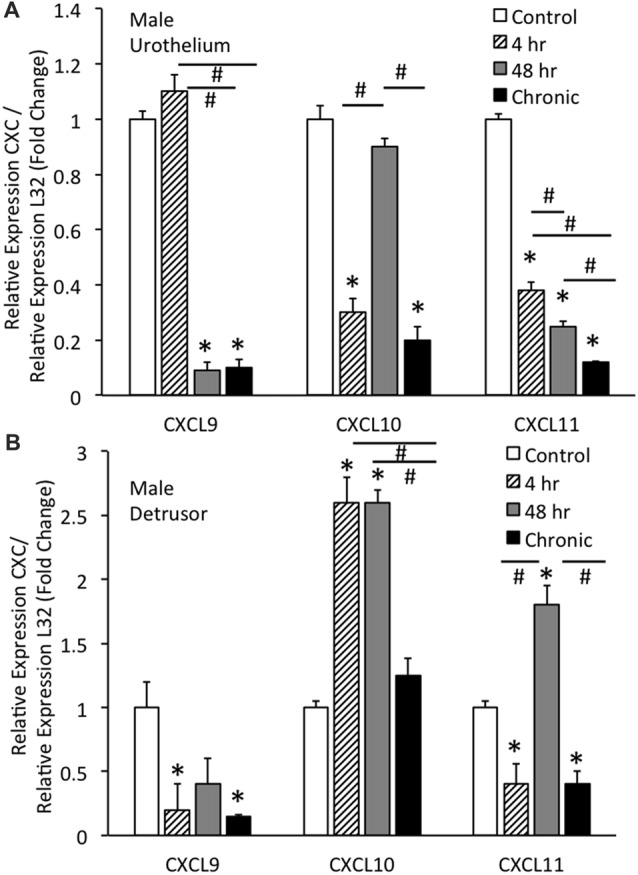
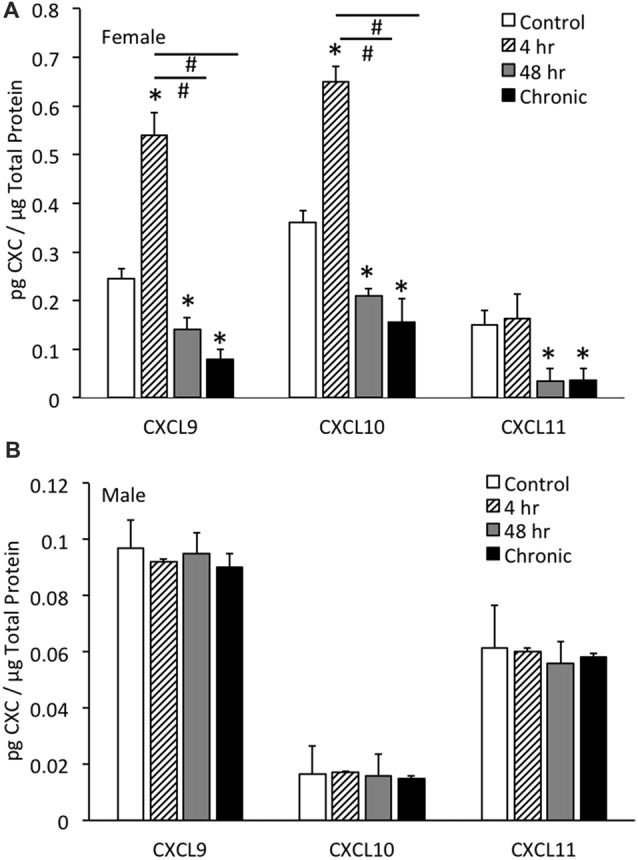
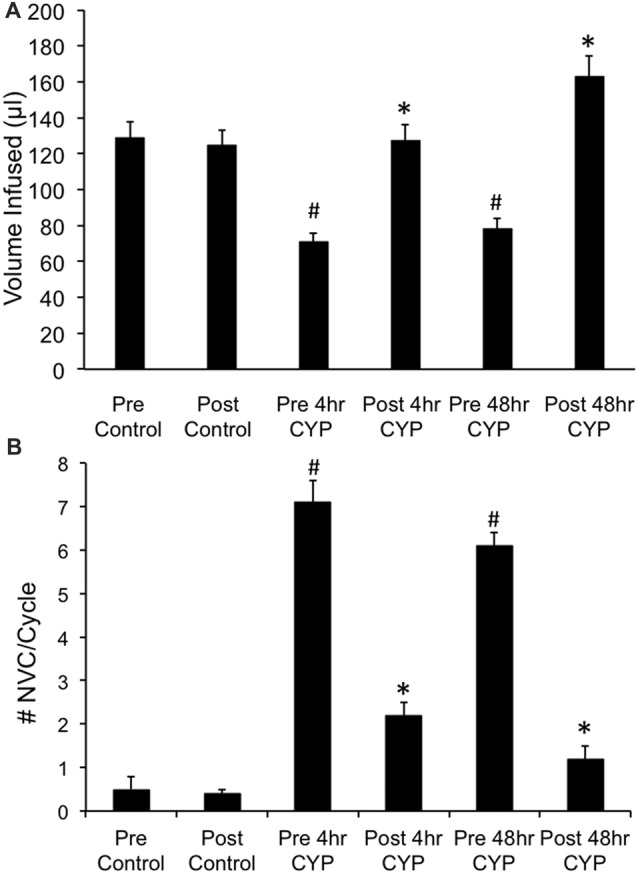
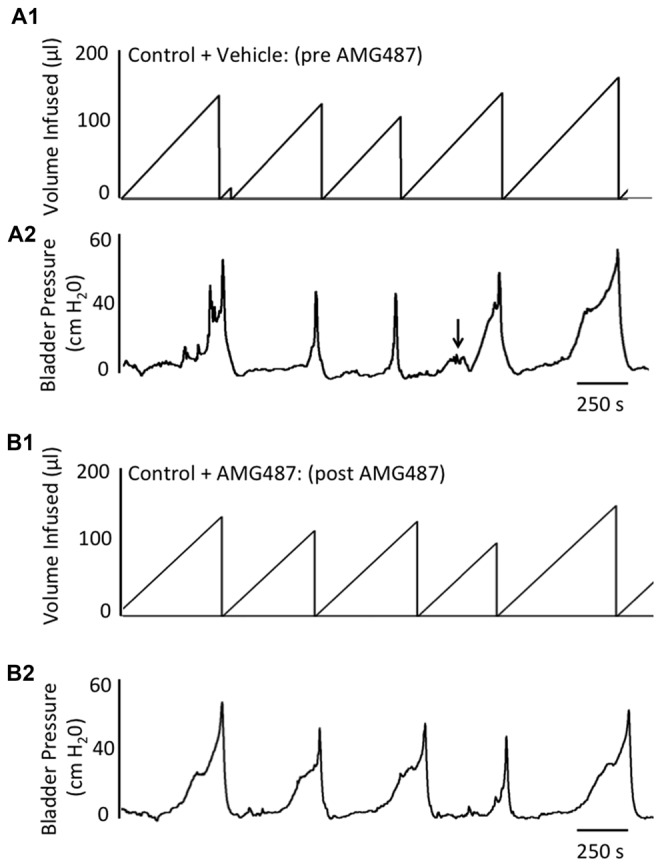
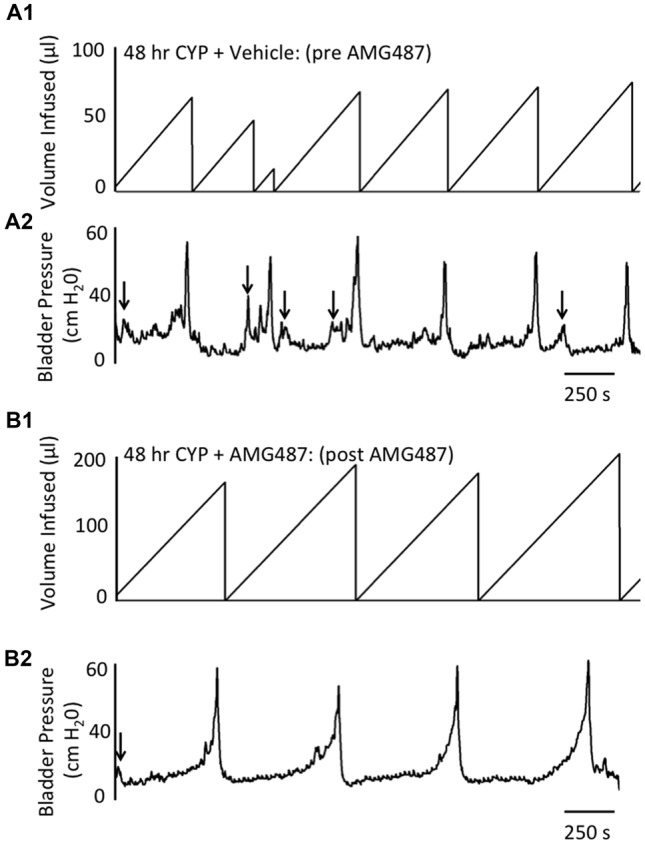
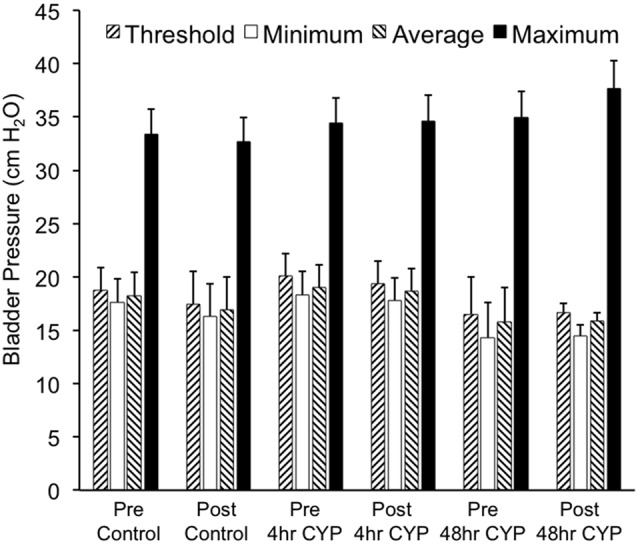
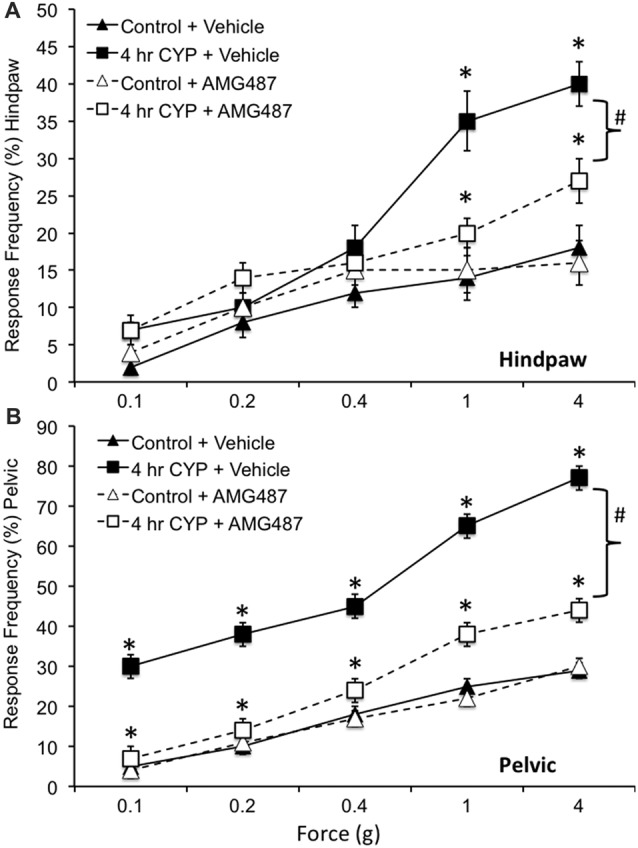
Changes in urinary bladder function and somatic sensation may be mediated, in part, by inflammatory changes in the urinary bladder including the expression of chemokines. Male and female C57BL/6 mice were treated with cyclophosphamide (CYP; 75 mg/kg, 200 mg/kg, i.p.) to induce bladder inflammation (4 h, 48 h, chronic). We characterized the expression of CXC chemokines (CXCL9, CXCL10 and CXCL11) in the urinary bladder and determined the effects of blockade of their common receptor, CXCR3, at the level urinary bladder on bladder function and somatic (hindpaw and pelvic) sensation. qRT-PCR and Enzyme-Linked Immunoassays (ELISAs) were used to determine mRNA and protein expression of CXCL9, CXCL10 and CXCL11 in urothelium and detrusor. In urothelium of female mice treated with CYP, CXCL9 and CXCL10 mRNA significantly ( ≤ 0.01) increased with CYP treatment whereas CXC mRNA expression in the detrusor exhibited both increases and decreases in expression with CYP treatment. CXC mRNA expression urothelium and detrusor of male mice was more variable with both significant ( ≤ 0.01) increases and decreases in expression depending on the specific CXC chemokine and CYP treatment. CXCL9 and CXCL10 protein expression was significantly ( ≤ 0.01) increased in the urinary bladder with 4 h CYP treatment in female mice whereas CXC protein expression in the urinary bladder of male mice did not exhibit an overall change in expression. CXCR3 blockade with intravesical instillation of AMG487 (5 mg/kg) significantly ( ≤ 0.01) increased bladder capacity, reduced voiding frequency and reduced non-voiding contractions in female mice treated with CYP (4 h, 48 h). CXCR3 blockade also reduced ( ≤ 0.01) hindpaw and pelvic sensitivity in female mice treated with CYP (4 h, 48 h). CXC chemokines may be novel targets for treating urinary bladder dysfunction and somatic sensitization resulting from urinary bladder inflammation.
膀胱功能和躯体感觉的变化可能部分由膀胱的炎症变化介导,包括趋化因子的表达。对雄性和雌性C57BL/6小鼠腹腔注射环磷酰胺(CYP;75mg/kg、200mg/kg)以诱导膀胱炎症(4小时、48小时、慢性)。我们对膀胱中CXC趋化因子(CXCL9、CXCL10和CXCL11)的表达进行了表征,并确定了在膀胱水平阻断其共同受体CXCR3对膀胱功能和躯体(后爪和盆腔)感觉的影响。采用qRT-PCR和酶联免疫吸附测定(ELISA)来确定CXCL9、CXCL10和CXCL11在尿路上皮和逼尿肌中的mRNA和蛋白表达。在用CYP处理的雌性小鼠的尿路上皮中,CXCL9和CXCL10 mRNA随着CYP处理而显著(≤0.01)增加,而逼尿肌中CXC mRNA表达随着CYP处理呈现出增加和减少。雄性小鼠尿路上皮和逼尿肌中的CXC mRNA表达变化更大,其表达根据特定的CXC趋化因子和CYP处理而显著(≤0.01)增加和减少。在用CYP处理4小时的雌性小鼠中,膀胱中CXCL9和CXCL10蛋白表达显著(≤0.01)增加,而雄性小鼠膀胱中的CXC蛋白表达未表现出总体表达变化。膀胱内灌注AMG487(5mg/kg)阻断CXCR3可显著(≤0.01)增加用CYP处理(4小时、48小时)的雌性小鼠的膀胱容量、降低排尿频率并减少非排尿收缩。CXCR3阻断还降低了(≤0.01)用CYP处理(4小时、48小时)的雌性小鼠的后爪和盆腔敏感性。CXC趋化因子可能是治疗膀胱炎症引起的膀胱功能障碍和躯体致敏的新靶点。