Cieplik Fabian, Steinwachs Viktoria-Sophia, Muehler Denise, Hiller Karl-Anton, Thurnheer Thomas, Belibasakis Georgios N, Buchalla Wolfgang, Maisch Tim
Department of Conservative Dentistry and Periodontology, University Medical Center Regensburg, Regensburg, Germany.
Division of Oral Microbiology and Immunology, Clinic of Preventive Dentistry, Periodontology and Cariology, Center of Dental Medicine, University of Zurich, Zurich, Switzerland.
Front Microbiol. 2018 Apr 6;9:688. doi: 10.3389/fmicb.2018.00688. eCollection 2018.
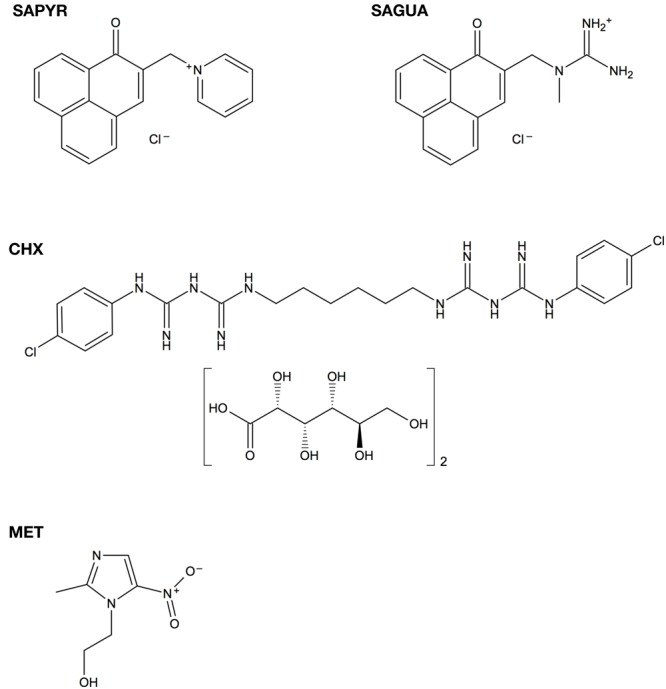
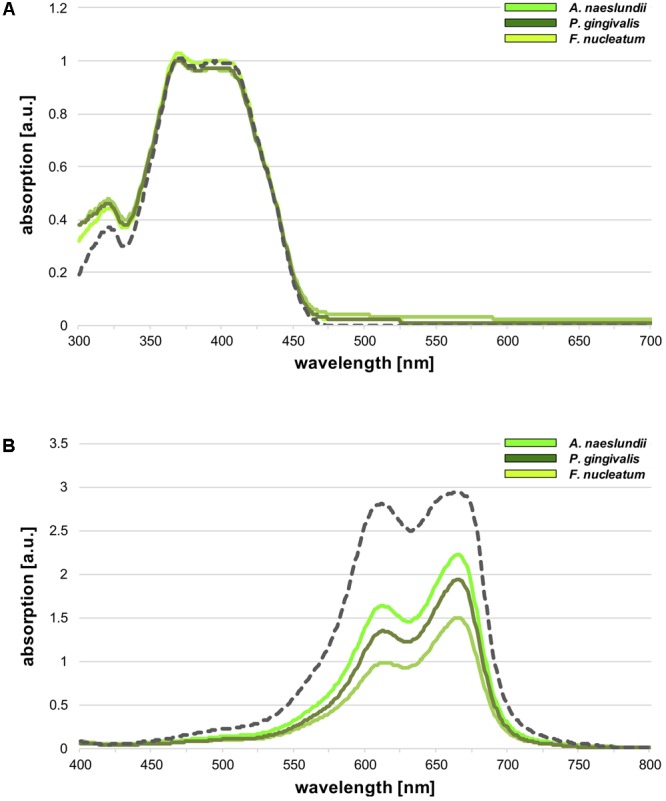
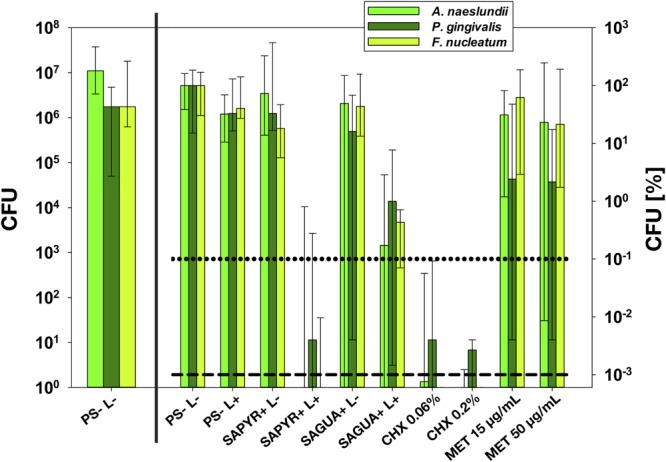
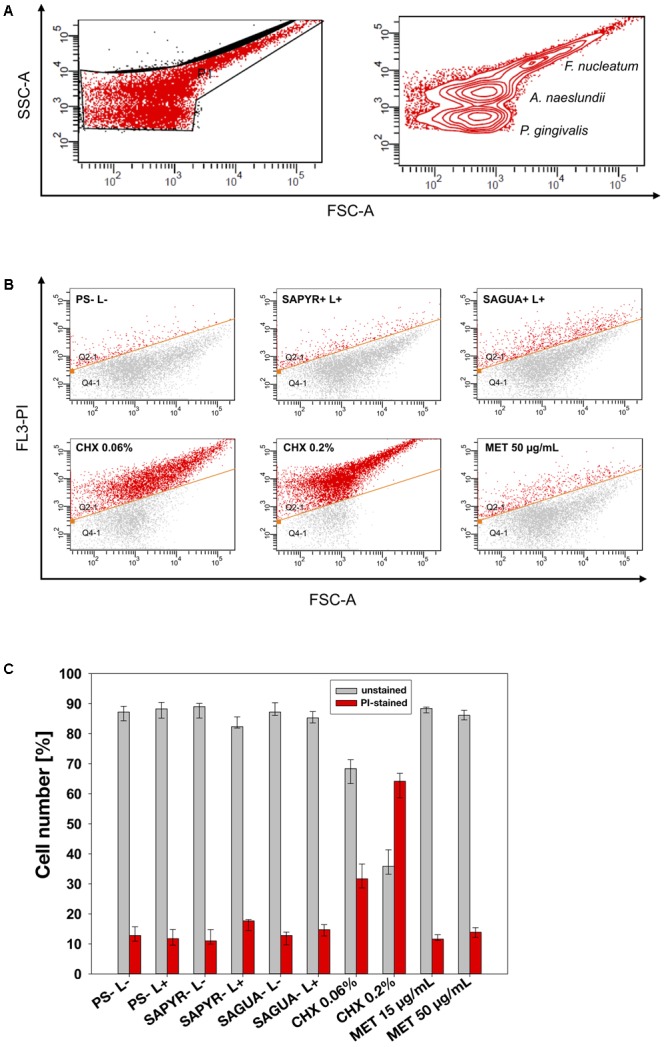
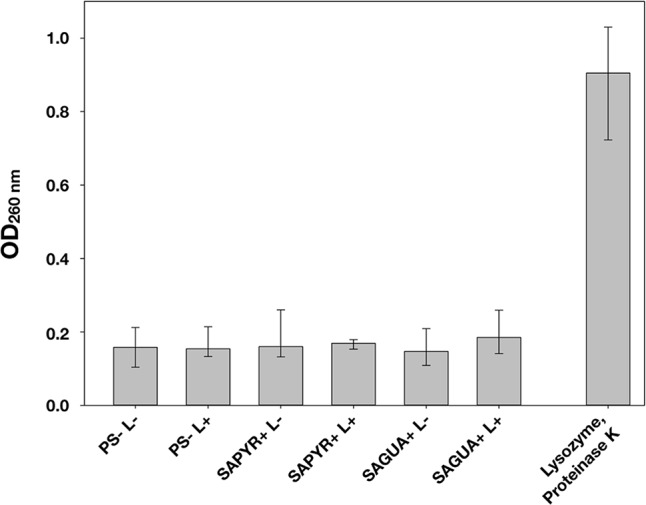
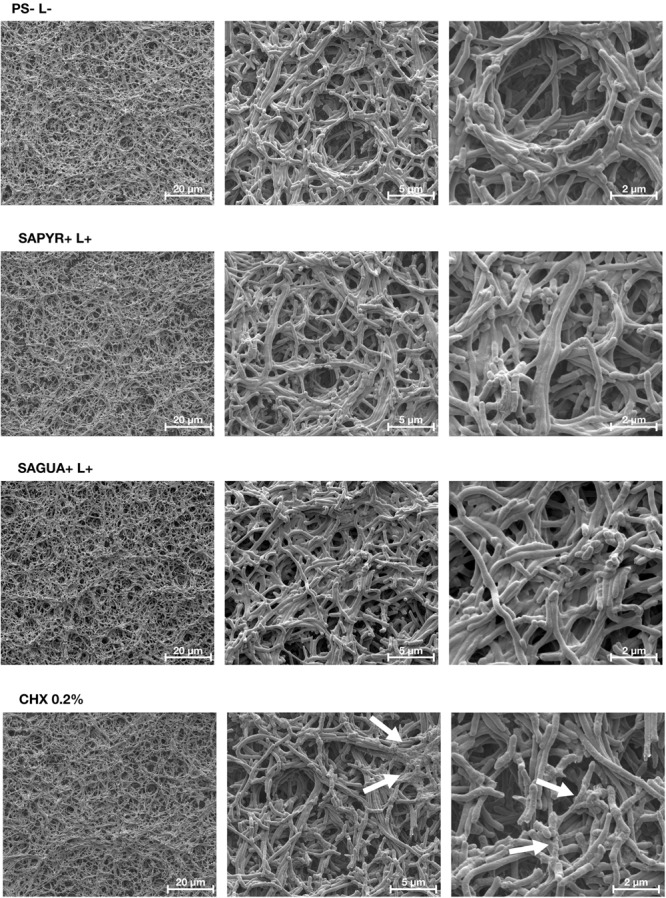
In light of increasing resistance toward conventional antibiotics and antiseptics, antimicrobial photodynamic therapy (aPDT) may be a valuable alternative, especially for use in dentistry. In this regard, photosensitizers (PS) based on a phenalen-1-one structure seem to be especially favorable due to their high singlet oxygen quantum yield. However, the actual target structures of phenalen-1-one-mediated aPDT are still unclear. The aim of the present study was to investigate the antimicrobial efficacy of aPDT mediated by phenalen-1-one derivatives SAPYR and SAGUA for inactivation of a polymicrobial biofilm consisting of three putative periodontal pathogens and to get first insights in the mechanism of action of phenalen-1-one-mediated aPDT by assessing damage of cytoplasmic membranes. aPDT with SAPYR exhibited identical antimicrobial efficacy as compared to chlorhexidine (CHX) [4.4-6.1 log reduction of colony forming units (CFUs) depending on bacterial species] while aPDT with SAGUA was less effective (2.0-2.8 log). Flow cytometric analysis combined with propidium iodide (PI) staining revealed no damage of cytoplasmic membranes after aPDT with both phenalen-1-one derivatives, which was confirmed by spectroscopic measurements for release of nucleic acids after treatment. Spectrophotometric PS-uptake measurements showed no uptake of SAPYR by bacterial cells. Despite the inability to pinpoint the actual target of phenalen-1-one-mediated aPDT, this study shows the high antimicrobial potential of phenalen-1-on mediated aPDT (especially when using SAPYR) and represents a first step for getting insights in the mechanism and damage patterns of aPDT with this class of PS.
鉴于对传统抗生素和防腐剂的耐药性不断增加,抗菌光动力疗法(aPDT)可能是一种有价值的替代方法,特别是在牙科领域。在这方面,基于菲-1-酮结构的光敏剂(PS)因其高单线态氧量子产率似乎特别有利。然而,菲-1-酮介导的aPDT的实际靶标结构仍不清楚。本研究的目的是研究由菲-1-酮衍生物SAPYR和SAGUA介导的aPDT对由三种假定的牙周病原体组成的多微生物生物膜的灭活抗菌效果,并通过评估细胞质膜的损伤来初步了解菲-1-酮介导的aPDT的作用机制。与洗必泰(CHX)相比,用SAPYR进行的aPDT表现出相同的抗菌效果[根据细菌种类,菌落形成单位(CFU)减少4.4-6.1个对数],而用SAGUA进行的aPDT效果较差(2.0-2.8个对数)。流式细胞术分析结合碘化丙啶(PI)染色显示,在用两种菲-1-酮衍生物进行aPDT后,细胞质膜没有损伤,这通过处理后核酸释放的光谱测量得到证实。分光光度法PS摄取测量显示细菌细胞没有摄取SAPYR。尽管无法确定菲-1-酮介导的aPDT的实际靶标,但本研究显示了菲-1-酮介导的aPDT的高抗菌潜力(特别是使用SAPYR时),并代表了初步了解此类PS的aPDT的作用机制和损伤模式的第一步。