David H. Smith Center for Vaccine Biology and Immunology, Department of Microbiology and Immunology, University of Rochester Medical Center, Rochester, NY, United States.
Viral Pathogenesis Laboratory, Vaccine Research Center NIAID, Bethesda, MD, United States.
Front Immunol. 2018 Apr 6;9:655. doi: 10.3389/fimmu.2018.00655. eCollection 2018.
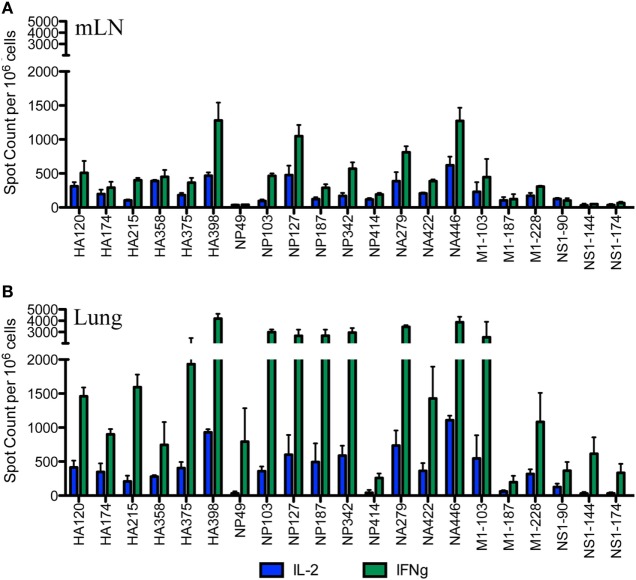
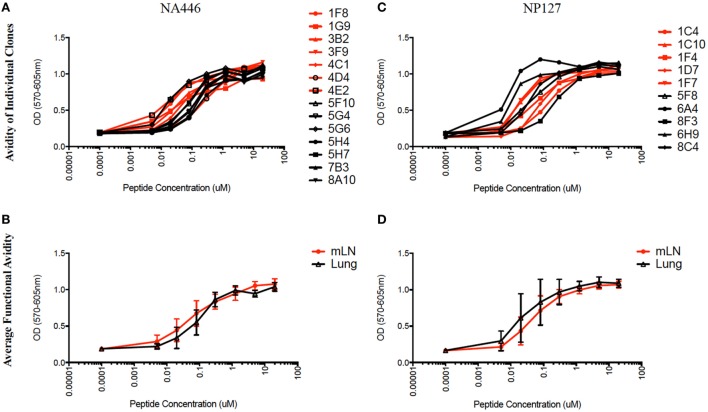
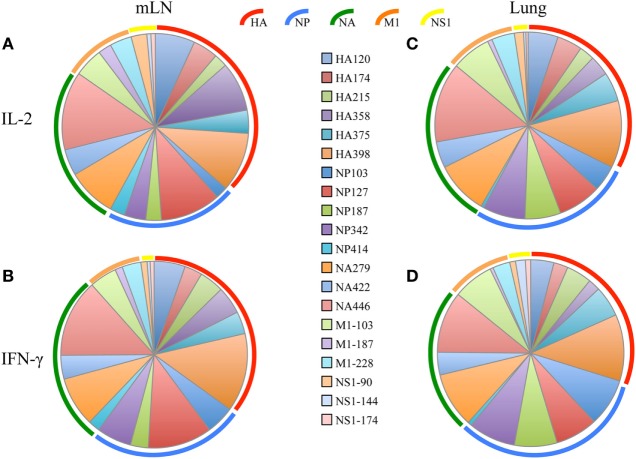
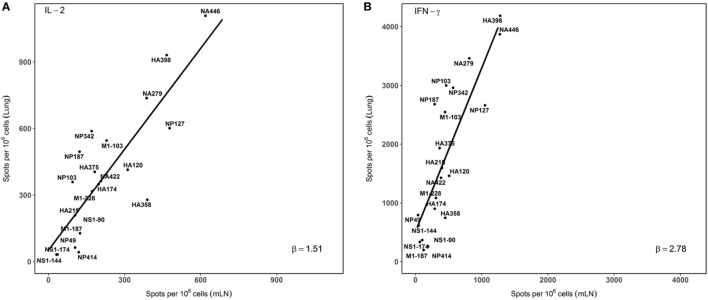
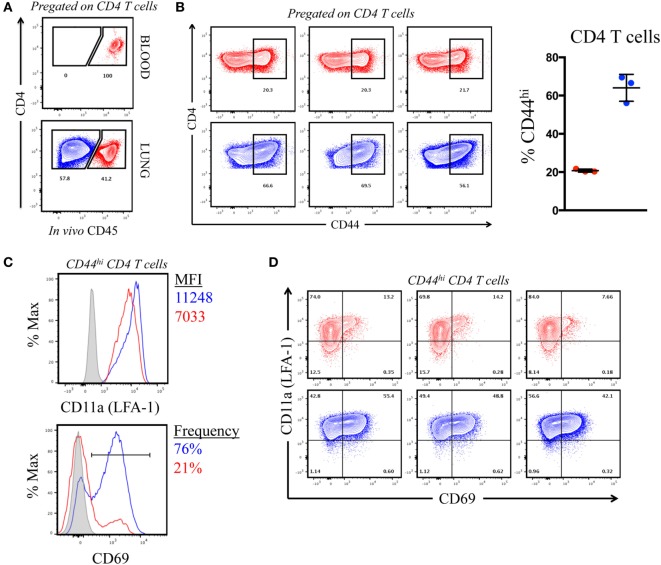
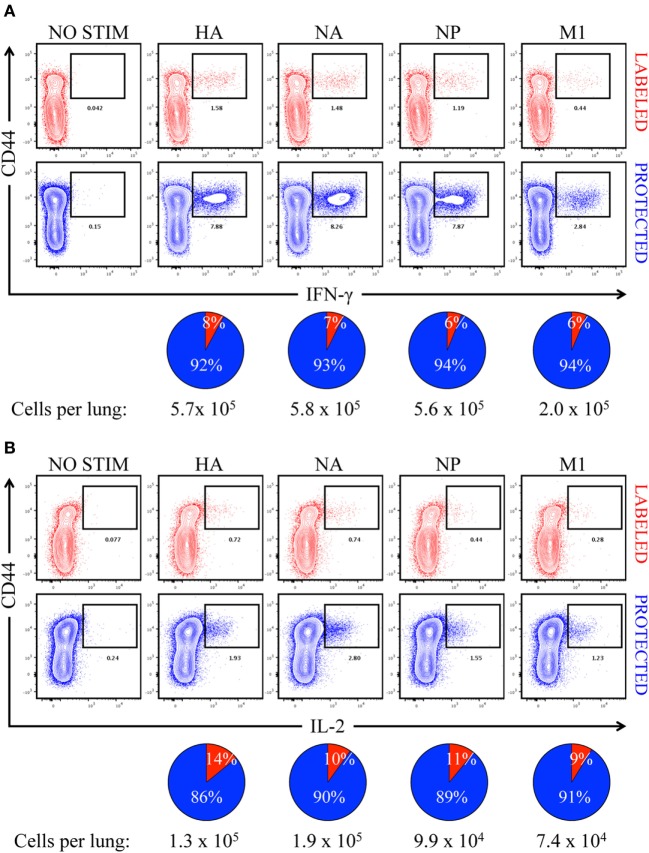
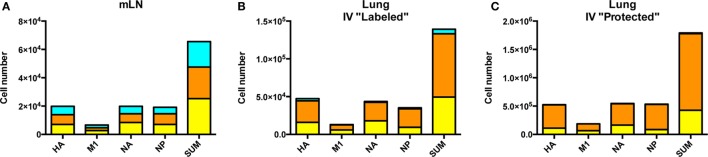
One of the major contributions to protective immunity to influenza viruses that is provided by virus-specific CD4 T cells is delivery of effector function to the infected lung. However, there is little known about the selection and breadth of viral epitope-specific CD4 T cells that home to the lung after their initial priming. In this study, using a mouse model of influenza A infection and an unbiased method of epitope identification, the viral epitope-specific CD4 T cells elicited after infection were identified and quantified. We found that a very diverse specificity of CD4 T cells is primed by infection, including epitopes from hemagglutinin, neuraminidase, matrix protein, nucleoprotein, and non-structural protein-1. Using peptide-specific cytokine EliSpots, the diversity and immunodominance hierarchies established in the lung-draining lymph node were compared with specificities of CD4 T cells that home to the lung. Our studies revealed that CD4 T cells of all epitope specificities identified in peripheral lymphoid tissue home back to the lung and that most of these lung-homing cells are localized within the tissue rather than the pulmonary vasculature. There is a striking shift of CD4 T cell functionality that enriches for IFN-γ production as cells are primed in the lymph node, enter the lung vasculature, and finally establish residency in the tissue, but with no apparent shifts in their functional avidity. We conclude that CD4 T cells of broad viral epitope specificity are recruited into the lung after influenza infection, where they then have the opportunity to encounter infected or antigen-bearing antigen-presenting cells.
病毒特异性 CD4 T 细胞为流感病毒提供保护性免疫的主要贡献之一是将效应功能递送到受感染的肺部。然而,对于初始引发后归巢到肺部的病毒表位特异性 CD4 T 细胞的选择和广度知之甚少。在这项研究中,使用甲型流感病毒感染的小鼠模型和一种无偏倚的表位鉴定方法,鉴定和量化了感染后引发的病毒表位特异性 CD4 T 细胞。我们发现,感染引发了非常多样化的 CD4 T 细胞特异性,包括血凝素、神经氨酸酶、基质蛋白、核蛋白和非结构蛋白-1 的表位。使用肽特异性细胞因子 Elispot,比较了在肺引流淋巴结中建立的多样性和免疫优势层次与归巢到肺部的 CD4 T 细胞的特异性。我们的研究表明,在外周淋巴组织中鉴定的所有表位特异性 CD4 T 细胞都归巢到肺部,并且这些归巢到肺部的细胞大多数位于组织中而不是肺脉管系统中。随着细胞在淋巴结中被激活、进入肺脉管系统并最终在组织中建立居留,CD4 T 细胞的功能发生了惊人的转变,富集了 IFN-γ 的产生,但它们的功能亲和力没有明显变化。我们得出结论,流感感染后,广泛的病毒表位特异性 CD4 T 细胞被招募到肺部,然后有机会遇到感染或携带抗原的抗原呈递细胞。