Laboratoire de Reproduction et Développement des Plantes, Université de Lyon, ENS de Lyon, UCB Lyon 1, CNRS, INRA, Lyon, France.
Elife. 2018 Apr 23;7:e34460. doi: 10.7554/eLife.34460.
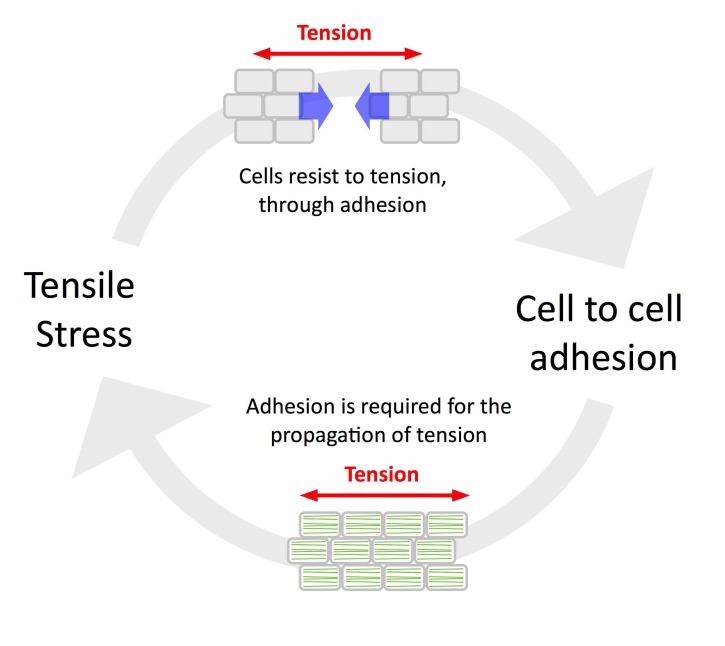
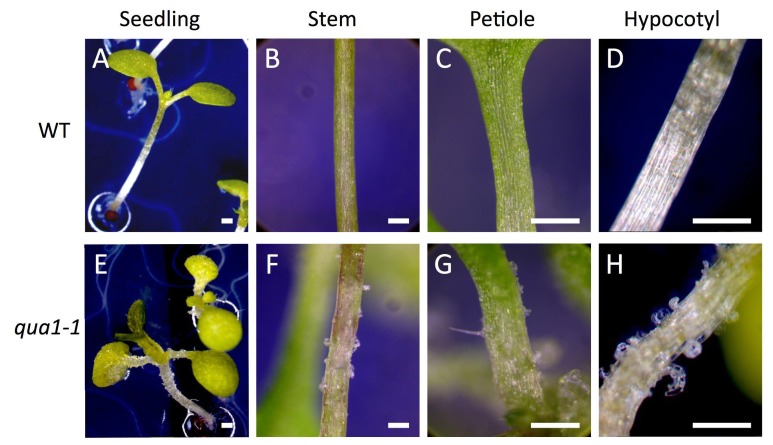
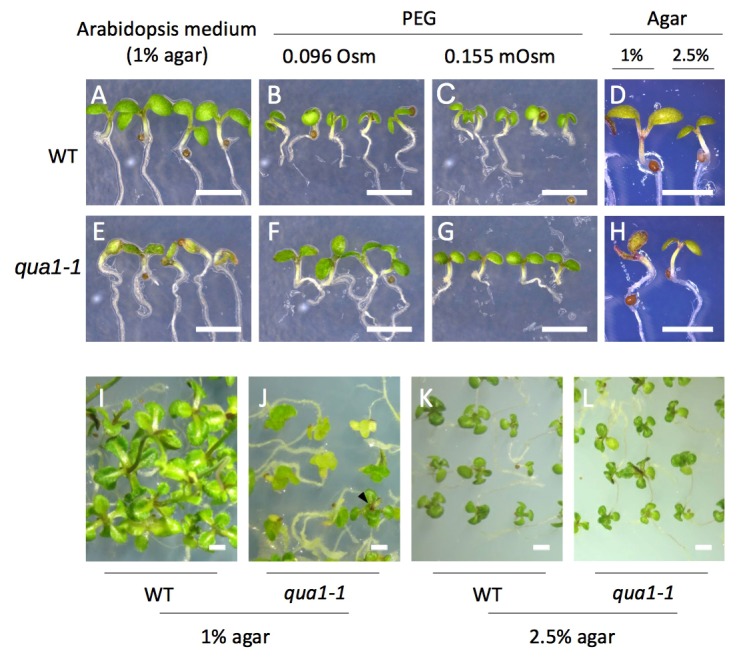
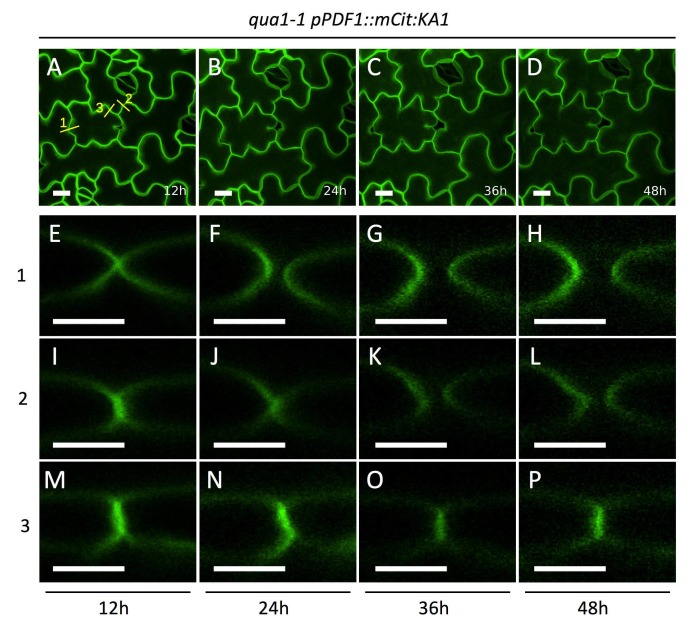
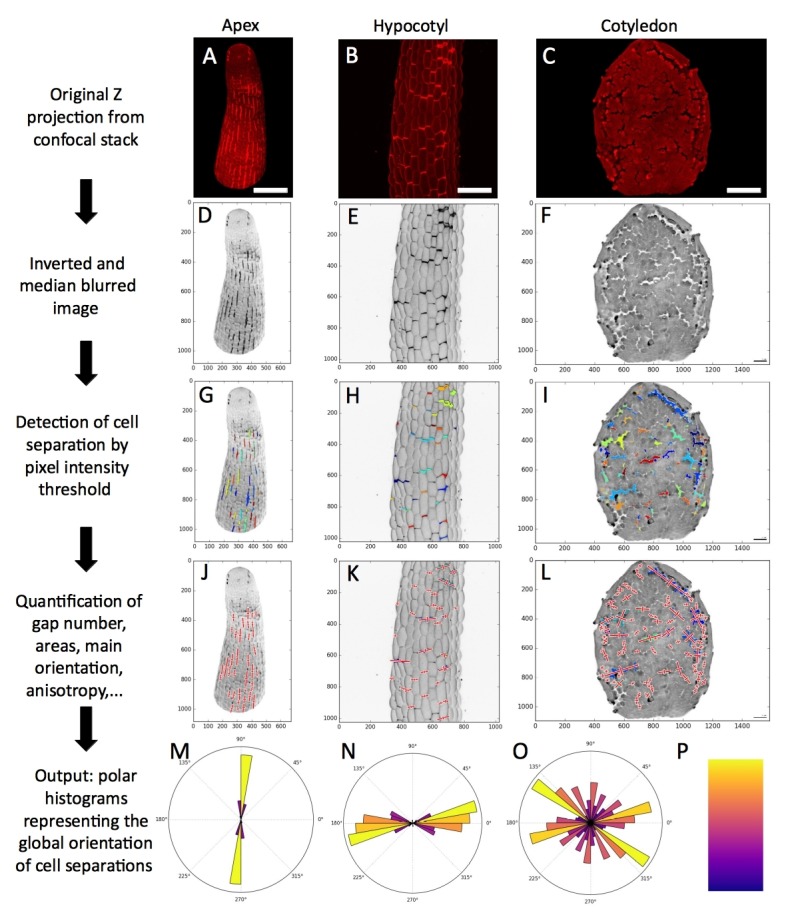
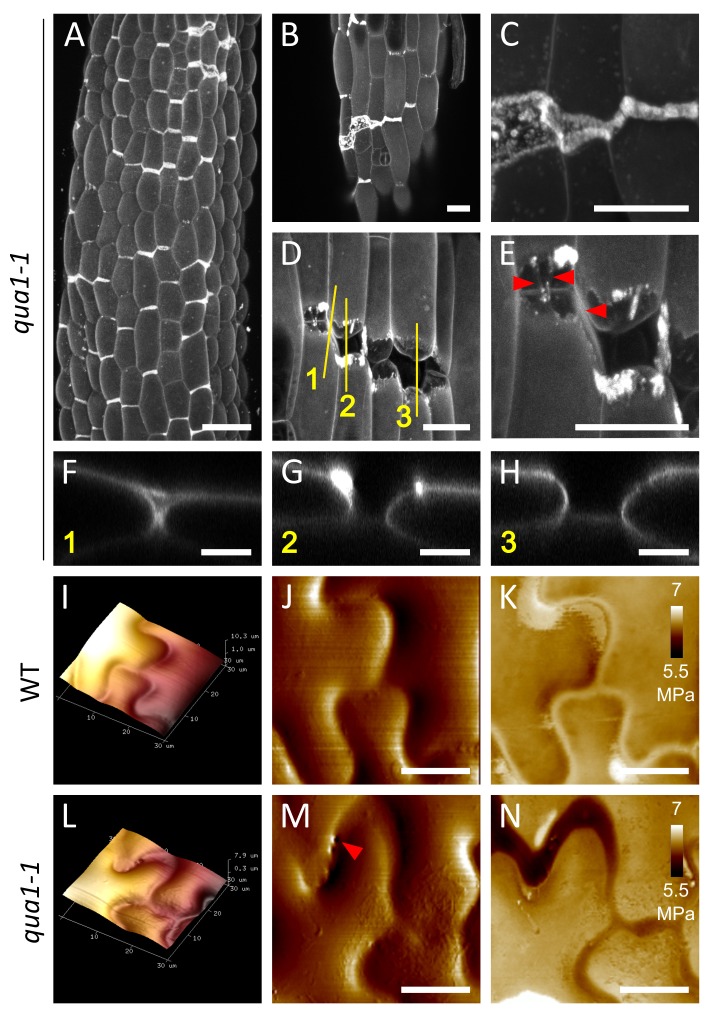
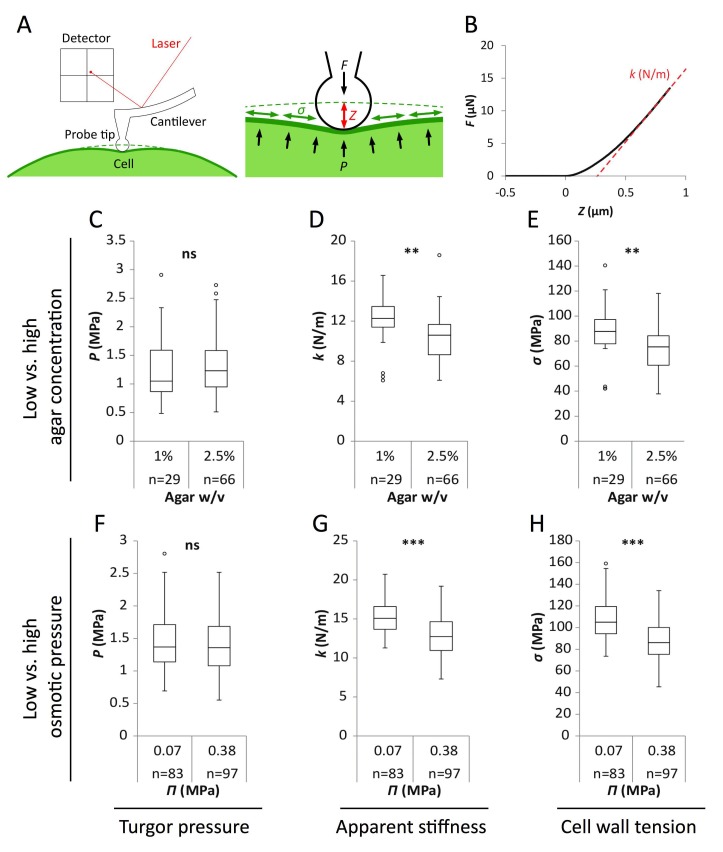
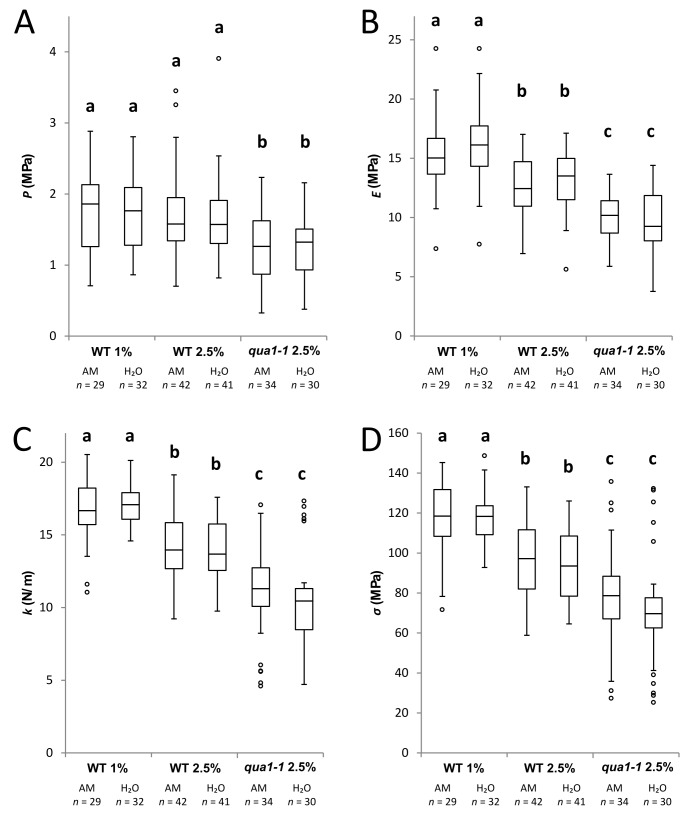
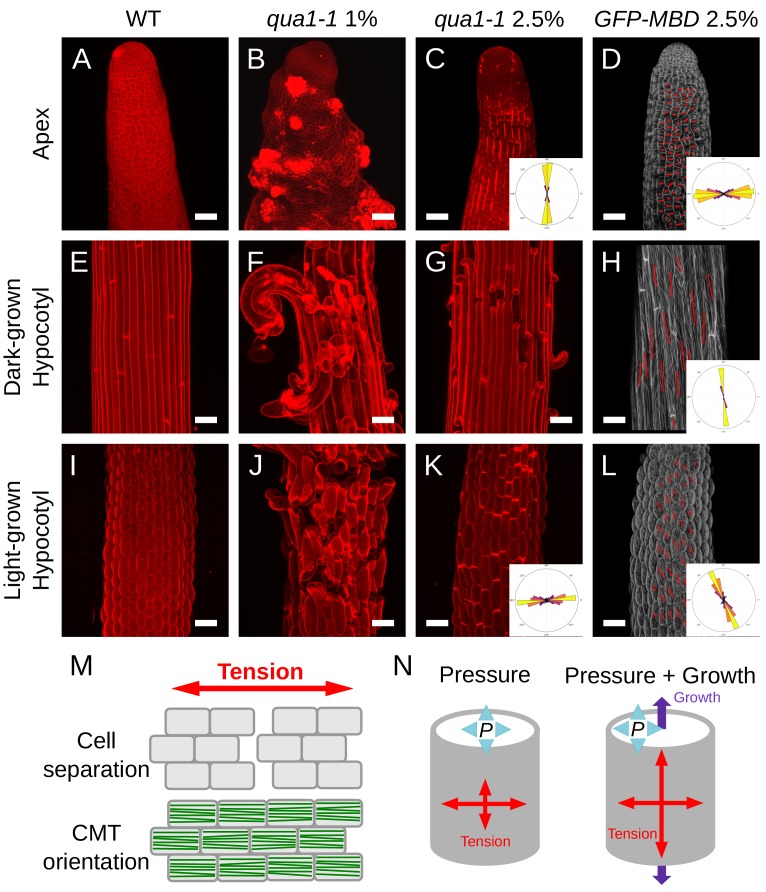
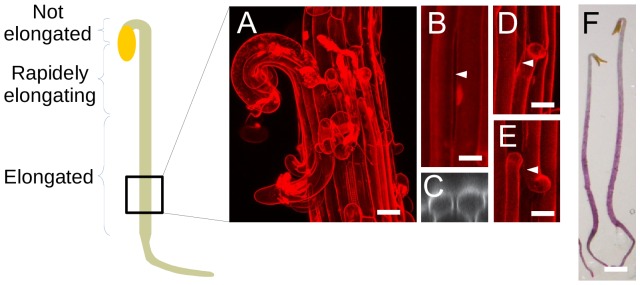
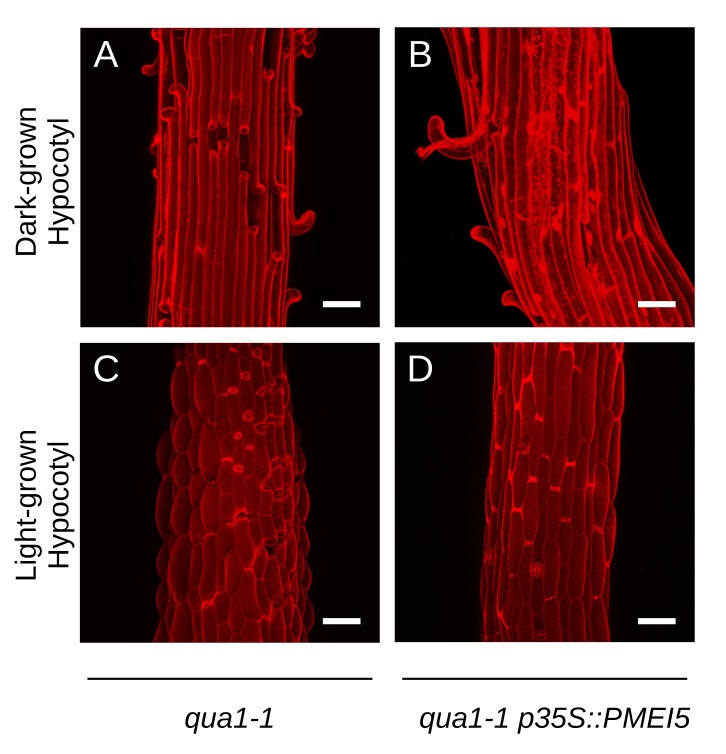
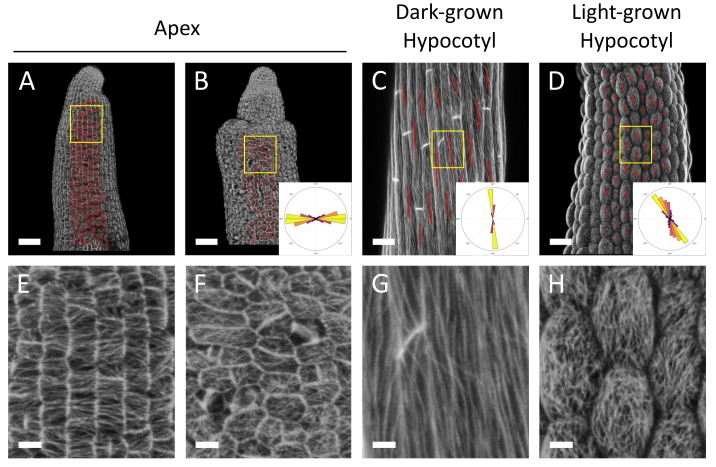
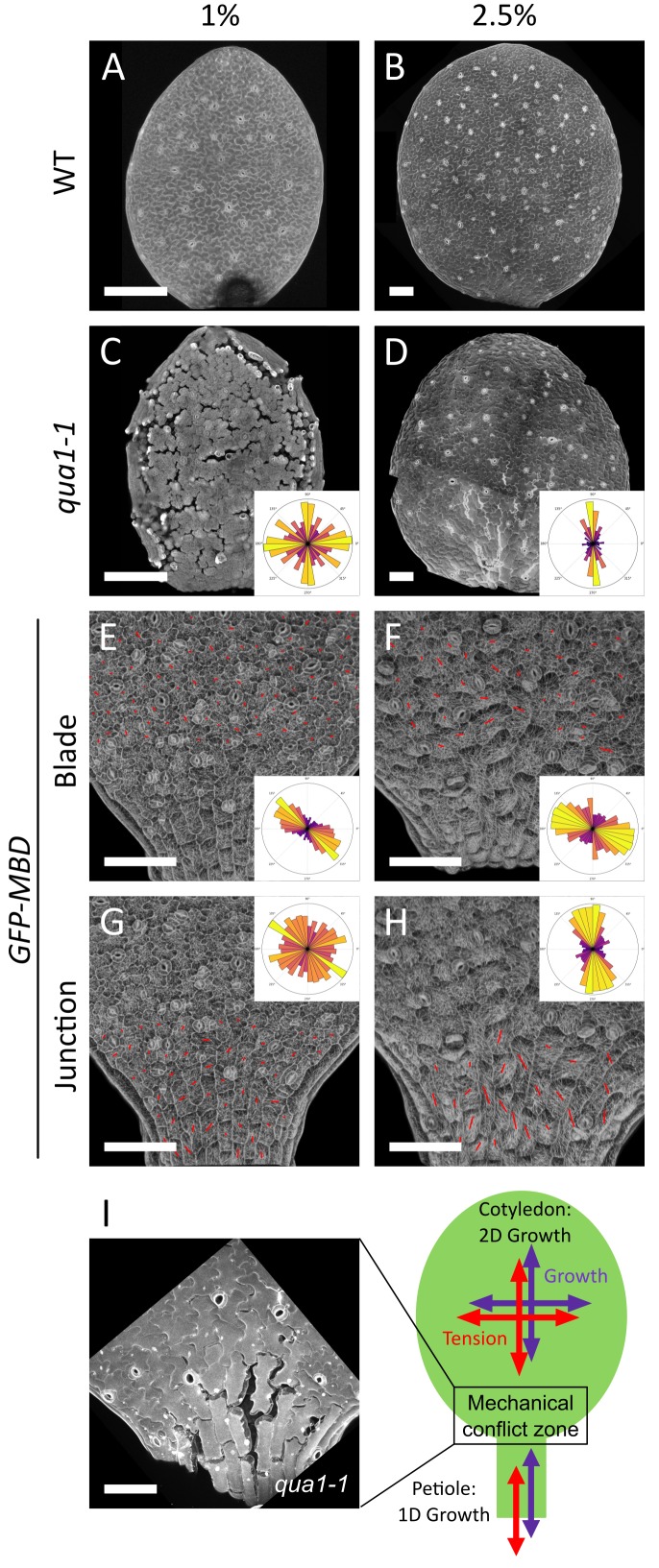
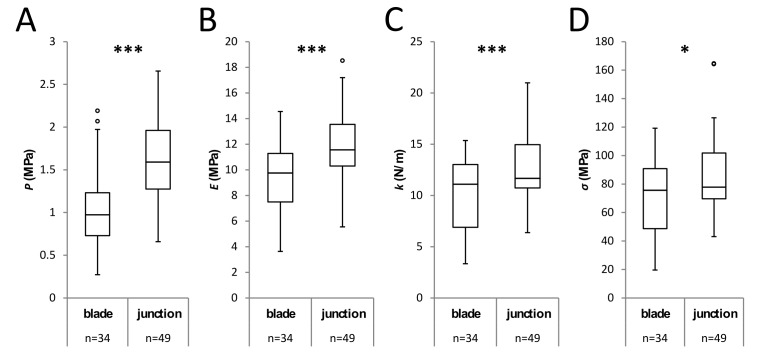
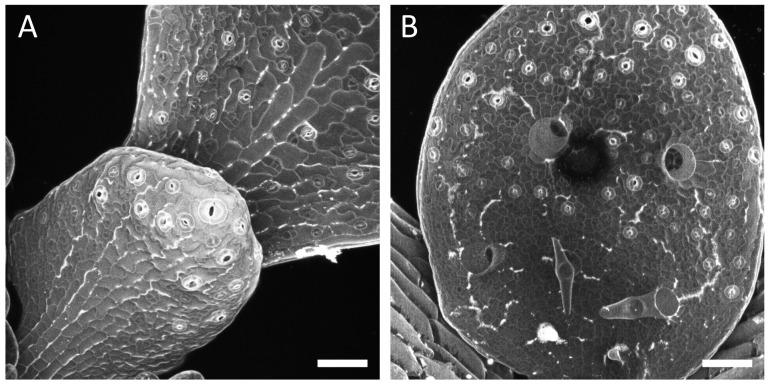
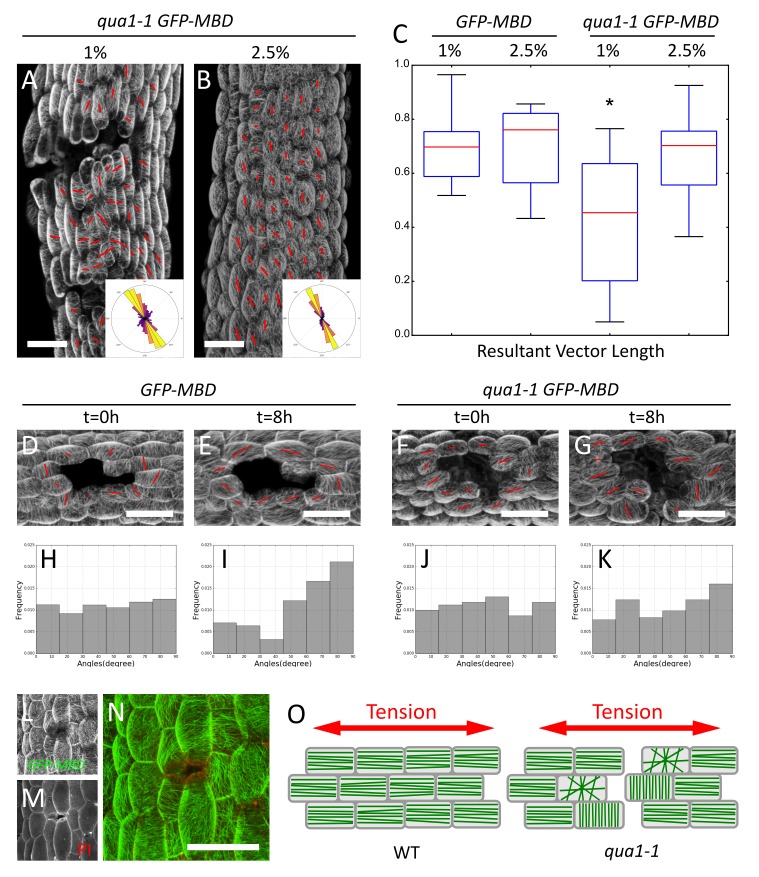
Mechanical forces have emerged as coordinating signals for most cell functions. Yet, because forces are invisible, mapping tensile stress patterns in tissues remains a major challenge in all kingdoms. Here we take advantage of the adhesion defects in the mutant to deduce stress patterns in tissues. By reducing the water potential and epidermal tension , we rescued the adhesion defects in , formally associating gaping and tensile stress patterns in the mutant. Using suboptimal water potential conditions, we revealed the relative contributions of shape- and growth-derived stress in prescribing maximal tension directions in aerial tissues. Consistently, the tension patterns deduced from the gaping patterns in matched the pattern of cortical microtubules, which are thought to align with maximal tension, in wild-type organs. Conversely, loss of epidermis continuity in the mutant hampered supracellular microtubule alignments, revealing that coordination through tensile stress requires cell-cell adhesion.
机械力已成为大多数细胞功能的协调信号。然而,由于力是不可见的,因此映射组织中的拉伸应力模式仍然是所有生物领域的主要挑战。在这里,我们利用 突变体中的粘附缺陷来推断组织中的应力模式。通过降低水势和表皮张力,我们挽救了 中的粘附缺陷,正式将突变体中的张口和拉伸应力模式联系起来。利用非最佳水势条件,我们揭示了形状和生长衍生的应力在规定空中组织中最大张力方向上的相对贡献。一致地,从 中的张口模式推断出的张力模式与被认为与最大张力一致的皮层微管的模式相匹配,在野生型器官中。相反, 突变体中表皮连续性的丧失阻碍了超细胞微管的排列,表明通过拉伸应力的协调需要细胞-细胞粘附。