Department of Veterinary Microbiology, University of Saskatchewan, Saskatoon, Saskatchewan, Canada.
PLoS One. 2018 Apr 23;13(4):e0196290. doi: 10.1371/journal.pone.0196290. eCollection 2018.
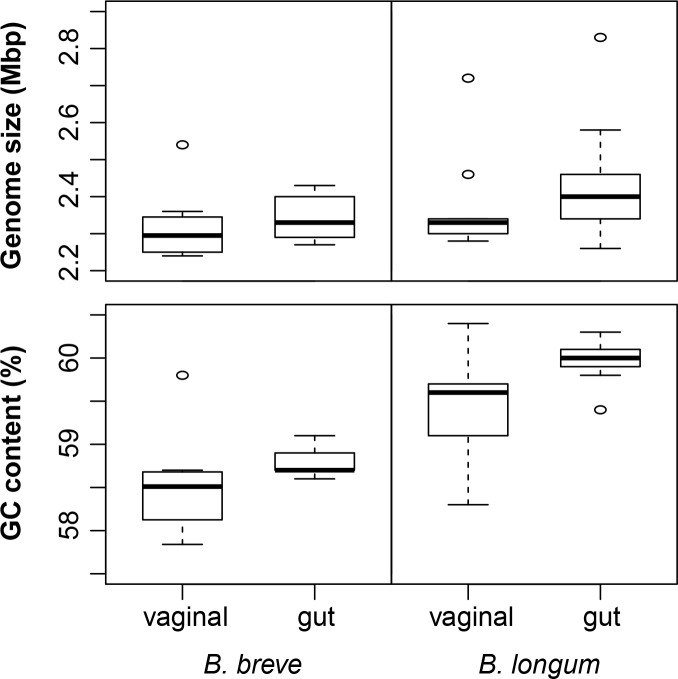
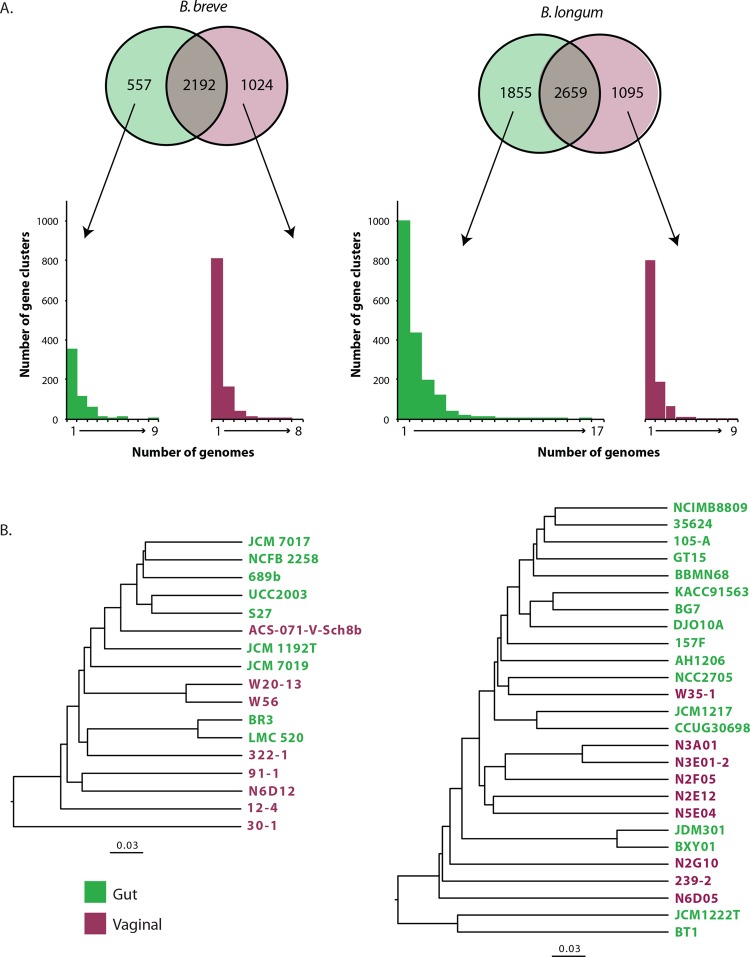
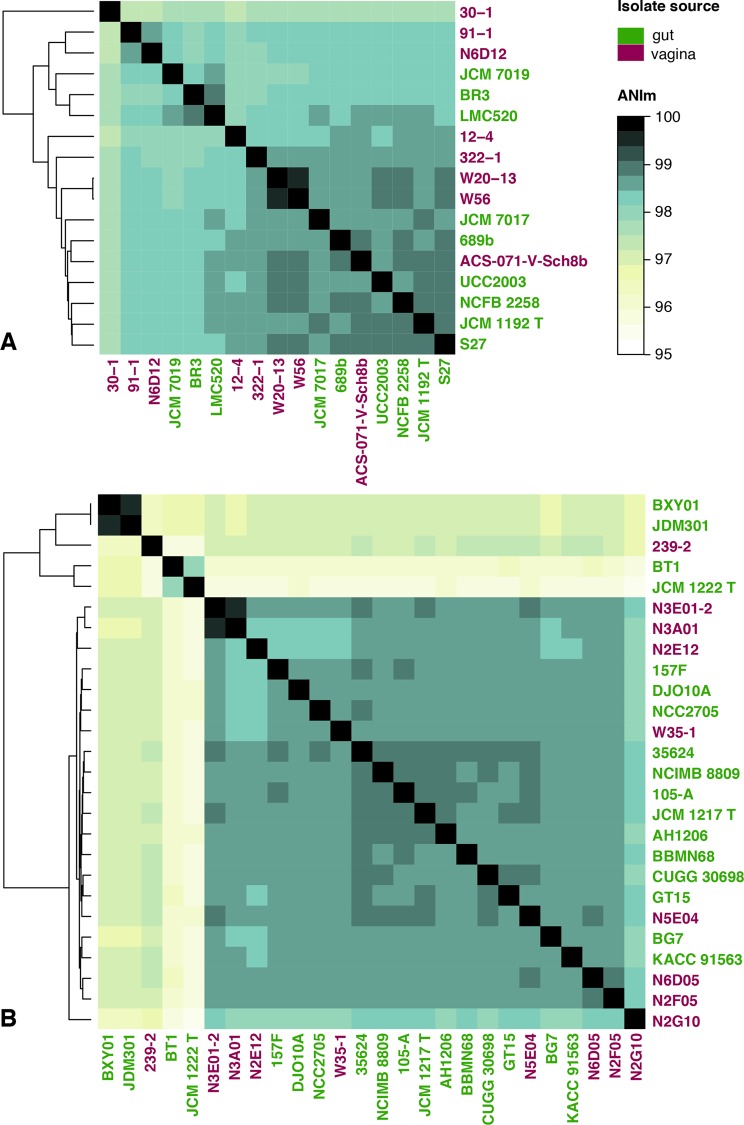
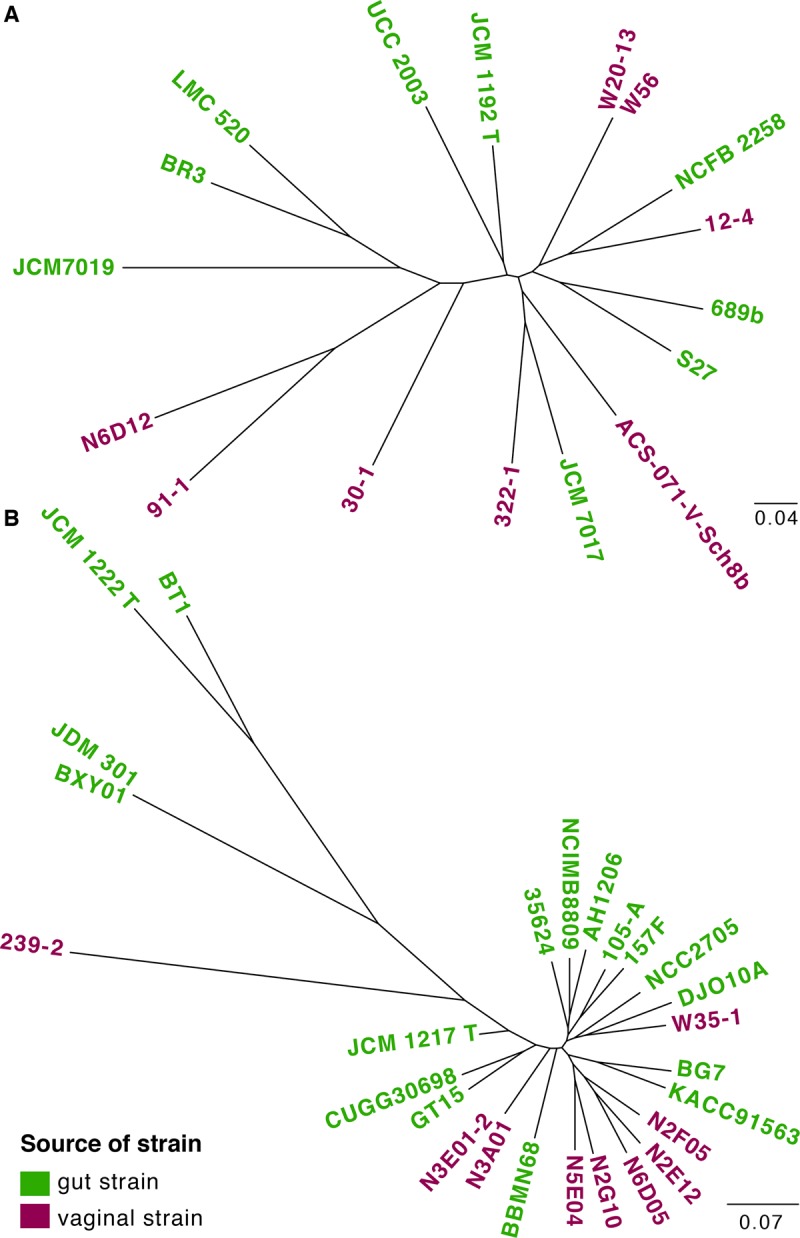
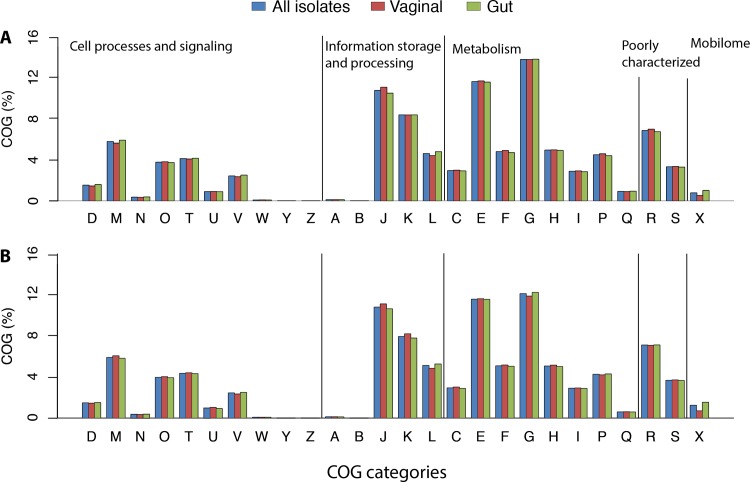
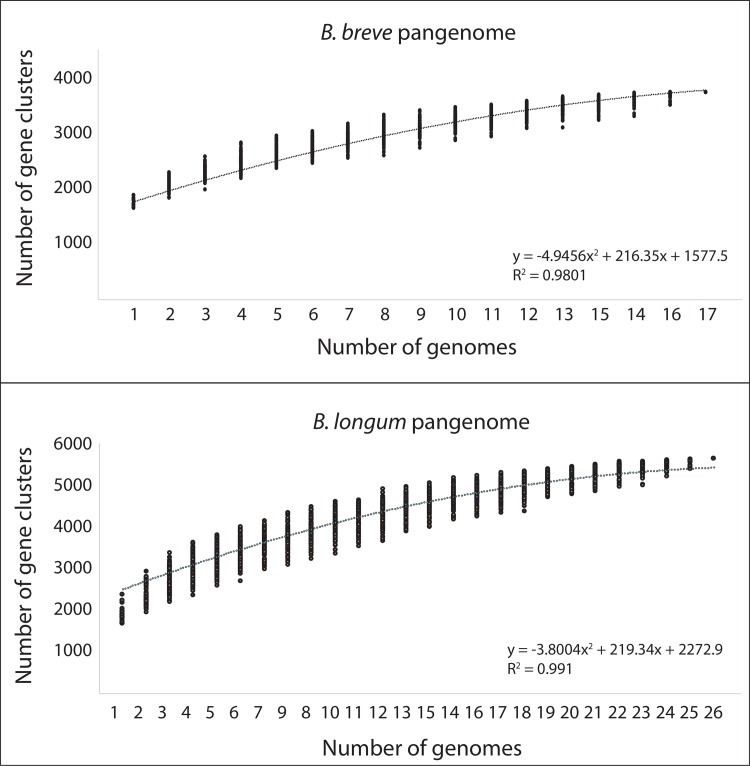
Bifidobacteria colonize the human gastrointestinal tract, vagina, oral cavity and breast milk. They influence human physiology and nutrition through health-promoting effects, play an important role as primary colonizers of the newborn gut, and contribute to vaginal microbiome homeostasis by producing lactic acid. Nevertheless, the mechanisms by which bifidobacteria are transmitted from mother to infant remains in discussion. Moreover, studies have suggested that Bifidobacterium spp. have specializations for gut colonization, but comparisons of strains of the same bifidobacteria species from different body sites are lacking. Here, our objective was to compare the genomes of Bifidobacterium breve (n = 17) and Bifidobacterium longum (n = 26) to assess whether gut and vaginal isolates of either species were distinguishable based on genome content. Comparison of the general genome features showed that vaginal and gut isolates did not differ in size, GC content, number of genes and CRISPR, either for B. breve or B. longum. Average nucleotide identity and whole genome phylogeny analysis revealed that vaginal and gut isolates did not cluster separately. Vaginal and gut isolates also had a similar COG (Cluster of Orthologous Group) category distribution. Differences in the accessory genomes between vaginal and gut strains were observed, but were not sufficient to distinguish isolates based on their origin. The results of this study support the hypothesis that the vaginal and gut microbiomes are colonized by a shared community of Bifidobacterium, and further emphasize the potential importance of the maternal vaginal microbiome as a source of infant gut microbiota.
双歧杆菌定植于人体胃肠道、阴道、口腔和母乳中。它们通过促进健康的作用影响人体的生理和营养,作为新生儿肠道的主要定植菌发挥着重要作用,并通过产生乳酸来维持阴道微生物组的稳态。然而,双歧杆菌从母亲传播到婴儿的机制仍在讨论中。此外,研究表明双歧杆菌属具有肠道定植的专门化特性,但缺乏对来自不同身体部位的相同双歧杆菌属菌株的比较。在这里,我们的目的是比较短双歧杆菌(n = 17)和长双歧杆菌(n = 26)的基因组,以评估基于基因组内容,该物种的肠道和阴道分离株是否可以区分。比较一般基因组特征表明,无论是短双歧杆菌还是长双歧杆菌,阴道和肠道分离株在大小、GC 含量、基因和 CRISPR 数量上均无差异。平均核苷酸同一性和全基因组系统发育分析表明,阴道和肠道分离株没有分别聚类。阴道和肠道分离株的 COG(直系同源群)类别分布也相似。观察到阴道和肠道菌株之间的辅助基因组存在差异,但不足以根据其来源来区分分离株。这项研究的结果支持这样一种假设,即阴道和肠道微生物组是由双歧杆菌的一个共享群落定植的,并且进一步强调了母体阴道微生物组作为婴儿肠道微生物组来源的潜在重要性。