School of Biology and Ecology, University of Maine, Orono, ME, USA.
Ecology and Environmental Sciences Program, University of Maine, Orono, ME, USA.
Sci Rep. 2018 Apr 23;8(1):6389. doi: 10.1038/s41598-018-24555-0.
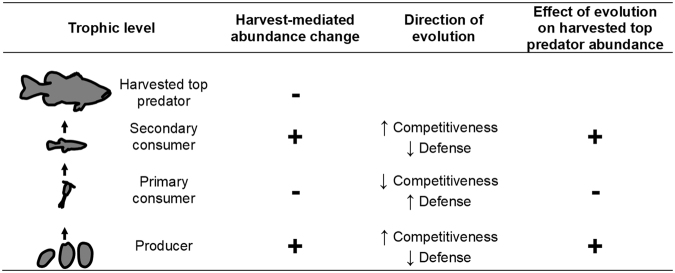
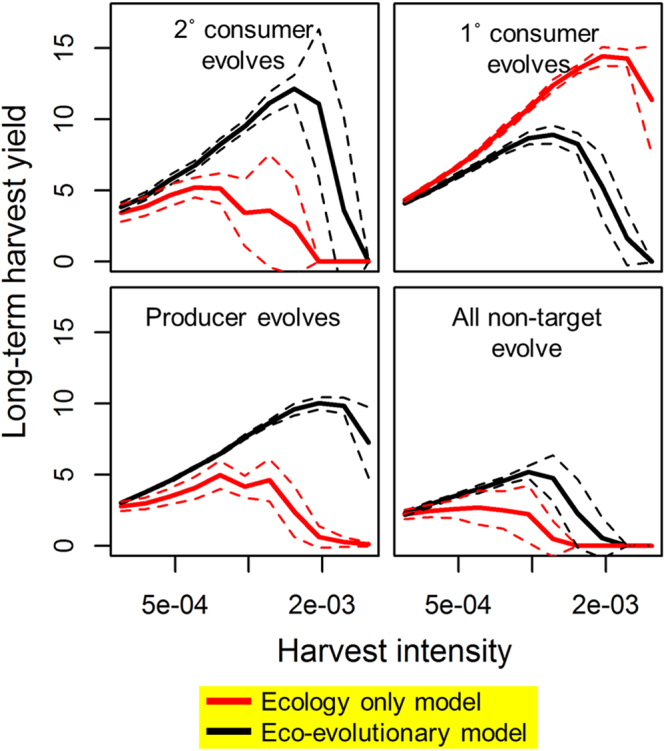
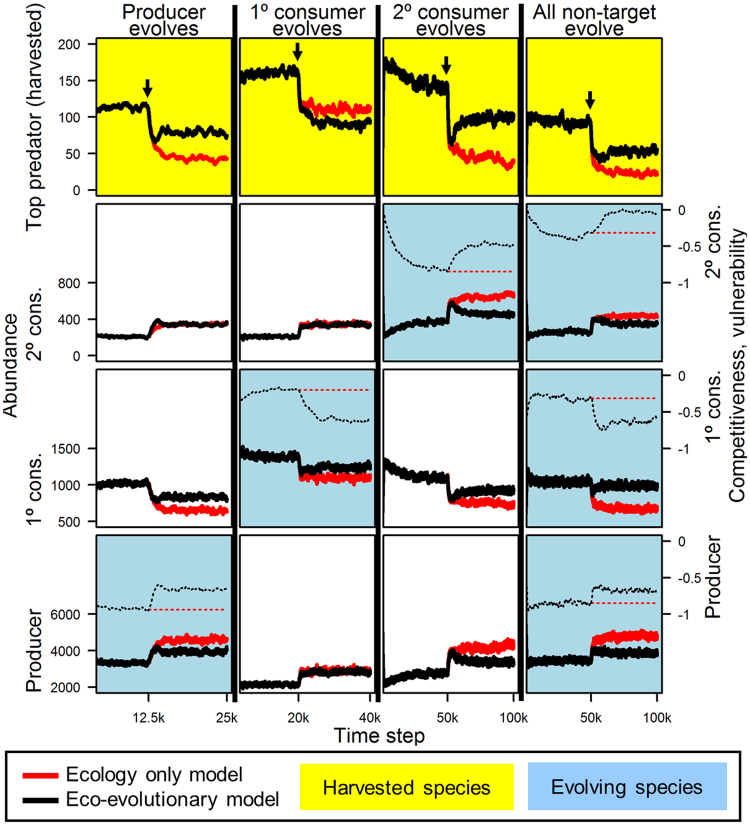
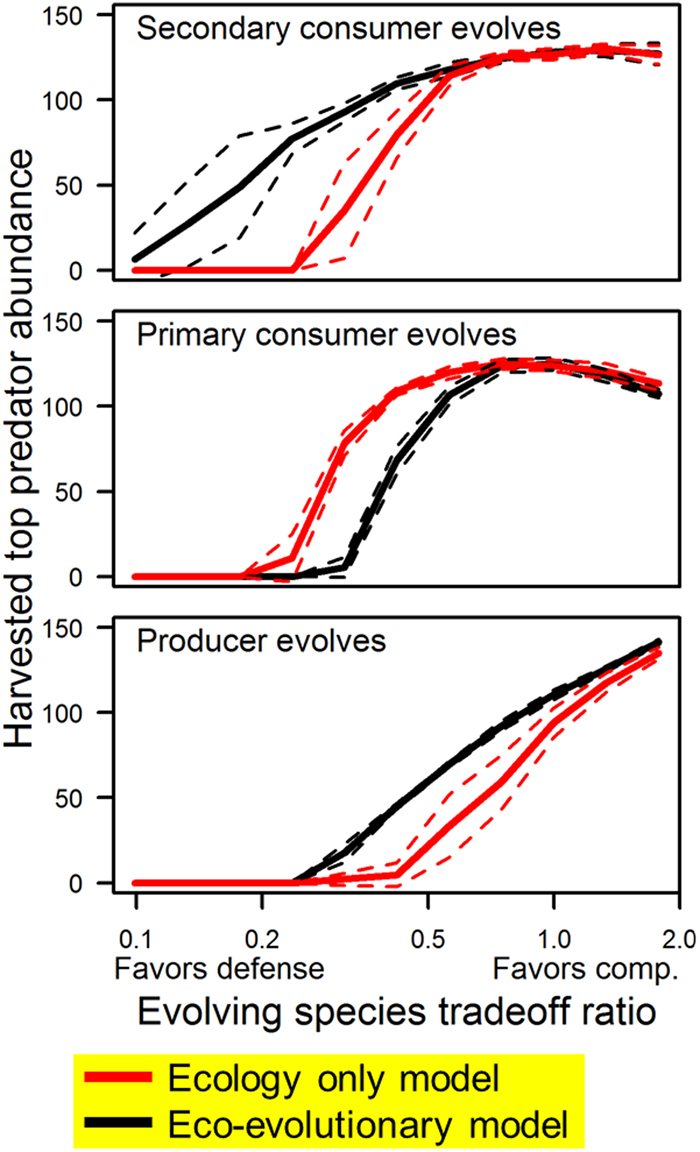
Evolution in harvested species has become a major concern for its potential to affect yield, sustainability, and recovery. However, the current singular focus on harvest-mediated evolution in target species overlooks the potential for evolution in non-target members of communities. Here we use an individual-based model to explore the scope and pattern of harvest-mediated evolution at non-target trophic levels and its potential feedbacks on abundance and yield of the harvested species. The model reveals an eco-evolutionary trophic cascade, in which harvest at top trophic levels drives evolution of greater defense or competitiveness at subsequently lower trophic levels, resulting in alternating feedbacks on the abundance and yield of the harvested species. The net abundance and yield effects of these feedbacks depends on the intensity of harvest and attributes of non-target species. Our results provide an impetus and framework to evaluate the role of non-target species evolution in determining fisheries yield and sustainability.
收获物种的进化已成为一个主要关注点,因为它有可能影响产量、可持续性和恢复力。然而,目前对目标物种中收获介导的进化的单一关注忽略了群落中非目标成员进化的可能性。在这里,我们使用基于个体的模型来探索非目标营养级别的收获介导的进化的范围和模式,以及它对收获物种的丰度和产量的潜在反馈。该模型揭示了一个生态进化的营养级联,在这个级联中,顶级营养级别的收获导致随后的较低营养级别的更大防御或竞争力的进化,从而对收获物种的丰度和产量产生交替的反馈。这些反馈的净丰度和产量效应取决于收获的强度和非目标物种的属性。我们的研究结果为评估非目标物种进化在确定渔业产量和可持续性方面的作用提供了动力和框架。