Jildeh Zaid B, Oberländer Jan, Kirchner Patrick, Wagner Patrick H, Schöning Michael J
Imagine Engineering GmbH, Kopernikusstr. 13b, 50126 Bergheim, Germany.
Institute of Nano- and Biotechnologies (INB), Aachen University of Applied Sciences, Heinrich-Mussmann-Str. 1, 52428 Jülich, Germany.
Nanomaterials (Basel). 2018 Apr 21;8(4):262. doi: 10.3390/nano8040262.
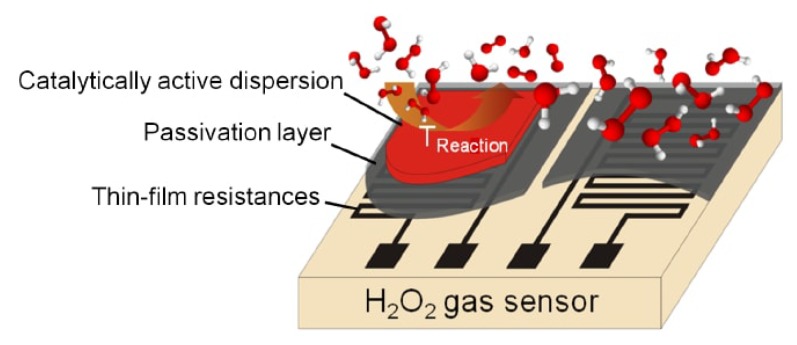
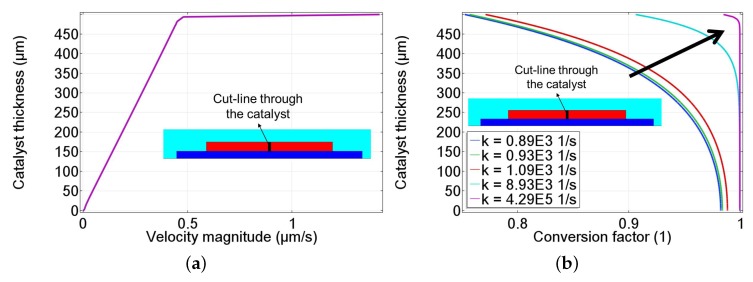
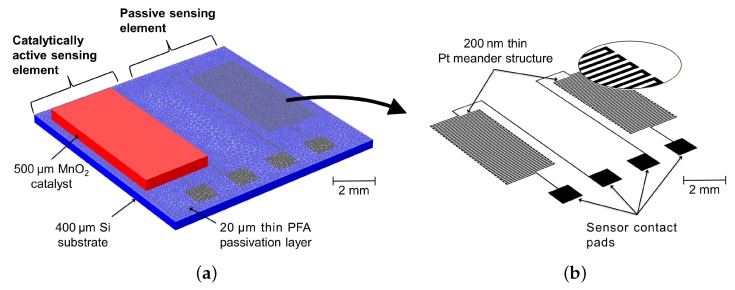
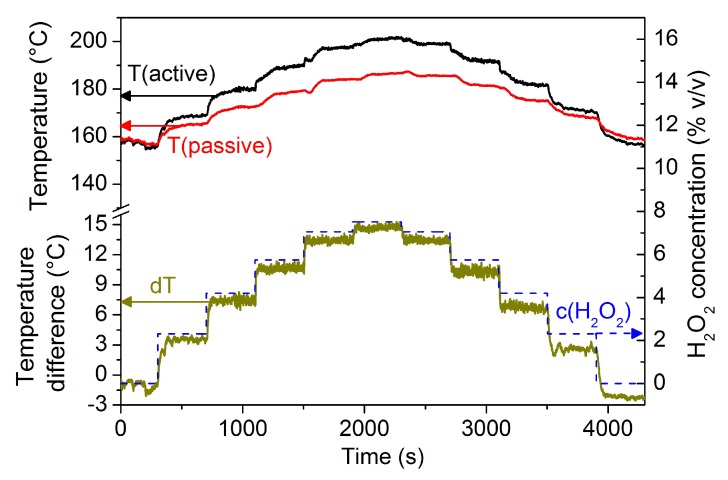
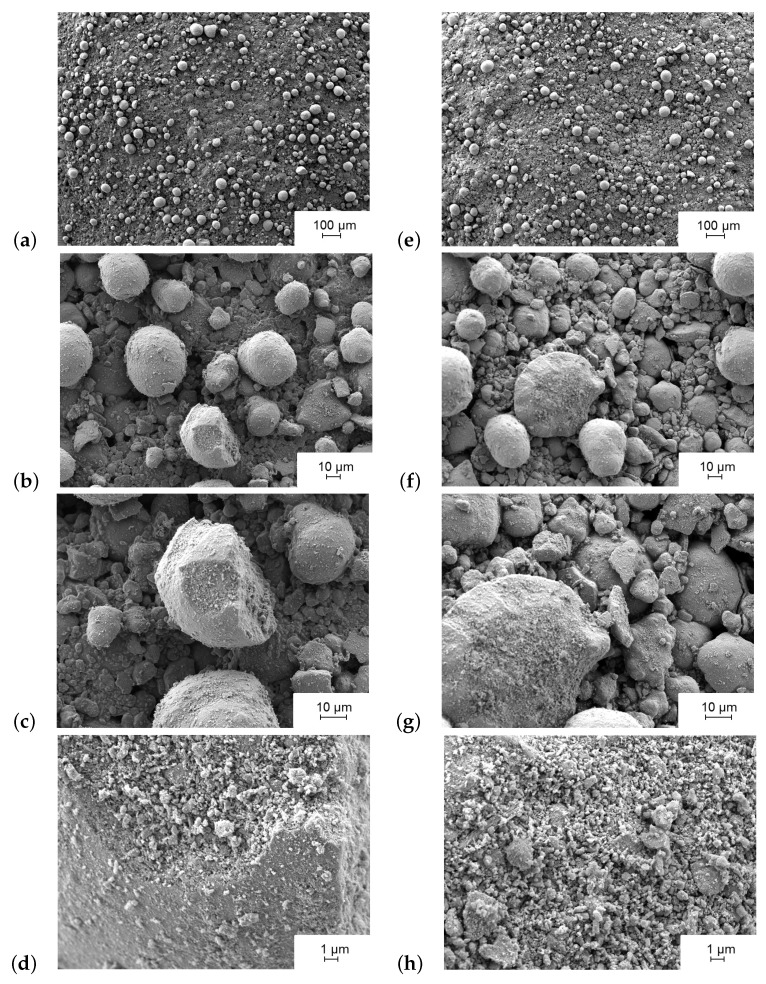
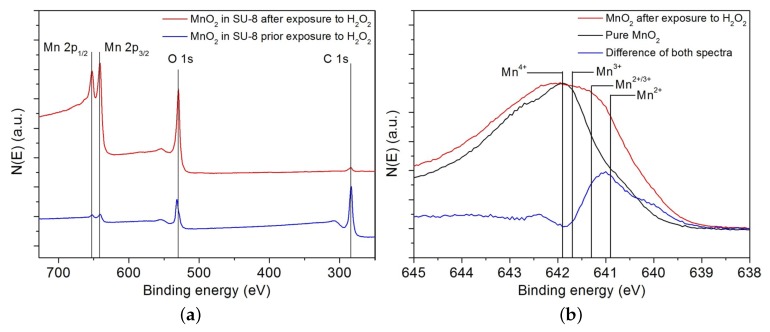
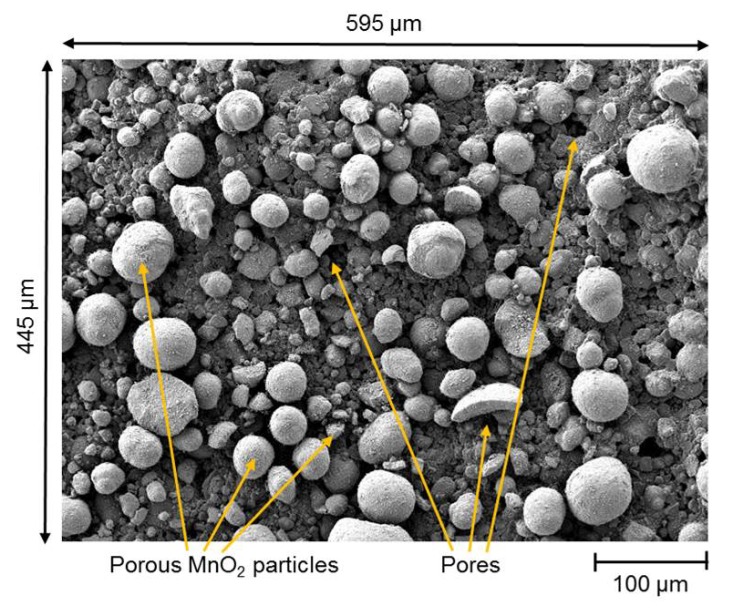
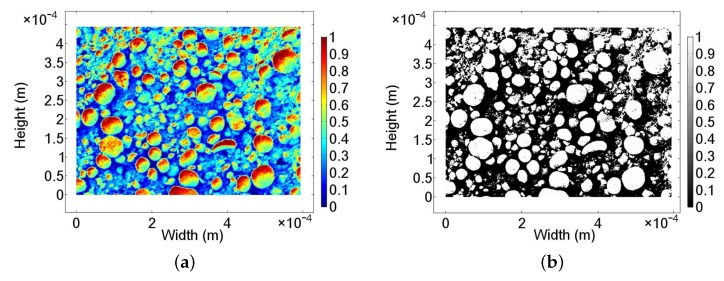
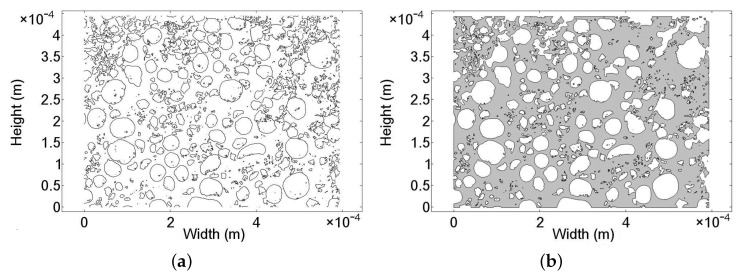
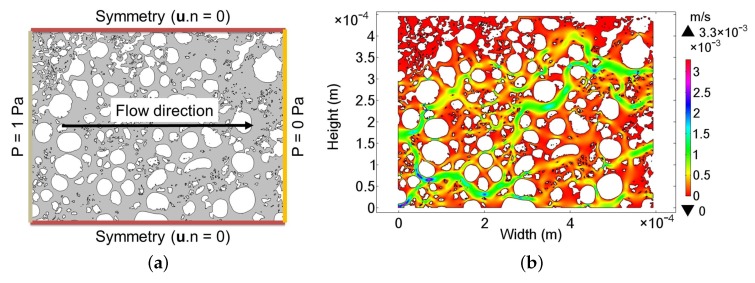
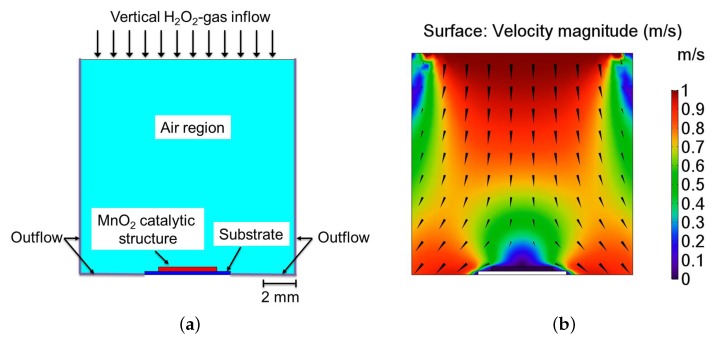
In this article, we present an overview on the thermocatalytic reaction of hydrogen peroxide (H 2 O 2 ) gas on a manganese (IV) oxide (MnO 2 ) catalytic structure. The principle of operation and manufacturing techniques are introduced for a calorimetric H 2 O 2 gas sensor based on porous MnO 2 . Results from surface analyses by X-ray photoelectron spectroscopy (XPS) and scanning electron microscopy (SEM) of the catalytic material provide indication of the H 2 O 2 dissociation reaction schemes. The correlation between theory and the experiments is documented in numerical models of the catalytic reaction. The aim of the numerical models is to provide further information on the reaction kinetics and performance enhancement of the porous MnO 2 catalyst.
在本文中,我们概述了过氧化氢(H₂O₂)气体在二氧化锰(MnO₂)催化结构上的热催化反应。介绍了基于多孔MnO₂的量热式H₂O₂气体传感器的工作原理和制造技术。通过对催化材料进行X射线光电子能谱(XPS)和扫描电子显微镜(SEM)表面分析得到的结果,为H₂O₂分解反应方案提供了指示。催化反应的数值模型记录了理论与实验之间的相关性。数值模型的目的是提供关于多孔MnO₂催化剂反应动力学和性能增强的更多信息。